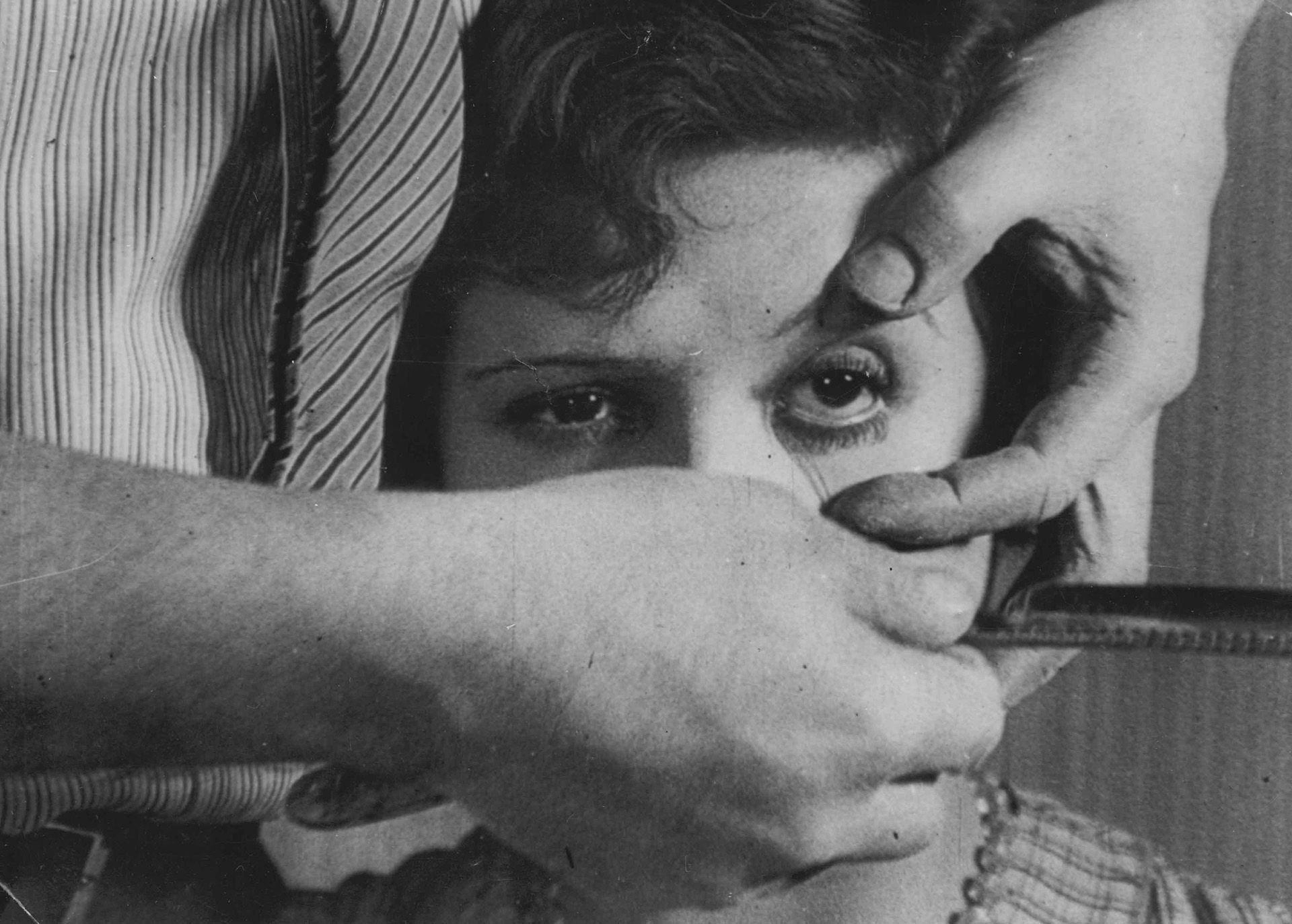
The Savage Eye: Surrealism and Cinema

11 Jun 2011 – 2 Oct 2011 | GOMA | Cinema A

The cinema seems to have been invented to express the power of the subconscious whose roots penetrate so deeply into poetry… The film seems to be the involuntary imitation of the dream.
Luis Buñuel 

In conjunction with 'Surrealism: The Poetry of Dreams', the Gallery's Australian Cinémathèque presents a major survey of the surrealist sensibility in cinema. The Savage Eye: Surrealism and Cinema considers films made under the rubric of the movement alongside popular cinema highlighting the enduring fascination with surrealist tendencies, narratives and tropes. The program also charts how developments in filmmaking have been used to represent the interior world of dreams and the subconscious via cinematic manipulation and montage.
The Savage Eye charts Dada and Surrealism's interest in, engagement with, and response to cinema during the 1920s and 1930s, and features works by artists, filmmakers and writers connected with surrealist and dada groups — and those working on the margins — such as Luis Buñuel, René Clair, Jean Cocteau, Salvador Dalí, Marcel Duchamp, Germaine Dulac, Fernand Léger and Dudley Murphy, Jacques Prévert, Man Ray, Hans Richter and others.

The Savage Eye includes a focus on the late films of Spanish filmmaker Luis Buñuel, undoubtedly the most well-known filmmaker to emerge out of Surrealism, and who continued to underline the surrealist provenance of his films throughout his longstanding career into the 1970s.

The surrealist's love of cinema is highlighted in French filmmaker Louis Feuillade's celebrated serial films of the silent era, based on pulp detective fiction. Special attention will also be given to a surrealist use of documentary, with the inclusion of films by Joris Ivens, Eli Lotar, Jean Painlevé, Pierre Prévert, Henri Storck, Jean Rouch, Jean Vigo and Georges Franju and others. Surrealism's influence in the United States following World War One will be mapped through the work of avantgarde artists and filmmakers working in the United States, including Kenneth Anger, Joseph Cornell, Maya Deren, Alexander Hammid, Sidney Peterson, Hans Richter, while the movement in Belgium and Denmark will be seen in the films of Marcel Mariën and Wilhelm Freddie with Jørgen Roos.

The pervasive presence of Surrealism outside western Europe is featured in programs of films by Polish filmmakers Stefan and Franciszka Themerson, Wojciech Has and Polish surrealist group member and filmmaker Walerian Borowczyk; Czechoslovak surrealist group member and animator–filmmaker Jan Švankmajer; as well as in the work of Chilean filmmaker Alejandro Jodorowsky, Spanish playwright–filmmaker Fernando Arrabal and French illustrator–writer Roland Topor, who formed the collective 'Mouvement panique' after meeting in the 1960s at a gathering of the Paris Surrealist Group.

The relationships between Surrealism and popular cinema will also be explored through the works of Jean Cocteau, David Cronenberg, Peter Greenaway, David Lynch, Jean-Pierre Jeunet and Marc Caro, Raúl Ruiz and others.

This program would not have been possible without the assistance of our Fédération Internationale des Archives du Film partners. Special thanks to the National Film and Sound Archive, Australia; l'Institut Français and the Embassy of France in Australia who have generously provided materials for this program. Presented by The Courier Mail. Program curated by José Da Silva, Australian Cinematheque.

LIST OF WORKS

Pulp Surrealism: Louis Feuillade and the Film Serial

Fantômas 1913–14
Fantômas I: À l'ombre de la guillotine (Fantômas: In the Shadow of the Guillotine) 1913
Fantômas II: Juve contre Fantômas (Juve vs. Fantômas) 1913
Fantômas III: Le Mort Qui Tue (The Murderous Corpse) 1913
Fantômas IV: Fantômas contre Fantômas (Fantômas vs. Fantômas) 1914
Fantômas V: Le Faux Magistrat (The False Magistrate) 1914

Les Vampires (The Vampires) 1915–16
Episode 1-3: La tête coupée (The Severed Head) + La bague qui tue (The Killer Ring) + Le cryptogramme rouge (The Red Cypher)
Episode 4-6: Le spectre (The Ghost) + L'évassion du mort (The Escaping Dead Man) + Les yeux qui fascinent (The Hypnotic Gaze)
Episode 7-8: Satanas (Satan) + Le maître de la foudre (The Thunder Lord)
Episode 9-10: L'homme des poisons (The Poisoner) + Les noces sanglantes (Bloody Wedding)

From Dada to Surrealism
'Dadaist 'cinema' was anti-film, a negation of film practice, that sought in cinema a kind of utopian space in which the processes of film production would be annulled. This was in conformity with the Dadaist opposition to all values: film, as a form inseparable from the modern progress they denounced, was of value only to the extent that it could contribute to this generalised demoralisation.' MR

In this collection of experimental short film we trace the rhythms of the dada film poems and see how the Dada artists rejected cinema as a medium of impressionism, seeking to create a universal pictorial language using abstract geometric shapes in rhythmic movement, aspects of chance.

From Dada to Surrealism
Symphonie diagonale (Diagonal Symphony) 1921 | Director: Viking Eggeling
Rhythmus 21 1921–24 | Director: Hans Richter
Rhythmus 23 1923–25 | Director: Hans Richter
Le Retour à la raison (Return to Reason) 1923 | Director: Man Ray
La Ballet mécanique 1923–24 | Director: Fernand Léger
Entr'acte 1924 | Director: René Clair
Anémic cinéma 1925 | Director: Marcel Duchamp
Vormittagsspuk (Ghosts before Breakfast) 1927-28 | Director: Hans Richter

The Films of Man Ray
Le Retour à la raison (Return to Reason) 1923
Emak Bakia (Cinépoème) (Fichez moi la paix aka Leave Me Alone) 1926
L'Etoile de mer (The Star of the Sea aka The Starfish) 1928
Les mystères du château de Dé (The Mysteries of the Chateau of Dice) 1929

Surrealist Shorts
Filmstudie (Etude filmique) c.1926 | Director: Hans Richter
Pour vos beaux yeux (For Your Beautiful Eyes) 1929-30 | Director: Henri Storck
Spiste Horisonter (Eaten Horizon) 1950 | Director: Wilhelm Freddie, Jørgen Roos
L'Imitation du cinéma (The Imitation of Cinema) 1960 | Director: Marcel Mariën

The Surrealist Scenario
'What we ask of the cinema is the impossible, it is the unexpected, the dream, the surprise, the lyricism that erases the baseness in souls and hurls them enthusiastically onto the barricades and into adventure; what we ask of the cinema is what love and life have refused us — it is mystery, it is the miracle.' Robert Desnos

La Coquille et le clergyman (The Seashell and the Clergyman) 1927 | Director: Germaine Dulac
Un chien andalou (An Andalusian Dog) 1929 | Director: Luis Buñuel
L'âge d'or; Abajo la constitucion (The Golden Age) 1930 | Director: Luis Buñuel
Le sang d'un poète (The Blood of a Poet) 1930 | Director: Jean Cocteau
L'Affaire est dans le sac (It's in the Bag) 1932 | Director: Pierre Prevert
Babaouo 2000 | Director: Manuel Cusso-Ferrer

Jacques Prévert: The Poet Dreams in Movies
'The epic poet shall express himself by means of the cinema.' Guillaume Apollinaire
'Jacques Prévert is the poet of the end of the world. But this end is the promise of a new world. In the films he wrote, fate may appear malevolent but it is, more often, facilitatory, allowing a glimpse of a desired life that may be out of reach in more than a momentary way but still gives texture to this life.' MR

French poet and screenwriter Jacques Prévert is considered by many as unequalled in the history of French screenwriting. He participated in the Surrealist Group between 1925 and 1929 and was also celebrated for his collages and his work as a dramatist. Prévert's longstanding creative partnership with director Marcel Carné made both key figures in the style of 'poetic realism' in French cinema of the 1930s that combined lyrical elements with grim depictions of reality.

Drôle de Drame (Bizarre, Bizarre) 1937 | Director: Marcel Carné
Le Quai des Brumes (Port of Shadows) 1938 | Director: Marcel Carné
Le Jour Se Lève (Daybreak) 1939 | Director: Marcel Carné
Les Portes de la Nuit (Gates of the Night) 1945 | Director: Marcel Carne
Paris qui dort (Paris Which Sleeps aka The Crazy Ray) 1923 | Director: René Clair
À propos de Nice (On the Subject of Nice) 1930 | Director: Jean Vigo
Las Hurdes aka Terre sans Pain (Land without Bread) 1932—36 | Director: Luis Buñuel
L'Île de Pâques (Easter Island) 1935 | Director: Henri Storck
Aubervilliers 1946 | Director: Eli Lotar
Le Sang des Bêtes (Blood of the Beasts) 1949 | Director: Georges Franju
Hôtel des Invalides 1951 | Director: Georges Franju
La Seine a Rencontré Paris (The Seine Meets Paris) 1957 | Director: Joris Ivens
Paris la Belle (Paris the Beautiful) 1959 | Directors: Pierre Prévert, Marcel Duhamel 

Surrealist Science: Jean Painlevé
Jean Painlevé – whose motto was 'science is fiction' – remains a one of the most fascinating documentarist to emerge from the time of Surrealism. In over 200 short films and scientific documentaries, Painlevé characterised the natural world and life under the microscope with a lyrical and sometimes humorous sensibility.

'The miracle of Painlevé's films is that they retain a sense of wonder at the natural world while engaging with it scientifically. This wonderment is very different from that of a natural history film maker like David Attenborough, whose enthusiasm is contained within a sense of detachment that anthropomorphises the animal kingdom while enclosing it as something separate from the human realm… In Painlevé's films, anthropomorphism is turned against itself. He shares with other filmmakers linked to surrealism a fascination with the relationship between humanity and the world, and to this extent his films are fundamentally about communication, seeking to chart aspects of its topography. The world presented is one of disjunction, a disjunction not inherent to this world, but emerging as a result of humanity's will to grasp life as a continuum.' MR

Mathusalem ou L'eternel bourgeois (Mathusalem or The Eternal Bourgeois) 1927
L'Hippocampe (The Sea Horse) 1934
Le Vampire (The Vampire) 1939–45
Les Amours de la pieuvre (The Love Life of the Octopus) 1965 | Director: Jean Painleve, Genevieve Hamon
Les Cristaux Liquides (Phase Transformation in Liquid Crystals) 1976

Ethnographic Surrealism: Jean Rouch
'For me, cinema, making a film, is like Surrealist painting: the use of the most real processes of reproduction, the most photographic, but at the service of the unreal, of the bringing into being of elements of the irrational. The postcard at the service of the imaginary.' Jean Rouch
French filmmaker and anthropologist Jean Rouch was heavily influenced by his discovery of surrealism in his early twenties. Many of his films blur the line between fiction and documentary, creating a new style of ethnofiction.

Les Maîtres fous (The Crazy Masters) 1955 | Director: Jean Rouch
La Pyramide humaine (The Human Pyramid) 1959 | Director: Jean Rouch
Jaguar 1967 | Director: Jean Rouch
Fireworks 1947 | Director: Kenneth Anger
Inauguration of the Pleasure Dome 1954 | Director: Kenneth Anger
Rose Hobart 1937 | Director: Joseph Cornell
Cotillion 1930–70 | Director: Joseph Cornell
The Midnight Party 1930–70 | Director: Joseph Cornell
The Children's Party 1930–68 | Director: Joseph Cornell
Destino 2003 | Director: Salvador Dalí
Meshes of the Afternoon 1943 | Director: Maya Deren
Witch's Cradle 1944 | Director: Maya Deren
At Land 1944 | Director: Maya Deren
Ritual in Transfigured Time 1945–46 | Director: Maya Deren
The Potted Psalm 1946 | Director: Sidney Peterson
The Cage 1947 | Director: Sidney Peterson
The Lead Shoes 1949 | Director: Sidney Peterson
Dreams That Money Can Buy 1948 | Director: Hans Richter
8x8: A Chess Sonata in 8 Movements 1955–58 | Director: Hans Richter

The Surrealist Quotidian: Luis Buñuel
'For us there is no room for ambiguity: every one of us desires the transfer of power from the hands of the bourgeoisie to those of the proletariat. In the meantime, it is no less crucial, in our view, that the experiences of the inner life continue, and continue, of course, without any outside interference.' André Breton
'Surrealism made me understand that freedom and justice do not exist' Luis Buñuel

El ángel exterminador (The Exterminating Angel) 1962 | Director: Luis Buñuel
Simón del desierto (Simon of the Desert) 1965 | Director: Luis Buñuel
Belle de Jour (Beauty of the Day) 1967 | Director: Luis Buñuel
Le charme discret de la bourgeoisie (The Discreet Charm of the Bourgeoisie) 1972 | Director: Luis Buñuel
Le fantôme de la liberté (The Phantom of Liberty) 1974 | Director: Luis Buñuel
Cet obscur objet du désir (That Obscure Object of Desire) 1977 | Director: Luis Buñuel
Goto, Île d'amour (Goto, Island of Love) 1968 | Director: Walerian Borowczyk
Contes immoraux (Immoral Tales) 1974 | Director: Walerian Borowczyk
La bête (The Beast) 1975 | Director: Walerian Borowczyk
Cérémonie d'amour (Love Rites) 1987 | Director: Walerian Borowczyk
Rękopis znaleziony w Saragossie (The Saragossa Manuscript) 1965 | Director: Wojciech Has
Sanatorium pod klepsydra (The Hour-Glass Sanatorium) 1973 | Director: Wojciech Has
Przygoda czlowieka poczciwego (The Adventure of a Good Citizen) 1937 | Director: Stefan Themerson and Franciszka Themerson
Calling Mr Smith 1943 | Director: Stefan Themerson and Franciszka Themerson

The Panique Collective
'Panique was a configuration of three figures from the fringes of surrealism who came together in the early sixties not, apparently, for any fixed purpose, but simply to share ideas, especially on the transgressive and transformative possibilities they perceived in theatre. Their common inspiration was to be found in the theories of Antonin Artaud and his idea of a Theatre of Cruelty, developed in the thirties and aiming at liberation through cathartic violence. These three figures were Alejandro Jodorowsky, a mime artist and theatre director, Fernando Arrabal, already a well-established dramatist and novelist, and Roland Topor, a cartoonist and storyteller. They appear to have met one another at a meeting of the Paris Surrealist Group when they decided to work together, feeling that that context of the Surrealist Group was insufficiently dynamic to satisfy what they wanted to achieve.' MR

Viva la muerte (Long Live Death) 1971 | Director: Fernando Arrabal
J'irai comme un cheval fou (I Will Walk Like a Crazy Horse) 1973 | Director: Fernando Arrabal
La Planète sauvage (The Savage Planet aka Fantastic Planet) 1973 | Director: René Laloux
El Topo (The Mole) 1970 | Director: Alejandro Jodorowsky
La Montaña Sagrada (The Holy Mountain) 1973 | Director: Alejandro Jodorowsky
Santa Sangre (Holy Blood) 1989 | Director: Alejandro Jodorowsky
Le locataire (The Tenant) 1976 | Director: Roman Polanski
Marquis 1989 | Director: Henri Xhonneux

Jan Švankmajer: Animating the Fantastic
Něco z Alenky (Alice) 1988
Spiklenci slasti (Conspirators of Pleasure) 1996
Otesánek (Little Otik) 2001
Sílení (Lunacy) 2005

Popular Surrealism in Cinema

La Belle et la bête (Beauty and the Beast) 1946 | Director: Jean Cocteau
Orphée (Orpheus) 1949 | Director: Jean Cocteau
Videodrome 1983 | Director: David Cronenberg
Dead Ringers 1988 | Director: David Cronenberg
Naked Lunch 1991 | Director: David Cronenberg
Crash 1996 | Director: David Cronenberg
The Falls 1980 | Director: Peter Greenaway
Drowning by Numbers 1988 | Director: Peter Greenaway
Delicatessen 1991 | Director: Jean-Pierre Jeunet and Marc Caro
La Cité des enfants perdus (The City of Lost Children) 1995 | Director: Jean-Pierre Jeunet and Marc Caro
Eraserhead 1976 | Director: David Lynch
Lost Highway 1997 | Director: David Lynch
Mulholland Drive 2001 | Director: David Lynch
Inland Empire 2006 | Director: David Lynch
Het dak van de Walvis (On Top of the Whale aka A Film About Survival) 1982 | Director: Raúl Ruiz
La ville des Pirates (City of Pirates) 1983 | Director: Raúl Ruiz
Les Trois couronnes du matelot (Three Crowns of the Sailor) 1983 | Director: Raúl Ruiz
Zéro de conduite: Jeunes diables au collège (Zero for Conduct) 1933 | Director: Jean Vigo

Musician in Residence: D Black
The Savage Eye: Surrealism and Cinema features a number of silent film screenings with live musical accompaniment by D Black, founding member of influential Brisbane experimental band Secret Birds. Black uses guitar, synthesisers, drum machines and loop pedals to create a dense and layered sound infused with psychedelic and Middle Eastern percussive influences.
After years in the Brisbane music underground, including time with seminal teen hardcore act On/Oxx, Black started Secret Birds as an outlet to channel his interest in psychedelic and free music, drawing inspiration from such disparate influences as Agitation Free, Terry Riley and Sunburned Hand of the Man. He recently spent a year in Tokyo working with Japanese musicians and furthering his musical outlook.
His commissioned scores for The Savage Eye program will provide a powerful companion to key works of Surrealist filmmaking, which delve into the interior world of dreams and the subconscious via cinematic manipulation and montage.
 
Man Ray Shorts Program
Germaine Dulac La Coquille et le clergyman (The Seashell and the Clergyman) 1927
Jean Vigo À propos de Nice (On the Subject of Nice) 1930
René Clair Paris qui dort (Paris Which Sleeps aka The Crazy Ray) 1923
Maya Deren Shorts Program
Sidney Peterson Shorts Program
Joseph Cornell Shorts Program

MORE

LOADING...