

Suffering, penance and martyrdom
The widely reported example of an attempt by an elderly amateur artist to restore a fresco painting in the church of the Santuario de la Misericordia in the Spanish city of Borja, is an example of the continuing significance of local traditions and religious imagery in Spain.
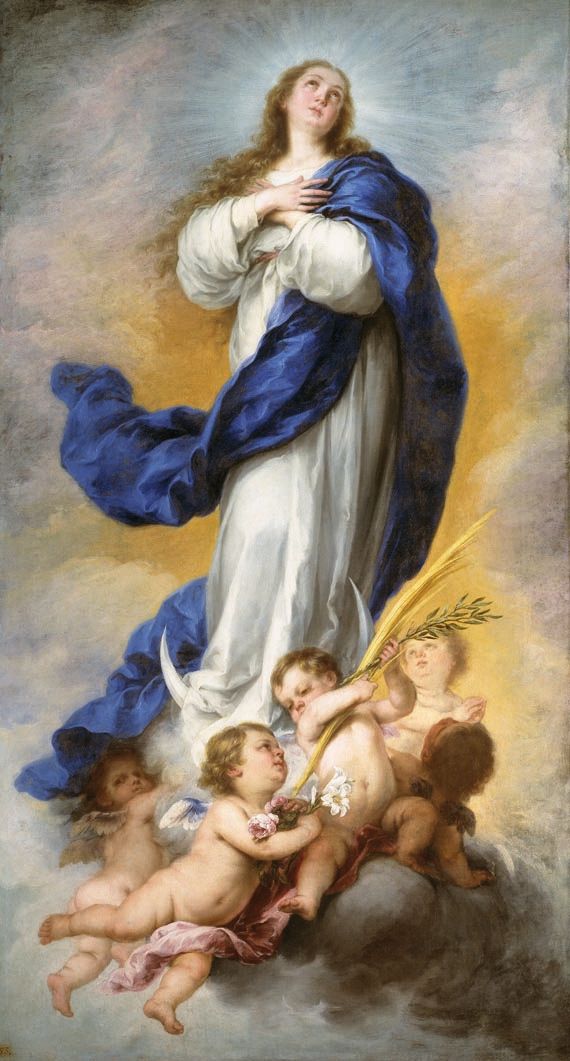
Bartolomé Esteban Murillo The Immaculate Conception of Aranjuez (La Inmaculada Concepción de Aranjuez) (detail) c.1675–80

Bartolomé Esteban Murillo, 1618–82 Seville / The Immaculate Conception of Aranjuez (La Inmaculada Concepción de Aranjuez) (detail) c.1675–80 / Oil on canvas / Collection: Museo Nacional del Prado, Madrid / © Photographic Archive, Museo Nacional del Prado, Madrid / View full image
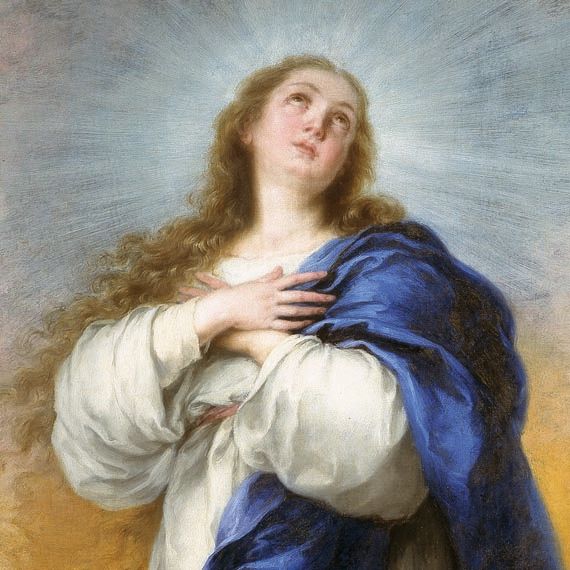
The recent, widely reported example of an attempt by an elderly amateur artist to restore a fresco painting in the church of the Santuario de la Misericordia in the Spanish city of Borja, is an example of the continuing significance of local traditions and religious imagery in Spain.
The ocean of imagery in which we are all immersed makes it difficult to appreciate the power that resided (and continues to) in the painted (and sculpted) image during the sixteenth and seventeenth centuries in Catholic Spain. In churches, chapels, convents, monasteries and cathedrals throughout the country, numerous altarpieces, murals, sculptures, and individual paintings depicted — in addition to the Holy Mother and Christ — the lives of the saints and martyrs as told by the Gospels. These images had both a devotional and didactic purpose. For the largely illiterate congregation, images of the saints were often intercessors through which the lessons of the Gospel could be learnt and communion with the divine sought. They also offered solace in what was, for the majority of Spain’s rural population, a life of trials and hardships.
It is also difficult to appreciate these images as powerful devotional icons outside of their original cultural and architectural context. When displayed in a museum, they often seem drained of their particular aura and local significance. In their original context, many images — particularly those portraying the saints and the Virgin — took on the status of holy relics, sometimes with a supernatural dimension. While much of Protestant Europe, and particularly the Netherlands and England, debunked and discouraged what was considered idolatry, the Counter-Reformation spirit seemed to actively promote the miracles of statues and images sweating droplets of blood or crying tears. Such phenomena were regularly reported in many towns and principalities and would attract believers to those centres in the hope of divine cures, or just to share in the witnessing of the mysterious activations. The majority of occurrences were usually revealed as bogus or an active deception on the part of Church authorities, but many superstitions continued to thrive in villages and townships where the constant search for guidance, help and solace in a difficult life nourished a spiritual climate receptive to the miraculous.
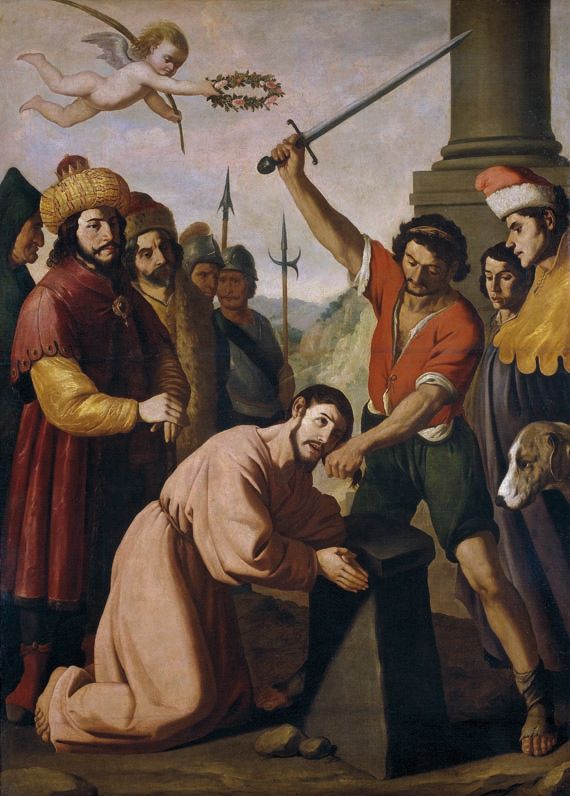
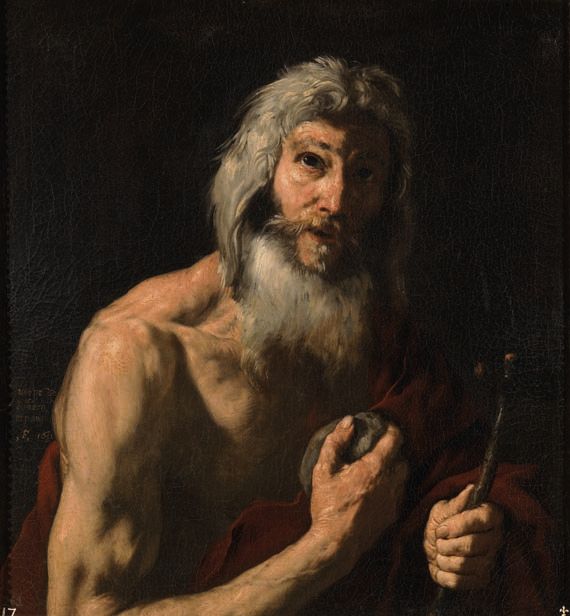
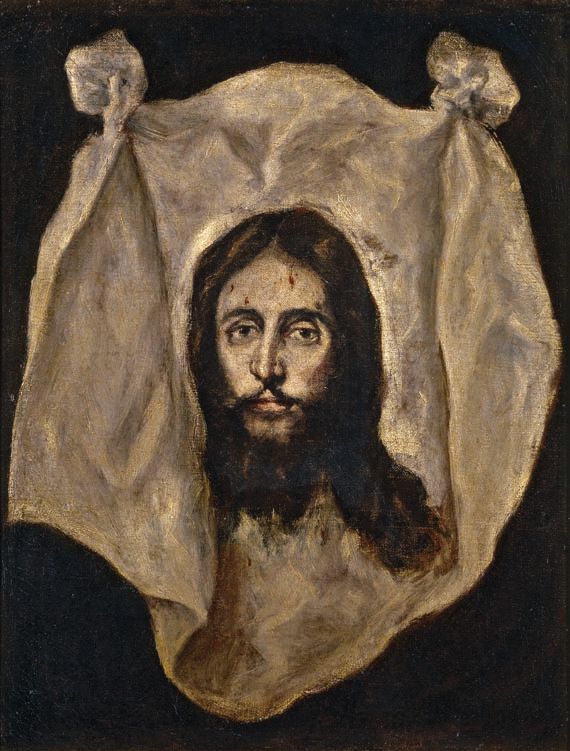
In the exhibition ‘Portrait of Spain: Masterpieces from the Prado’, a number of paintings address the suffering and penance of saints and martyrs, such as Francisco de Zurbarán’s The martyrdom of Saint James c.1640 and Jusepe de Ribera’s Penitent Saint Jerome 1652. Others present images of the miraculous, such as El Greco’s The veil of St Veronica c.1586–95 and Bartolomé Murillo’s representation of the most profound mystery of Spanish Catholic faith, The immaculate conception of Aranjuez c.1675–80.
Perhaps a residue of such belief and attachment to images survives today in our treasuring of photographs of family, friends and loved ones. The domestic context for these images is often similar to a shrine or a small altar where photographs are framed and lovingly arranged in celebration of the living and memorial of those past.
Francisco de Zurbarán The martyrdom of Saint James (Martirio de Santiago) c.1640

Francisco de Zurbarán, 1598 Fuente de Cantos, Badajoz – 1664 Madrid / The martyrdom of Saint James (Martirio de Santiago) c.1640 / Oil on canvas / Collection: Museo Nacional del Prado, Madrid / © Photographic Archive, Museo Nacional del Prado, Madrid / View full image
Jusepe de Ribera Penitent Saint Jerome (San Jeronimo penitente) 1652

Jusepe de Ribera, 1591 Játiva, Valencia – 1652 Naples / Penitent Saint Jerome (San Jeronimo penitente) 1652 / Oil on canvas / Collection: Museo Nacional del Prado, Madrid / © Photographic Archive, Museo Nacional del Prado, Madrid / View full image
El Greco The Veil of Saint Veronica (La Santa Faz) c.1586–95

El Greco, 1541 Crete – 1614 Toledo / The Veil of Saint Veronica (La Santa Faz) c.1586–95 / Oil on canvas / Collection: Museo Nacional del Prado, Madrid / © Photographic Archive, Museo Nacional del Prado, Madrid / View full image
Bartolomé Esteban Murillo The Immaculate Conception of Aranjuez (La Inmaculada Concepción de Aranjuez) c.1675–80

Bartolomé Esteban Murillo, 1618–82 Seville / The Immaculate Conception of Aranjuez (La Inmaculada Concepción de Aranjuez) c.1675–80 / Oil on canvas / Collection: Museo Nacional del Prado, Madrid / © Photographic Archive, Museo Nacional del Prado, Madrid / View full image
Portrait of Spain: Masterpieces from the Prado
21 July – 4 November 2012
Queensland Art Gallery
Brisbane, Australia
Specially curated for the Queensland Art Gallery by the Museo Nacional del Prado, Madrid, ‘Portrait of Spain: Masterpieces from the Prado’ is the largest and most significant international loan the Prado has ever undertaken, and the first exhibition from their Collection to be shown in the Southern Hemisphere.