
Robert Klippel's abstract assemblages are fashioned from scrap metal

Robert Walker, Australia 1922–2007 / Robert Klippel, Sydney / 1968, printed 2006 / Gelatin silver photograph on paper / 44.5 x 34cm / Purchased 2007. QAG Foundation / Collection: Queensland Art Gallery | Gallery of Modern Art / © Robert Walker/Copyright Agency / View full image
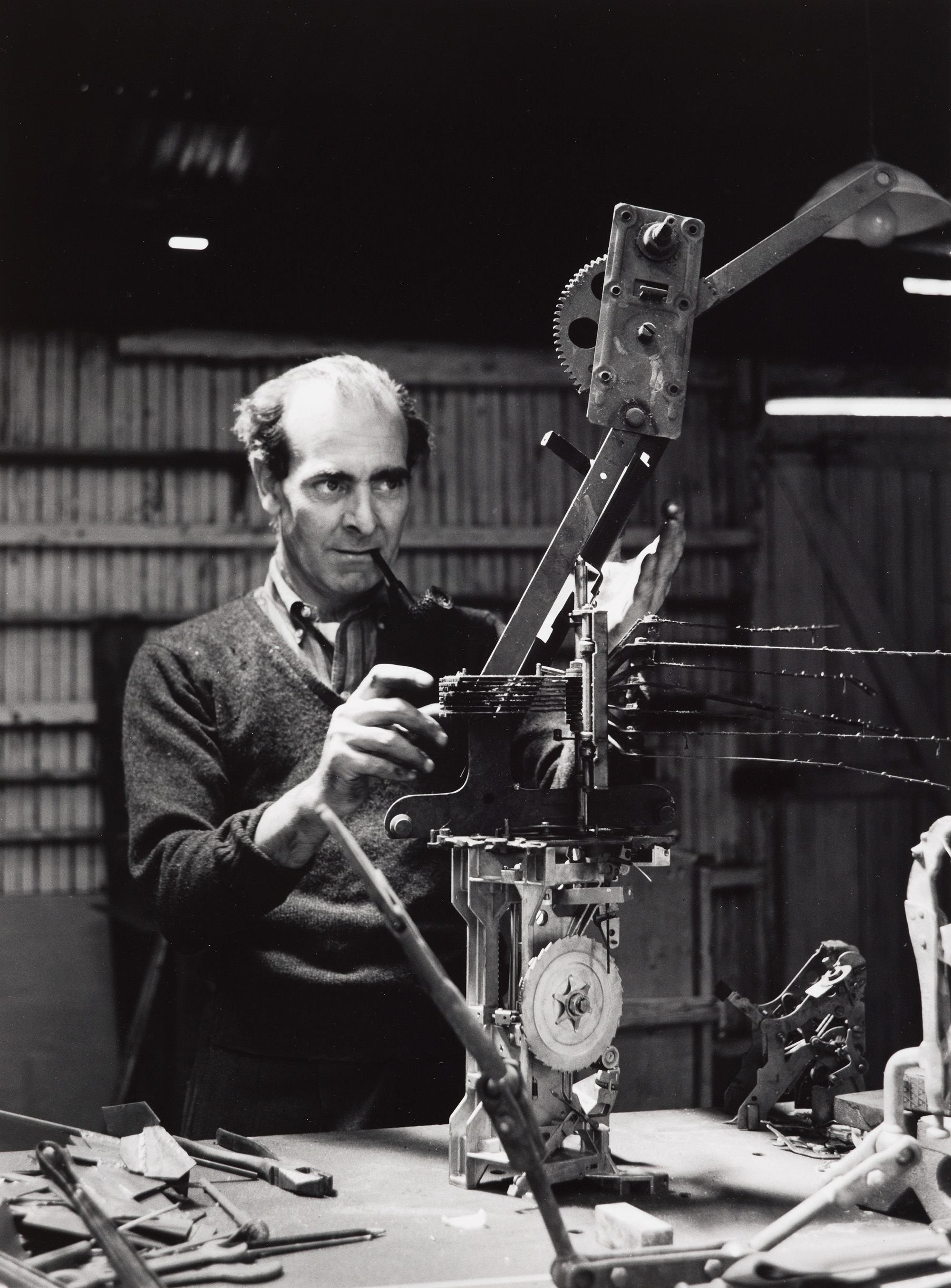
Robert Klippel (19 June 1920–2001) was one of Australia’s pre-eminent sculptors, recognised for his abstract assemblages fashioned from scrap metal which developed from his childhood fascination with model-making.
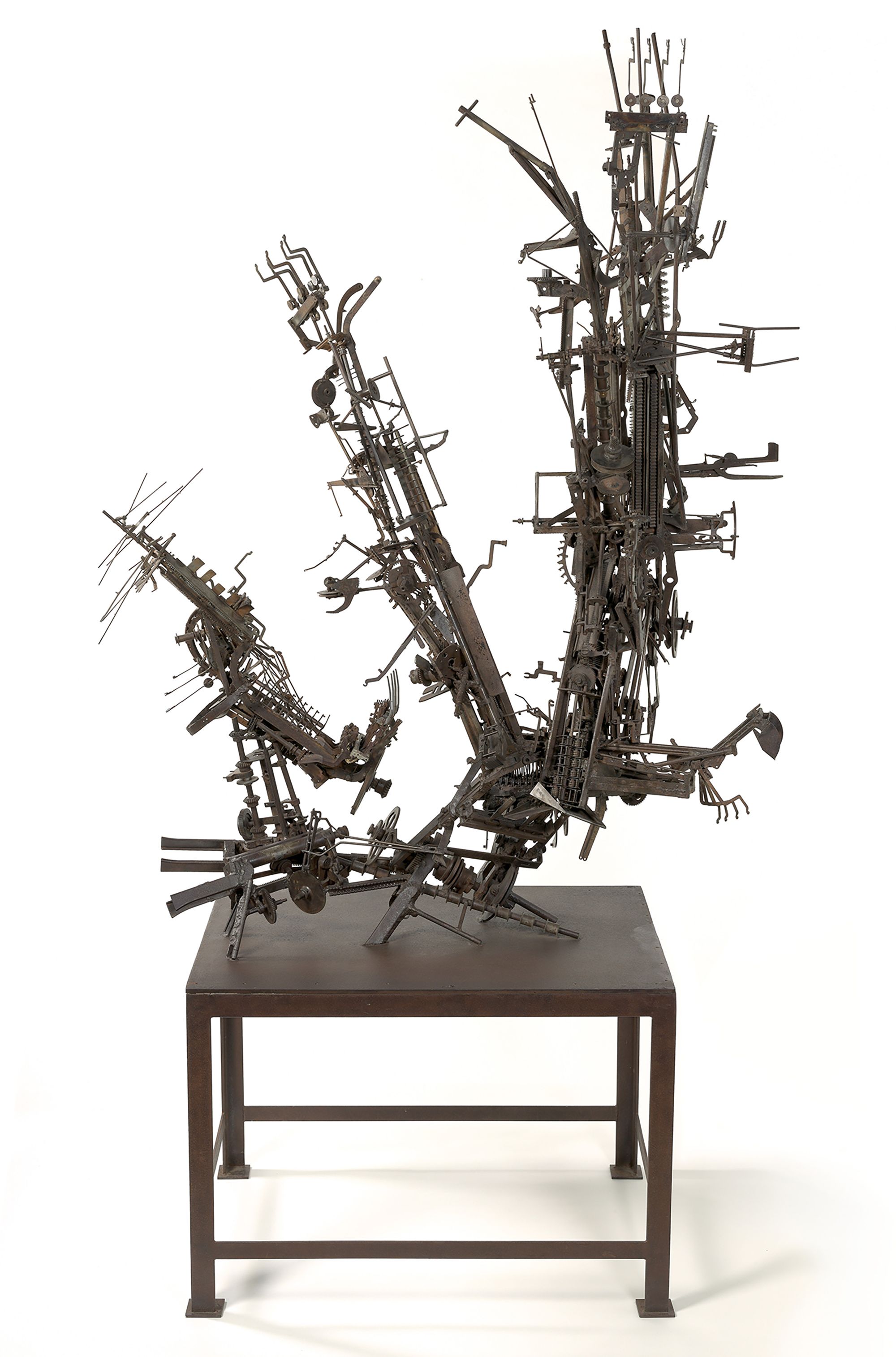
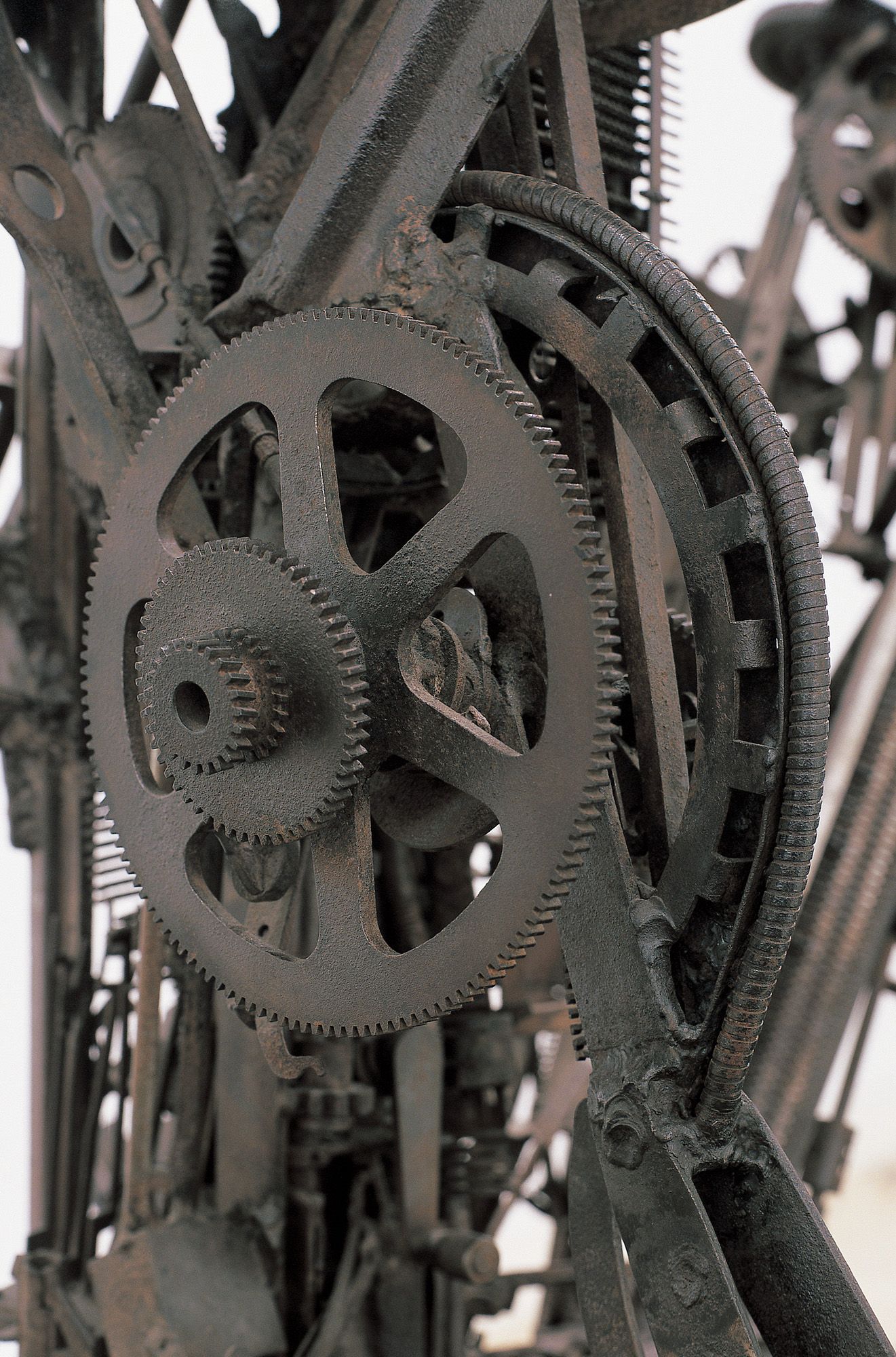
Klippel became increasingly interested in discarded metal and found objects, creating welded constructions from steel-plate, copper, and engine parts. No. 247 Metal construction 1965–68 exemplifies this aspect of his work and is one of his signature pieces. The artist has transformed a disparate group of recycled metal objects including IBM computer parts into a unified composition. The sculpture’s construction creates an interplay between discarded machine parts and the elegant, almost organic limb-like forms they become.
Klippel’s meticulous exploration and repurposing of machine parts creates a new relationship to the assembled objects. Photographer Robert Walker’s intimate portrait of Klippel captured in 1968 (illustrated) — engrossed in the work of artmaking in his studio — captures the artist in the role of an inventor, tinkering and experimenting in his studio.
Robert Klippel No. 247 Metal construction 1965-68

Robert Klippel, Australia 1920–2001 / No. 247 Metal construction 1965-68 / Welded and brazed steel, found objects, wood / 198 x 145 x 126cm (irreg., without base) / Purchased 1983. QAG Foundation / Collection: Queensland Art Gallery | Gallery of Modern Art / © QAGOMA / View full image
Robert Walker Robert Klippel, Sydney / 1968

Robert Walker, Australia 1922–2007 / Robert Klippel, Sydney / 1968, printed 2006 / Gelatin silver photograph on paper / 44.5 x 34cm / Purchased 2007. QAG Foundation / Collection: Queensland Art Gallery | Gallery of Modern Art / © Robert Walker/Copyright Agency / View full image
No. 247 Metal construction has been explained in modernist terms by his friend James Gleeson (1915–2008), Australia's foremost surrealist painter. Klippel wishes to achieve an aesthetically fruitful union of mechanical and organic forms, and to endow each conformation with an inner logic, so that 'the apprehended form is to the hidden form as the skin is to the body, taking its contours and particularities from the forms and functions it contains’. Klippel is concerned, that is, with revelation, with making invisible forms visible through a visual 'language of forms'.
With this language Klippel cannibalised industry's off casts to make his sculptures, metal constructions and assemblages... Klippel discovered he could incorporate found objects and machine parts in his sculptures, a realisation that opened a material path to No. 247 Metal construction.

Robert Klippel, Australia 1920–2001 / No. 247 Metal construction 1965-68 / Welded and brazed steel, found objects, wood / 198 x 145 x 126cm (irreg., without base) / Purchased 1983. QAG Foundation / Collection: Queensland Art Gallery | Gallery of Modern Art / © QAGOMA / View full image
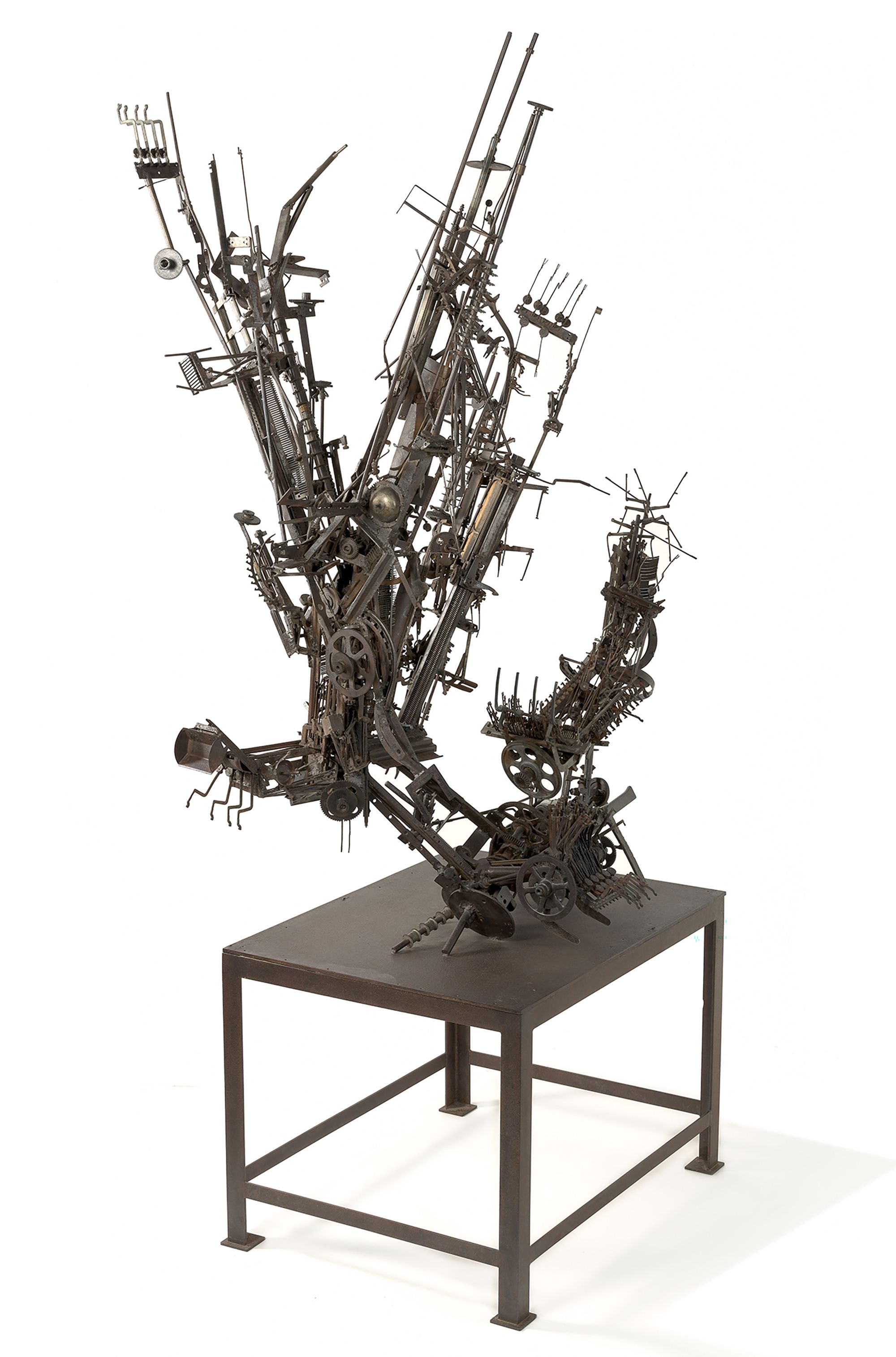

Robert Klippel, Australia 1920–2001 / No. 247 Metal construction (detail) 1965-68 / Welded and brazed steel, found objects, wood / 198 x 145 x 126cm (irreg., without base) / Purchased 1983. QAG Foundation / Collection: Queensland Art Gallery | Gallery of Modern Art / © QAGOMA / View full image
Queensland Art Gallery | Gallery of Modern Art (QAGOMA)
Brisbane, Australia