
Pablo Picasso's traveling circus performers

Pablo Picasso, Spain 1881–1973 / Le Repas frugal (The frugal meal) (from 'La Suite des Saltimbanques' series) 1904, printed 1913 / Etching and scraper on Van Gelder Zonen wove paper / 66 x 51cm / Purchased 2015 with funds from the Margaret Olley Art Trust through the QAGOMA Foundation / Collection: Queensland Art Gallery | Gallery of Modern Art / © Succession Picasso/Copyright Agency / View full image
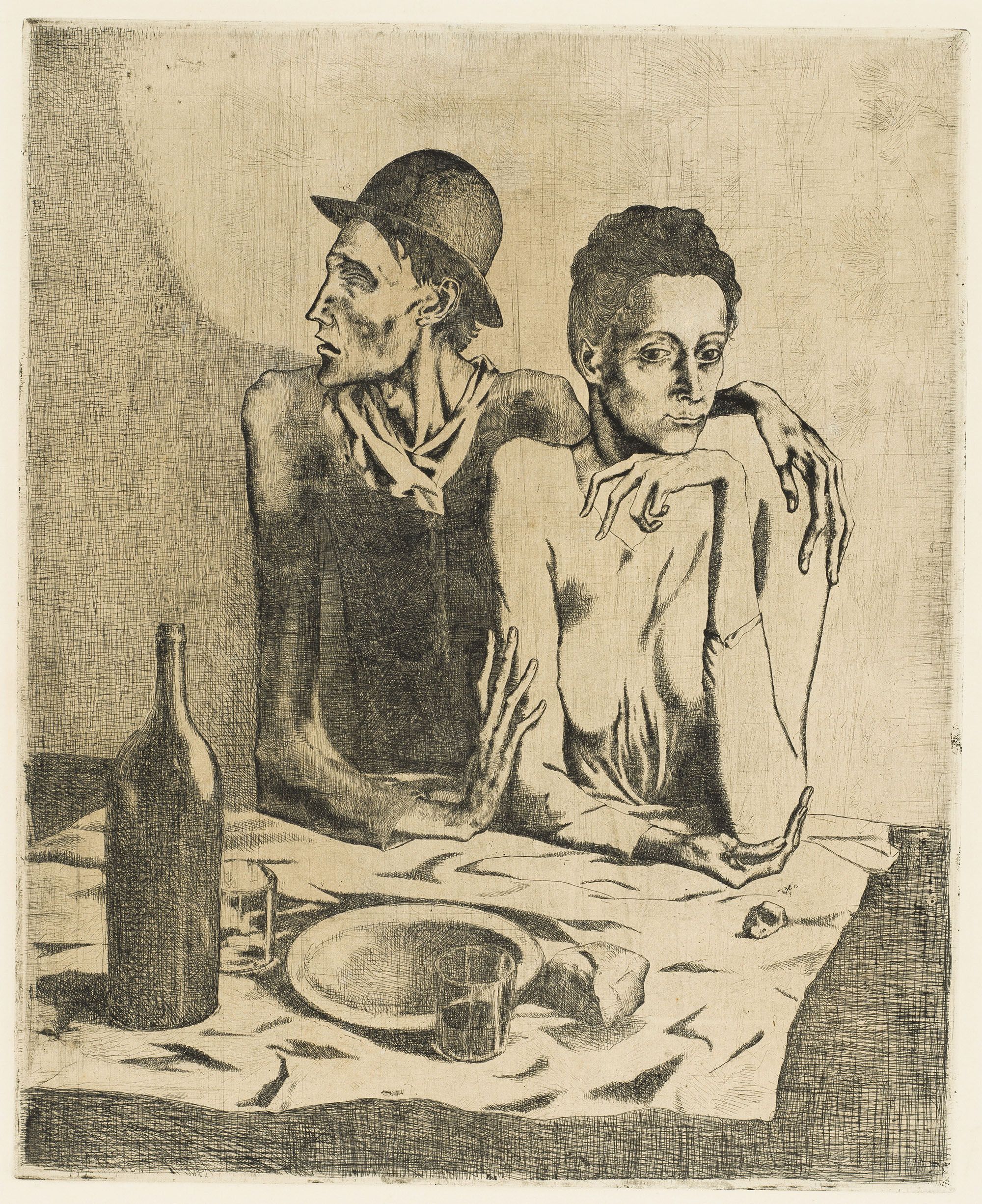
Pablo Picasso’s (1881–1973) first major body of work in printmaking conjures the free-spirited world of the Parisian saltimbanques — the bohemian crowd of acrobats, jugglers and travelling street performers whom the artist encountered on settling in Montmartre, Paris, in 1904. Over the course of a year, the 22-year‑old Picasso produced several portraits of the vagabond troupe as they rehearsed their routines and socialised together.
Watch | A curator's perspective
Le Repas frugal (The frugal meal) 1904

Pablo Picasso, Spain 1881–1973 / Le Repas frugal (The frugal meal) (from 'La Suite des Saltimbanques' series) 1904, printed 1913 / Etching and scraper on Van Gelder Zonen wove paper / 66 x 51cm / Purchased 2015 with funds from the Margaret Olley Art Trust through the QAGOMA Foundation / Collection: Queensland Art Gallery | Gallery of Modern Art / © Succession Picasso/Copyright Agency / View full image
Au Cirque (At the circus) 1905-06

Pablo Picasso, Spain 1881–1973 / Au Cirque (At the circus) (from 'La Suite des Saltimbanques' series) 1905-06, printed 1913 / Drypoint on Japon laid paper / 48.6 x 33.3cm / Purchased 2019 with funds from the Henry and Amanda Bartlett Trust through the QAGOMA Foundation / Collection: Queensland Art Gallery | Gallery of Modern Art / © Succession Picasso/Copyright Agency / View full image
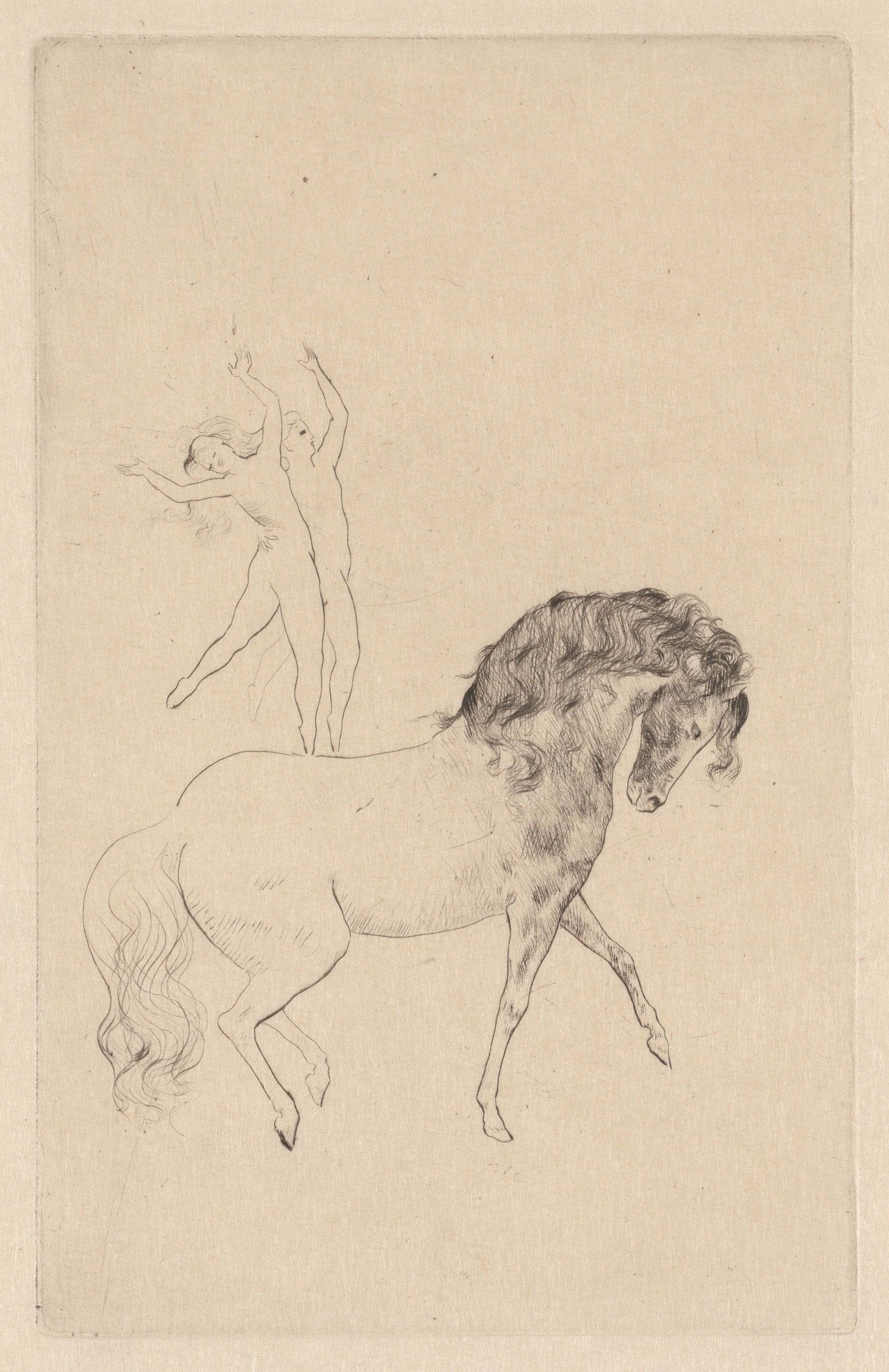
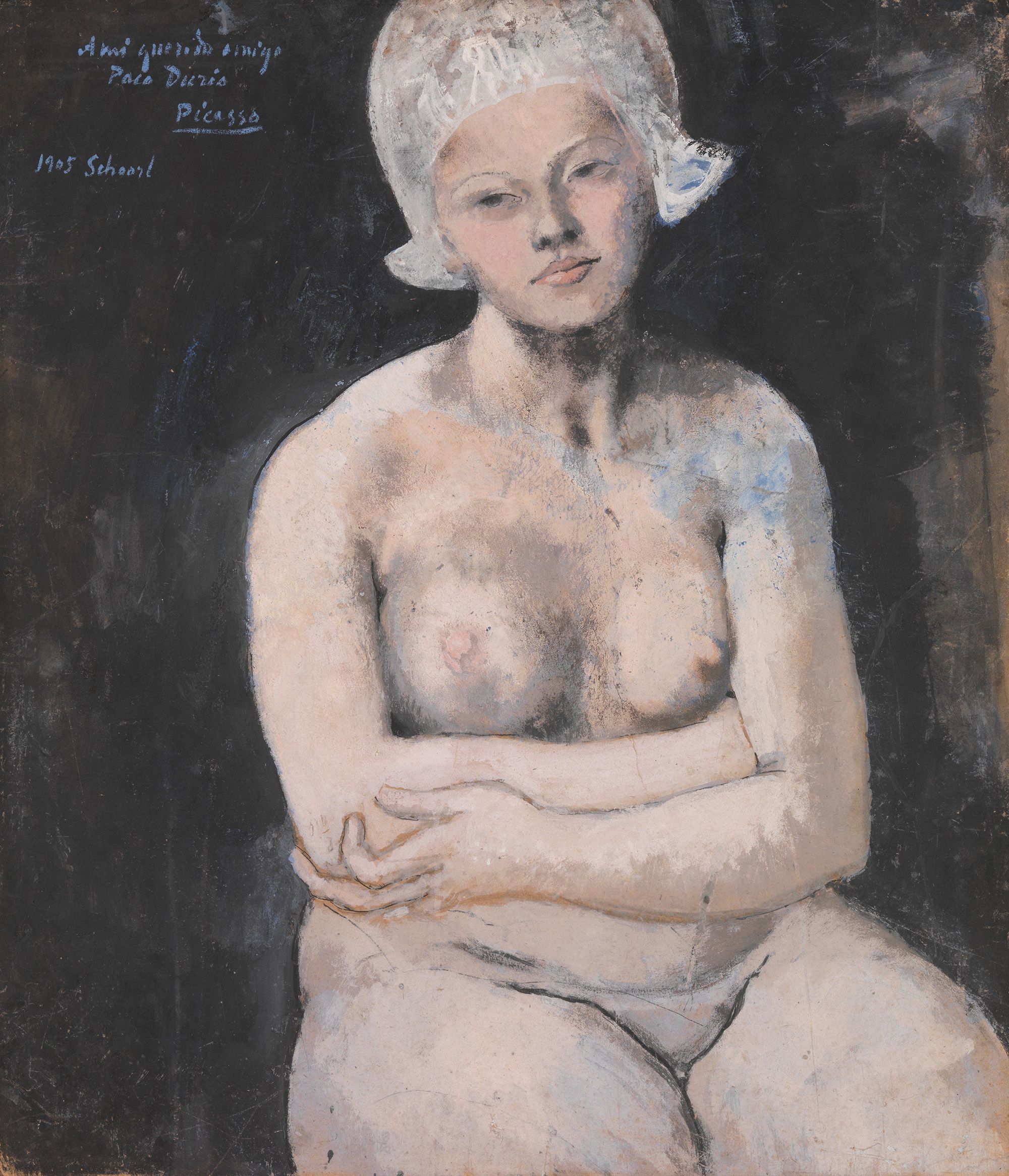
Comprising 15 loosely related etchings and drypoints, ‘La Suite des Saltimbanques’ marks a transitional moment in Picasso’s personal and artistic development. Created on the cusp of his Blue (1901–04) and Rose (1904–06) periods, these works are intimately connected with his paintings and drawings of the same era, including the Gallery’s own La Belle Hollandaise 1905 (illustrated).
La Belle Hollandaise 1905

Pablo Picasso, Spain 1881–1973 / La Belle Hollandaise 1905 / Gouache, oil and chalk on cardboard laid down on wood / 77.1 x 65.8cm / Purchased 1959 with funds donated by Major Harold de Vahl Rubin / Collection: Queensland Art Gallery | Gallery of Modern Art / © Succession Picasso/Copyright Agency / View full image
Widely considered the last great work of Picasso’s Blue period, the iconic first image in the suite — Le repas frugal (The frugal meal) (illustrated) — was purchased in 2015, and a further 12 images have been secured in the intervening years.
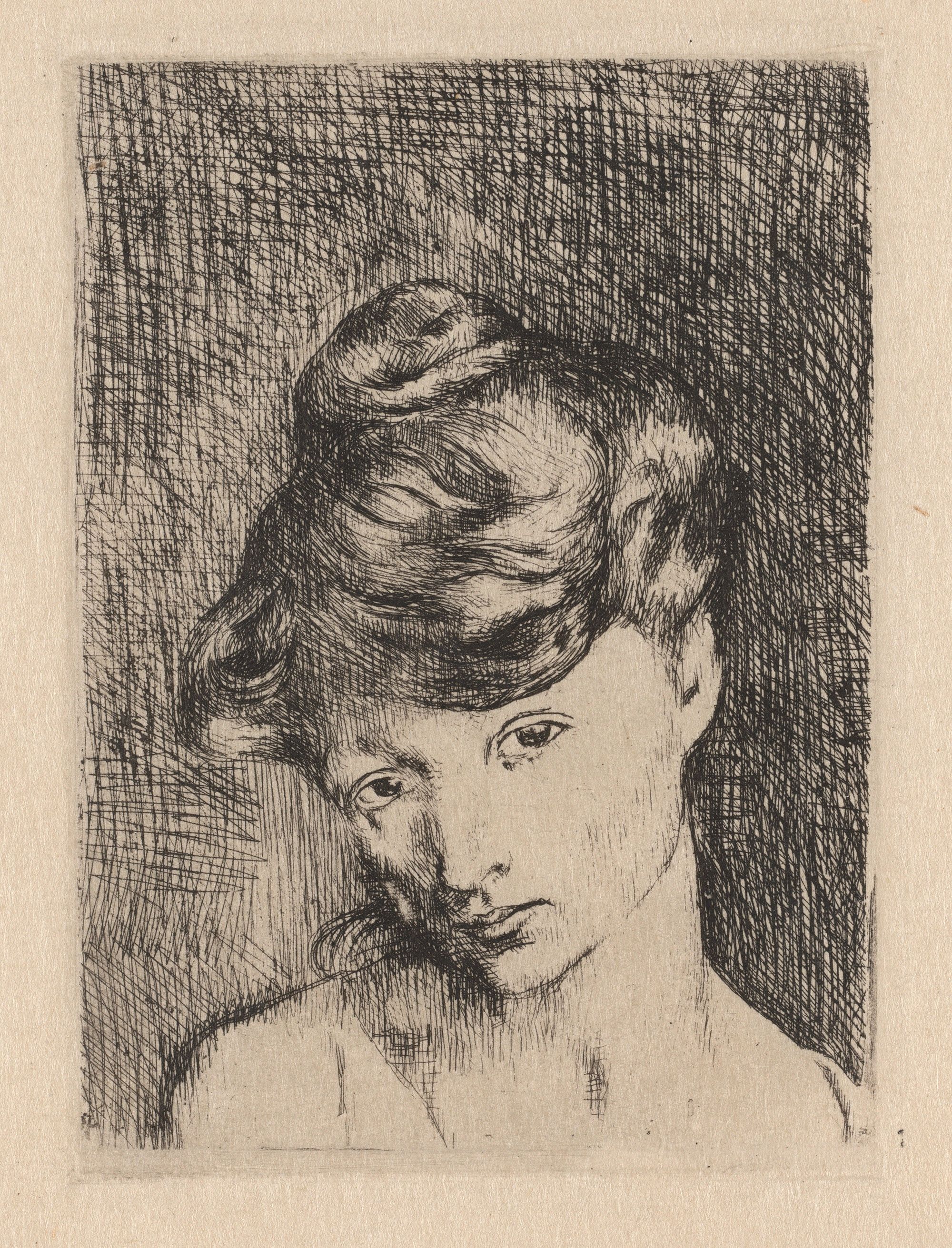
The initial prints in the suite focus on the vulnerability and poverty of the itinerant acrobats, while subsequent portrayals assume a warmer tone, with the artist often paying homage to their strong social bonds and familial contentment. Appearing as individuals and in groups, Picasso’s saltimbanques range widely in age and fulfil a variety of social roles, from clown and friend to mother and king. Other works in the series offer intimate depictions of the artist’s lover of the time, known only as Madeleine, revealing the degree to which Picasso’s life and art were entwined from the beginning.
Téte de Femme: Madeleine 1905

Pablo Picasso, Spain 1881–1973 / Téte de Femme: Madeleine (from 'La Suite des Saltimbanques' series) 1905, printed 1913 / Etching on Japan paper / 48.6 x 33.3cm / Purchased 2022 with funds from the Henry and Amanda Bartlett Trust through the QAGOMA Foundation / Collection: Queensland Art Gallery | Gallery of Modern Art / © Succession Picasso/Copyright Agency / View full image
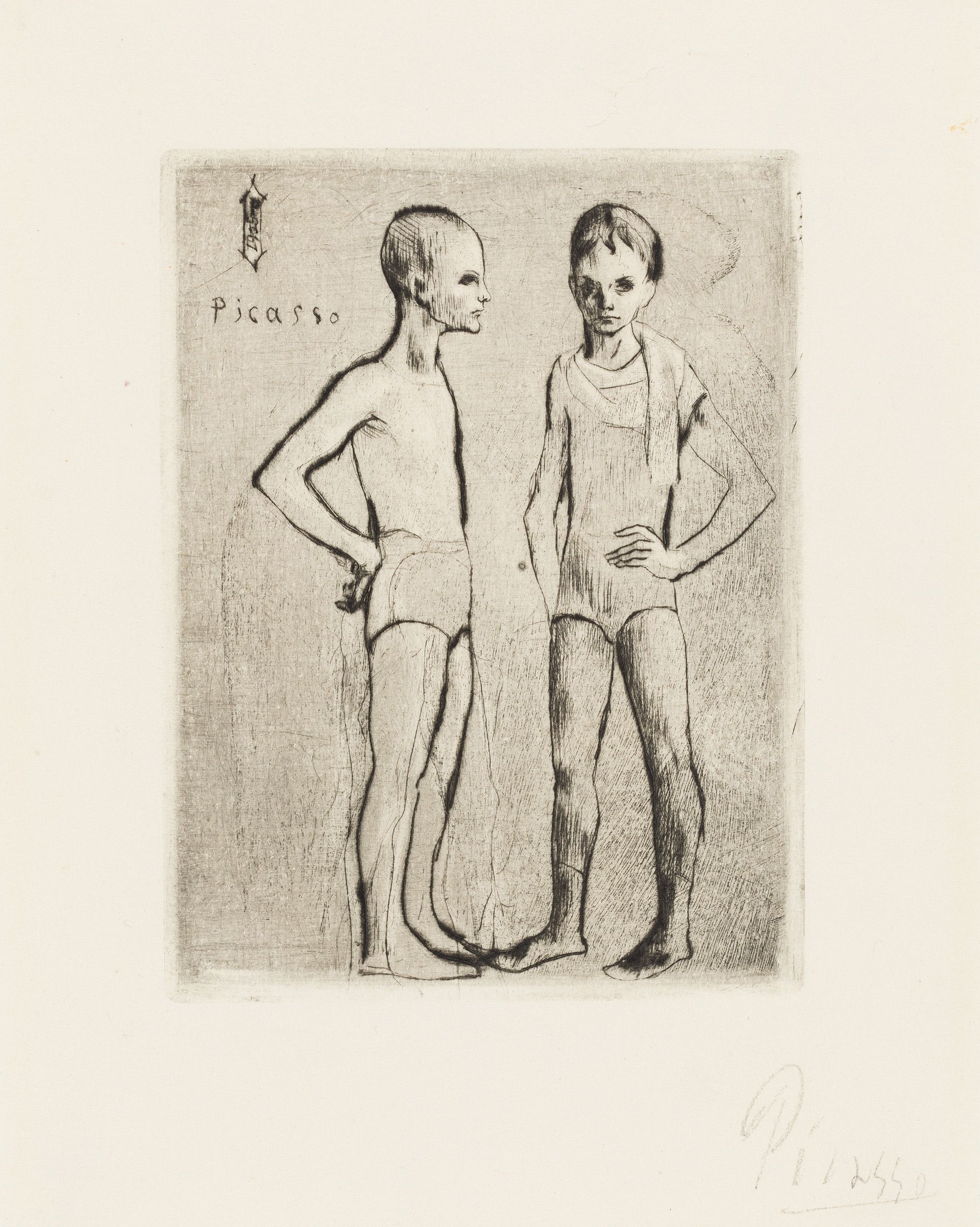
Les deux Saltimbanques (The two acrobats) 1905

Pablo Picasso, Spain 1881–1973 / Les deux Saltimbanques (The two acrobats) (from 'La Suite des Saltimbanques' series) 1905 / Drypoint on laid paper / 21.5 x 14.3cm / Purchased 2015 with funds from the Henry and Amanda Bartlett Trust through the QAGOMA Foundation / Collection: Queensland Art Gallery | Gallery of Modern Art / © Succession Picasso/Copyright Agency / View full image
‘La Suite des Saltimbanques’ reveals the young artist’s growing captivation with the possibilities of printmaking, after fellow Spanish artist and engraver Ricard Canals introduced him to the etching process.
Picasso originally turned to printmaking in the hope that a mass-produced medium might improve his financial circumstances; however, few prints sold when they were first exhibited, and Picasso gave many of them away to his poet friends. It was only after 1913, when the influential dealer Ambroise Vollard purchased the etching plates and published all 15 images as a suite, that the prints became widely known and collectible.
Ushering in a lifelong experimentation with printmaking, ‘La Suite des Saltimbanques’ offers extraordinary insights into Picasso’s formative artistic concerns and the social milieu he inhabited at the time. In these sensitive and sympathetic portraits, he conveys the heft of a body, the texture of hair, a playful pose or a tender gesture with remarkable economy and elegance of line, ennobling figures who ordinarily existed on the fringes of society.
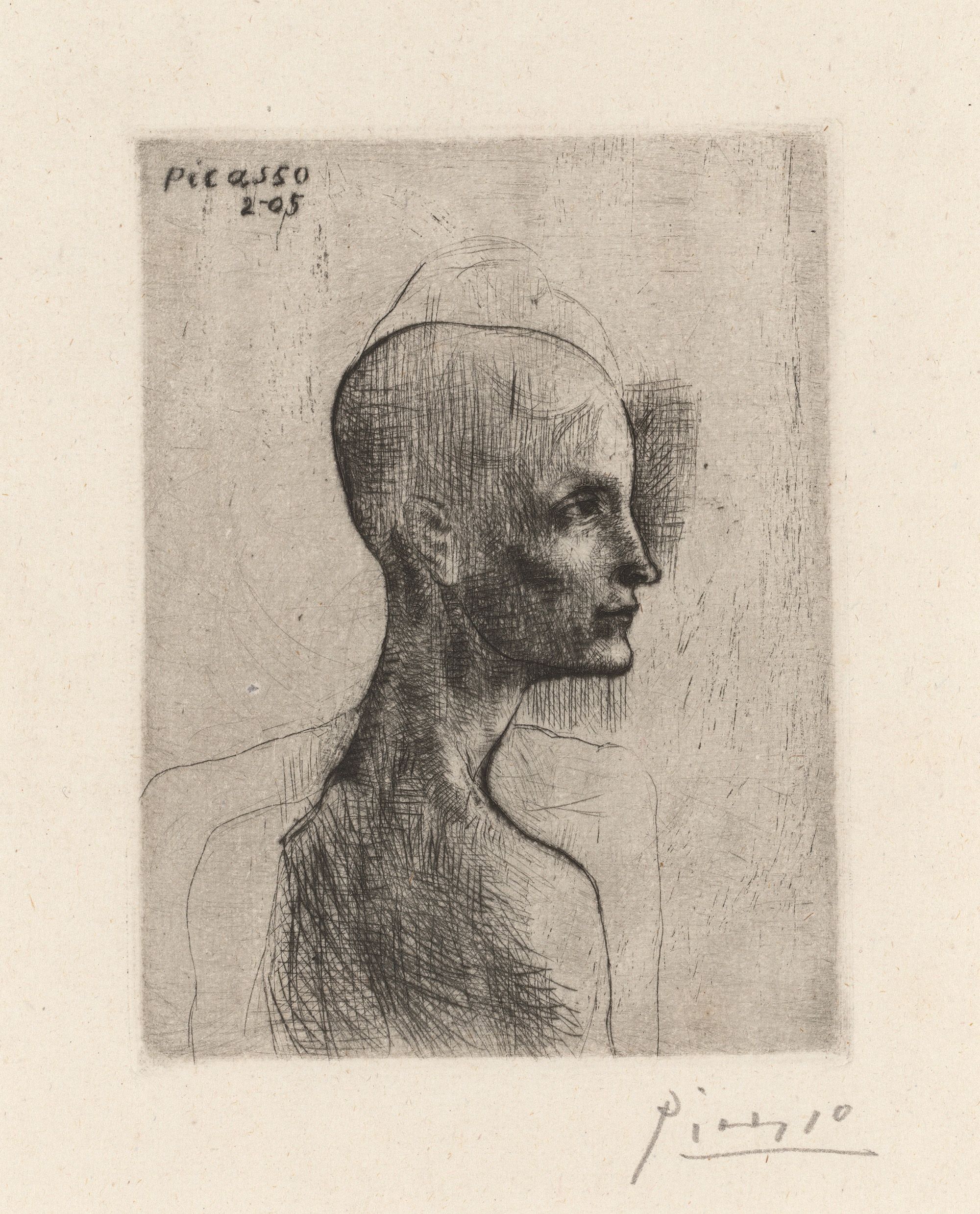
Buste d'homme 1905

Pablo Picasso, Spain 1881–1973 / Buste d'homme (from 'La Suite des Saltimbanques' series) 1905, printed 1905 / Drypoint on vergé ancient paper / 44.7 x 29.5cm / Purchased 2022 with funds from the Henry and Amanda Bartlett Trust through the QAGOMA Foundation / Collection: Queensland Art Gallery | Gallery of Modern Art / © Succession Picasso/Copyright Agency / View full image
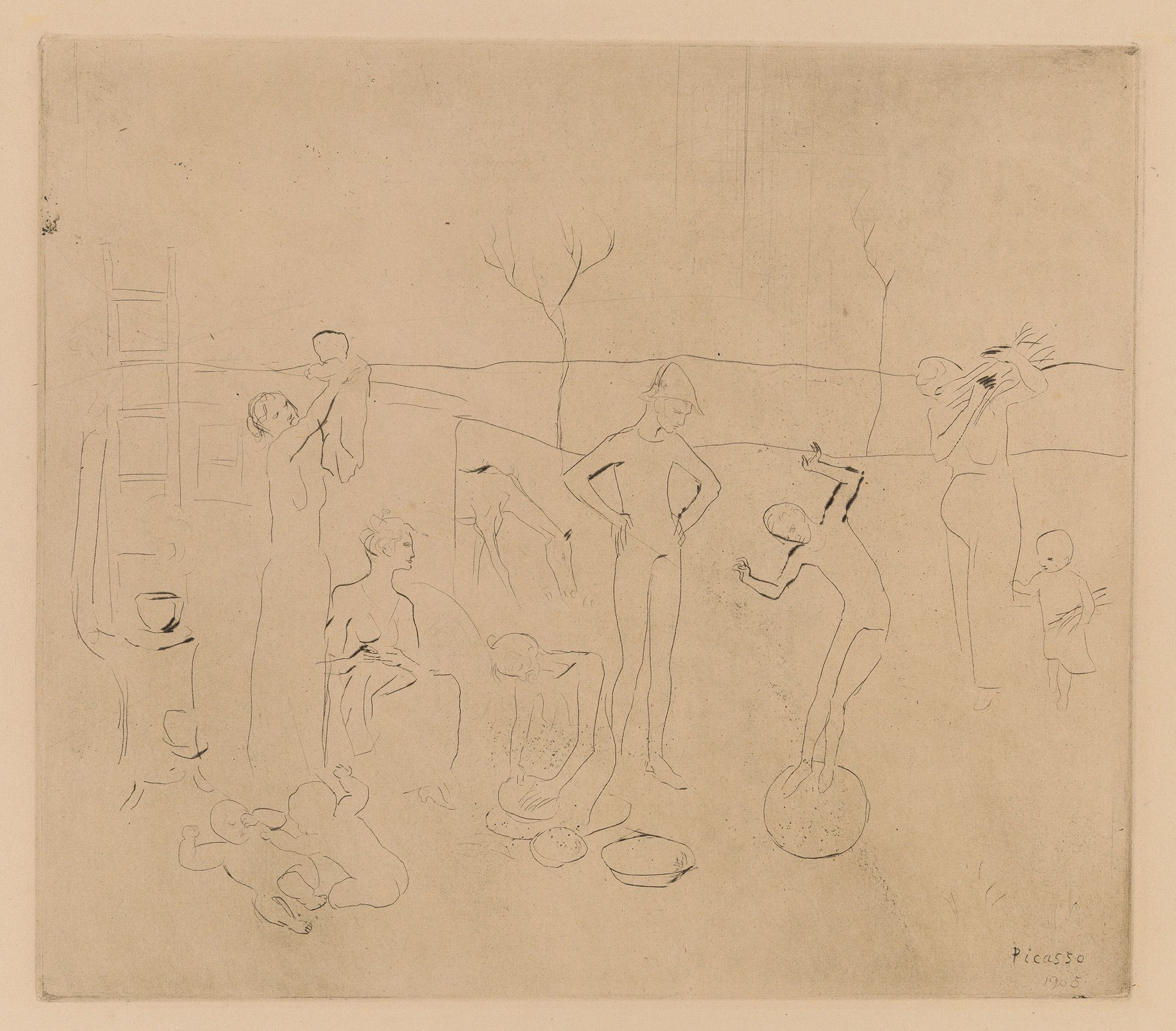
Les Saltimbanques (The circus performers) 1905

Pablo Picasso, Spain 1881–1973 / Les Saltimbanques (The circus performers) (from 'La Suite des Saltimbanques' series) 1905, published 1913 / Drypoint on Van Gelder Zonen wove paper / 31.7 x 35.2cm (sight) / Purchased 1992. QAG Foundation / Collection: Queensland Art Gallery | Gallery of Modern Art / © Succession Picasso/Copyright Agency / View full image
Nina Miall is Curator, International Art, QAGOMA
On display in International Art Collection
Queensland Art Gallery
Galleries 7, 8 & 9 (Philip Bacon Galleries)
Queensland Art Gallery | Gallery of Modern Art (QAGOMA)
Brisbane, Australia