
Go back in time when a paddock became the Brisbane township Kingston

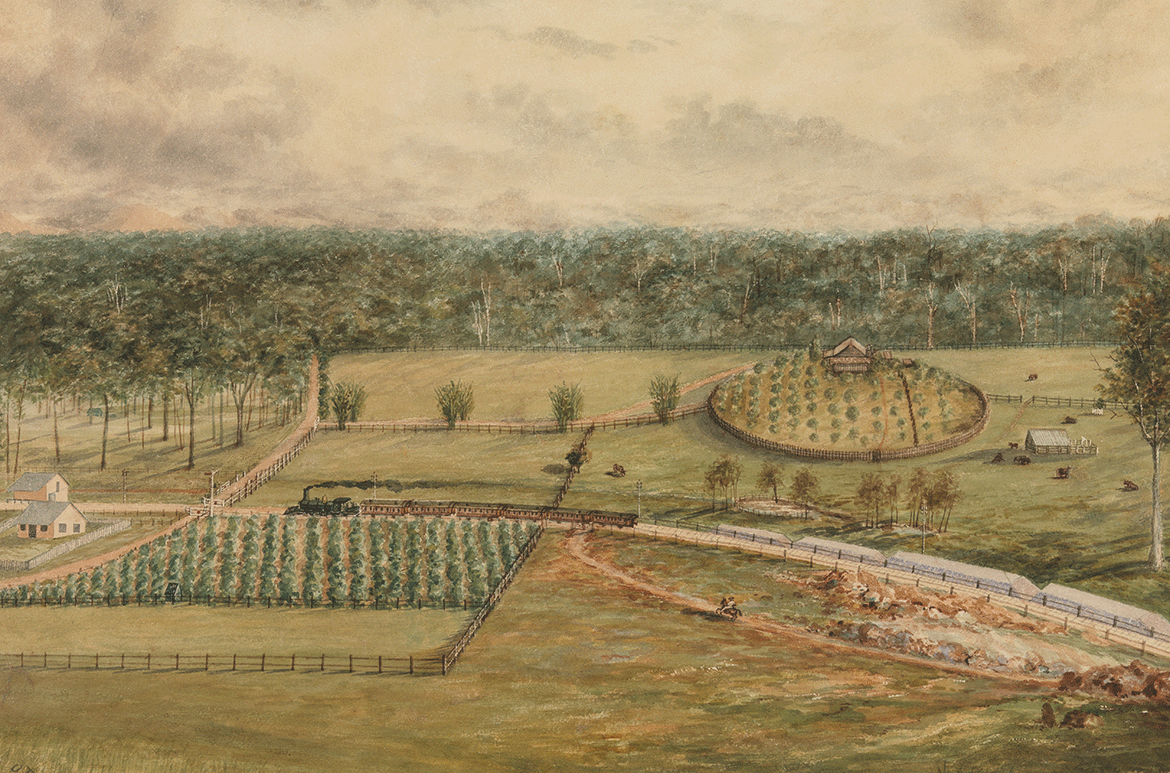
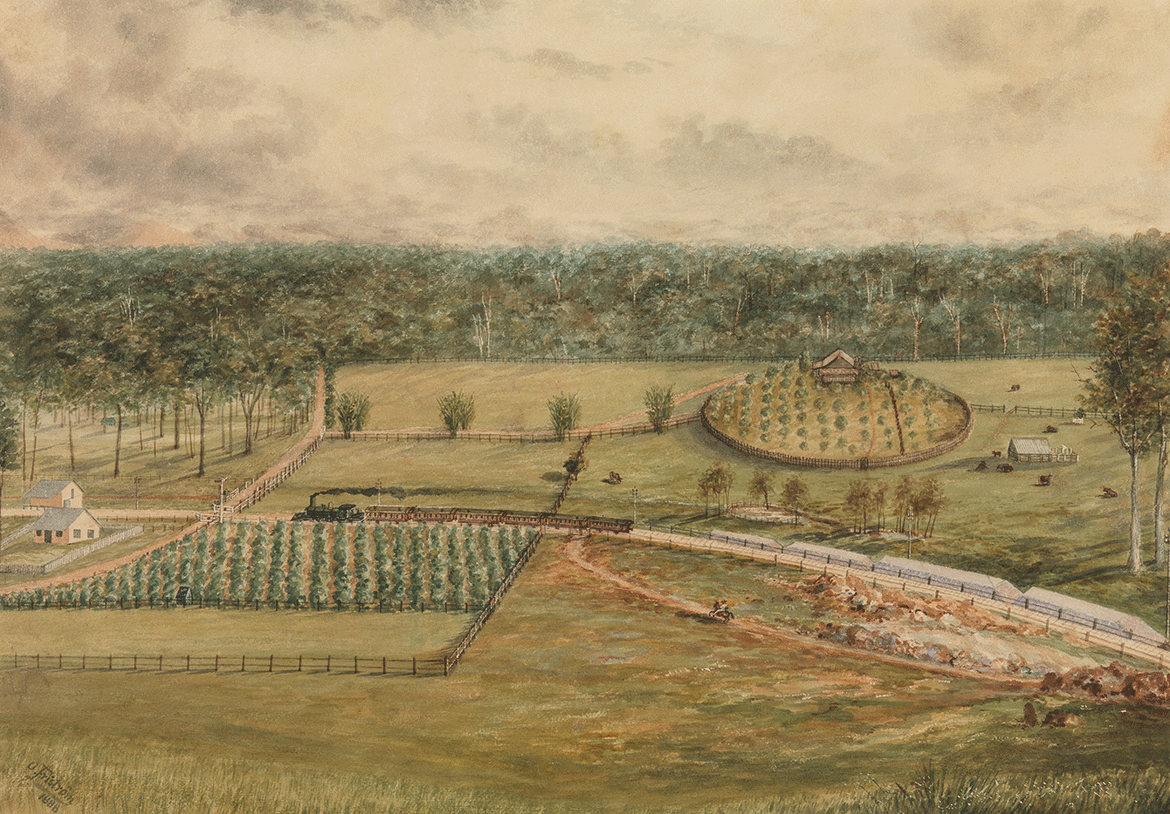
Oscar Friström, Sweden/Australia 1856-1918 / Kingston Estate, South Coast Line (detail) 1888 / Watercolour on paper / 47.4 x 66cm / Purchased 2000 / Collection: Queensland Art Gallery | Gallery of Modern Art / View full image
The suburb of Kingston, an inner suburb of the City of Logan to the south of Brisbane, was named after one of the first European land owners, Charles (1831-1094) and Harriet (1833-1911) Kingston. Kingston and his family arrived in Australia from England in 1857 and eventually the couple took up some 200 acres of Crown land near Scrubby Creek, a tributary of the Logan River, in 1872. Their original home 'Oakwood' served as the site for the first Post Office in the area from 1877.
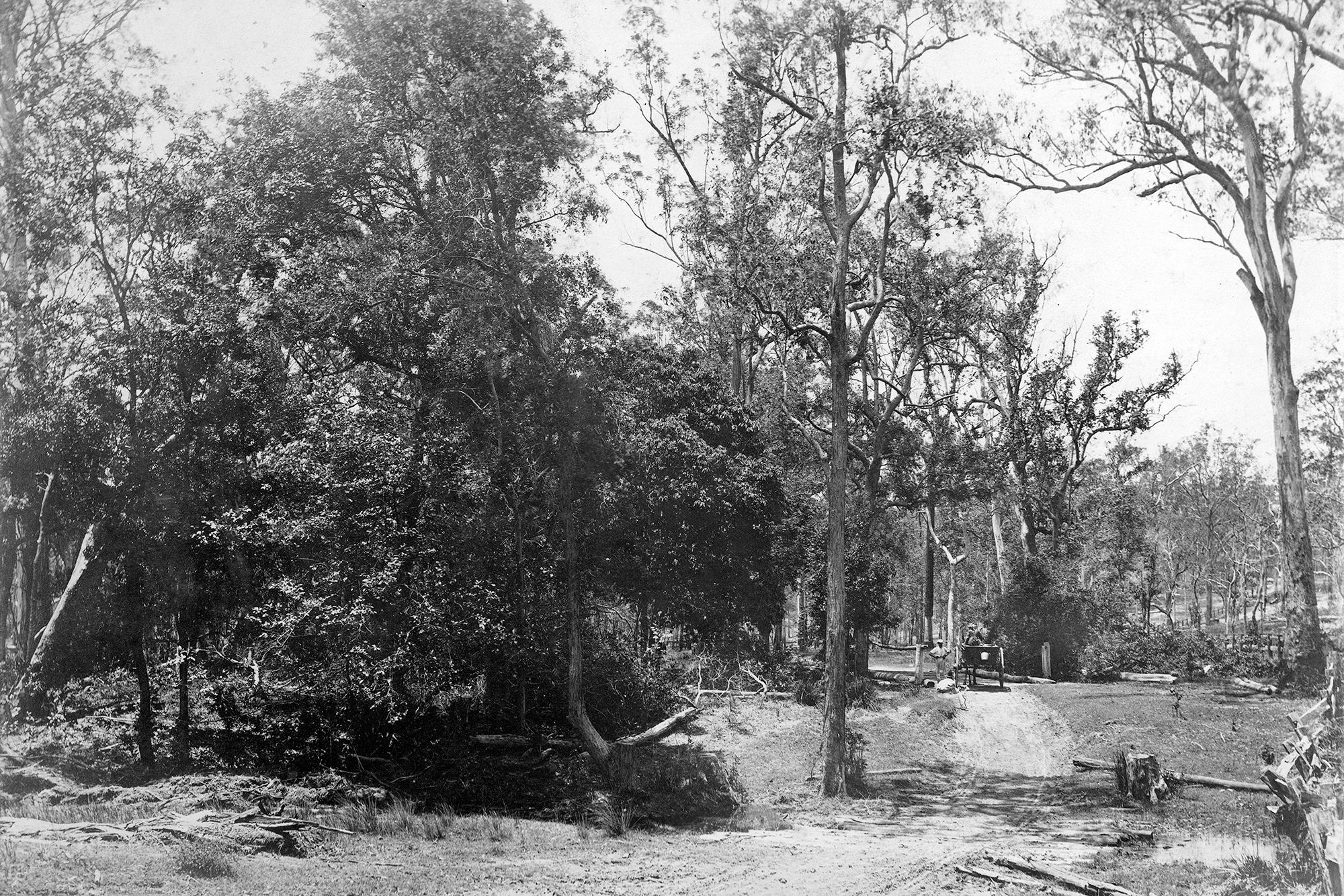
Early industry was timber, supplying the local sawmill, and once enough land was cleared, expanding to farming of cotton and sugar, then branching out to dairy and fruit groves, with the Kingston’s specialising in grapes and wine.
Scrubby Creek, c.1870s

Scrubby Creek, Kingston, c.1870s / 99183880436702061 / Courtesy: John Oxley Library, State Library of Queensland, Brisbane / View full image
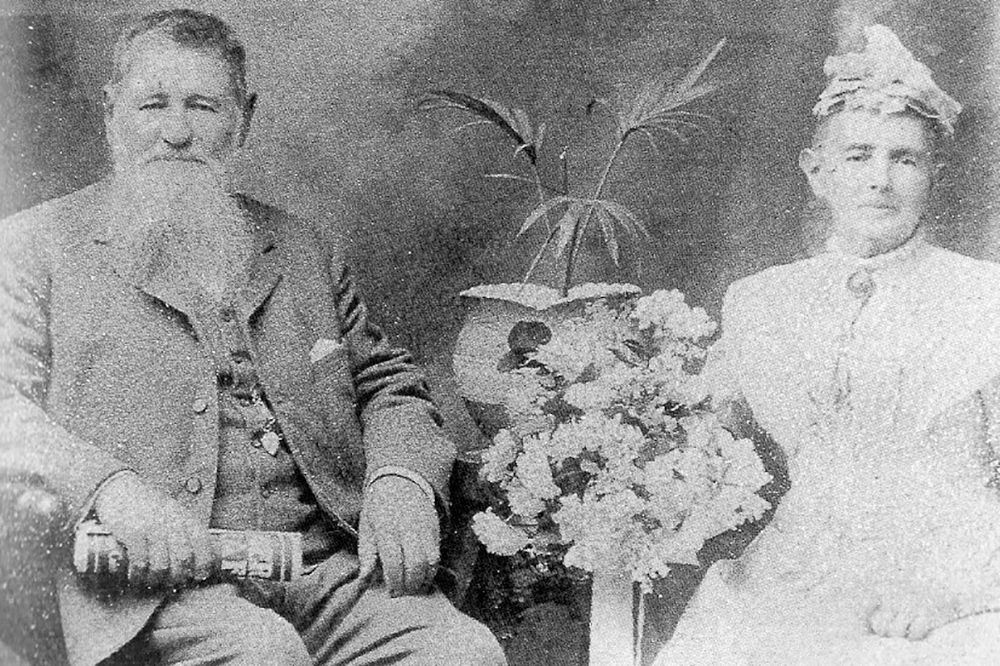
Charles and Harriet Kingston, 1904

Charles and Harriet Kingston at 'Kingston House', 1904 / Courtesy: Logan Village History / View full image
The Kingston’s successfully developed their property and then enjoyed even greater prosperity when the railway line from South Brisbane reached the area by 1885. In October that year, 72 subdivided blocks of land named ‘Kingston Railway Station Estate’ were advertised to be auctioned. A poster map (illustrated) advertising the auction shows that the blocks were close to the station and a selling feature were the picturesque views from both the railway and the estate.
Kingston Railway Station Estate sale by auction poster, 1885

Kingston Railway Station Estate, sale by auction, 1885 / Courtesy: John Oxley Library, State Library of Queensland, Brisbane / View full image
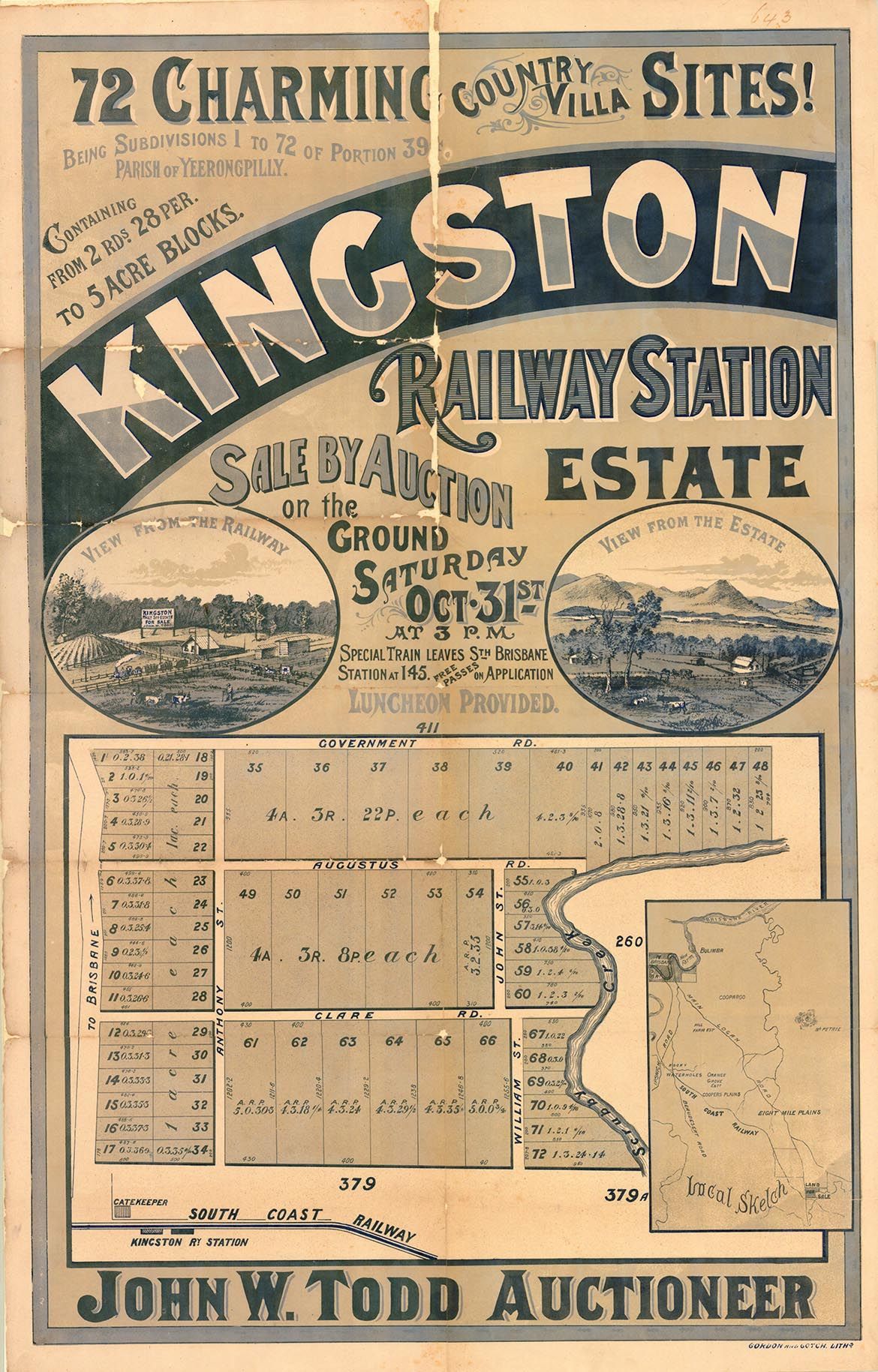

Detail of Kingston Railway Station Estate, sale by auction, 1885 / Courtesy: John Oxley Library, State Library of Queensland, Brisbane / View full image
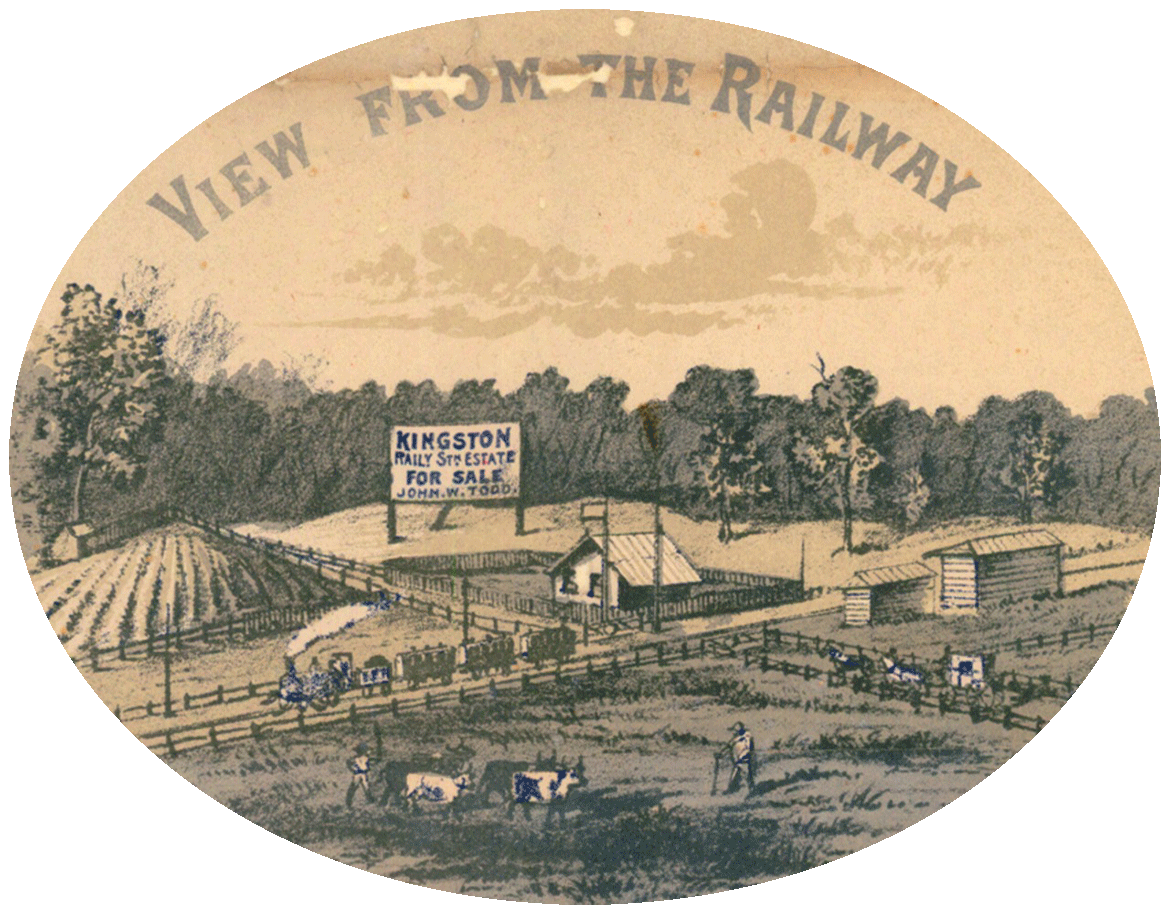

Detail of Kingston Railway Station Estate, sale by auction, 1885 / Courtesy: John Oxley Library, State Library of Queensland, Brisbane / View full image
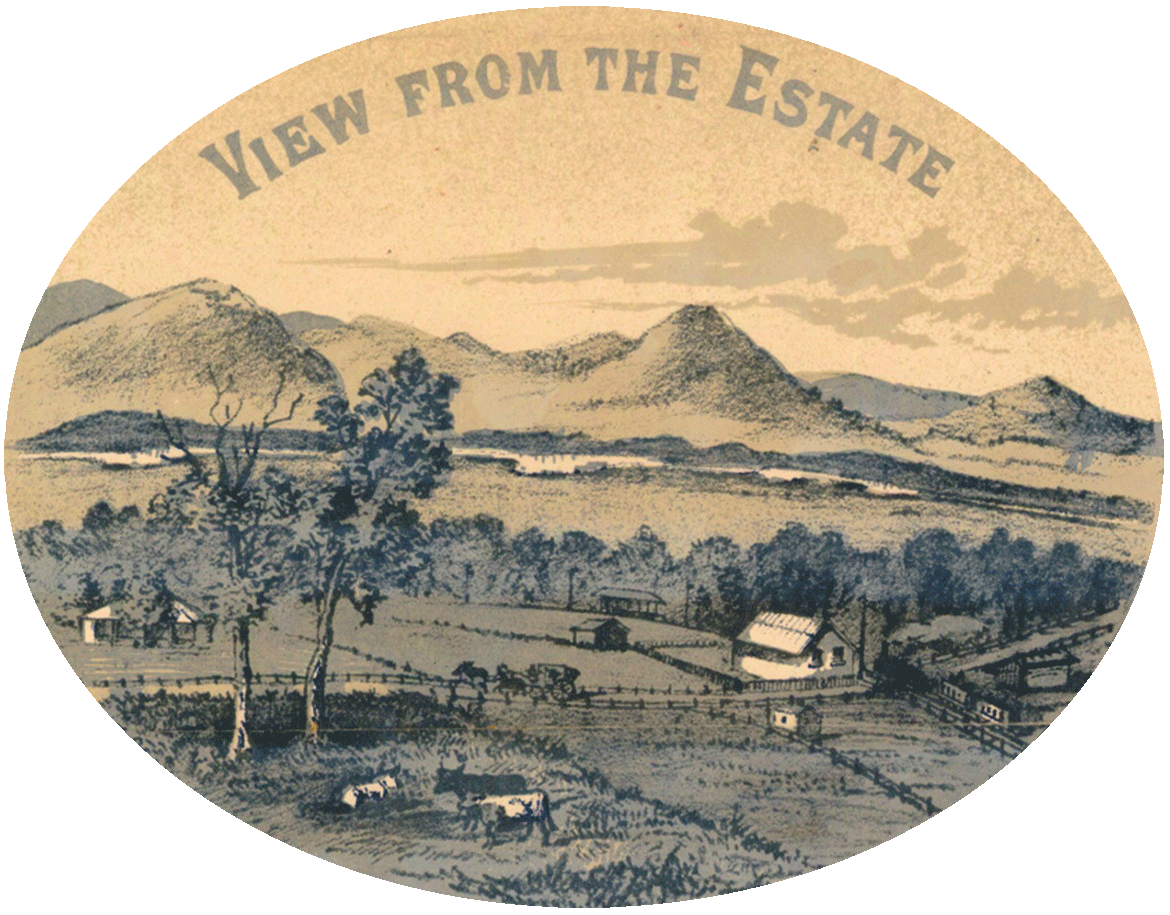
The first railway in Brisbane was built in 1879, when the line from the western interior was extended to the CBD from Ipswich to Roma Street Station on the northern side of the Brisbane River. South Brisbane Station on the corner of Melbourne and Grey Streets — originally known as Melbourne Street Station until 1891 (illustrated) with the opening of the current building — was intended as a temporary terminus, pending an extension of the South Coast Line across the river, however this was not implemented until 1978 via the Merivale Bridge into Roma Street.
Melbourne Street Railway Station, c.1891

Melbourne Street Railway Station, South Brisbane, c.1891 / 99183507167002061 / Courtesy: John Oxley Library, State Library of Queensland, Brisbane / View full image
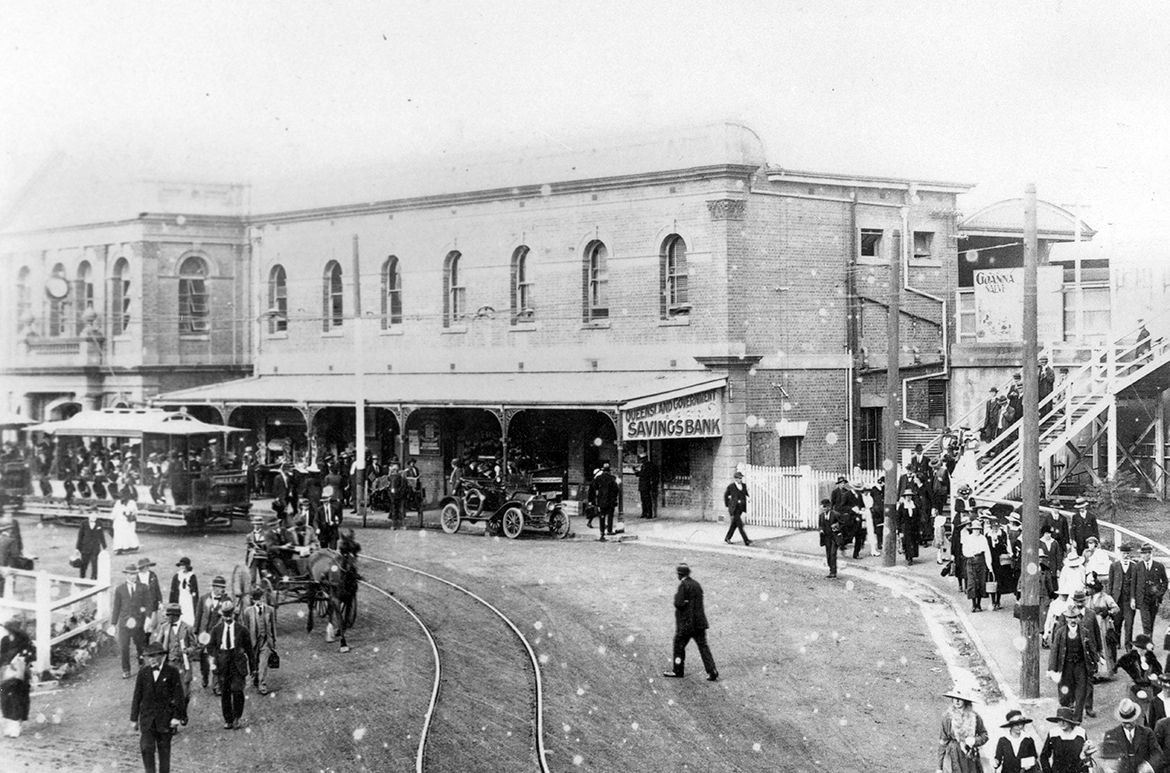
Travel time from Melbourne Street Station to Kingston — a journey of around 25km — was estimated at an hour to 90 minutes, depending on stops and express services. The South Brisbane Station served as a key hub for the South Coast Line connecting Queensland's capital to the growth in Logan and Beenleigh and reaching the burgeoning coastal town of Southport on the Gold Coast by 1889 and Tweed Heads on the New South Wales border in 1903.
The line built to transport farming goods and timber, and serving growing suburban needs, significantly boosted tourism to the beachside suburbs by reducing passenger travel time from days to hours, however the service from South Brisbane to Tweed Heads ended in 1961, and the Southport line ended in 1964 with Beenleigh replaced as the new terminus when improved roads made car and bus travel more appealing than the some 3-hour steam train journey to the coast.
Steam Train, c.1880s

Steam train at Roma Street Station, Brisbane c.1880-90 / 183736 / Courtesy: John Oxley Library, State Library of Queensland, Brisbane / View full image
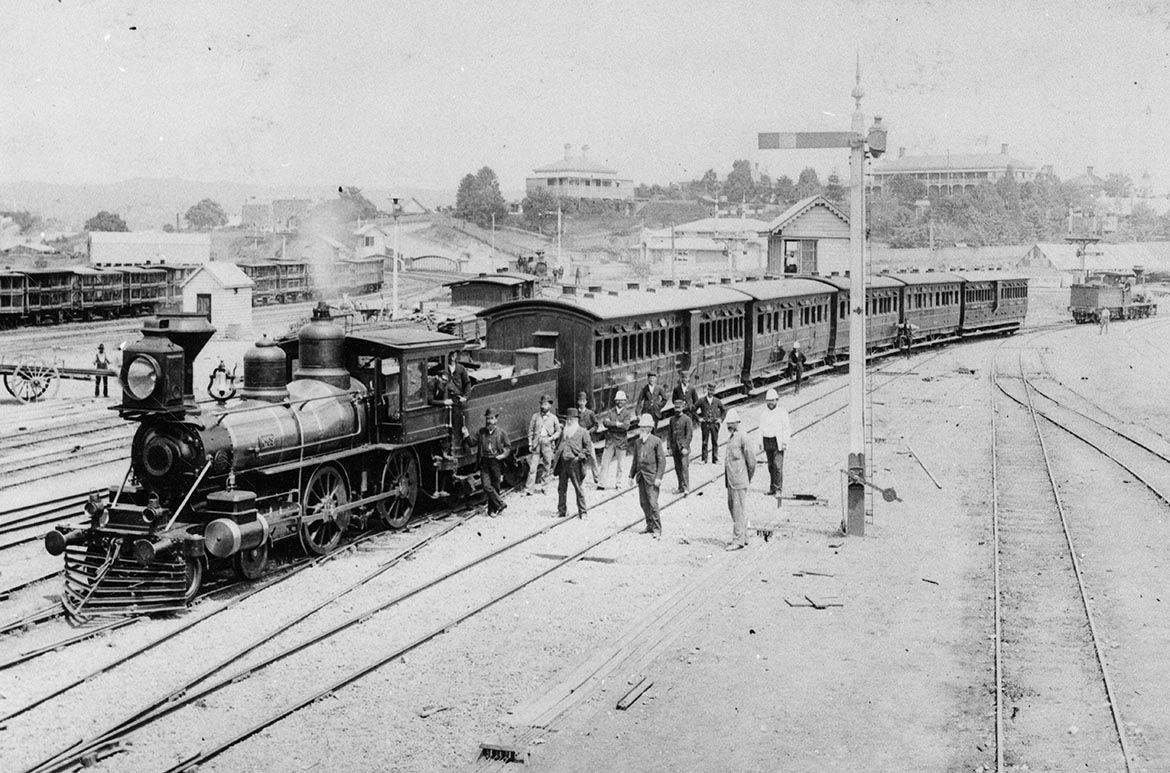
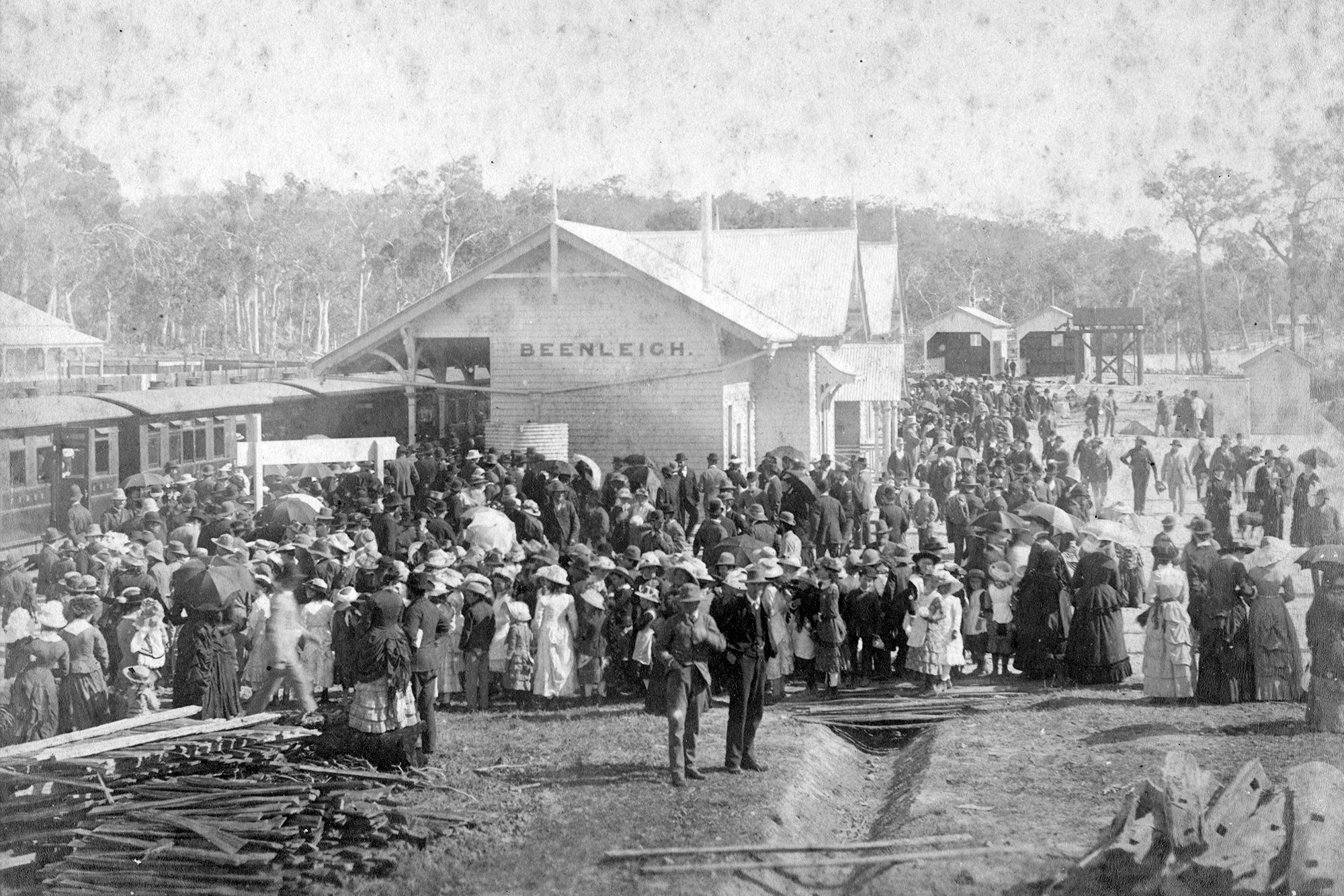
Opening of the Beenleigh Railway Station, 1885

Crowds gathered for the opening of the Beenleigh Railway Station, 25 July 1885 / 99290723402061 / Courtesy: John Oxley Library, State Library of Queensland, Brisbane / View full image
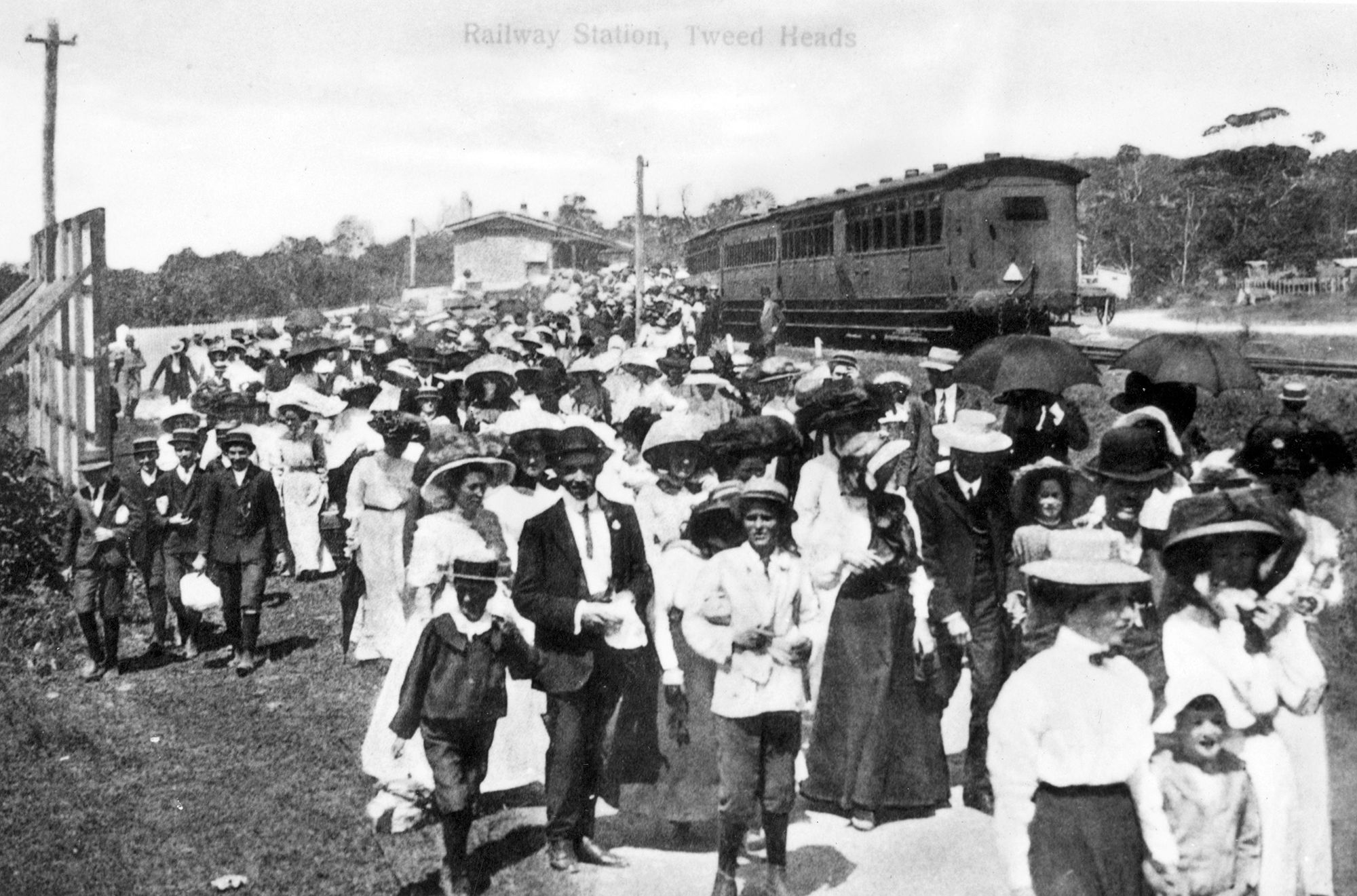
Tweed Heads Railway Station, New South Wales, c.1911

Crowds at the Tweed Heads Railway Station, New South Wales, c.1911 / 99183513014202061 / Courtesy: John Oxley Library, State Library of Queensland, Brisbane / View full image

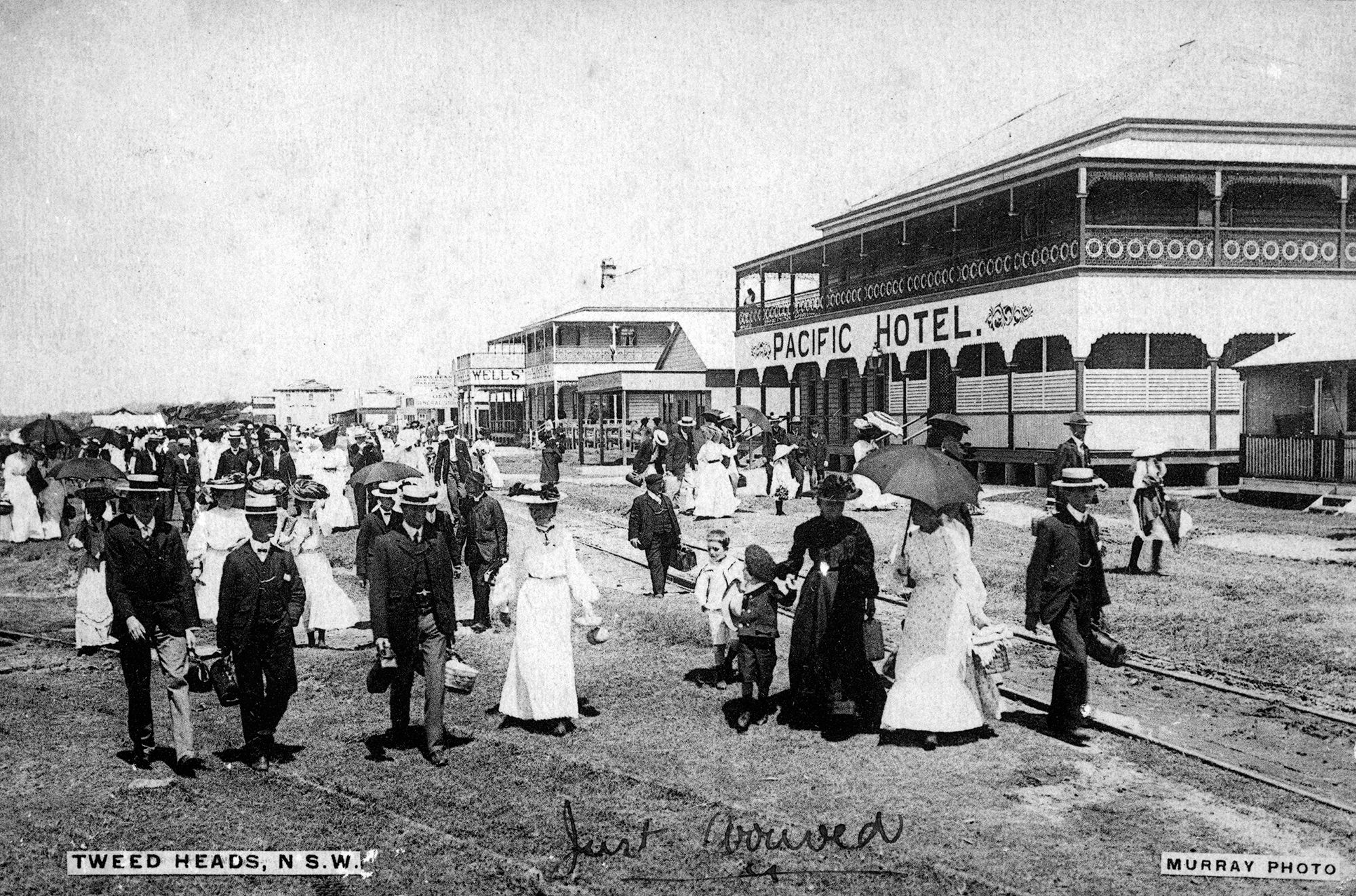
Visitors disembarking at Tweed Heads Railway Station, New South Wales, c.1911 / 99183859395202061 / Courtesy: John Oxley Library, State Library of Queensland, Brisbane / View full image
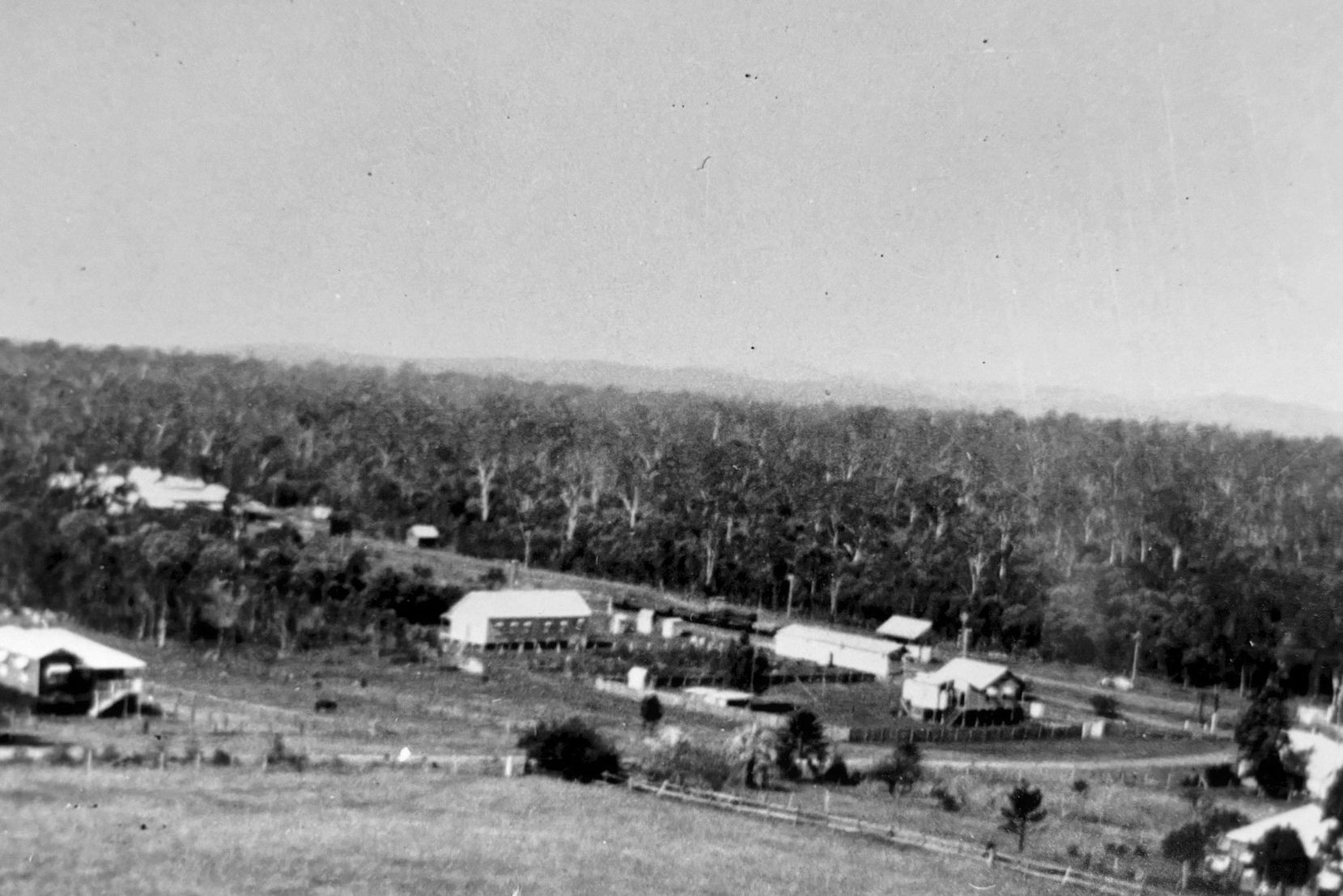
When the Kingston’s returned from a visit to England in 1888, local artist Oscar Friström was asked to record their success with the painting Kingston Estate, South Coast Line 1888 (illustrated). The family went on to build a larger residence ‘Kingston House’ on a hill overlooking the railway station in 1890, which with its ballroom and tennis court, became a landmark and the social centre for the district. That same year, the township was officially named Kingston, formalised by the Surveyor General, however the name was already in use after the railway went through. Kingston's census population was recorded at 109 by 1911.
Oscar Friström Kingston Estate, South Coast Line (and detail) 1888

Oscar Friström, Sweden/Australia 1856-1918 / Kingston Estate, South Coast Line 1888 / Watercolour on paper / 47.4 x 66cm / Purchased 2000 / Collection: Queensland Art Gallery | Gallery of Modern Art / View full image
Similar view across Kingston Estate toward the Kingston Railway Station (centre), 1925

Similar view across Kingston Estate toward the Kingston Railway Station (centre), 1925 / Courtesy: John Oxley Library, State Library of Queensland, Brisbane / View full image
Oscar Friström
A self-taught artist, Carl Magnus Oscar Friström (1856-1918) produced this high-vantage view of the Kingston’s estate featuring a circular paddock with post-and-rail fence and an orchard of fruit trees as cattle graze in a meadow nearby. A band of thick scrub forms a uniform barrier in the background confirming that the productivity of orchard and farm have been won from taming the Australian bush.
Born on the island of Sturkö off the south coast of Sweden, after Friström arrived in Australia he settled in Brisbane in 1884 where he first exhibited landscapes and recorded clients properties, but he soon became recognised as Queensland’s premier portrait painter, and turned to producing portraits of his clients and social identities rather than their properties. In 1885, he went into a partnership with the Elite Photo Co., and four years later opened his own studio in Adelaide Street and then in Queen Street by the following decade. During the 1890s, he was the art master at All Hallows’ Convent School.
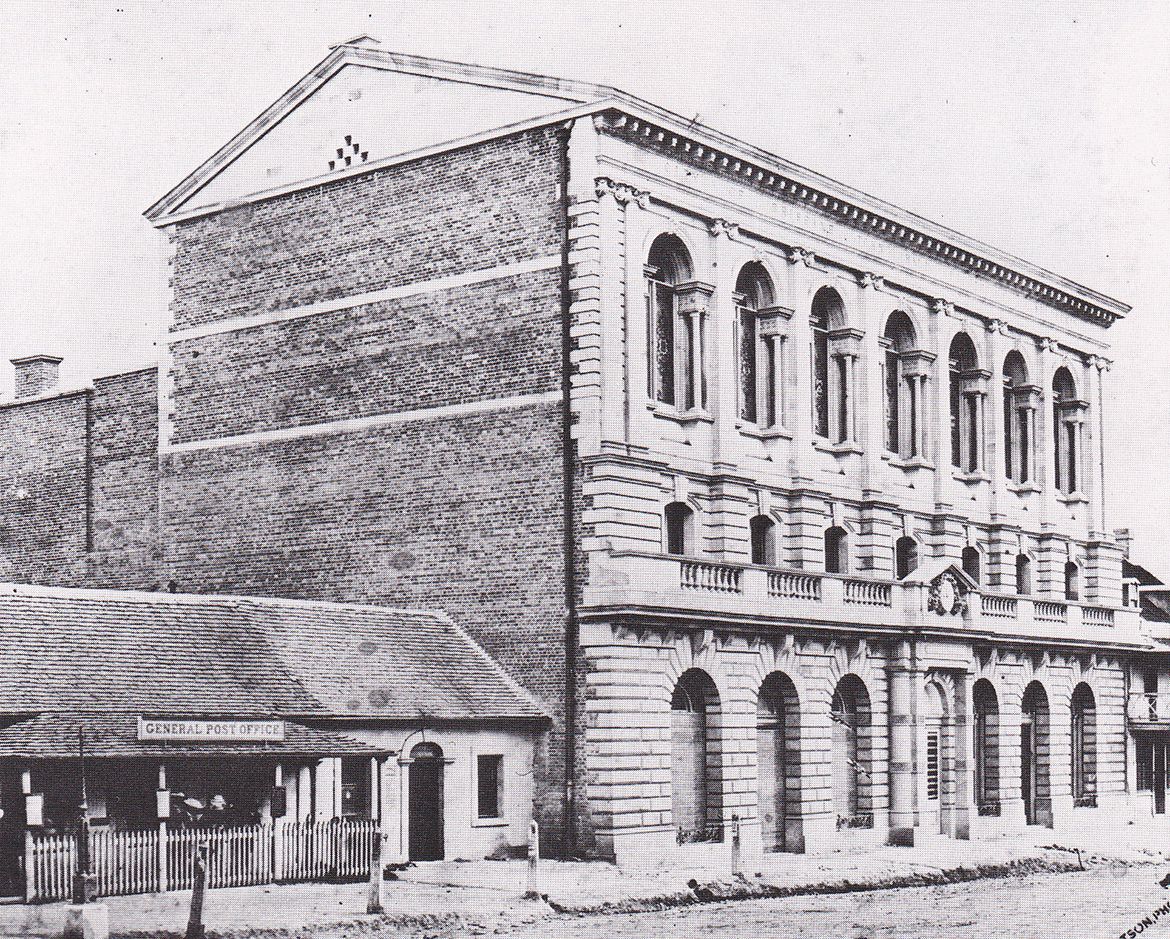
Friström is an important figure in the history of Queensland art as he was, with LWK Wirth (1858 –1950) and Isaac Walter Jenner (1836-1902), co-founder of the Queensland Art Society in 1887 and a member of the Society’s first committee. The Queensland capital had few professional artists at the time and not until 1895 did the Queensland National Art Gallery open at temporary premises in the old Town Hall on Queen Street (illustrated).
Queensland National Art Gallery, Brisbane Town Hall, 1895

Old Brisbane Town Hall building, c.1870 / 179307 / Courtesy: John Oxley Library, State Library of Queensland, Brisbane / View full image
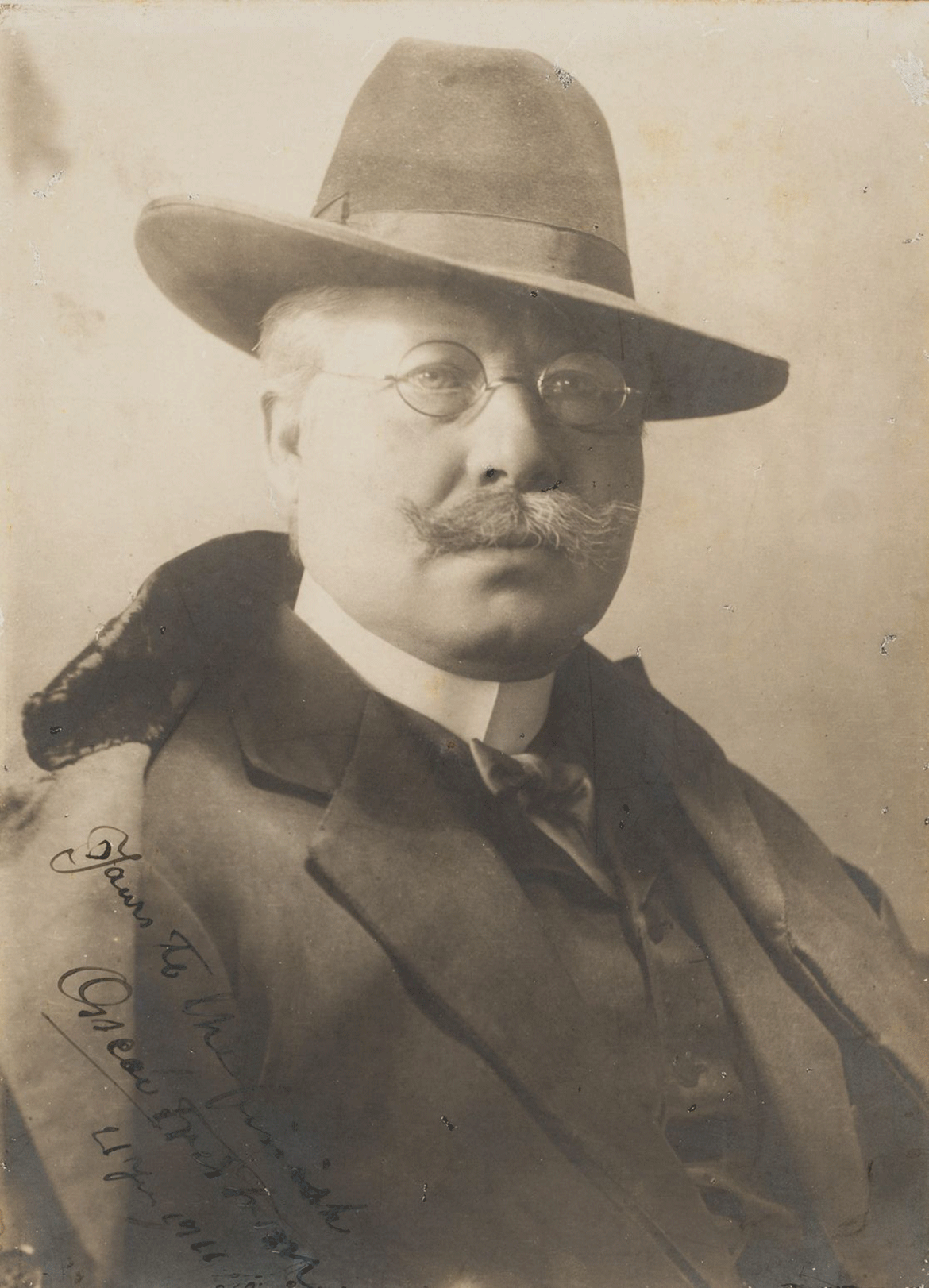
Oscar Friström, c.1911

Oscar Friström c.1911 / Gift of Edward Colclough / Collection: QAGOMA Research Library / View full image
Brisbane in the late Nineteenth Century
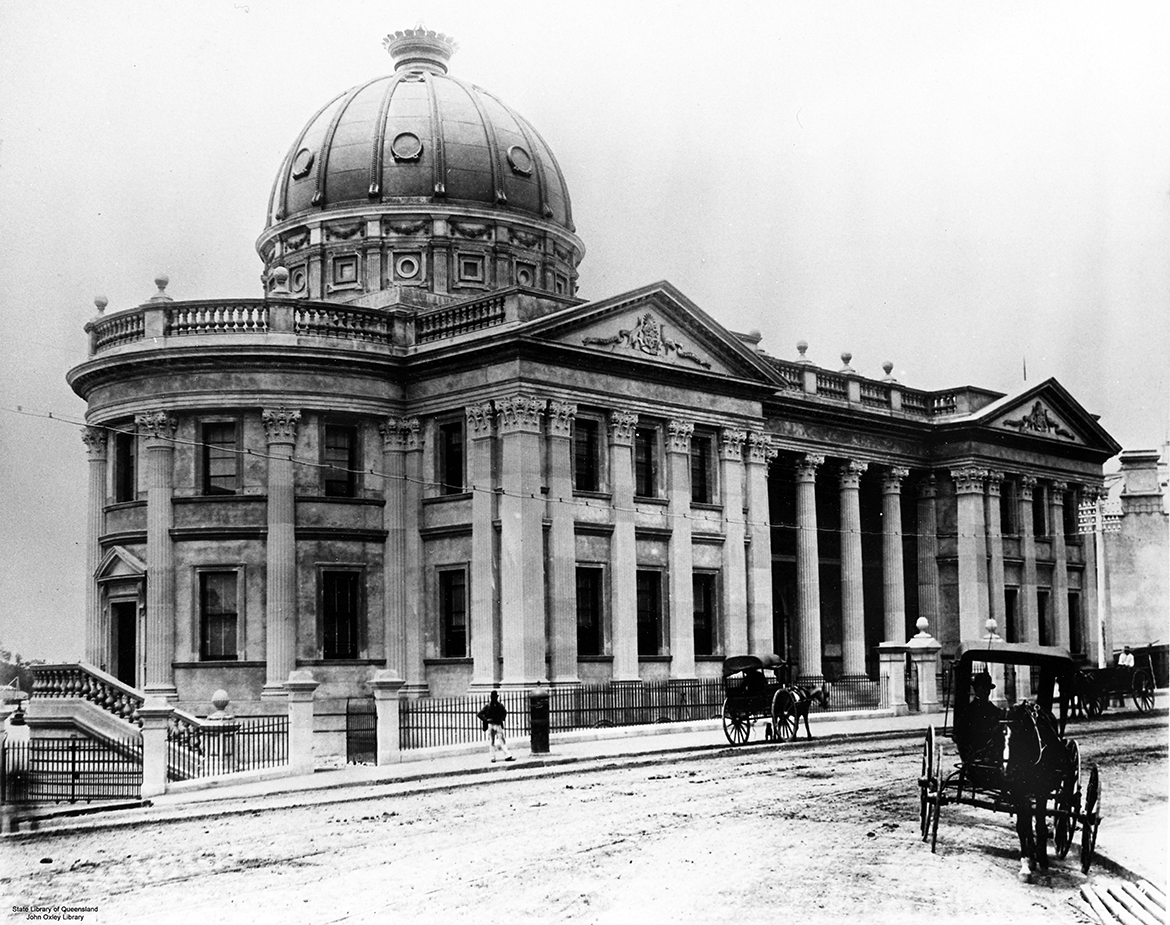
Brisbane was proclaimed a municipality in 1859 and became the capital of the newly independent Queensland that same year, however it was not gazetted a city until 1902. Originally the neighbouring City of Ipswich was intended to be the capital, but it proved to be too far inland. Between 1881 and 1891 metropolitan Brisbane’s population grew from 37,000 to 100,000, and at the time Oscar Friström painted Kingston Estate, South Coast Line, Queensland’s first permanent Customs House (1886-89) opened in Queen Street (illustrated) to collect duties on imported products as Brisbane became a busy port city.
Customs House, 1889

Customs House Brisbane, 1889 / 100069 / Courtesy: John Oxley Library, State Library of Queensland, Brisbane / View full image
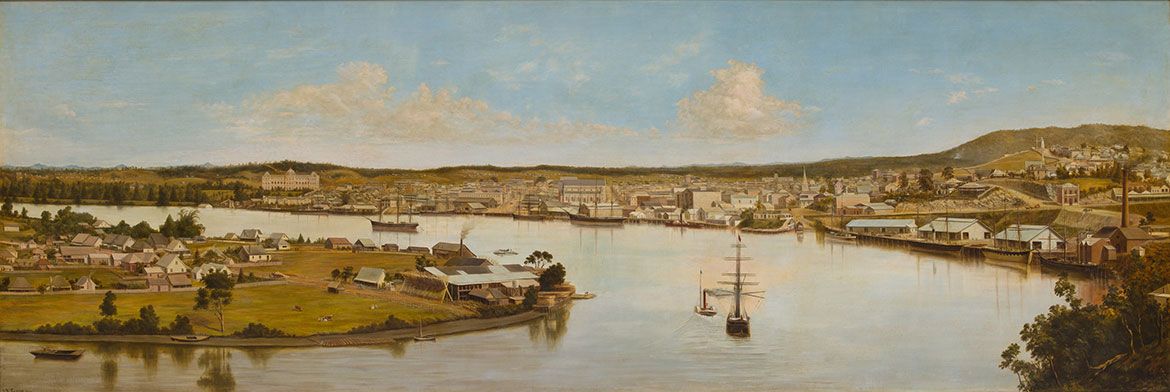
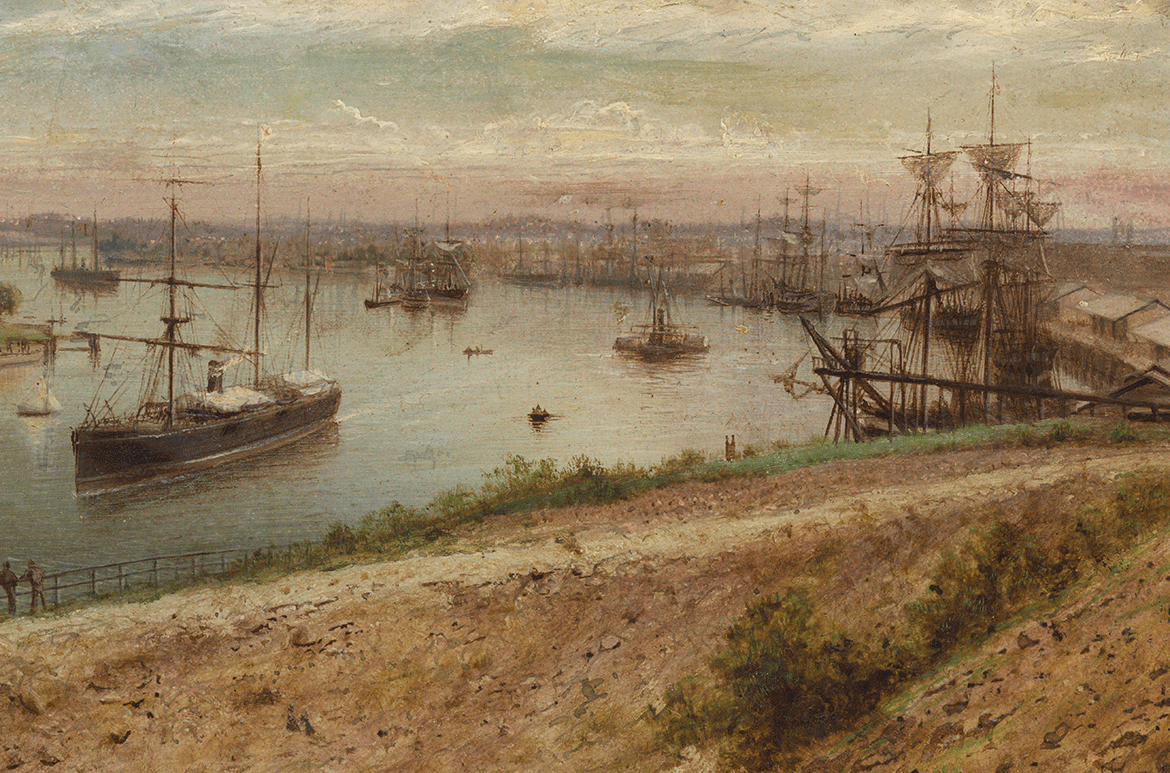
As documented by JA (Joseph Augustine) Clarke (1840–90) and Isaac Walter Jenner (1836–1902) (both illustrated), the Brisbane river had nearly continuous wharves surrounding the Customs House from Petrie Bight to the Botanical Gardens; and opposite from Kangaroo Point to the Victoria Bridge at South Brisbane.
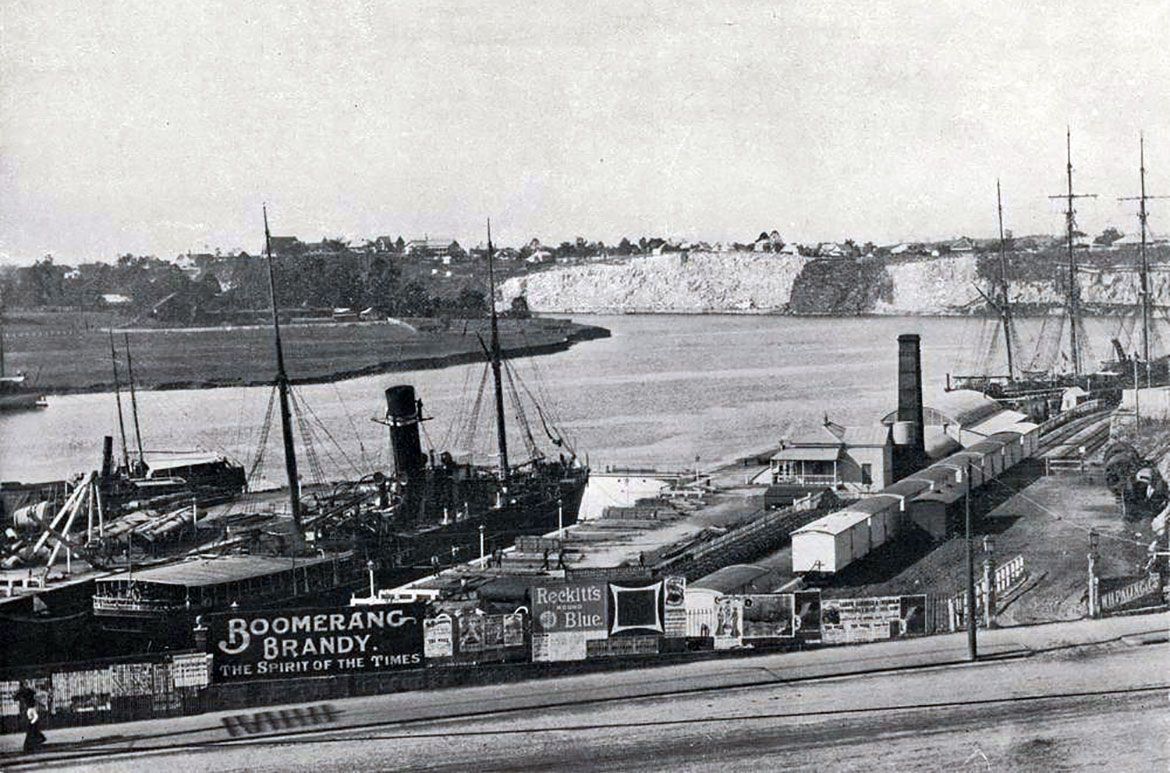
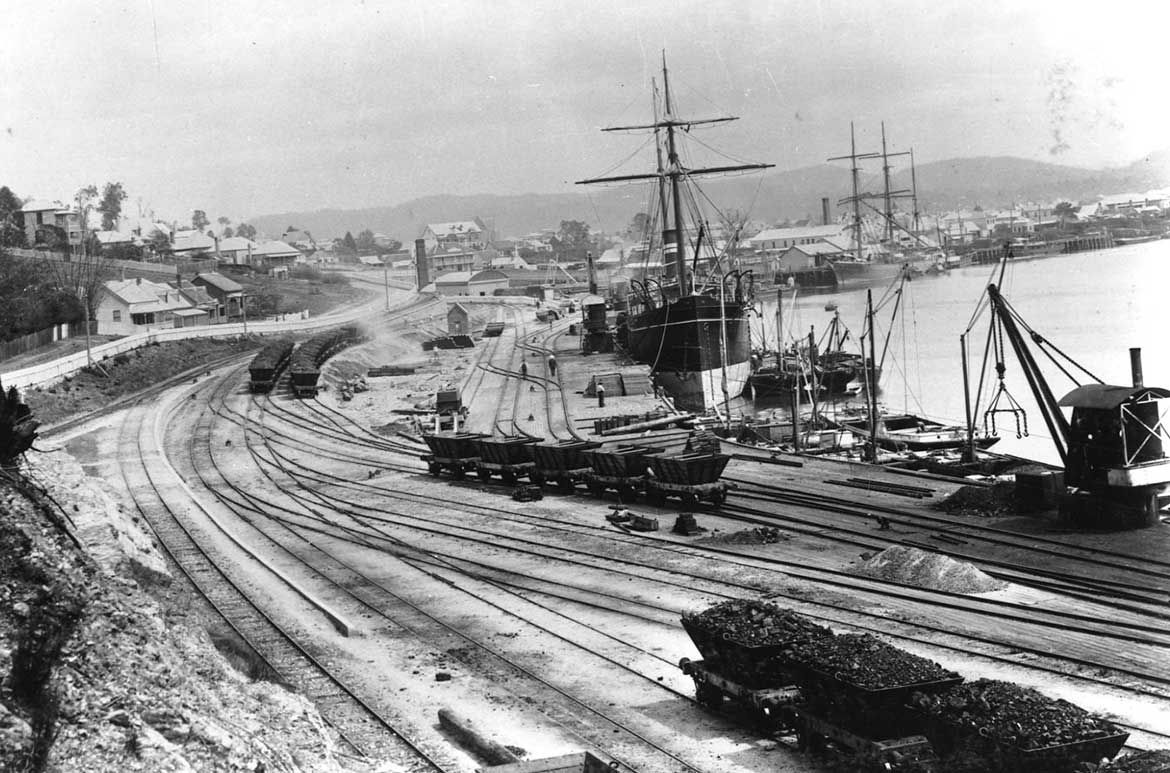
On the southern bank, the railway wharves which opened in 1884 were a terminus for a dedicated railway line from the main Ipswich line via a branch line from Corinda to South Brisbane. The transport of goods, and coal from West Moreton, directly from railway wagons down to the riverbank and along the front of the wharves to ships, serviced the growing port's cargo needs. By 1890, the South Coast line connected to the Brisbane network enabling access to the main lines running to Ipswich, forming a connected network.
Joseph Augustus Clarke Panorama of Brisbane 1880

J A (Joseph Augustine) Clarke, Australia 1840–90 / Panorama of Brisbane 1880 / Oil on canvas / 137 x 366cm / Collection: Queensland Museum / View full image
Isaac Walter Jenner Brisbane from Bowen Terrace, New Farm 1888

Isaac Walter Jenner, England/Australia 1836-1902 / Brisbane from Bowen Terrace, New Farm 1888 / Oil on board / 14.5 x 21.8cm / Purchased 1995. Queensland Art Gallery Foundation / Collection: Queensland Art Gallery | Gallery of Modern Art / View full image
Dry Docks at South Brisbane

Dry Docks and and adjoining Coal Wharves at South Brisbane looking back to Kangaroo Point Cliffs c.1890 / 240253 / Courtesy: John Oxley Library, State Library of Queensland, Brisbane / View full image

Coal Wharves at South Brisbane / Resource Identifier BCC-C120-13343 / Courtesy: Brisbane Images, Brisbane City Council. / View full image
Curatorial extracts, research and supplementary material sourced and compiled by Elliott Murray, Senior Digital Marketing Officer, QAGOMA
Go back in time to discover Brisbane’s forgotten landmarks, delve into our historical past, and uncover unique stories through the work of Australian artists in QAGOMA’s Collection.
Queensland Art Gallery | Gallery of Modern Art (QAGOMA)
Brisbane, Australia