
Nineteenth century presentation vase highlights Australian fauna

Hunt & Roskell, England 1843–97 / Presentation vase (detail) 1864 / Sterling silver, cast and chased, with silver-plated insert / 53 x 42cm (diam.); weight: 10.1kg / Purchased 2009 with funds raised through the QAG Foundation 30th Anniversary Appeal / Collection: Queensland Art Gallery | Gallery of Modern Art / View full image
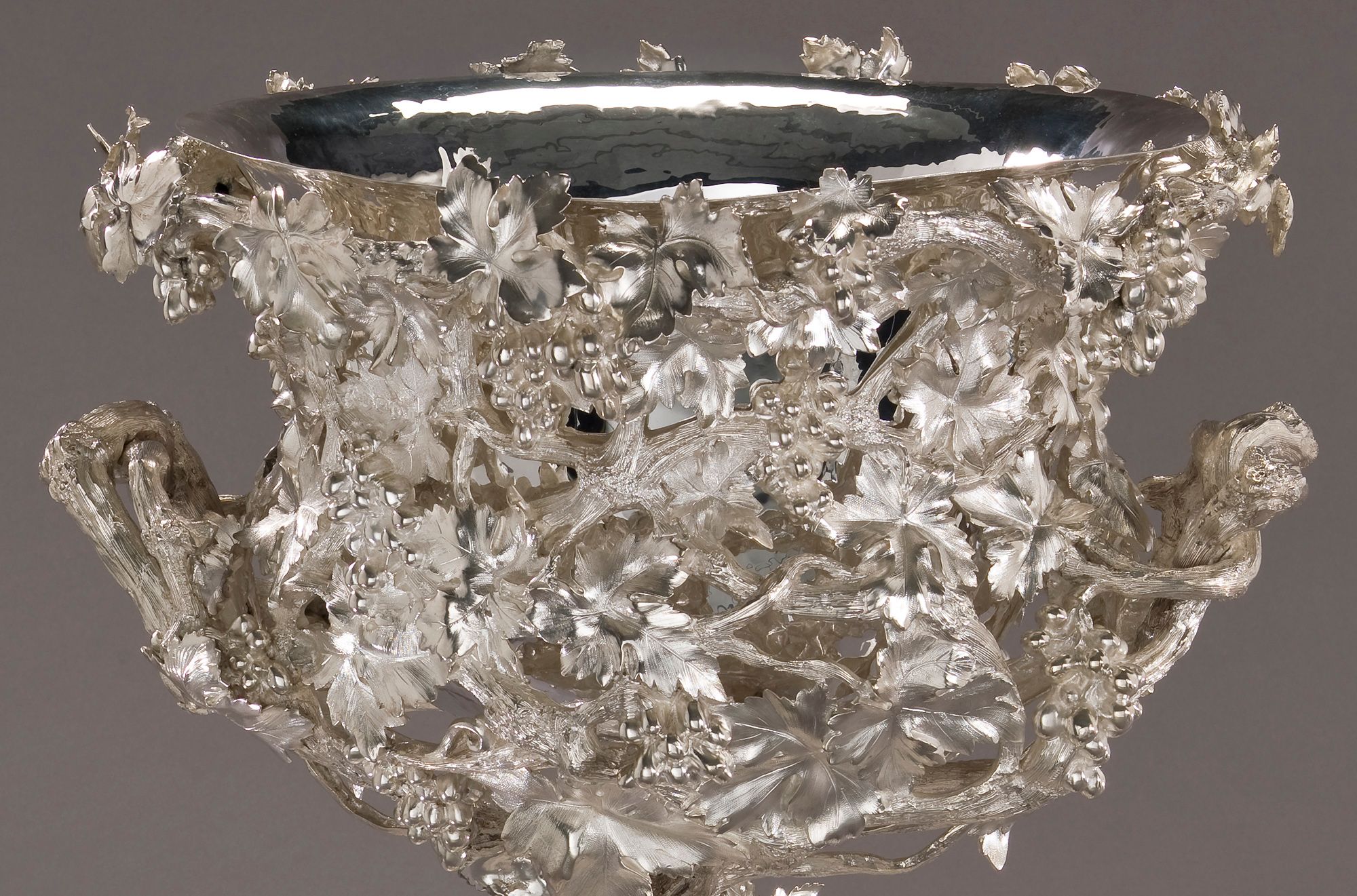
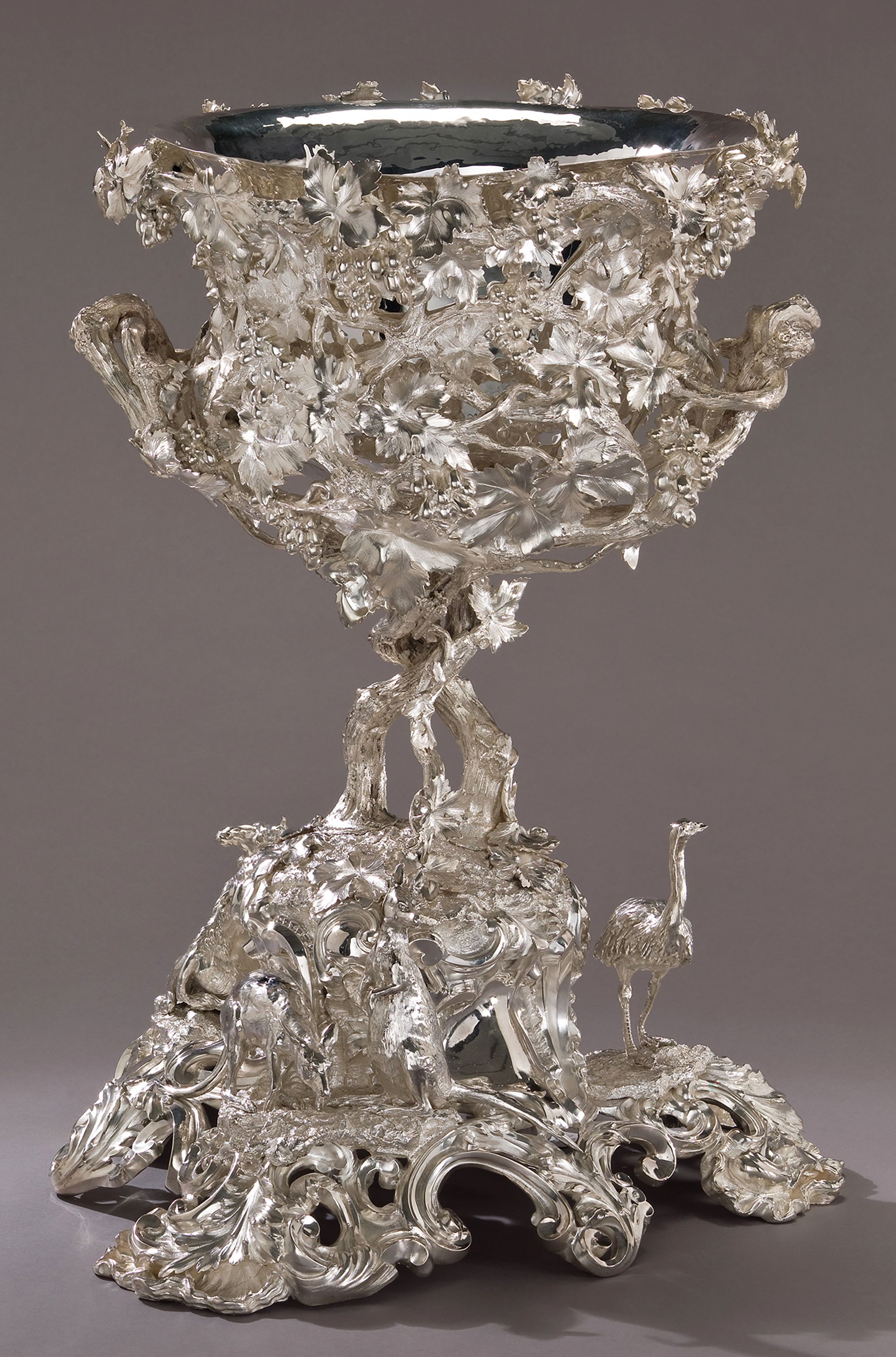
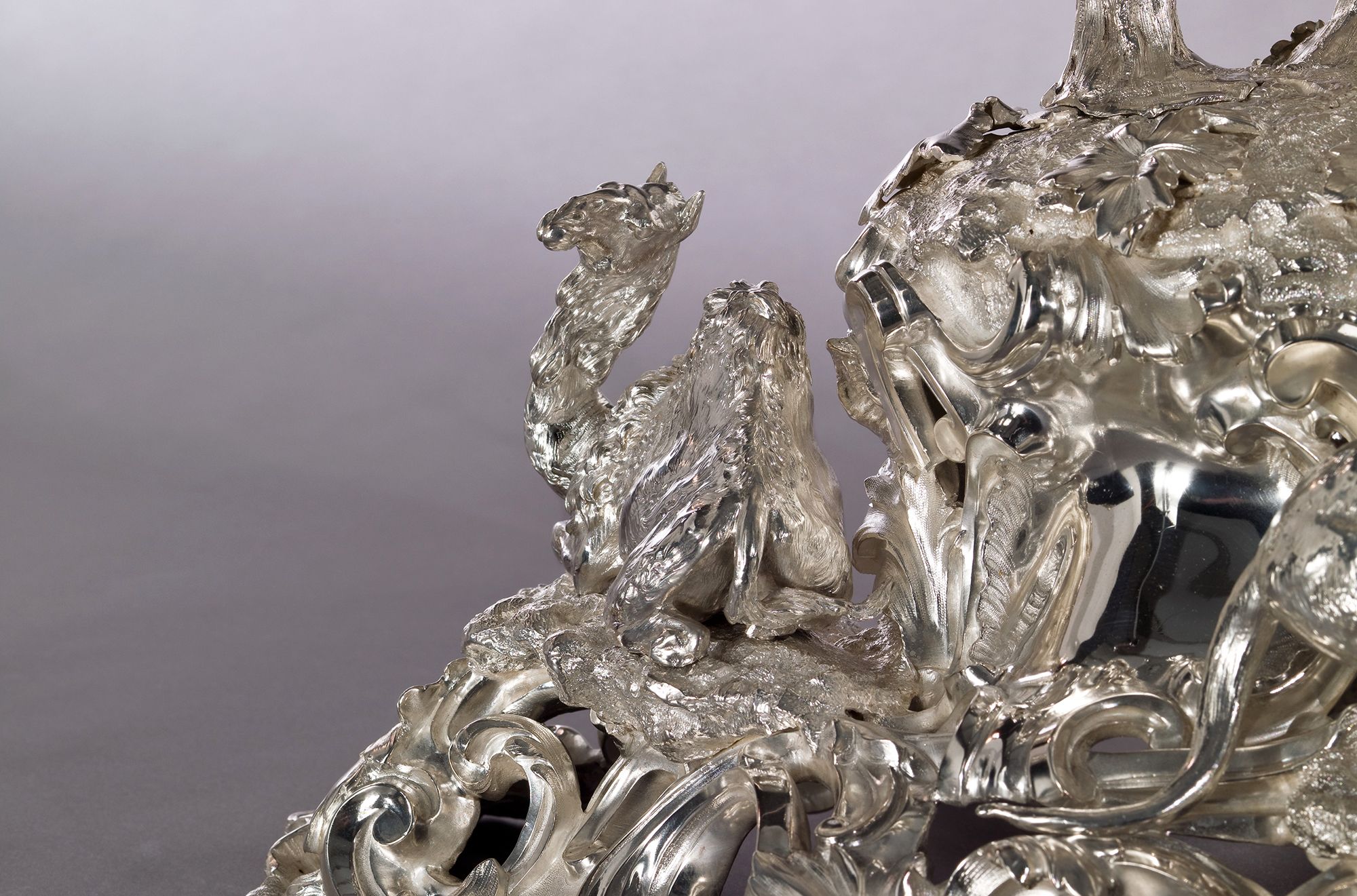
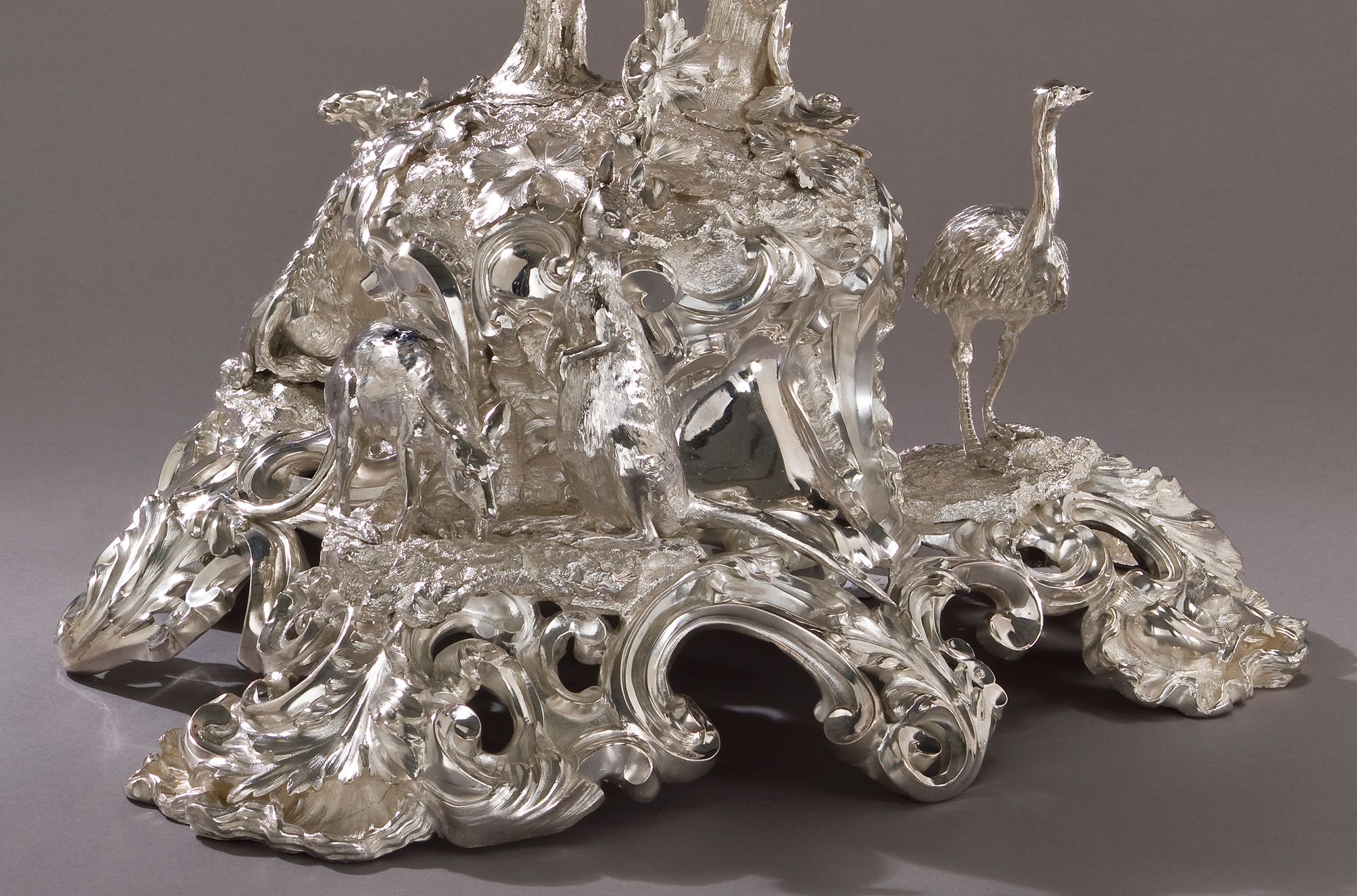
The magnificent Presentation vase 1864 made by Hunt and Roskell (1843–97) — the renowned jewellers and silversmiths of London — has significant links with Australia in the beautifully cast and chased pair of kangaroos and an emu mounted on the base.
This highly elaborate naturalistic decoration is unlike anything ever produced in the Australian colonies, though the presence of Australian fauna (and a camel) around the base suggest that it was commissioned with an Australian connection in mind.
It is believed the vase was presented to Charles Joseph Latrobe (1801–75) who was Lieutenant Governor of the Colony of Victoria from 1851 to 1854, before he returned to England, however unfortunately the identifying inscription has been removed. Removing inscriptions from presentation pieces was a common practice at that time, as it also removed any suggestion of financial difficulty for the owner.
Presentation vase 1864

Hunt & Roskell, England 1843–97 / Presentation vase 1864 / Sterling silver, cast and chased, with silver-plated insert / 53 x 42cm (diam.); weight: 10.1kg / Purchased 2009 with funds raised through the QAG Foundation 30th Anniversary Appeal / Collection: Queensland Art Gallery | Gallery of Modern Art / View full image

Hunt & Roskell, England 1843–97 / Presentation vase (detail) 1864 / Sterling silver, cast and chased, with silver-plated insert / 53 x 42cm (diam.); weight: 10.1kg / Purchased 2009 with funds raised through the QAG Foundation 30th Anniversary Appeal / Collection: Queensland Art Gallery | Gallery of Modern Art / View full image
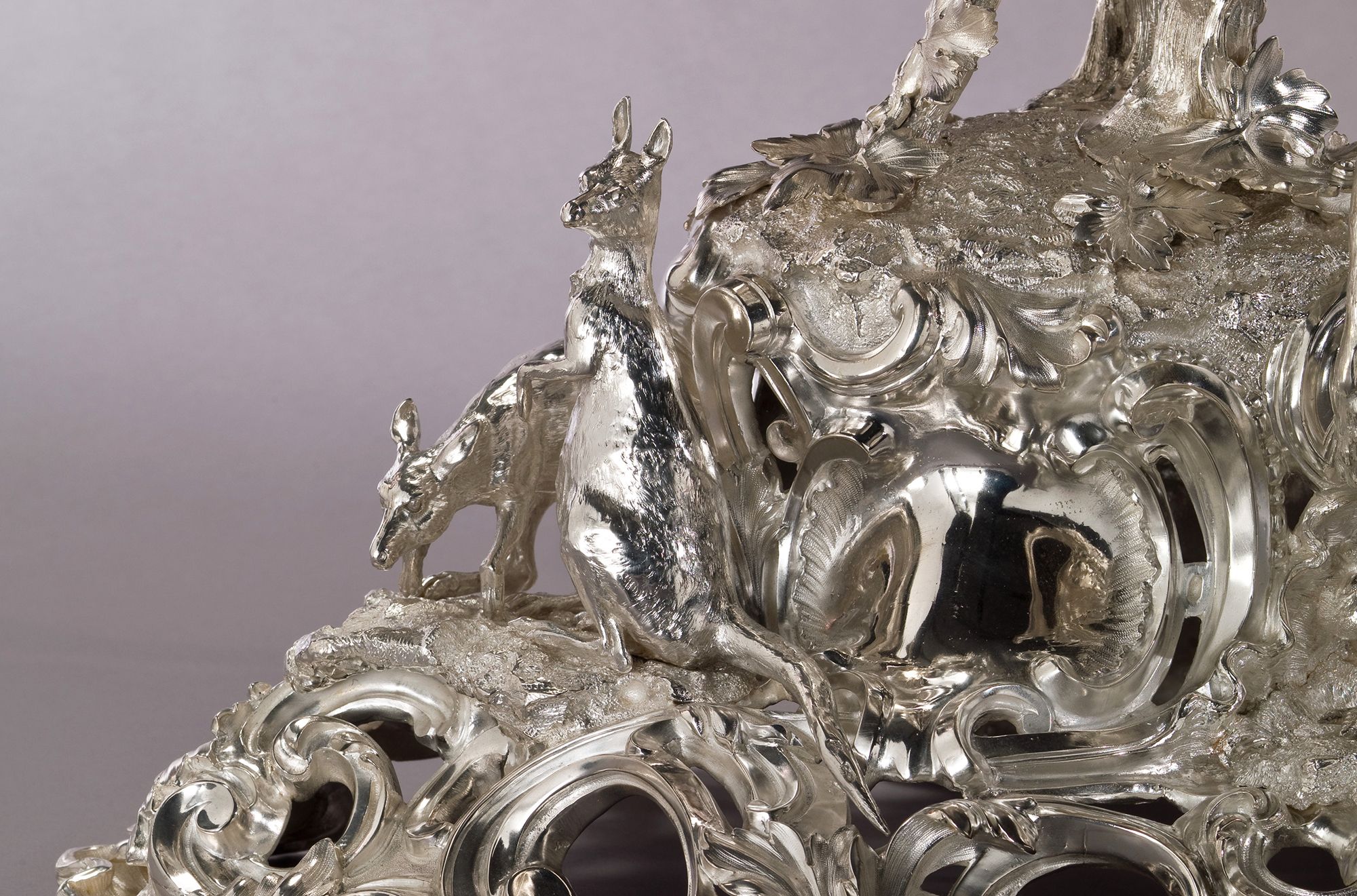

Hunt & Roskell, England 1843–97 / Presentation vase (detail) 1864 / Sterling silver, cast and chased, with silver-plated insert / 53 x 42cm (diam.); weight: 10.1kg / Purchased 2009 with funds raised through the QAG Foundation 30th Anniversary Appeal / Collection: Queensland Art Gallery | Gallery of Modern Art / View full image
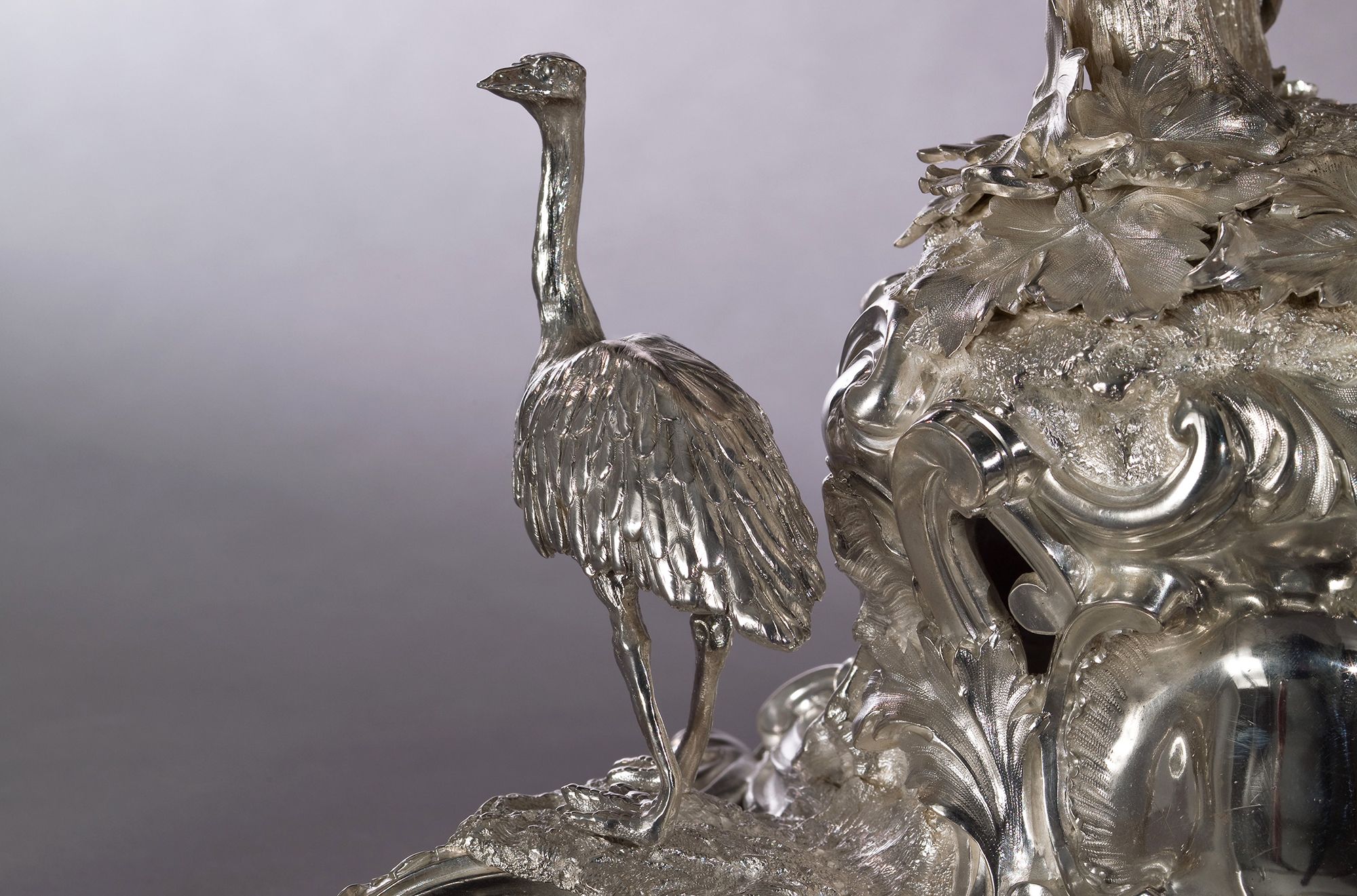

Hunt & Roskell, England 1843–97 / Presentation vase (detail) 1864 / Sterling silver, cast and chased, with silver-plated insert / 53 x 42cm (diam.); weight: 10.1kg / Purchased 2009 with funds raised through the QAG Foundation 30th Anniversary Appeal / Collection: Queensland Art Gallery | Gallery of Modern Art / View full image
Sterling silver is the British term that describes an alloy of silver containing 92.5% by weight of silver and 7.5% by weight of other metals, usually copper. This alloy gives strength to the silver while at the same time preserving the ductility and beauty of the precious metal. Silver marked 925 is the European equivalent.
Over the years, most countries in the world have developed their own systems of hallmarking silver. A hallmark is used to indicate the purity of the silver alloy used in making the piece; to identify the silversmith or the company that made the piece; and to note the date and/or the location where the piece was made.
British silver has been hallmarked with great consistency since the end of the twelfth century and it represents one of the earliest forms of consumer protection. These hallmarks indicate that the article has been independently tested at an Assay Office and they guarantee that it conforms to the legal standards of precious metal content, known as the fineness.
The Leopard’s Head is the mark of the London Assay Office and has been in continuous use since 1300. By 1363 every gold or silver smith had to stamp each piece of work with their personal mark, to show that they had met the set standards.
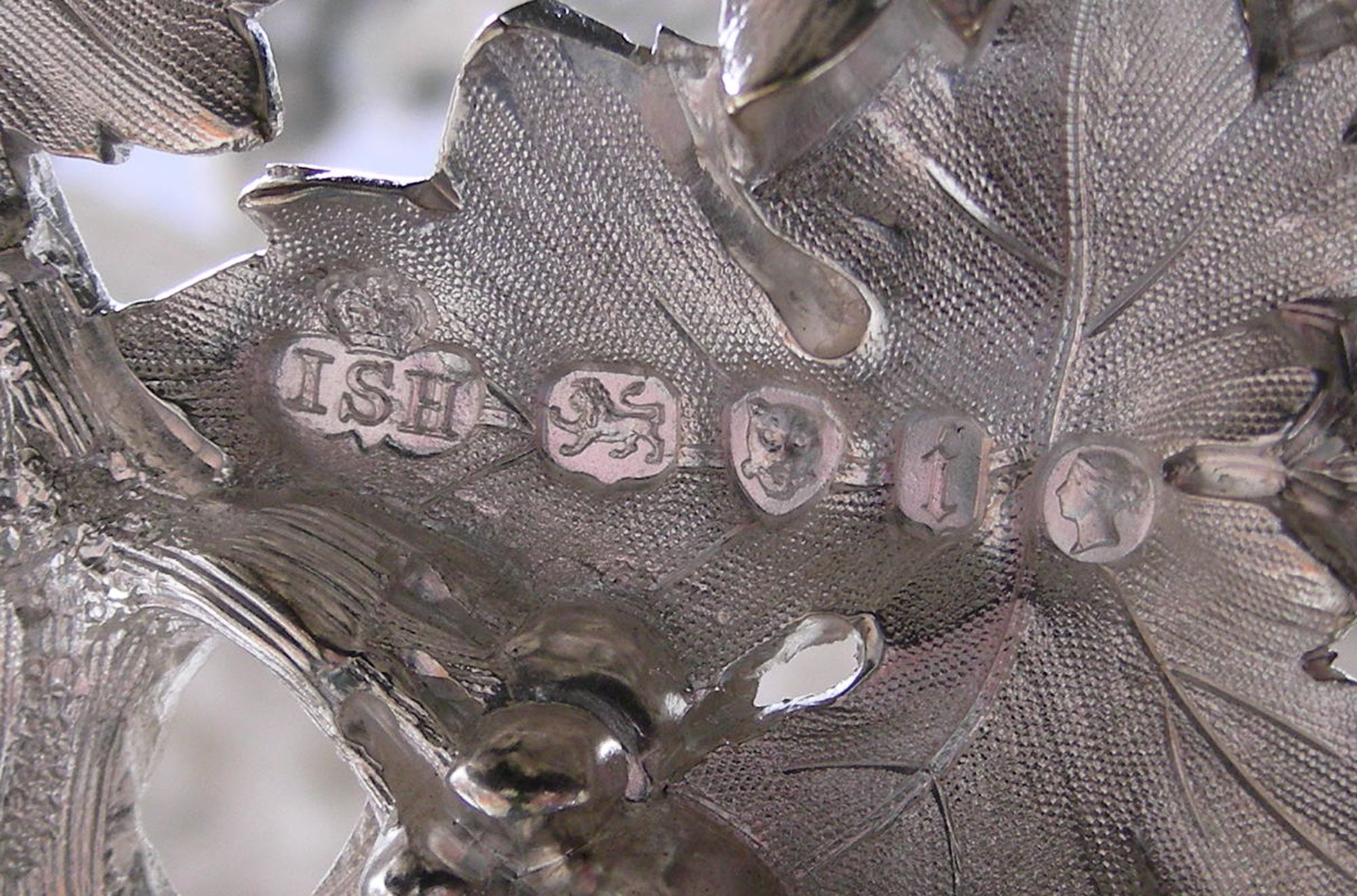
In 1478, year marks were introduced to further protect consumers. A group of four punch-marks make up the hall mark which reads from left to right: the Lion passant is the British sterling mark; the Leopard’s head denotes that the Presentation vase was made in London; the Gothic ‘I’ is the date mark for 1864; and the head of Queen Victoria shows that duty has been paid.
Other marks on the Presentation vase include a punch with ‘Ish’ which show that it was made by John Samuel Hunt (1785–1865). Along the bottom edge is ‘Hunt & Roskell Late Storr & Mortimer’ which establishes that the firm was heir to the legendary Regency silversmith Paul Storr (1771–1844) who began his business as Storr & Co in 1819, ‘Breadalbane 1877’ probably relates to an inventory record for Gavin Campbell (1851–1922), 7th Earl of Breadalbane.

Hunt & Roskell, England 1843–97 / Presentation vase (detail) 1864 / Sterling silver, cast and chased, with silver-plated insert / 53 x 42cm (diam.); weight: 10.1kg / Purchased 2009 with funds raised through the QAG Foundation 30th Anniversary Appeal / Collection: Queensland Art Gallery | Gallery of Modern Art / View full image
The British firm Hunt and Roskell was heir to the legendary Regency silversmith, Paul Storr, who established his business in 1819. Hunt and Roskell’s peak reputation during the second and third quarters of the nineteenth century was recognised by the granting of a Royal Warrant.
The vase belongs to a group of similar major presentation pieces with openwork decoration in the form of interwoven vine branches, fruit and leaves and the mixture of naturalism and rococo-revival styles is very indicative of high Victorian taste in England. Naturalism, in the replication of the form and colour of the natural world, was a strong element in English decorative arts from the eighteenth century onwards. The English taste for the Louis XV style and the products of the Sèvres porcelain factory expanded at the end of the century with the wholesale dispersal of aristocratic collections after the French Revolution. The enthusiastic buyers in England developed a renewed interest in the earlier rococo style.
This ‘new’ rococo was one of the many design elements popular in nineteenth century England and by the middle of the century a fully blown rococo-revival style was underway in the decoration of furniture, porcelain and, especially, silverware. It is obvious in the elaborate and irregular scrolling of the base of this vase.

Hunt & Roskell, England 1843–97 / Presentation vase (detail) 1864 / Sterling silver, cast and chased, with silver-plated insert / 53 x 42cm (diam.); weight: 10.1kg / Purchased 2009 with funds raised through the QAG Foundation 30th Anniversary Appeal / Collection: Queensland Art Gallery | Gallery of Modern Art / View full image
Delve into the QAGOMA Collection
A partner to Hunt & Roskell's Presentation vase 1864 is Tea urn c.1770-71 attribituted to Charles Woodward, the renowned eighteenth century English silversmith who was active in London c.1740–70, featuring the CW maker’s mark.
Tea urns were introduced in the 1760s and generally conformed to the classical vase or urn shape fashionable at the time. Where previously tea drinking had been a luxury, its practice became more widespread as the eighteenth century progressed.
Tea urn c.1770-71

Attrib. To Charles Woodward, England / Tea urn c.1770-71 / Silver, the swelling body decorated in a modified rococo style with branch handles and foliage. The stand with pierced edge and with cast bird feet. Engraved with heraldic crest / 53.5 x 27.5 x 28cm (complete) / Bequest of Colonel FG Le M Gostling 1942 / Collection: Queensland Art Gallery | Gallery of Modern Art / View full image
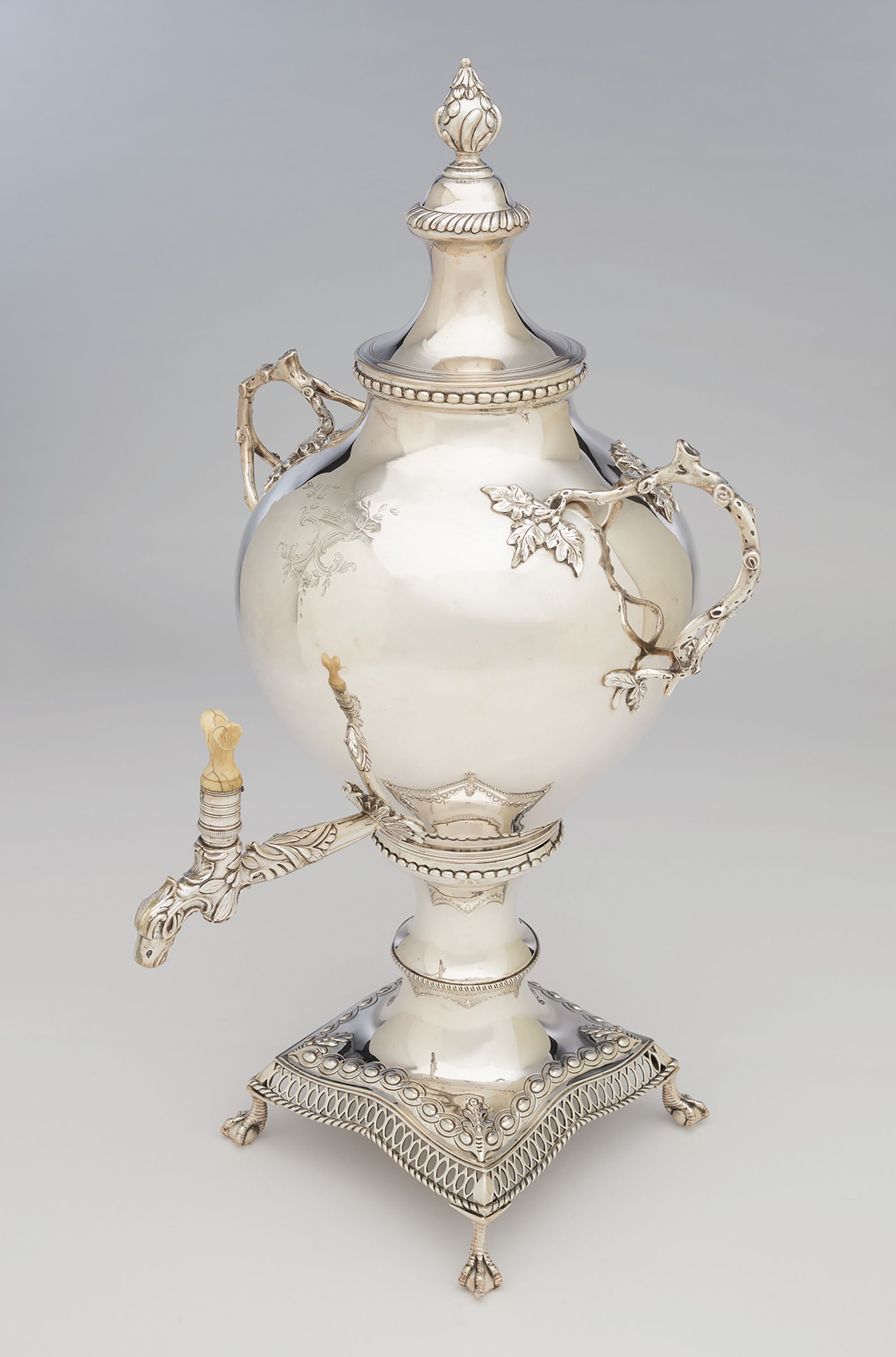
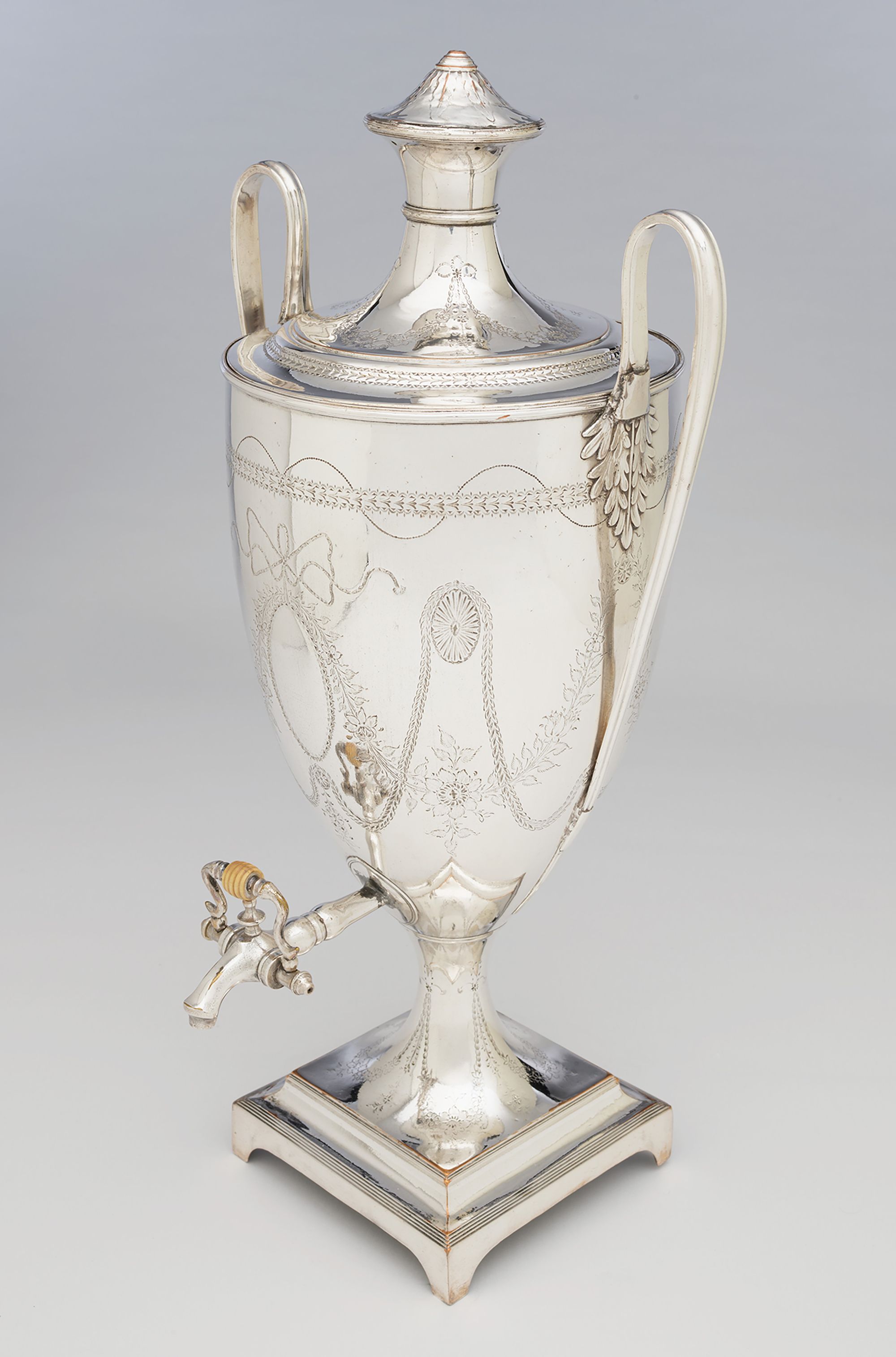
The Tea urn c.1770-1800 also in the Collection is attribituted to Adam Style. Robert Adam was at the forefront of British architectural design in the neo-classical taste of the eighteenth century, conceiving total decorative concepts for houses from their basic external structure to their interior detailing.
Originally training with his father who was also an architect, Adam's Grand Tour of 1754–58 was of fundamental importance to the development of his architectural and decorative style. While in Italy, and particularly under the guidance of Charles-Louis Clérisseau, Adam amassed a large repertoire of classical and Renaissance motifs from his own sketches, purchased or commissioned drawings, and from collecting casts and fragments of architectural details. The Tour also served to bring Adam into contact with potential patrons from the ranks of the other Grand Tourists.
With the growing demand for tea from a broadening clientele, came a diversification in the types of tea making apparatus produced. Not all tea drinkers could afford expensive silver, and Tea urn c.1770-1800 which bears the mark of Robert Adam's decorative style, has been made in the cheaper Sheffield Plate which was popular with less affluent customers.
Tea urn c.1770-1800

Adam Style, England 18th century / Tea urn c.1770-1800 / Sheffield plate / 52 x 27 x 23cm / Gift of Dr and Mrs Arnot Davis 1958 / Collection: Queensland Art Gallery | Gallery of Modern Art / View full image

Australian Art Collection, Queensland Art Gallery, Gallery 10 (Josephine Ulrick and Win Schubert Galleries) / View full image
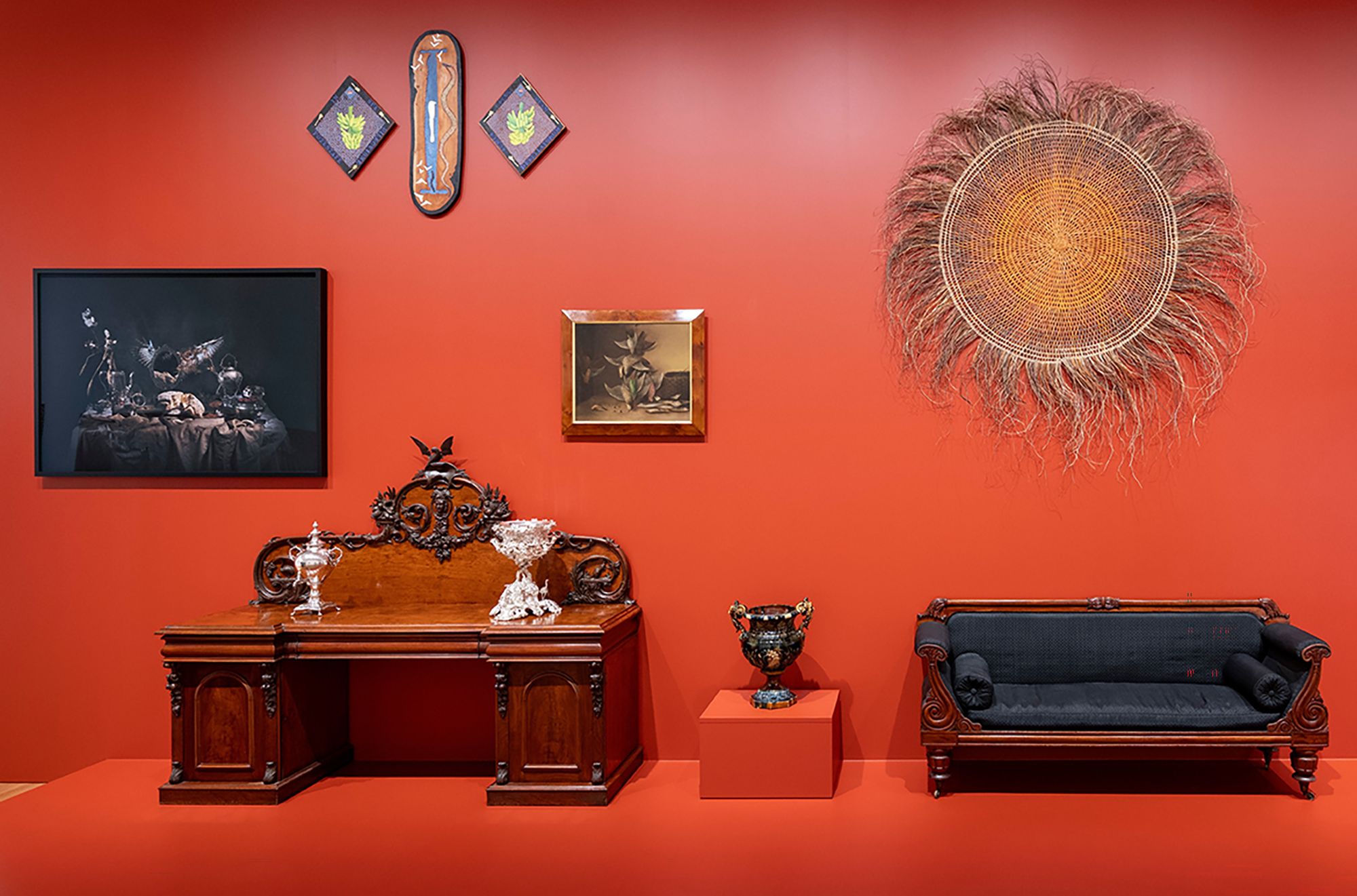
On display in the Australian Art Collection
Queensland Art Gallery
Galleries 10, 11, 12 & 13 (Josephine Ulrick and Win Schubert Galleries)
Queensland Art Gallery | Gallery of Modern Art (QAGOMA)
Brisbane, Australia