
Go back in time to 1940 with William Bustard's depictions of the Brisbane River

Details of William Bustard’s Brisbane River, Indooroopilly and Brisbane River, view to Graceville church / View full image
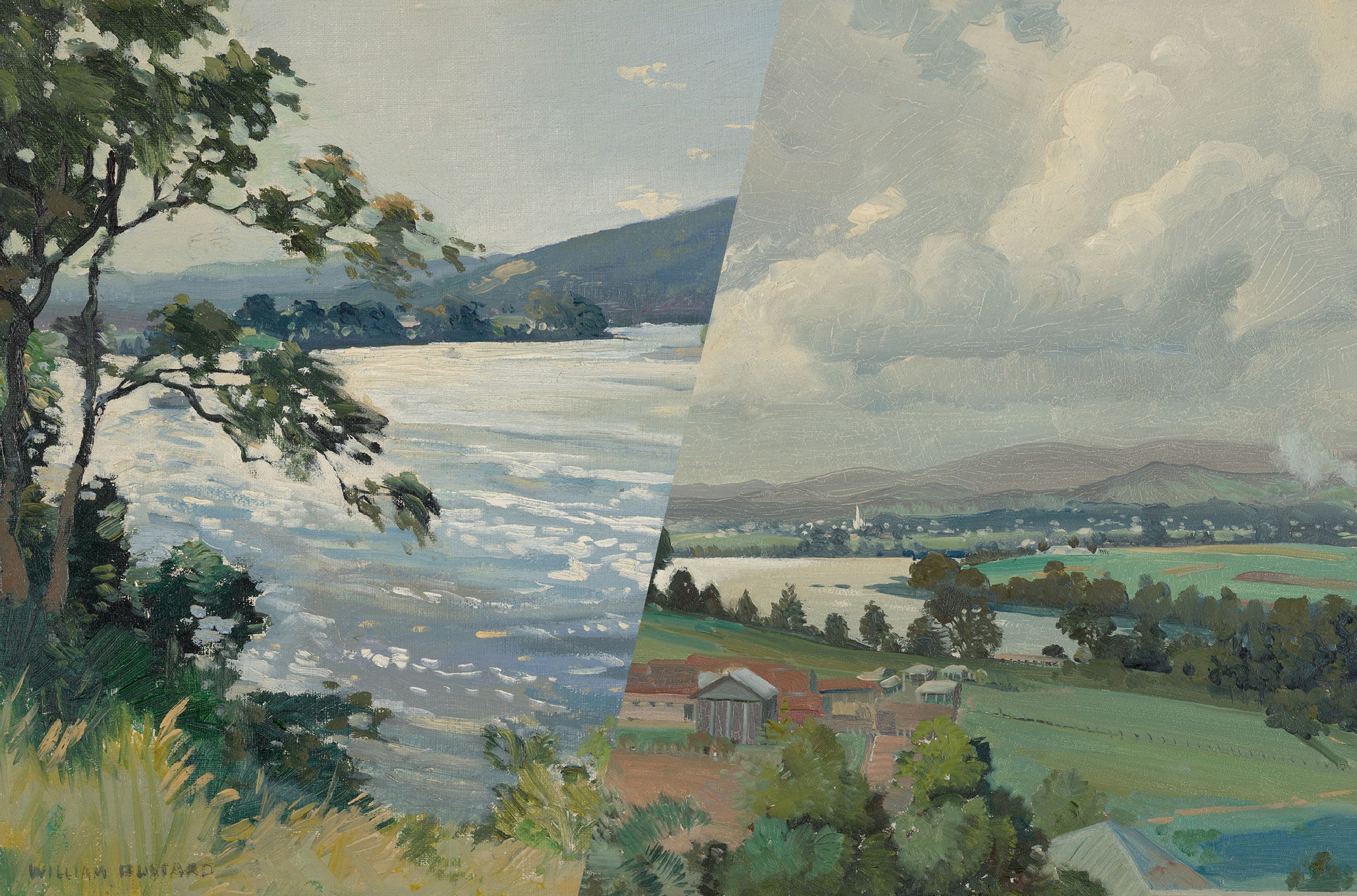
In 1921, Yorkshire-born artist William Bustard (18 April 1894–1973) migrated to Brisbane when he was 27 years old to accept the role of chief stained-glass designer for renowned painters, decorators and glaziers R S (Robert Skerrett) Exton and Co., and he would go on to play a leading role in the development of art in Queensland.
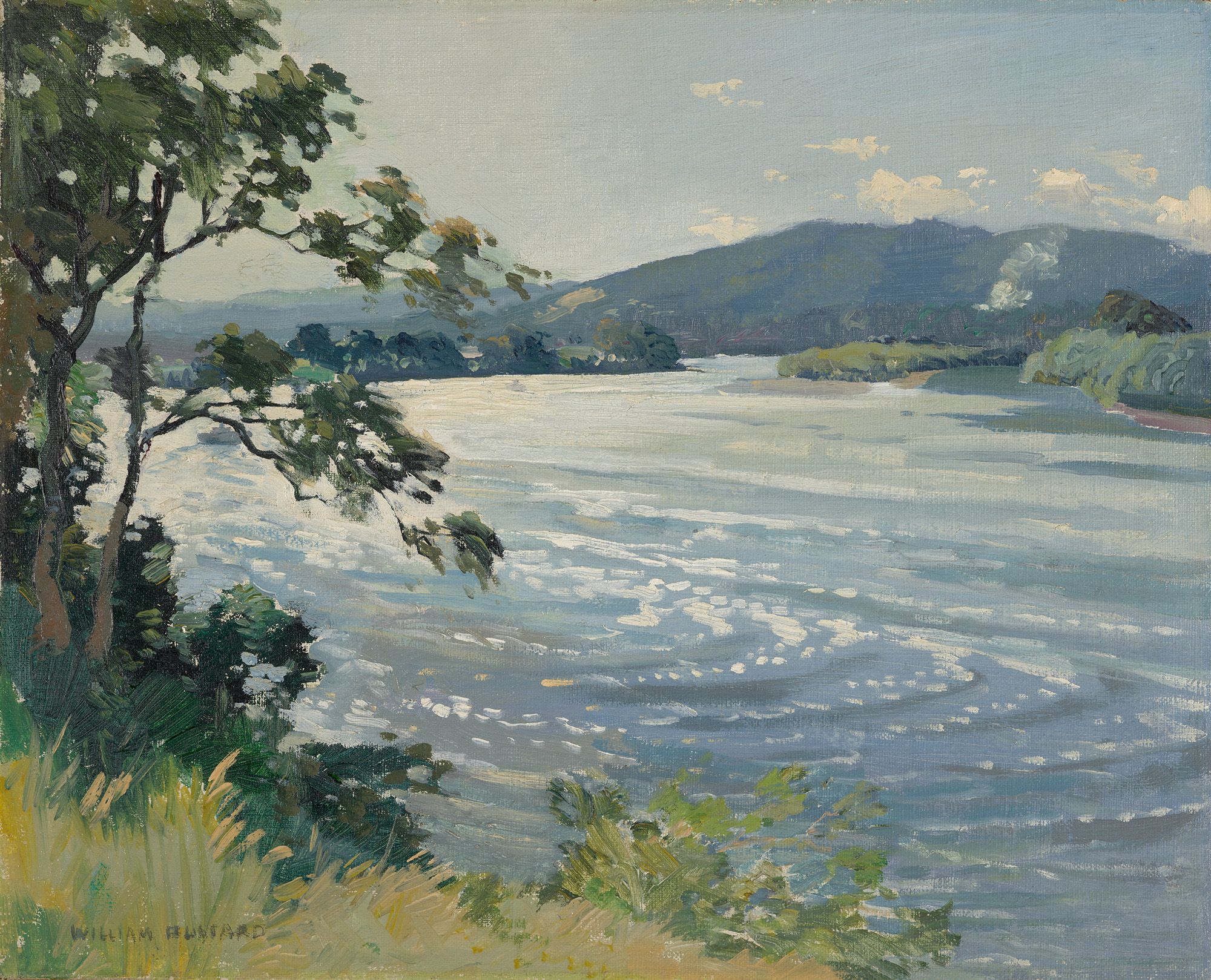
(Brisbane River, Indooroopilly) c.1940s

William Bustard, England/Australia 1894 - 1973 / (Brisbane River, Indooroopilly) c.1940s / Oil on board / 39 x 49cm / Purchased 2005 / Collection: Queensland Art Gallery | Gallery of Modern Art / © William Bustard Estate / View full image
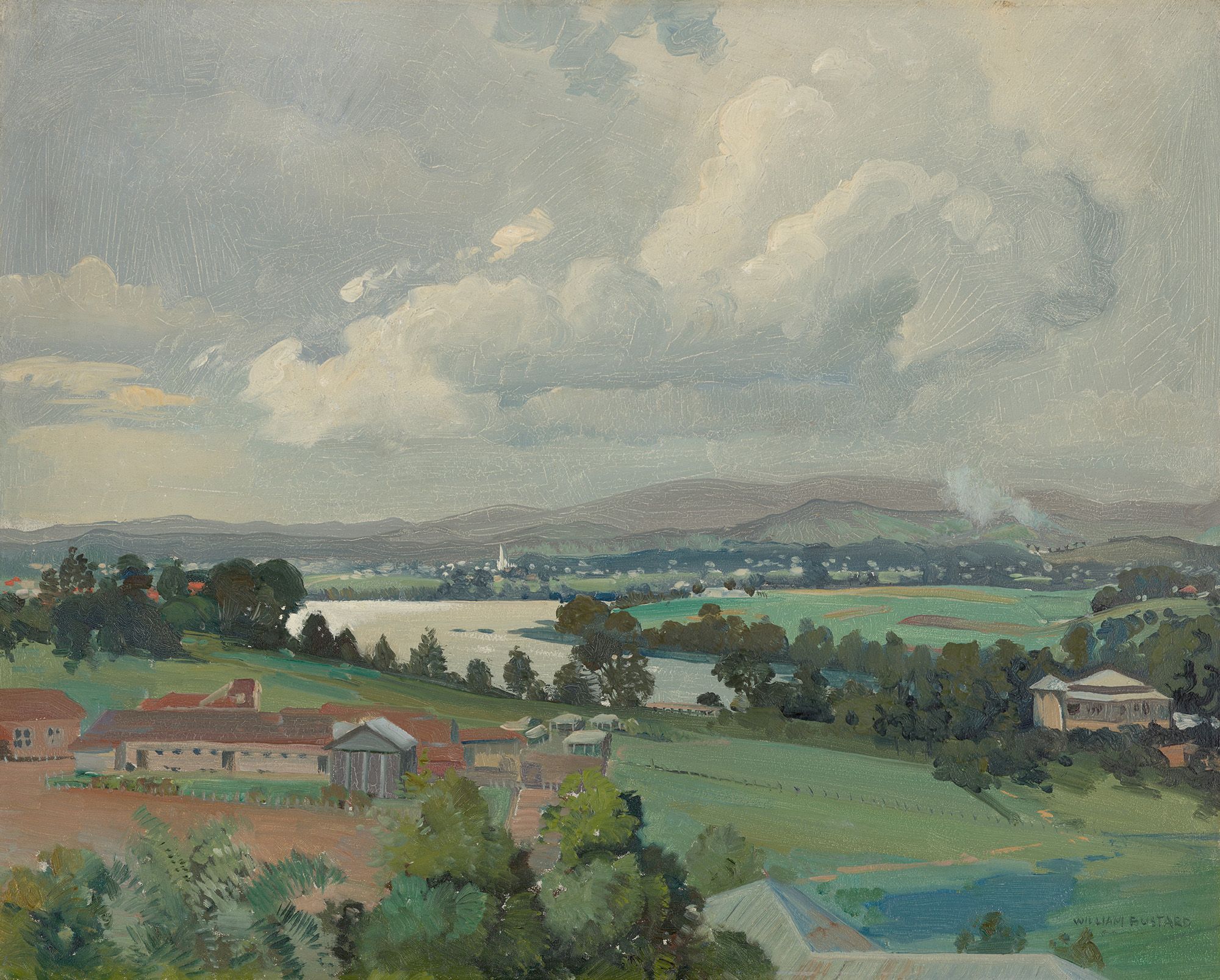
(Brisbane River, view to Graceville church) c.1940s

William Bustard, England/Australia 1894–1973 / (Brisbane River, view to Graceville church) c.1940s / Oil on board / 39 x 49cm / Purchased 2005 / Collection: Queensland Art Gallery | Gallery of Modern Art / © William Bustard Estate / View full image
The principal interest of his painting (Brisbane River, Indooroopilly) c.1940s is in the treatment of reflected light sparkling on the broad reach of the Brisbane River, the rippling waves spreading out in the wake of the passing boat which is just visible under the tree branch to the left of the composition, otherwise the landscape is free of any urban development except for some agricultural related smoke in the distance.
In contrast, (Brisbane River, view to Graceville church) c.1940s depicts a view to Graceville, still a semi-rural suburb, bathed in an overcast and cloudy sky of muted tones, the landscape a reduction of detail which enables Bustard to use broad swathes of colour. In the distance can be seen the recognisable white bell tower and spire pointing toward the heavens of the then recently built local landmark, the Gothic Style Graceville Methodist Church on Oxley Road (opened in 1930) and again smoke in the distance. Graceville in the 1940s was transitioning from its early days of large-scale agriculture, though to small-scale farming and residential.
Methodist Church, Graceville, c.1940

Methodist Church, Graceville, c.1940 / 99184318595202061 / Courtesy: John Oxley Library, State Library of Queensland, Brisbane / View full image
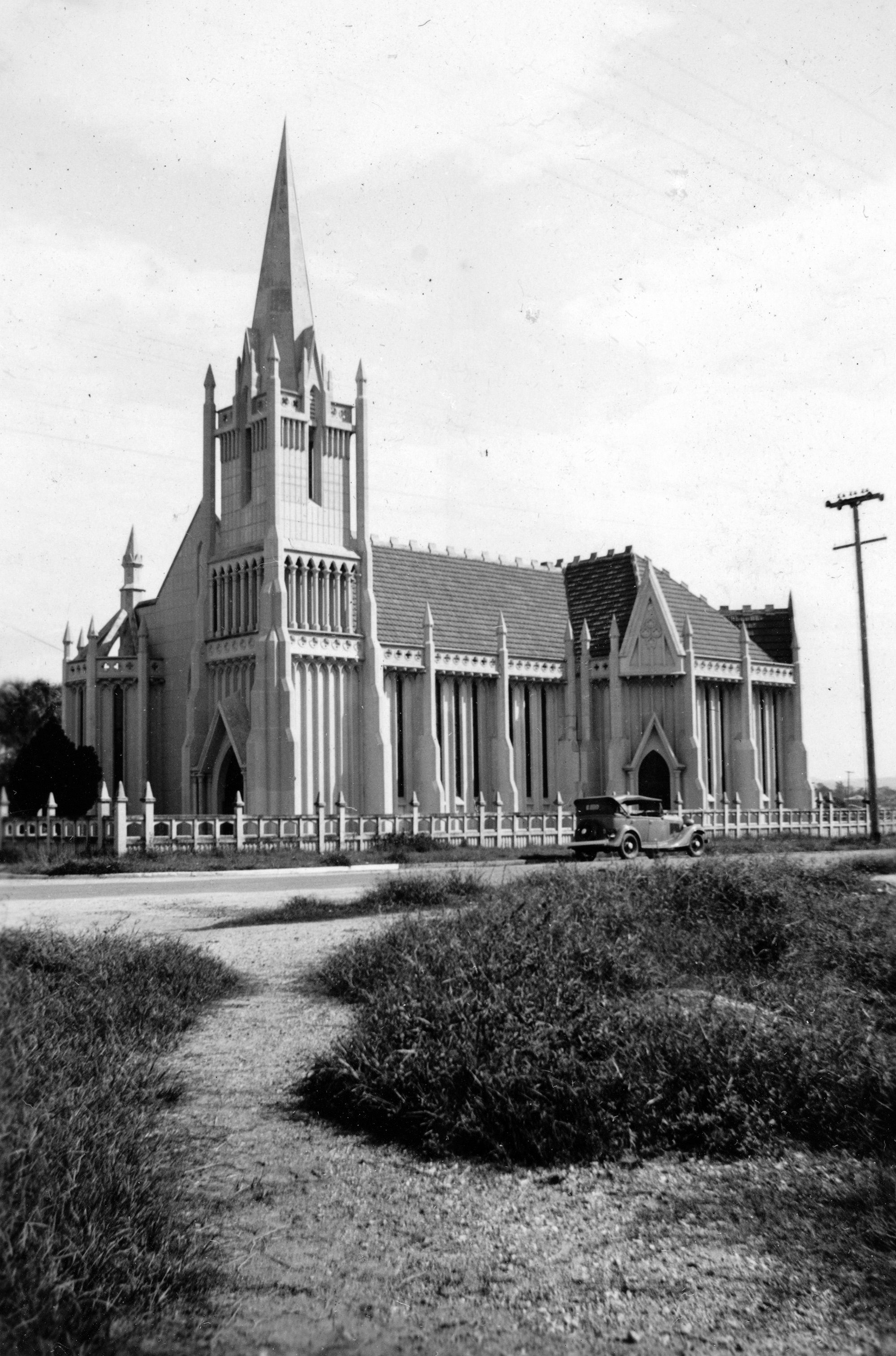
The Graceville church depicted (its congregation and operations closed in 2022) was designed and built by local visionary Walter Taylor who lived in the suburb, and who also conceived, designed, built and funded the nearby Indooroopilly Toll Bridge, renamed the Walter Taylor Suspension Bridge (opened in 1936) crossing the Brisbane River to Indooroopilly.
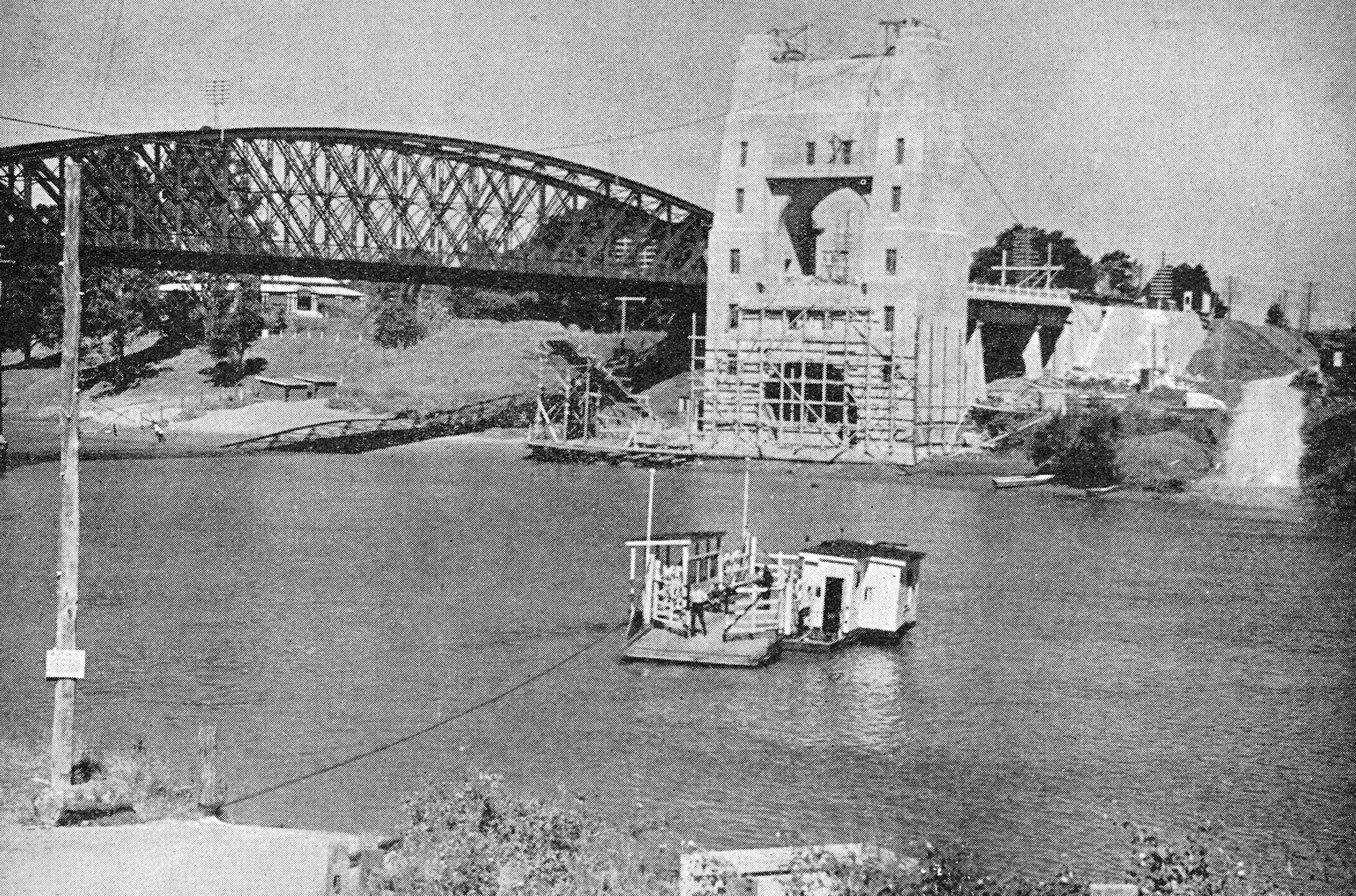
Albert Railway Bridge and the construction of the Indooroopilly Toll Bridge, 1935

Albert rail bridgeand the construction of the Walter Taylor suspension bridge, 1935 / 99184003618902061 / Courtesy: John Oxley Library, State Library of Queensland, Brisbane / View full image
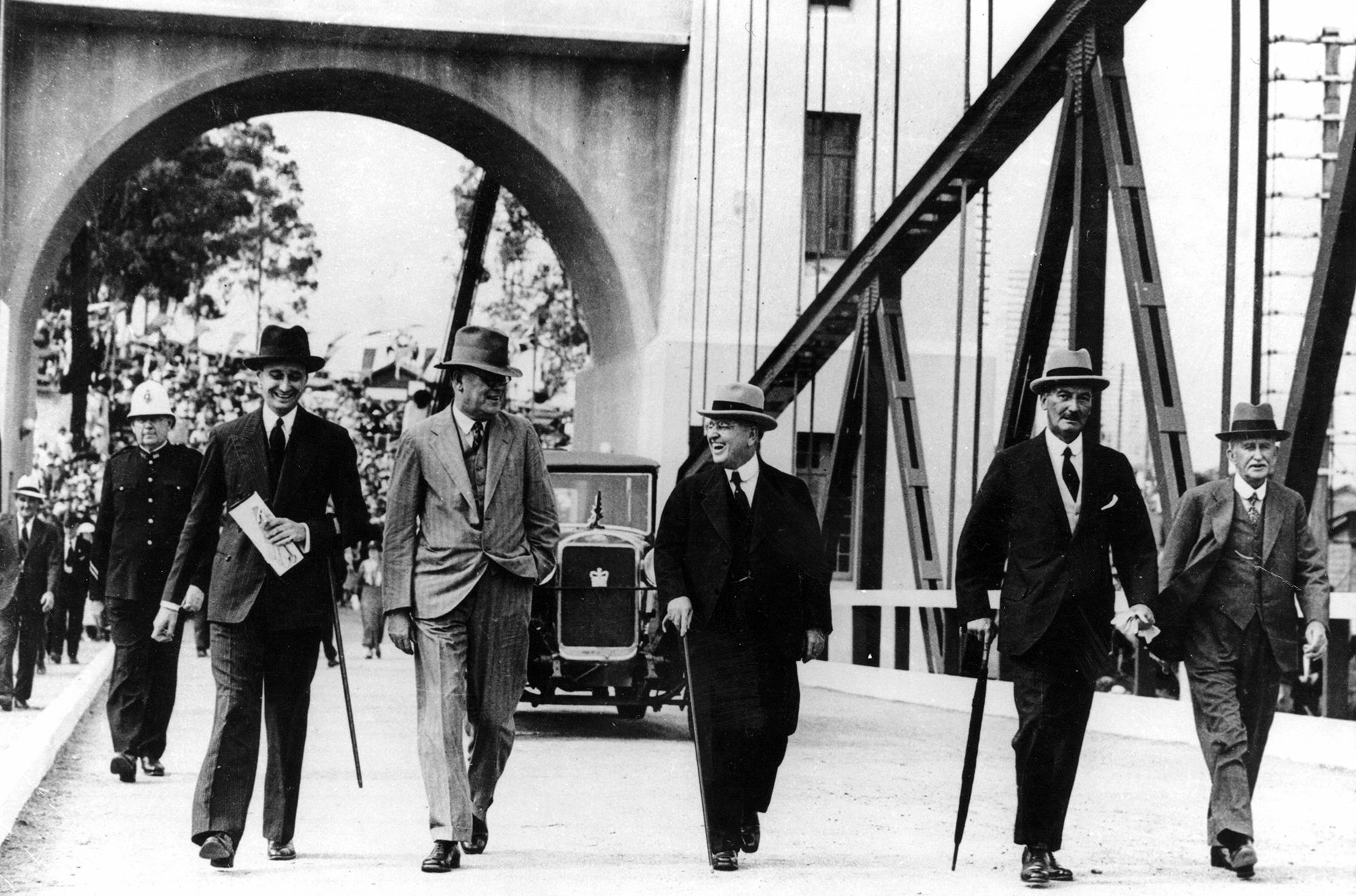
Official opening of the Indooroopilly Toll Bridge

Official opening of the Indooroopilly Toll bridge (renamed Walter Taylor in 1956) with Governor of Queensland, Sir Leslie Orme Wilson, and the official party with Walter Taylor (far right), 1936 / 99183512923302061 / Courtesy: John Oxley Library, State Library of Queensland, Brisbane / View full image
Indooroopilly was first settled by Europeans in the 1860s and agriculture and dairying were common in the early years. The arrival of rail in 1875 and completion of the Albert Railway Bridge across the Brisbane River to complete the extension of the Ipswich railway line the following year spurred the urban development of the area and beyond the river.
As Brisbane grew, demand for land in the outer areas increased, leading to the development of Indooroopilly and Graceville as residential suburbs. Graceville, also located some 10 kilometres south-west of the Brisbane CBD on the opposite side of the river to Indooroopilly, originally used for sheep and cattle grazing until the mid nineteenth century, developed into a semi-rural settlement, however with the arrival of rail saw development from the 1880s, facilitating the growth of the area with acreage subdivided into smaller farms, then into a residential plots.
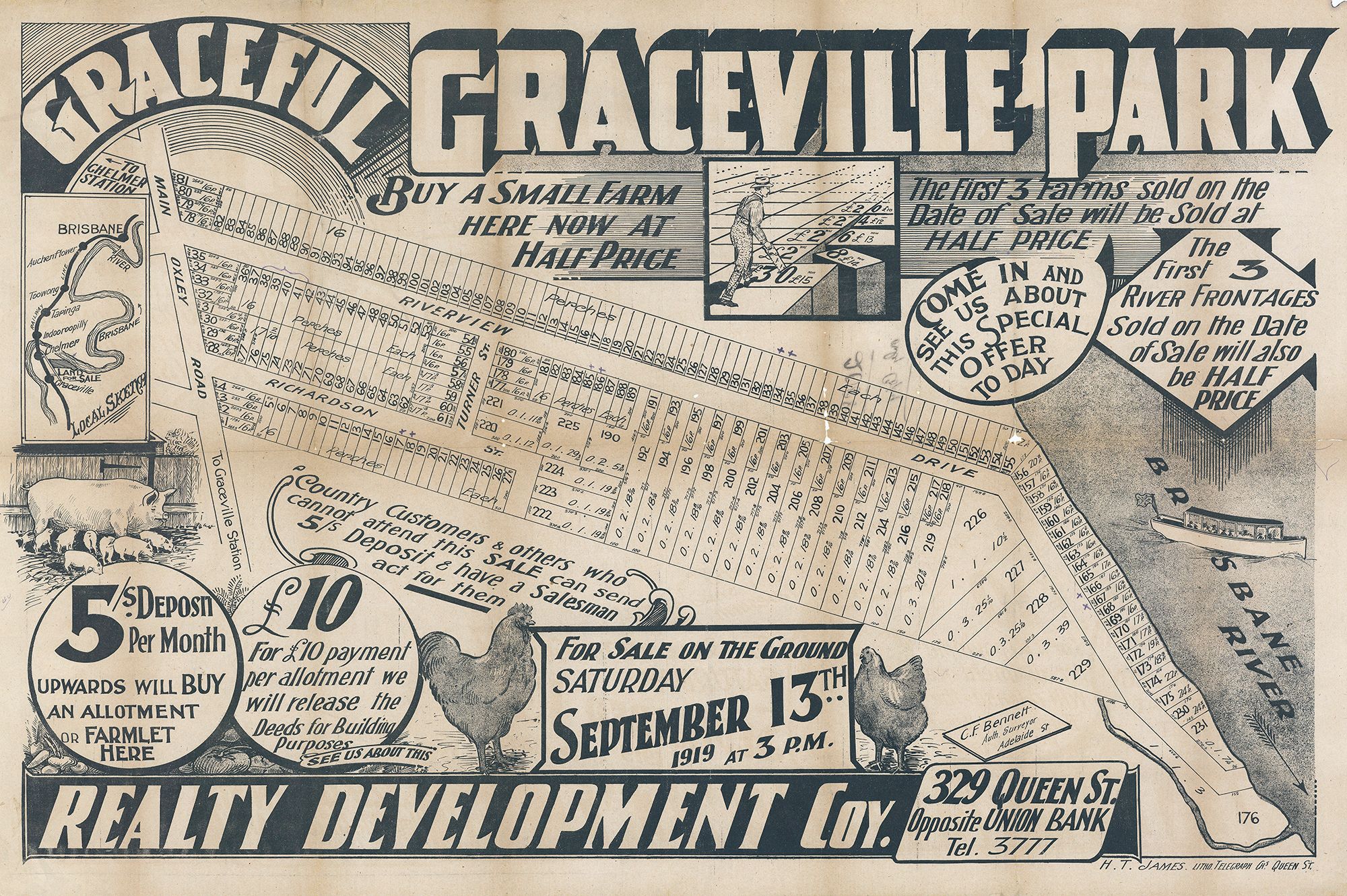
Graceville Park Estate, 1919

Graceful Graceville Park estate map, 1919 / 99183415521102061 / Courtesy: John Oxley Library, State Library of Queensland, Brisbane / View full image
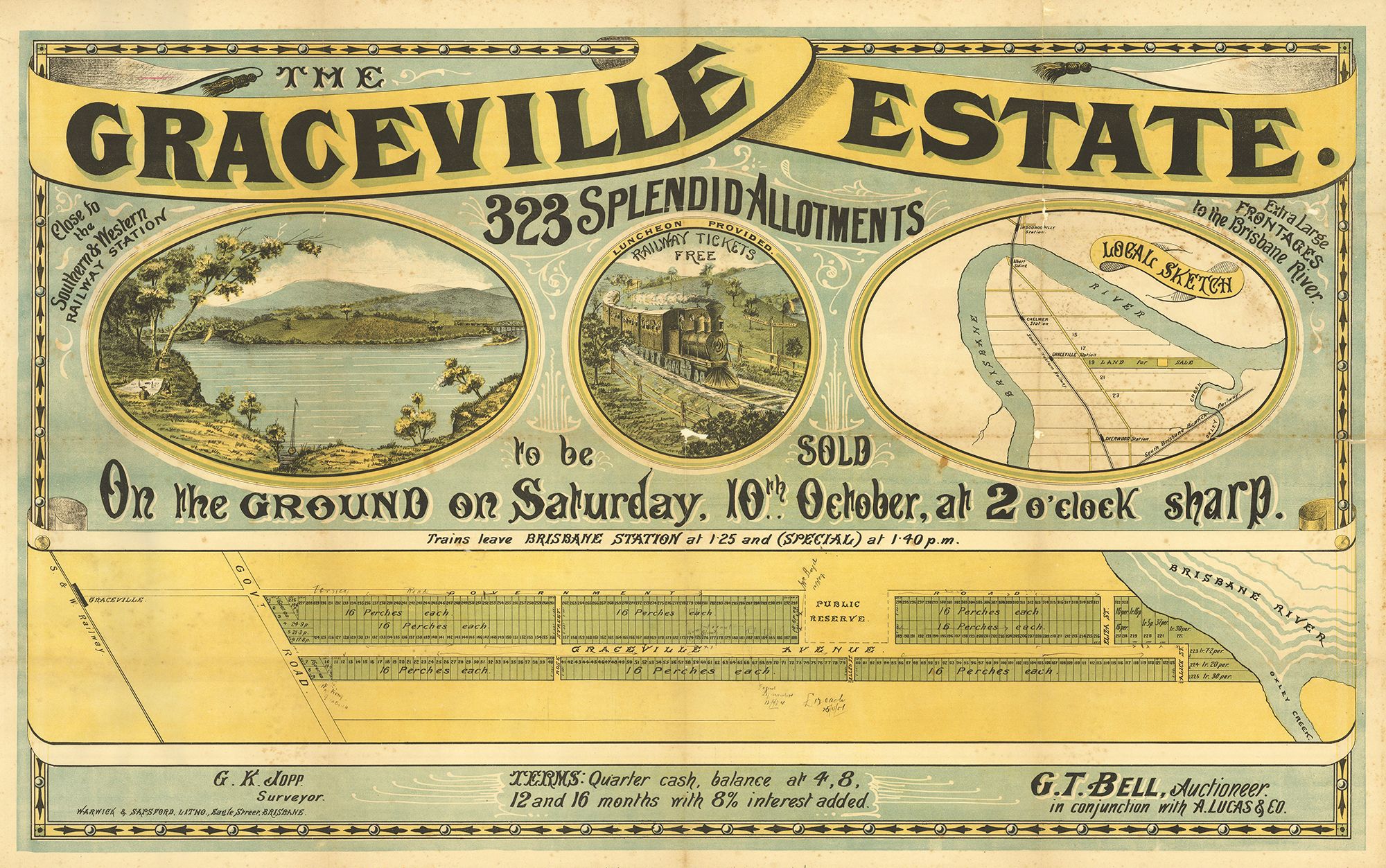
The Graceville Estate map, 1920

Graceville Estate map, 1920 / 996978644702061 / Courtesy: John Oxley Library, State Library of Queensland, Brisbane / View full image
Motor cars in Australia didn’t become popular until the 1950s, transitioning from a luxury item for the wealthy to ordinary families. Before then, the availability of cars was limited, with most roads unsealed and car ownership being aspirational. Before the then, Brisbane suburbia was confined to the proximity of about 10 kilometres from the CBD with the dependence on public transport.
In the 1940s, rail travel was the primary mode of transport in Brisbane, with Roma Street and Central stations handling passenger services to the outer suburbs such as Indooroopilly and Graceville. A regular service connected Brisbane and Ipswich via the Southern and Western Railway line which crossed the river at Indooroopilly in 1876.
Therefore, it is most likely Bustard looking for inspiration further afield, relied on this rail service to travel to Indooroopilly to paint (Brisbane River, Indooroopilly) and (Brisbane River, view to Graceville church). When viewing both artworks, they were painted in close proximity to the Indooroopilly station, located just before the line crosses Albert Bridge.
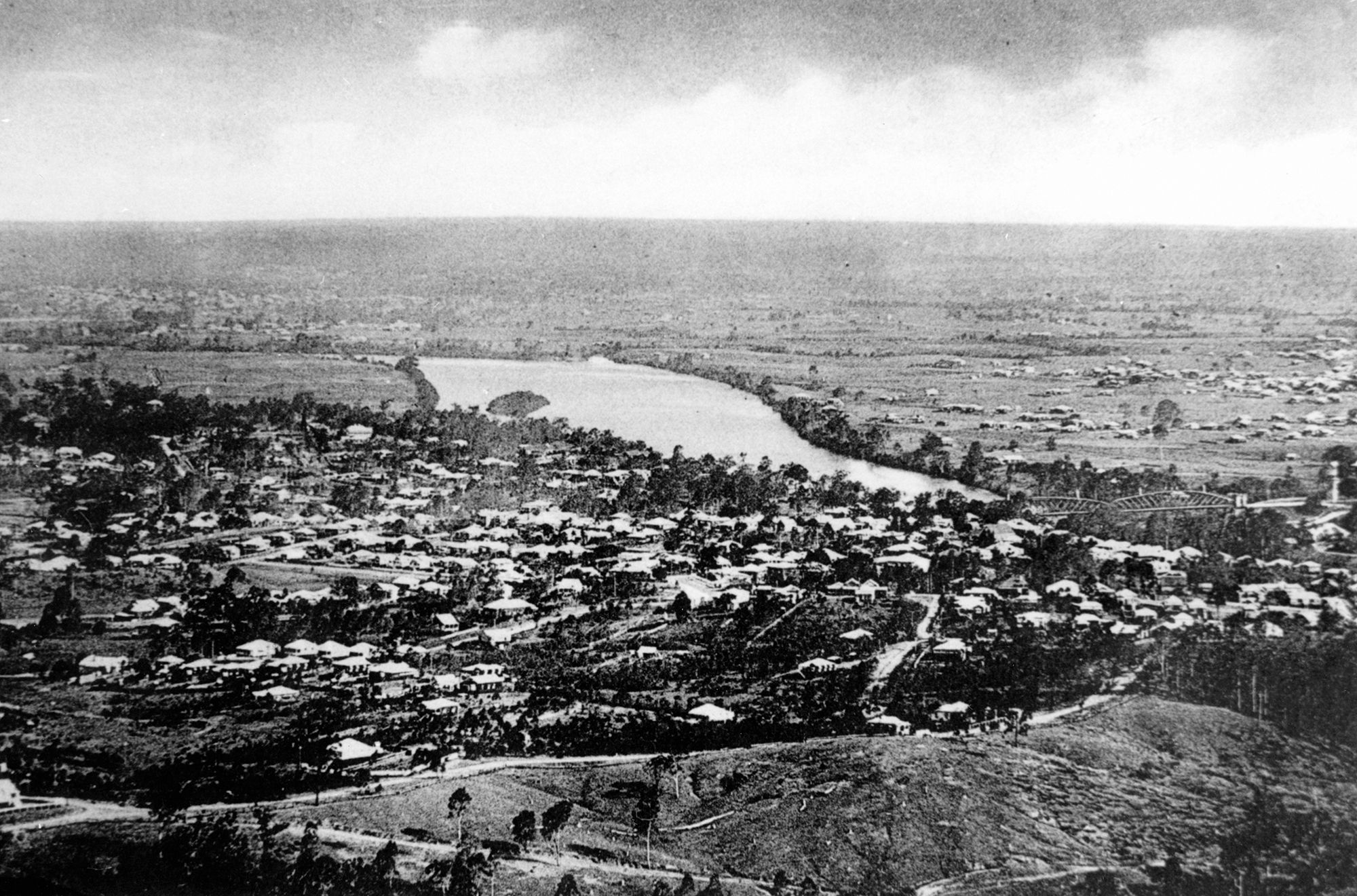
View over Indooroopilly toward Graceville, c.1930

View of Indooroopilly toward Graceville from Mount Coot-tha, c.1930. The Indooroopilly railway bridge can be seen far left / 99183513246702061 / Courtesy: John Oxley Library, State Library of Queensland, Brisbane / View full image
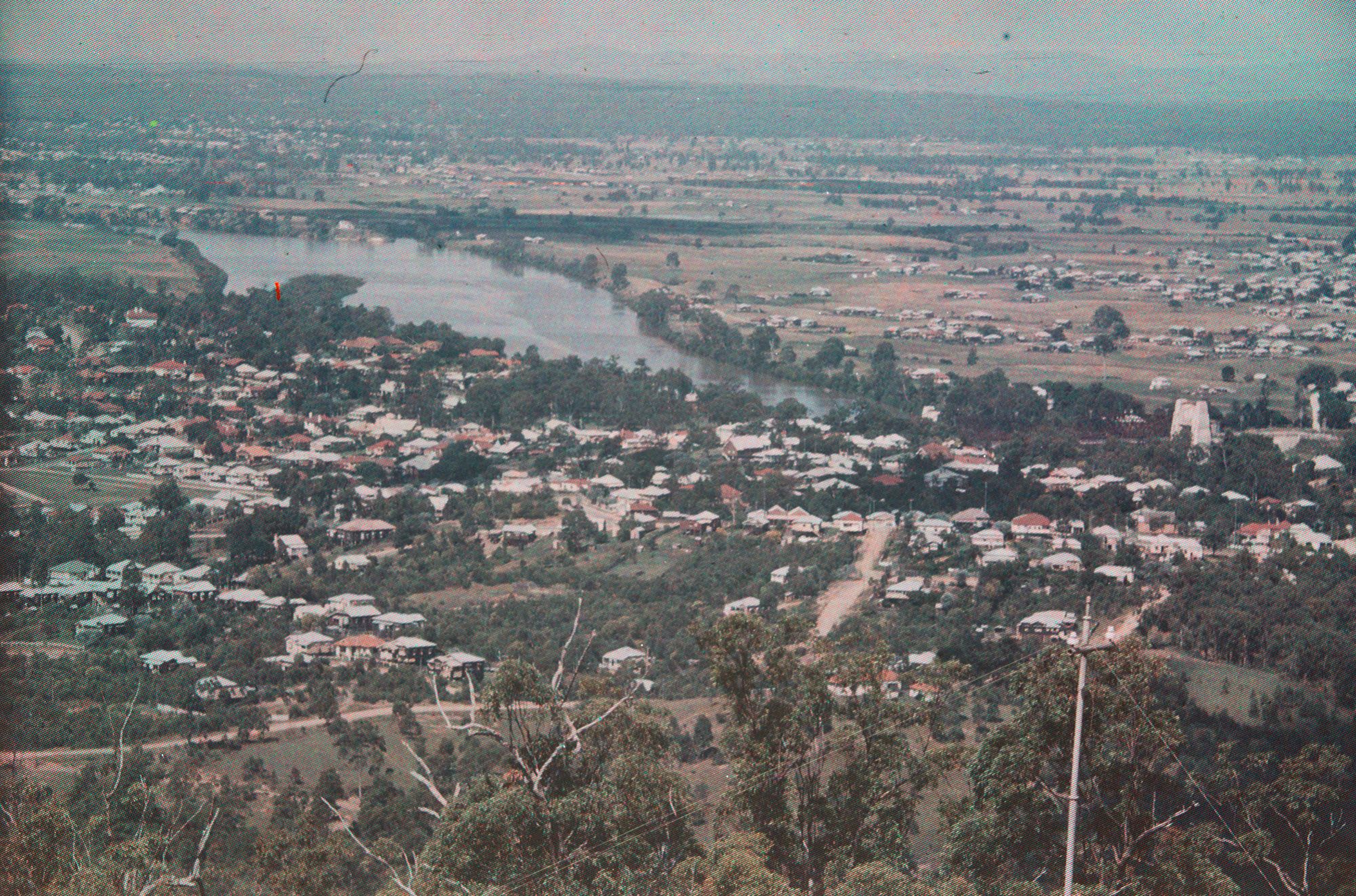
View over Indooroopilly toward Graceville, c.1938

View over Indooroopilly toward Graceville from Mt. Coot-tha, c.1938. One of the two towers of the bridge house residential accommodation, which were occupied until mid 2010 can be seen on the right / 99183735298402061 / Courtesy: John Oxley Library, State Library of Queensland, Brisbane / View full image
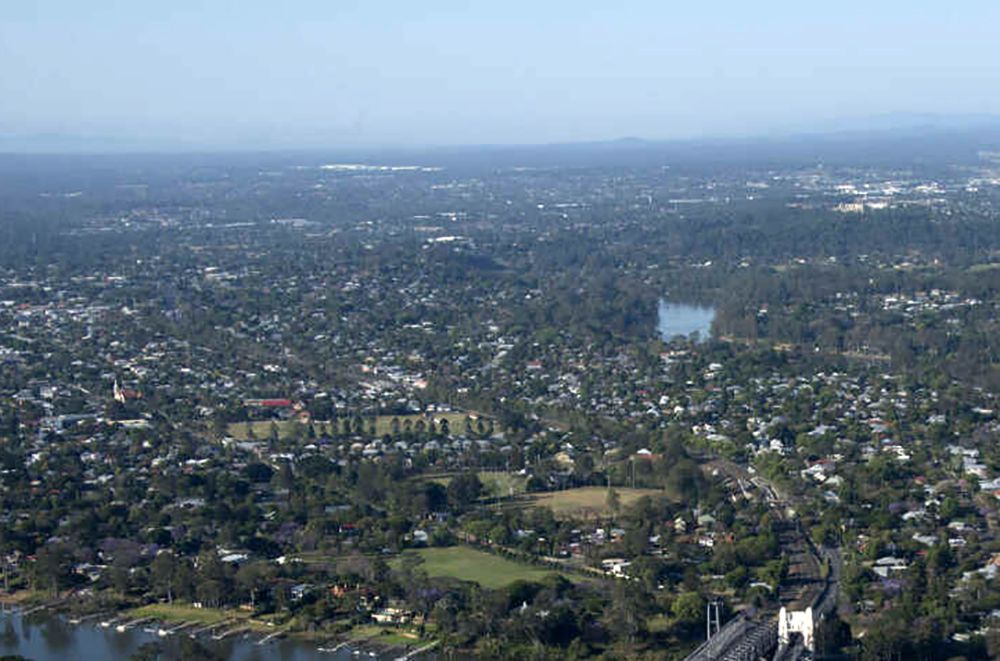
A similar view today over Indooroopilly toward Graceville

View over Indooroopilly toward Graceville today showing the Graceville Methodist Church in the mid distance / Courtesy: Wikimedia Commons / View full image
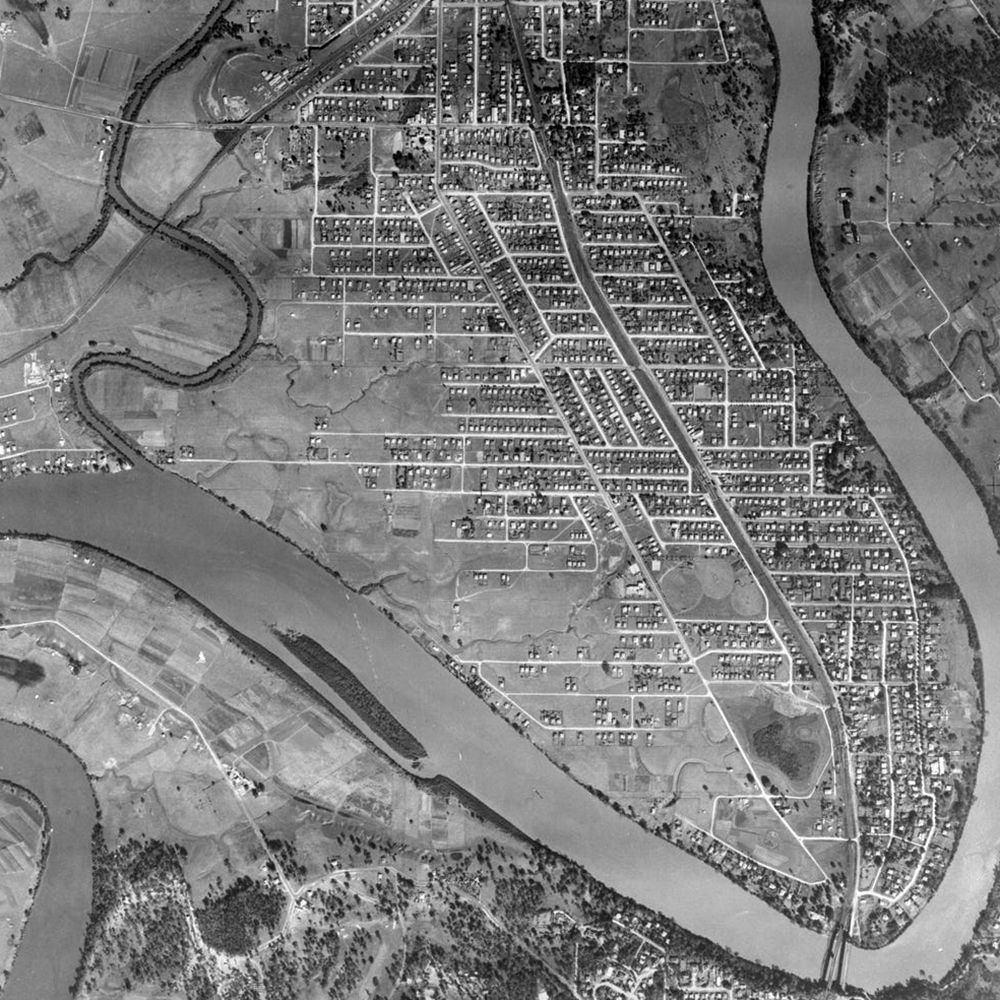
Aerial view over Indooroopilly toward Graceville, 1946

Aerial view over Indooroopilly toward Graceville showing the railway snaking through the suburb, 1946 / Courtesy: Wikimedia Commons / View full image
Curatorial extracts, research and supplementary material compiled by Elliott Murray, Senior Digital Marketing Officer, QAGOMA
Go back in time to discover Brisbane’s forgotten landmarks, delve into our historical past, and uncover unique stories through the work of Australian artists in QAGOMA’s Collection.
Queensland Art Gallery | Gallery of Modern Art (QAGOMA)
Brisbane, Australia