
Go back in time to 1925 with Vida Lahey & a morning on the Brisbane River

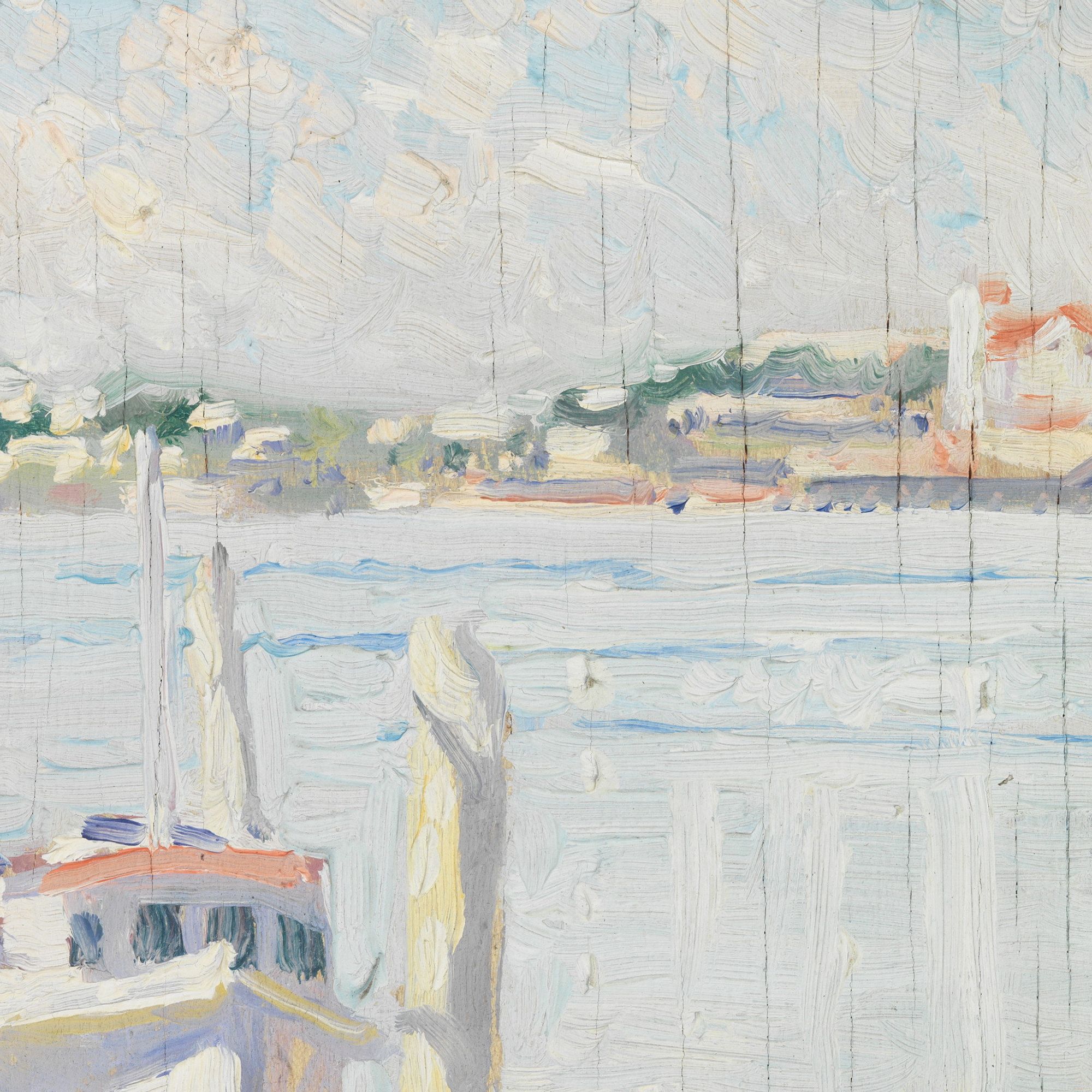
Vida Lahey, Australia 1882-1968 / Morning light, Brisbane River c.1925-30 / Oil on three-ply board / 19 x 19cm (sight) / Purchased 2012. QAG Foundation / Collection: Queensland Art Gallery | Gallery of Modern Art / © QAGOMA / View full image
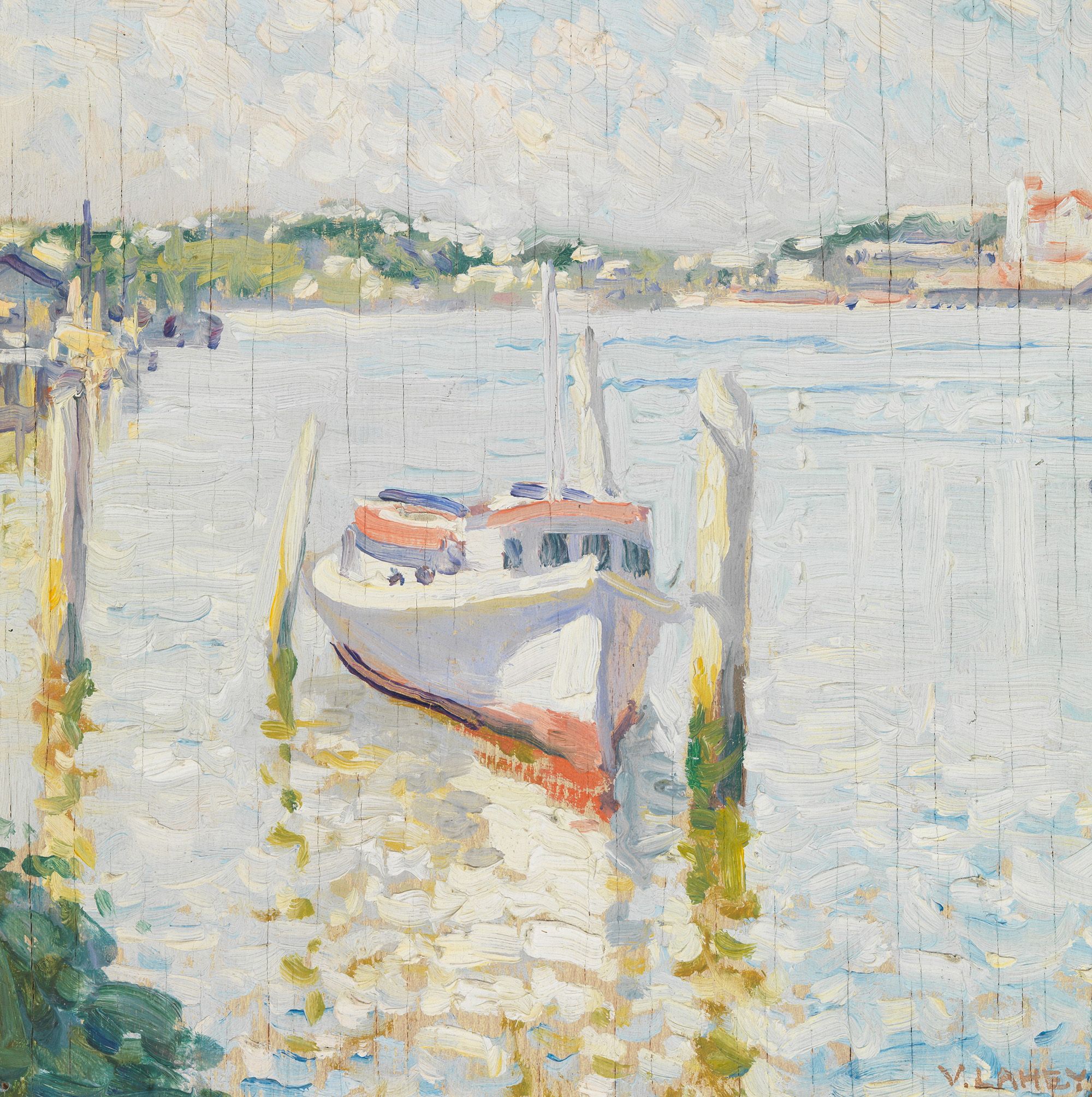
The work by Vida Lahey (26 August 1882-1968), one of Queensland’s best loved artists is widely admired for her watercolour floral studies, however in Morning light, Brisbane River c.1925-30 Lahey has beautifully captured the effects of light on water, and also provides us with a little mystery on the location.
The work shows the artist’s strength in painting landscape and her particular skill in depicting light on water. The painting was originally identified as Motor launch and dated to the 1930s, but removing its frame revealed a sticker where the work had been displayed in October 1930, giving Morning light, Brisbane River as the title.
Bright light, excellent tone values, and joyous colour are characteristics of Miss Vida Lahey’s exhibition at the Fine Art Society’s gallery, Exhibition street, Melbourne. Occasionally one or two of Miss Lahey’s works have attracted notice, but this is the first time we have seen her latest work in the mass. Painting against the light has an attraction for this artist, and some very successful results are achieved… There are also some brilliant sketches, of which “Morning Light, Brisbane River” is a gem… Miss Lahey is a Queenslander. She has caught to perfection the semi-tropical light of Brisbane.[1]
Morning light, Brisbane River c.1925-30

Vida Lahey, Australia 1882-1968 / Morning light, Brisbane River c.1925-30 / Oil on three-ply board / 19 x 19cm (sight) / Purchased 2012. QAG Foundation / Collection: Queensland Art Gallery | Gallery of Modern Art / © QAGOMA / View full image
Although the play of light in the sky and on the water is the principal subject of Morning light, Brisbane River, we are always interested to discover the exact location of a painter’s vantage point. The only clue is the white, red-roofed building in the upper right of the picture.
One indication to the location is found in the review of Brisbane River Studies in The Courier Mail from 1934, while not definitive as an artwork title was not referenced, it could indicate the view is toward Bowen Hills.
The Brisbane River presents infinite opportunities to the artist who seeks to depict with line and brush its varying moods, and the inspiration which Brisbane artists have found in the calm, mirrored beauty of the upper reaches of the river and in its crowded lanes of shipping is given satisfying expression in a splendid collection of etchings, water colours, and oils at the Gainsborough Gallery, Bank of New South Wales Chambers. The exhibition includes the works of such well-known artists as Vida Lahey… Each of them has seen the river from a different point of view, has succeeded in capturing a different impression and interpreting it in terms of colour and tone — an endeavour which constitutes the principal difference between the painting of a picture and the taking of a photograph.
The high quality of Miss Vida Lahey’s work is well known to the discerning public, and she has five happy river and riverside scenes, which are most satisfying in their treatment. The view of the Hamilton Reach is an excellent study in perspective and the contrasting blue of water and sky. In the foreground the rippling wake left by a motor launch, a receding speck in the distance, is admirably depicted.[2]
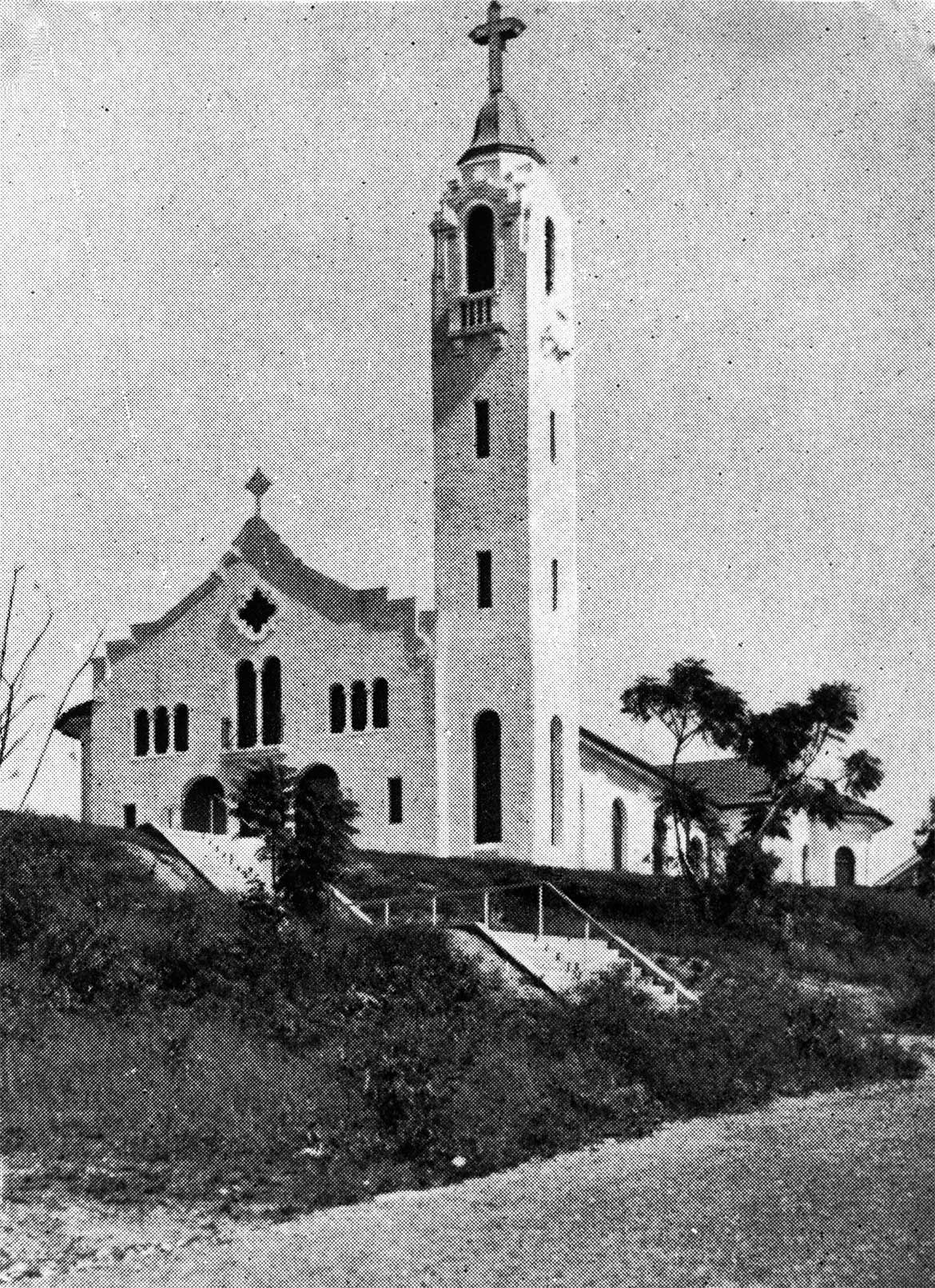
If at Hamilton Reach, this could suggest the Spanish mission revival-style church Our Lady of Victories Catholic Church on Roche Avenue, Bowen Hills due to its proximity to the river, therefore, it's a likely candidate (illustrated). Designed by prolific Brisbane architects TR Hall and GG Prentice during the 1920s and built as a memorial to the Catholic soldiers who served in World War One, the church would have been a fresh subject for Lahey’s brush. If this is the correct building, she was likely painting across the river from Newstead House, Hamilton.
Our Lady of Victories Catholic Church, c.1928

Our Lady of Victories Catholic Church at Bowen Hills c.1928 / Courtesy: John Oxley Library, State Library of Queensland, Brisbane / View full image
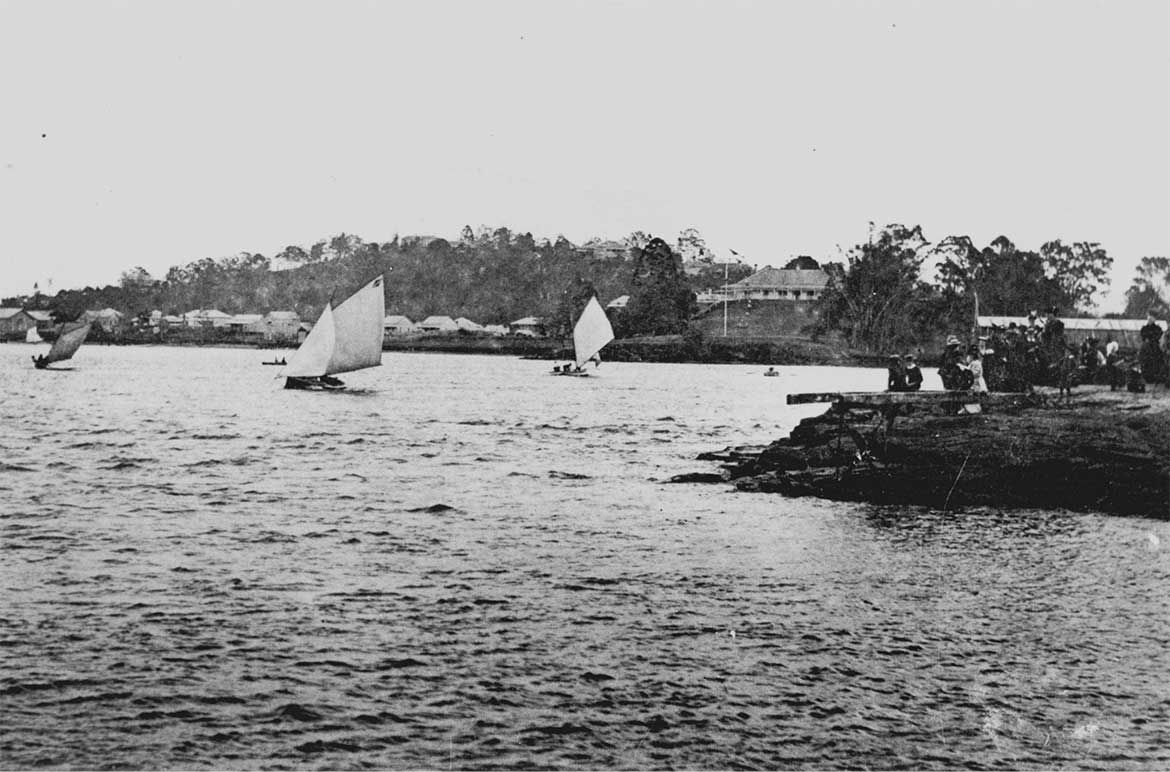
View across the river to Newstead House toward Bowen Hills, c.1895

Looking over the Brisbane River towards Newstead House c.1895 / Courtesy: John Oxley Library, State Library of Queensland, Brisbane / View full image
Our Lady of Victories Catholic Church, Bowen Hills

Aerial view of Bowen Hills looking south towards Brisbane, 2006 / 99184509831302061 / Courtesy: John Oxley Library, State Library of Queensland, Brisbane / Our Lady of Victories Catholic Church, Bowen Hills, 2013 / Courtesy: Chris Olszewski, Wikimedia Commons / View full image
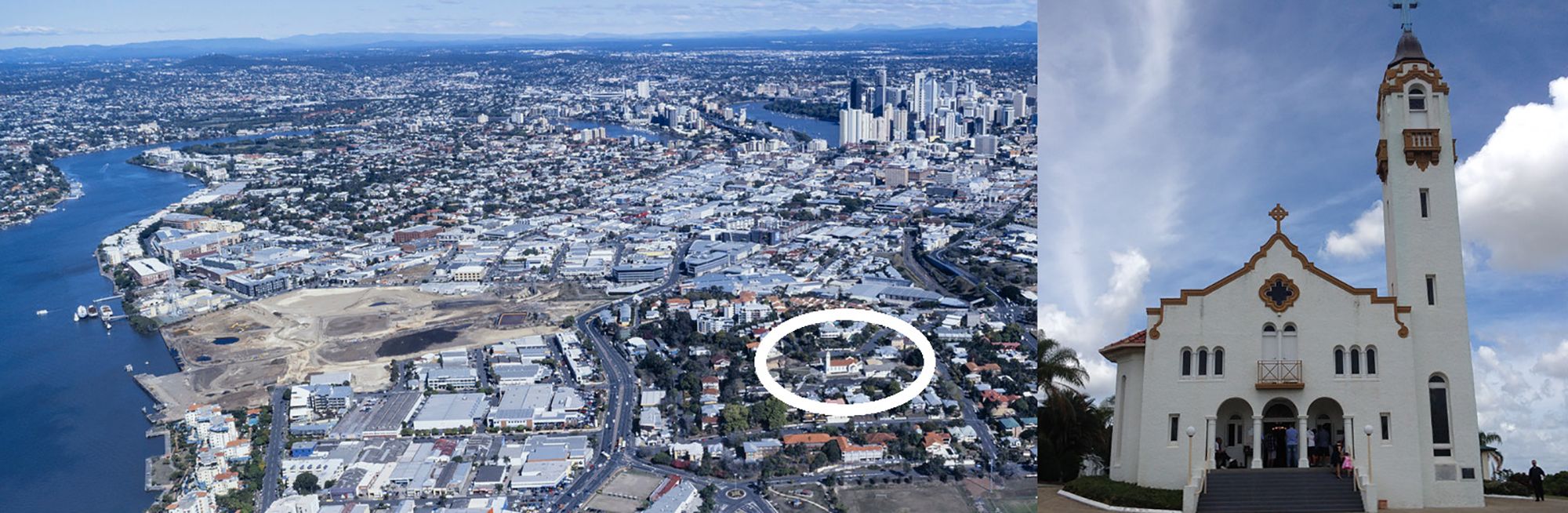
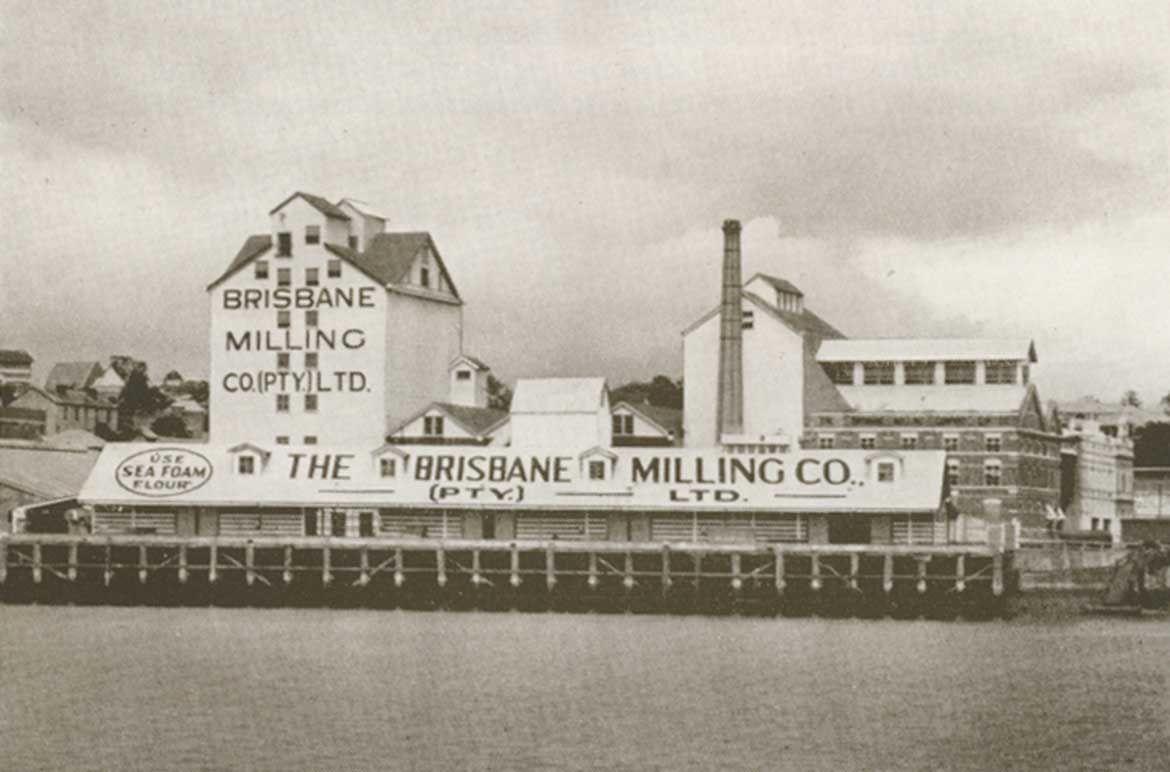
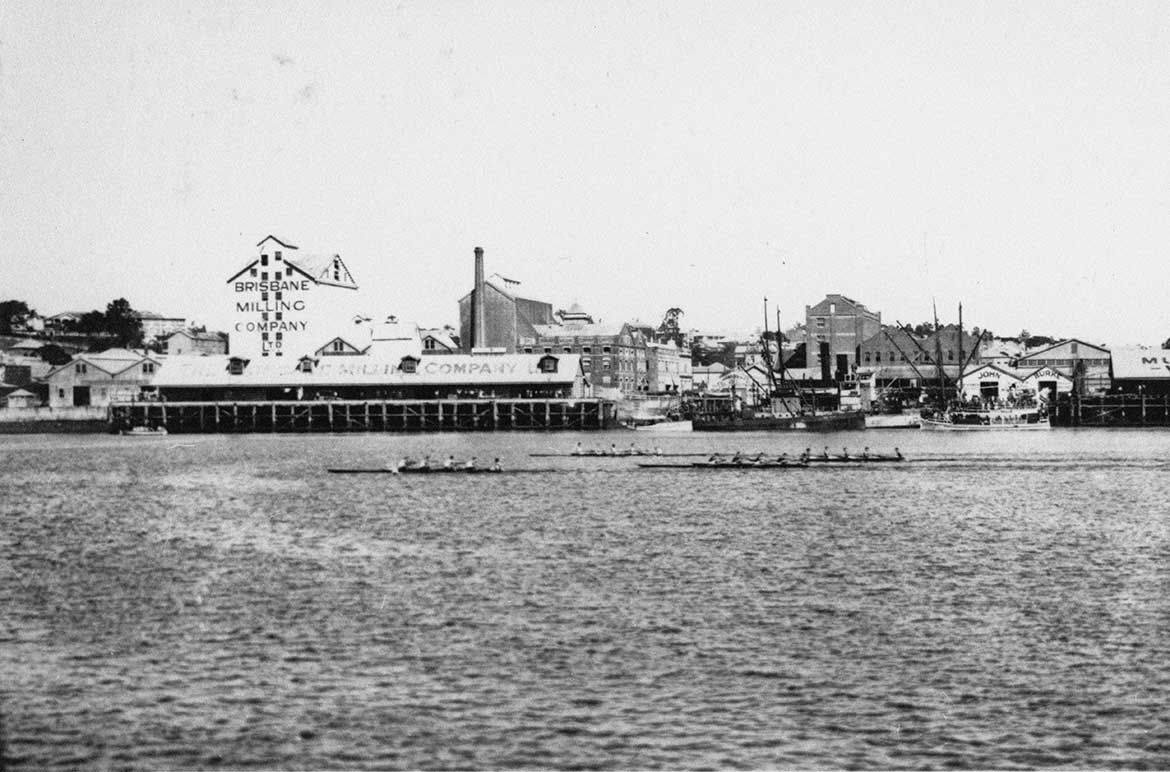
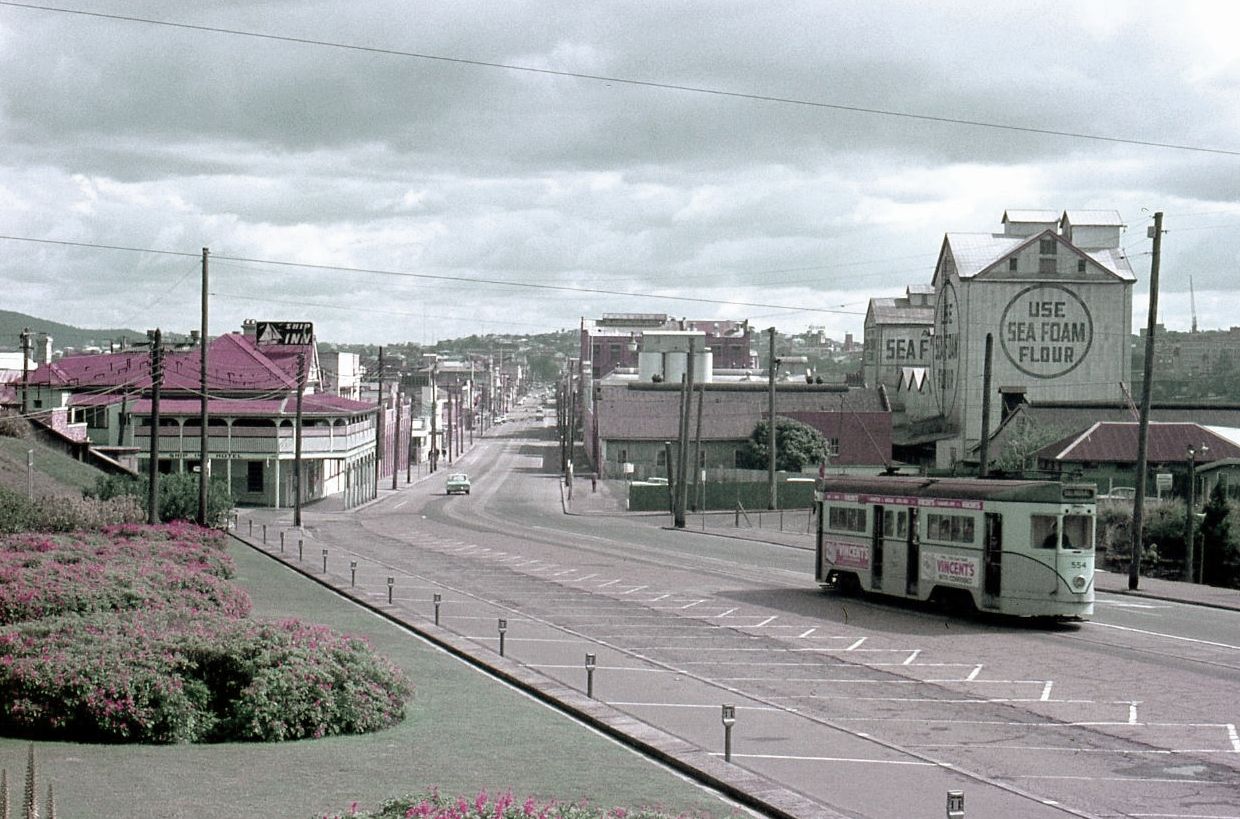
As Our Lady of Victories Catholic Church is somewhat further from the waters edge than the referenced white, red-roofed building in Lahey's painting, it's likely another building. A more plausible contender would be the old Sea Foam Flour Mill — formerly the Brisbane Milling Company — with its recognizable row of wharf pylons at waters edge, which was located at the corner of Stanley and Sidon Streets, opposite the Ship Inn at South Brisbane (illustrated). It was demolished in 1981 to make way for the redevelopment of the precinct and Riverside Park, which later became the site for Expo ’88.
By the time of its destruction, the mill’s painted surfaces had long since eroded, making the pristine red and white that Lahey depicts a distant recollection. If this is the case, her view would have been from the city side of the river at the North Quay wharves, downstream from the Victoria Bridge.

Vida Lahey, Australia 1882-1968 / Morning light, Brisbane River (detail) c.1925-30 / Oil on three-ply board / 19 x 19cm (sight) / Purchased 2012. QAG Foundation / Collection: Queensland Art Gallery | Gallery of Modern Art / View full image
Sea Foam Flour Mill (Brisbane Milling) & the bulk wheat silos

Brisbane Milling Company Limited (renamed Sea Foam Flour Mill) Stanley Street South Brisbane / Courtesy: John Oxley Library, State Library of Queensland, Brisbane / View full image

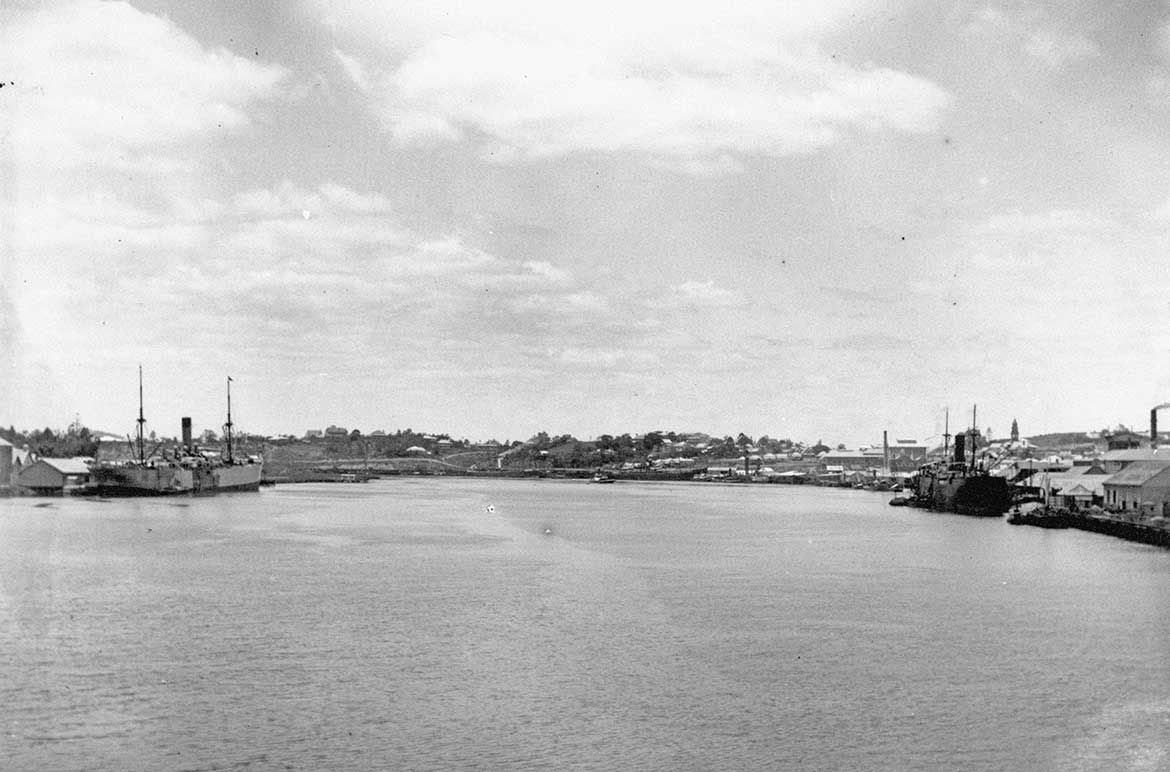
South Brisbane Reach of the Brisbane River c. 1928 in front of Sea Foam Flour Mill (Brisbane Milling) / Courtesy: John Oxley Library, State Library of Queensland, Brisbane / View full image
Sea Foam Flour Mill, 1968

Sea Foam Flour Mill, 1968 / Courtesy: Percy Meara, Remembering the Brisbane Tramways / View full image
View across the river toward Sea Foam Flour Mill (Brisbane Milling), Highgate Hill & Woolloongabba, c.1928

South Brisbane Reach of the Brisbane River c.1928 in front of Sea Foam Flour Mill (Brisbane Milling) / Courtesy: John Oxley Library, State Library of Queensland, Brisbane / View full image
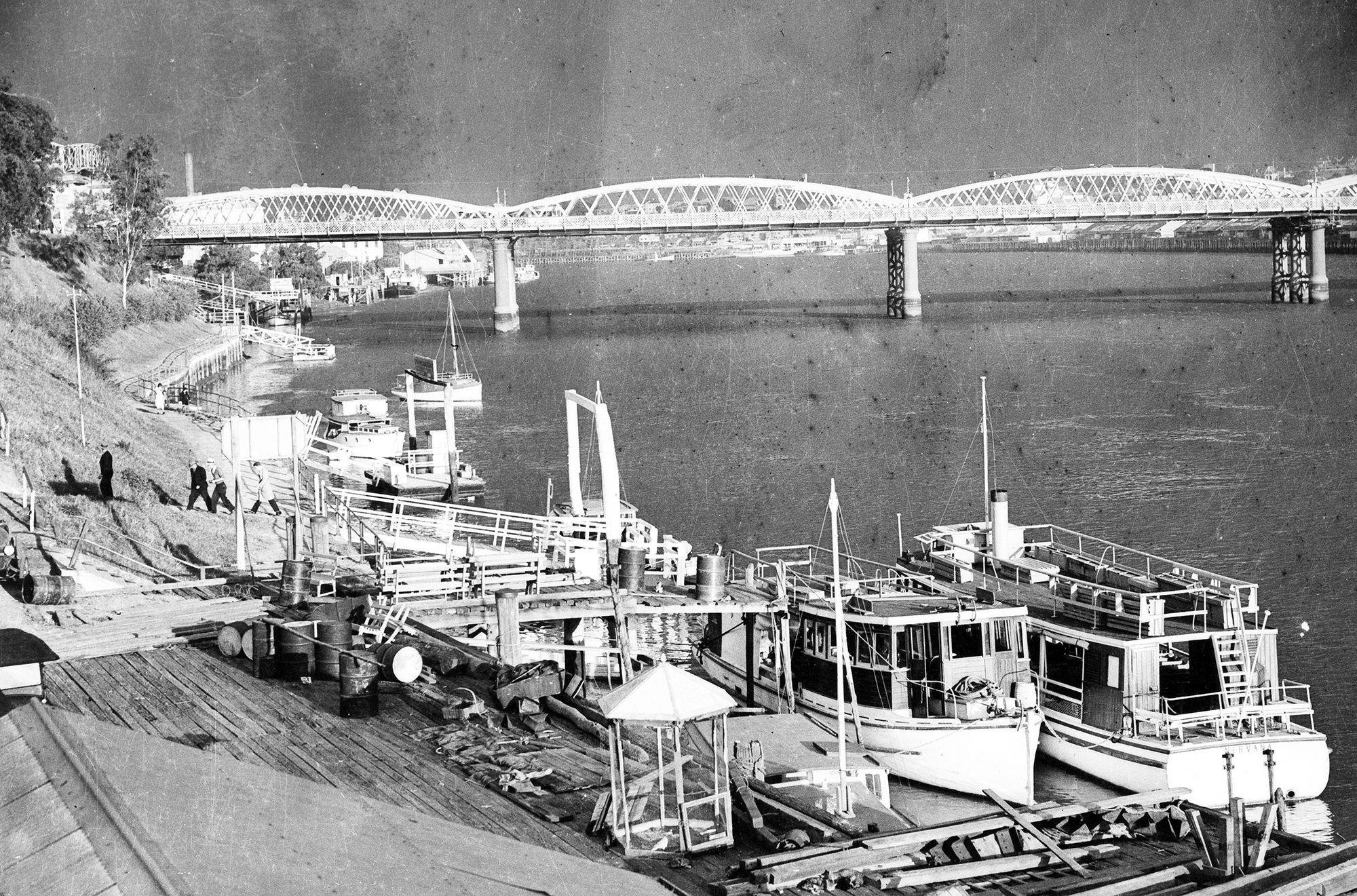
Boats moored at North Quay

Boats moored at North Quay, the Town Reach of the Brisbane River, 1925 / 99183798284002061 / Courtesy: John Oxley Library, State Library of Queensland, Brisbane / View full image


Boats berthed at wharves below North Quay, c.1936 / 99183509535802061 / Courtesy: John Oxley Library, State Library of Queensland, Brisbane / View full image
Edited curatorial extracts, research and supplementary material sourced and compiled by Elliott Murray, Senior Digital Marketing Officer, QAGOMA
Queensland Art Gallery | Gallery of Modern Art (QAGOMA)
Brisbane, Australia