
Frank Hinder's modernist principles

Frank Hinder, Australia 1906–92 / Studio abstract 1954 / Oil on composition board / 76.8 x 57.3cm / Purchased 1975 / Collection: Queensland Art Gallery | Gallery of Modern Art / © Frank Hinder Estate / View full image
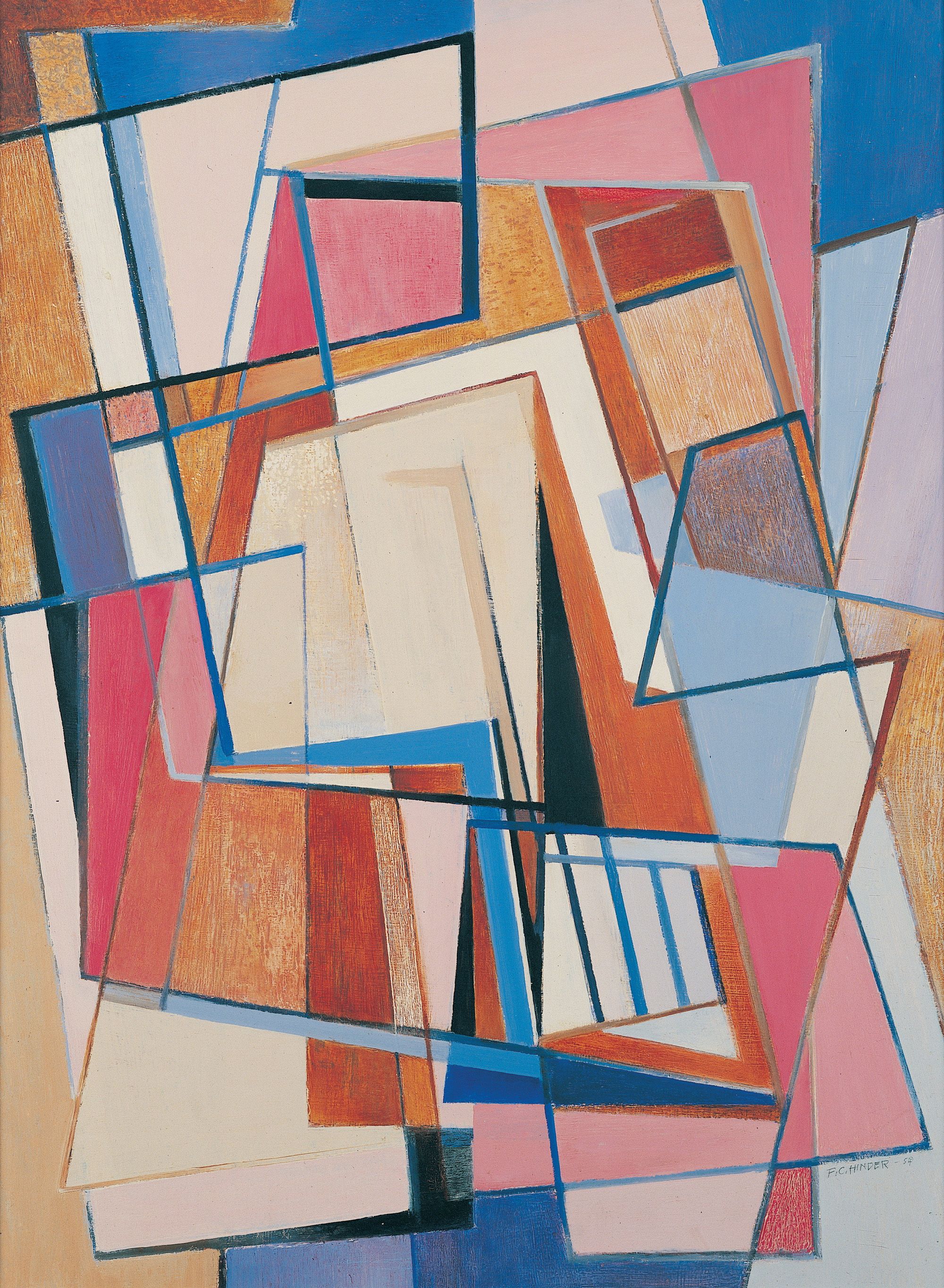
Studio abstract 1954 is based on the architectural structure of the artist's shared studio with American sculptor Margel Hinder (1906–95), where Frank Hinder (26 June 1906–92) painted the work, their house in bushland in the suburb of Gordon on the upper North Shore of Sydney.
Frank Hinder has used his knowledge of Modernism and the technique of dynamic symmetry from America to produce a painting that is balanced and classical. There is an interpenetration of line and colour. The palette is limited, sometimes transparent, at other times used to give a feeling of texture. The diagonal lines move in and out of different coloured areas, so instead of acting as confining borders they produce a unified field within the painting. There is a lively rhythm of colour and line across the surface which acknowledges structure, change of light, energy and space, and at the same time suggests the paraphernalia of creativity.
Frank Hinder Studio abstract 1954

Frank Hinder, Australia 1906–92 / Studio abstract 1954 / Oil on composition board / 76.8 x 57.3cm / Purchased 1975 / Collection: Queensland Art Gallery | Gallery of Modern Art / © Frank Hinder Estate / View full image
In Studio abstract, Frank Hinder has abandoned the use of curves and circles that he used in his previous paintings and has concentrated on the use of straight line, light and transparency of colour as a means of investigating time and space.
Frank Hinder Expansion 1938

Frank Hinder, Australia 1906–92 / Expansion 1938 / Watercolour on paper / 23.5 x 24.4cm / Purchased 1982 / Collection: Queensland Art Gallery | Gallery of Modern Art / © Frank Hinder Estate / View full image
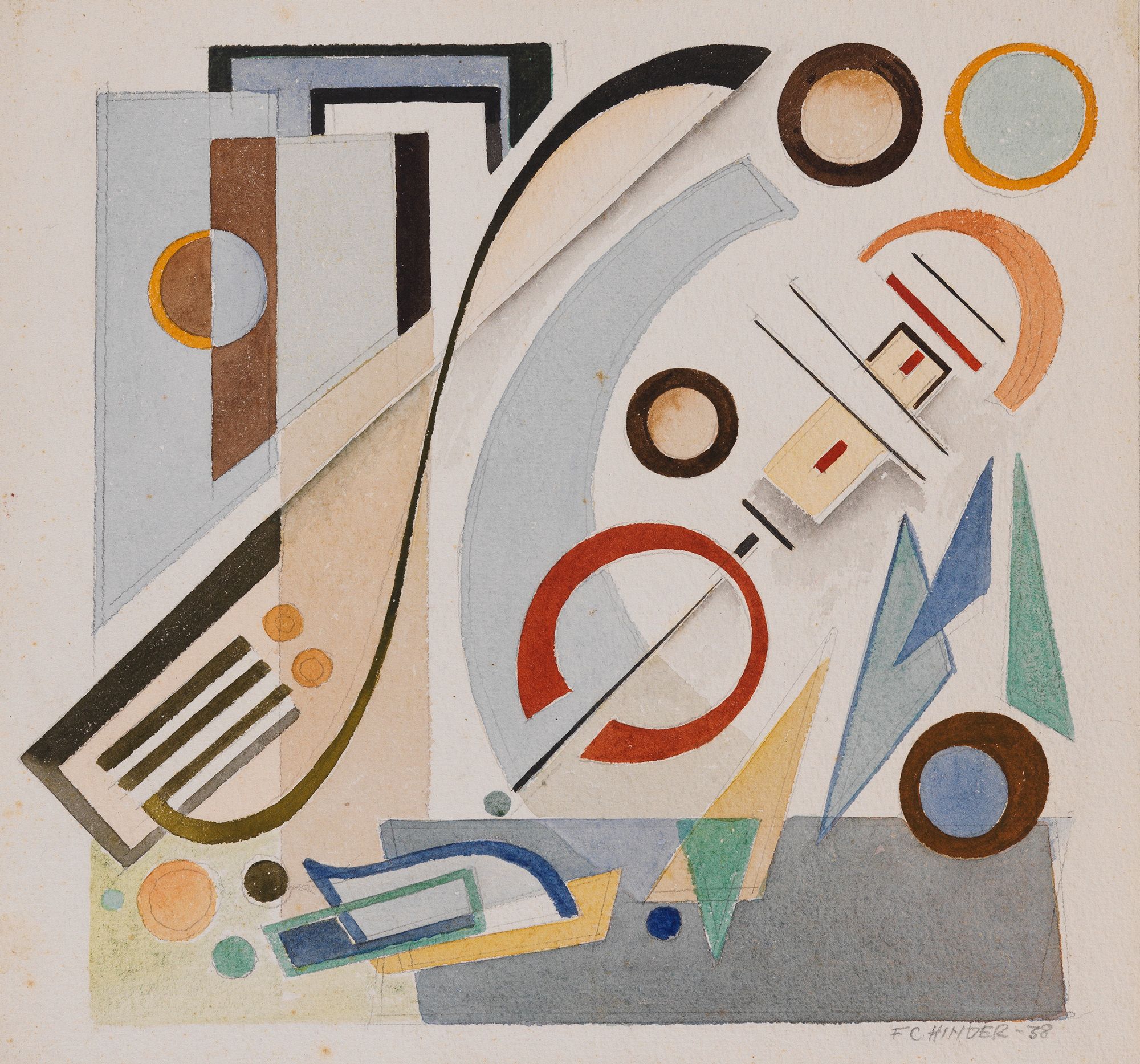
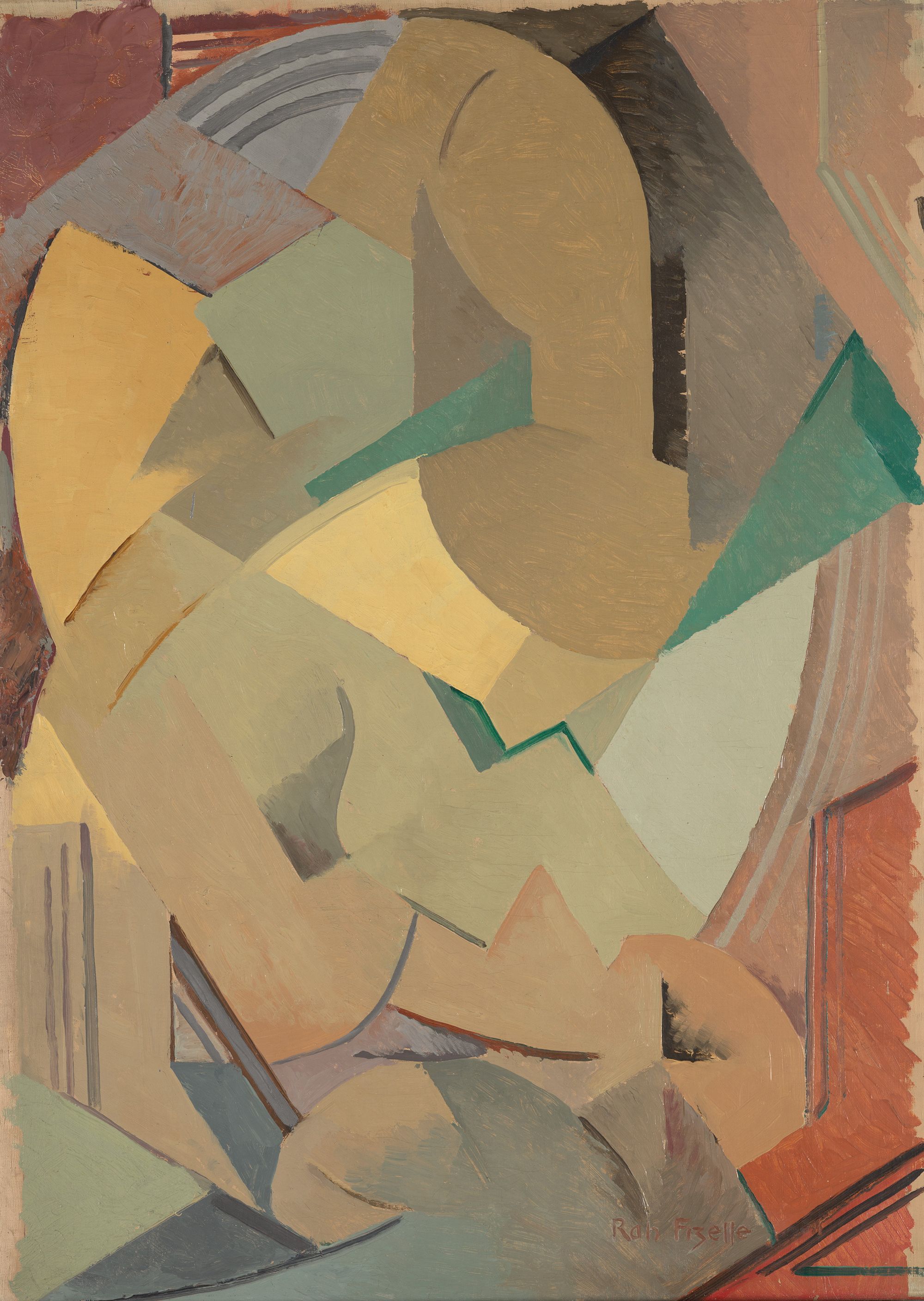
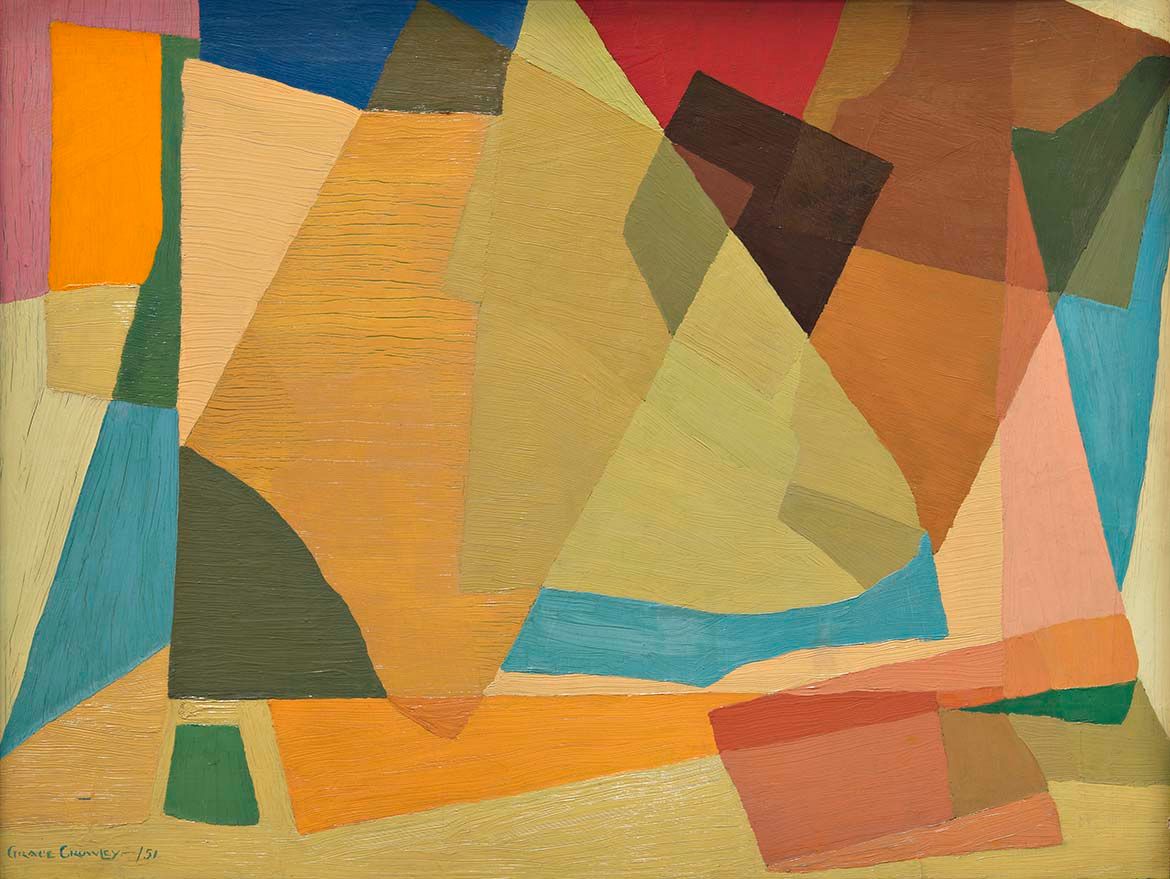
Frank Hinder's place in Australian art history and his influence on the art produced began in 1934 when the worsening conditions of the Depression in America led him to return to Australia from Boston with Margel to settle in Sydney. They arrived in a city with only three commercial galleries and a conservatively run state gallery; there was almost no interest in contemporary art nor were there many books, journals or reproductions which dealt with developments overseas. Nationalism and traditionalism dominated public taste and there was hostility towards abstraction. After the stimulation of Boston the Hinders initially felt they had landed in a cultural desert until they found a group of like-minded artists in Rah Fizelle, Grace Crowley and Ralph Balson.
Rah Fizelle Construction II c.1939

Rah Fizelle, Australia 1891–1964 / Construction II c.1939 / Oil on board / 91 x 65cm / Purchased 2012 with funds from Philip Bacon AM through the QAG Foundation / Collection: Queensland Art Gallery | Gallery of Modern Art / © Rah Fizelle Estate / View full image
Grace Crowley (Abstract) 1951

Grace Crowley, Australia 1890-1979 / (Abstract) 1951 / Oil on cardboard / 69 x 91cm / Purchased 1995. QAG Foundation / Collection: Queensland Art Gallery | Gallery of Modern Art / © Grace Crowley Estate / View full image
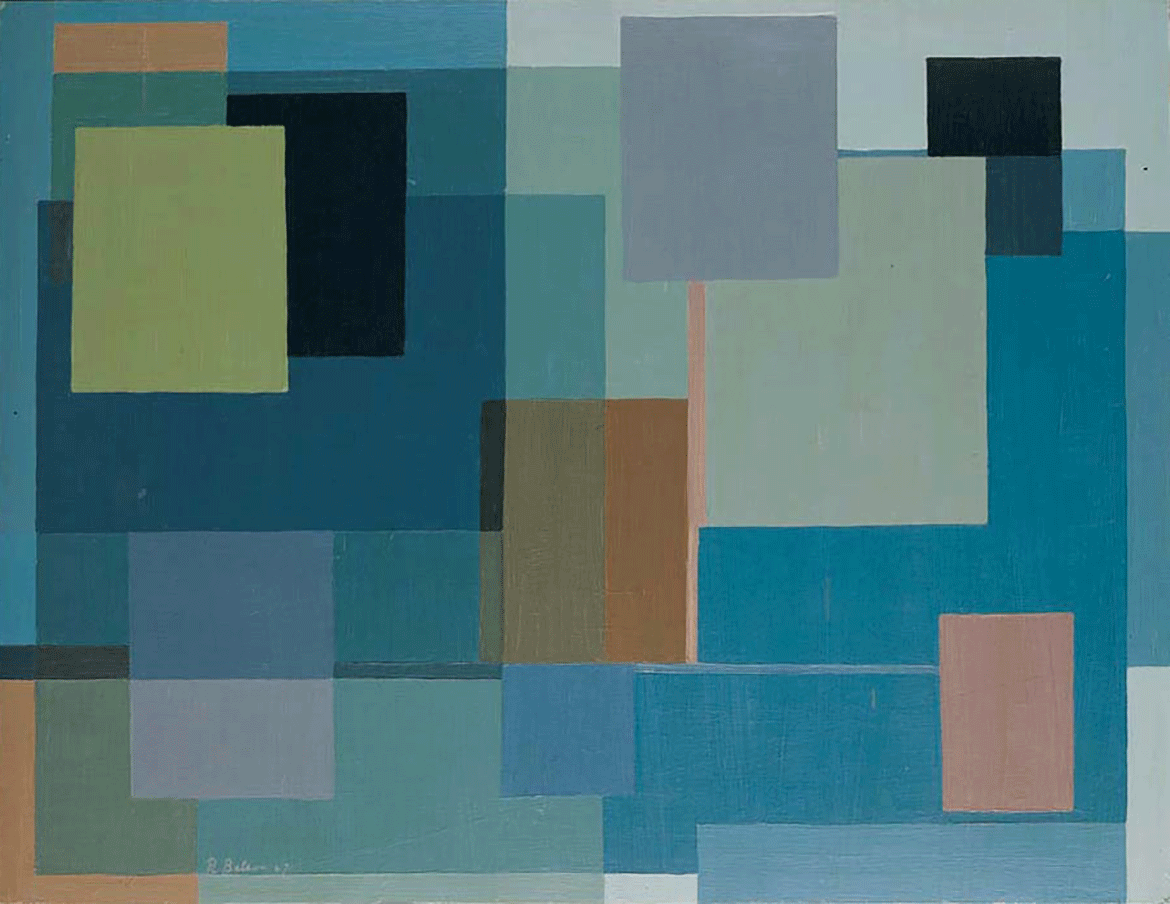
Ralph Balson Constructive painting 1947

Ralph Balson, Australia 1890-1964 / Constructive painting 1947 / Oil on composition board / 69.5 x 90.7cm / Purchased 1984 / Collection: Queensland Art Gallery | Gallery of Modern Art / © Ralph Balson Estate / View full image
Edited extract from ‘Encountering Dynamic Symmetry: Frank Hinder and Margel Hinder‘ by Christine France from Brought to Light: Australian Art 1850-1965, Queensland Art Gallery, 1998.
Queensland Art Gallery | Gallery of Modern Art (QAGOMA)
Brisbane, Australia