

Damien Hirst rebels against mortality

Damien Hirst, United Kingdom b.1965 / For the love of God, laugh 2007 / Silkscreen print with glazes and diamond dust on paper / Purchased 2008 with funds from the Estate of Lawrence F King in memory of the late Mr and Mrs S W King through the QAG Foundation / Collection: Queensland Art Gallery | Gallery of Modern Art / © Damien Hirst/DACS/Copyright Agency / View full image
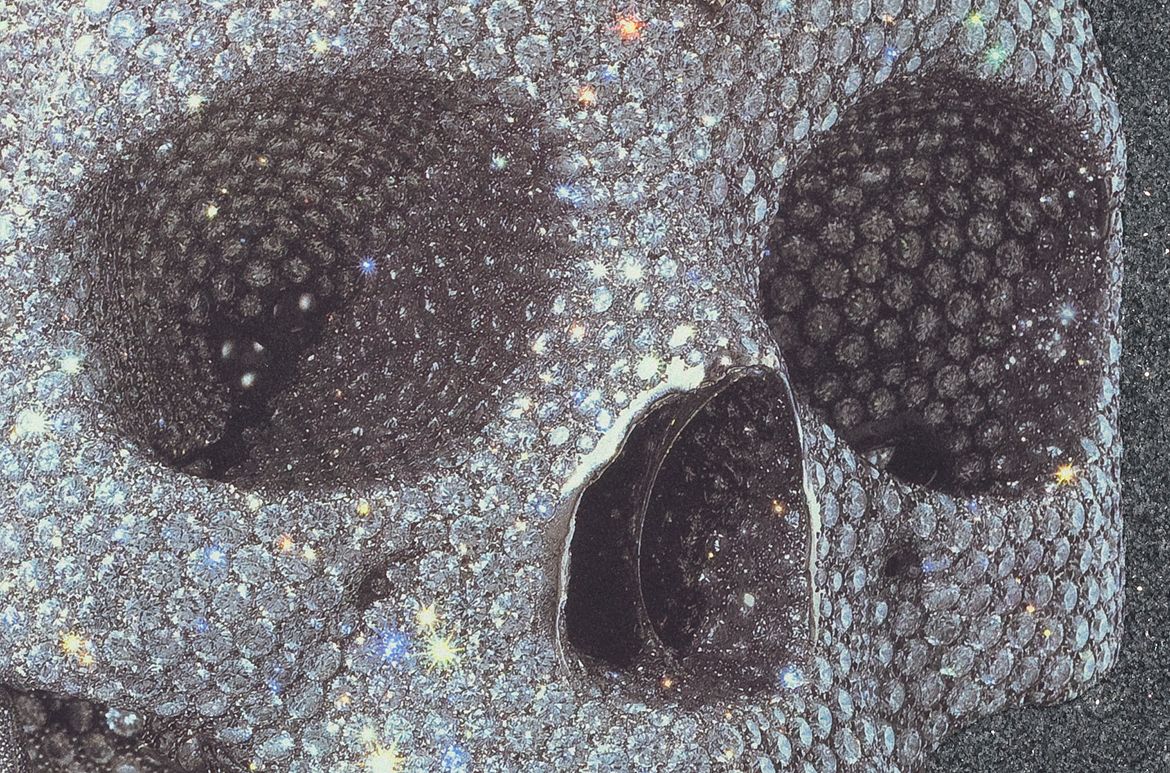
Renowned for creating artworks that explore the dilemmas of human existence, British artist Damien Hirst’s For the love of God, laugh rebels against mortality by transforming the human skull into a glittering object of desire. Coated with diamond dust, the print depicts Hirst’s sculptural work For the Love of God 2007, a platinum cast of an eighteenth‑century skull encrusted with 8601 diamonds.
A familiar motif in memento mori still lifes, the skull is a haunting symbol of contemplation and foreboding. Our attention is drawn to its smile — the real human teeth the only part of the work not covered by diamonds — bringing a sardonic humour and sense of contempt that suggests victory over decay.
Damien Hirst For the love of God, laugh 2007

Damien Hirst, United Kingdom b.1965 / For the love of God, laugh 2007 / Silkscreen print with glazes and diamond dust on paper / Purchased 2008 with funds from the Estate of Lawrence F King in memory of the late Mr and Mrs S W King through the QAG Foundation / Collection: Queensland Art Gallery | Gallery of Modern Art / © Damien Hirst/DACS/Copyright Agency / View full image

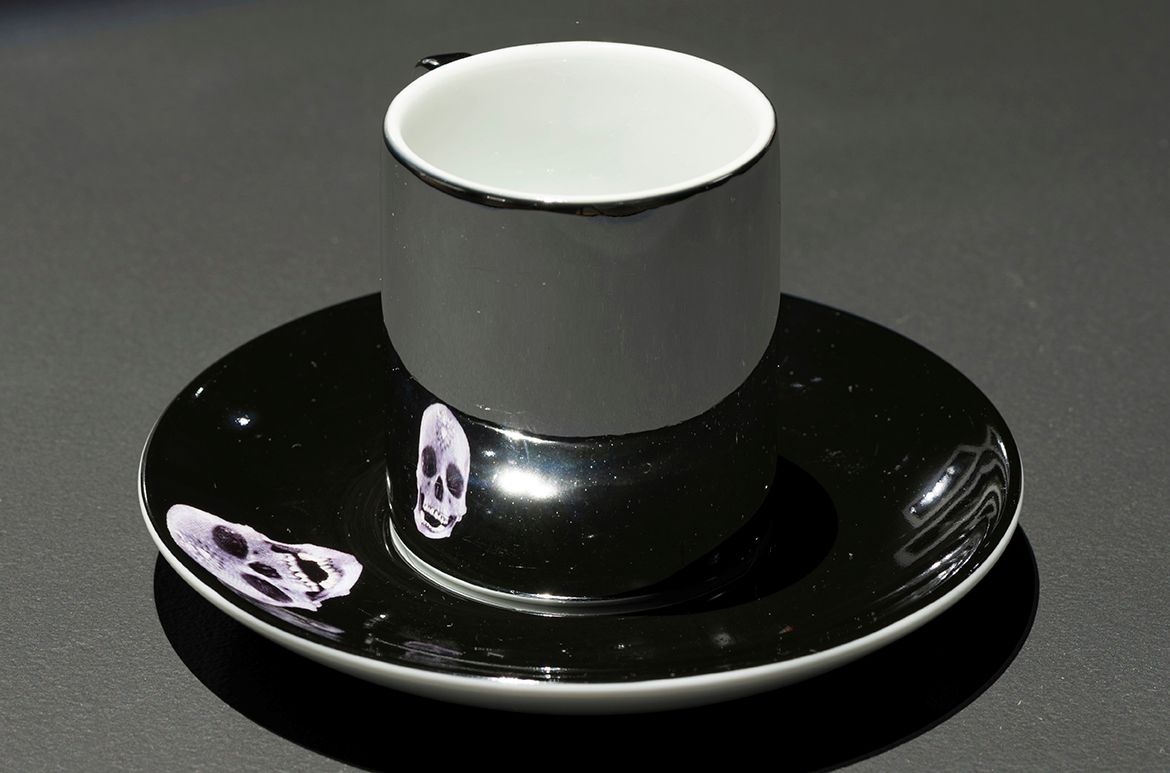
Damien Hirst For the love of God 2007

Damien Hirst, United Kingdom b.1965 / For the love of God 2007 / Anamorphic porcelain expresso cup and saucer / Proposed gift of Scott Redford 2022 / Collection: QAGOMA Research Library / © Damien Hirst/DACS/Copyright Agency / Photograph: C Callistemon © QAGOMA / View full image
Watch | The making of the sculptural work For the Love of God
Delve into the QAGOMA Collection
A key figure in the Young British Artists (YBAs) movement in late 1980s and early ’90s Britain, Hirst uses an unashamedly direct visual aesthetic to comment on the transience of life and the futility of wealth.
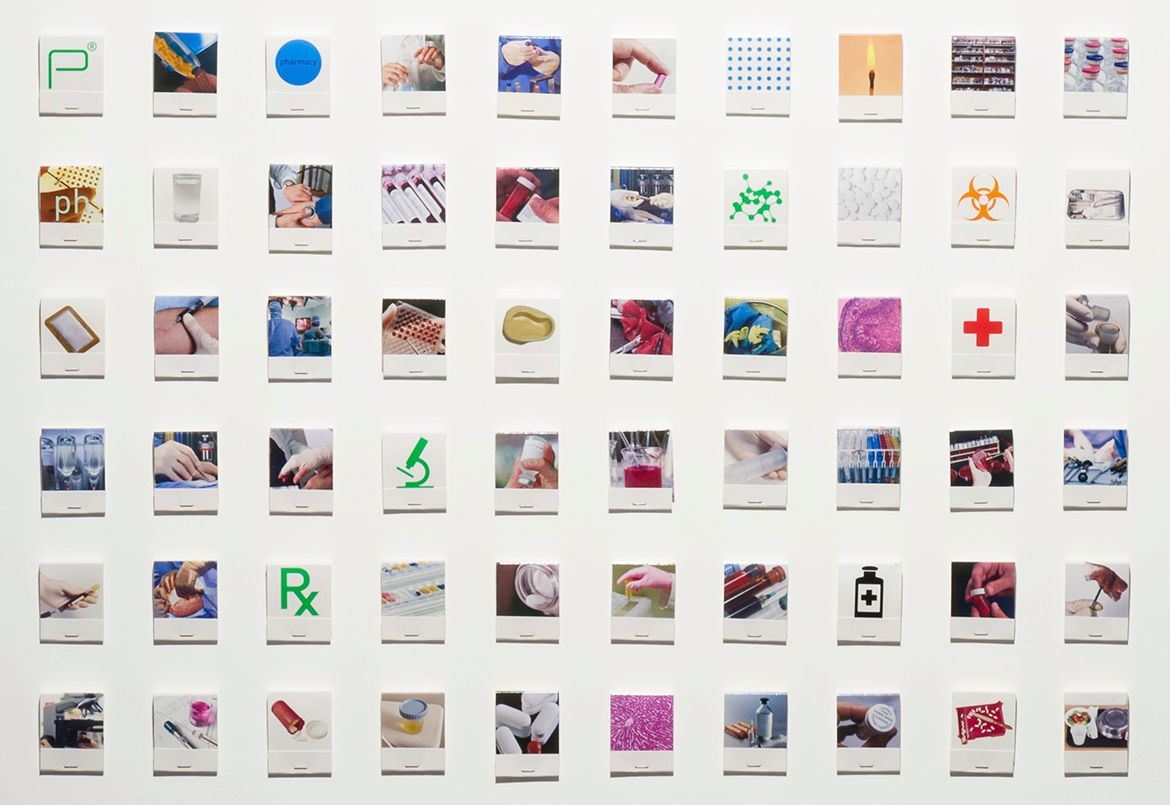
Inspired by Hirst’s site-specific installation Pharmacy 1992, a life-sized replica of a working British pharmacy, the Pharmacy matchbooks draw on the artist’s interest in medicine as a powerful belief system that offers an antidote to mortality. The images that appear on the front of the matchbooks include visual and typographical references to pharmacology, such as blood‑filled vials, pills and medical instruments. Bringing attention to the commercial pursuit of science — to offer a remedy for death and decay — Hirst juxtaposes these images with physical matches, igniting a sense of tension in the work.
Damien Hirst Pharmacy matchbooks

Damien Hirst, United Kingdom b.1965 / Pharmacy 1998–2003 / 60 matchbooks and presentation box / Proposed gift of Scott Redford 2022 / Collection: QAGOMA Research Library / © Damien Hirst/DACS/Copyright Agency / View full image
Queensland Art Gallery | Gallery of Modern Art (QAGOMA)
Brisbane, Australia