
City Before Our Eyes: Between dwelling, desire & density

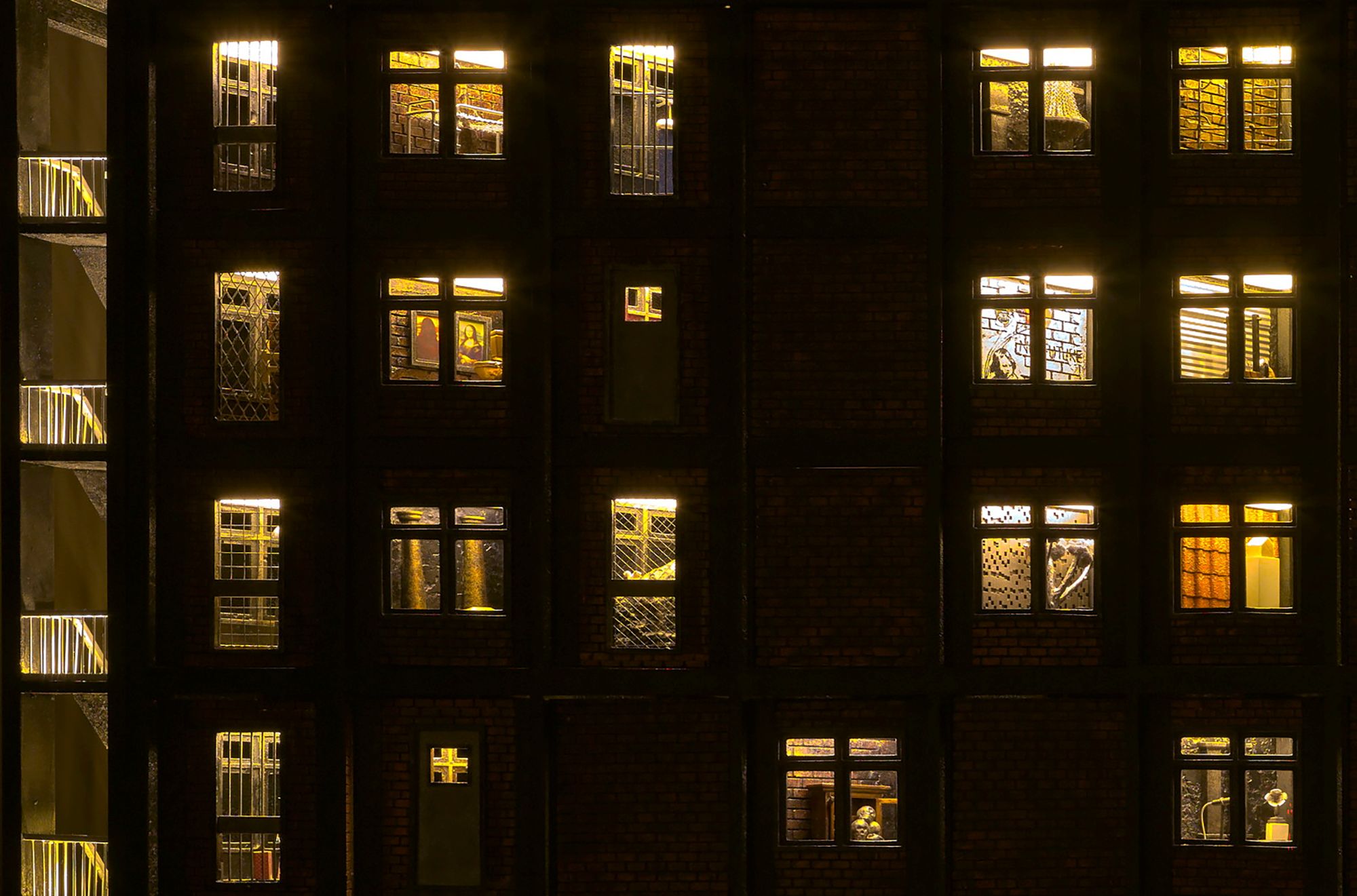
Aditya Novali, Indonesia, b.1978 / The Wall: Asian Un(real) Estate Project 2018 / Plastic, cast, steel, zinc, brass, copper, wood, wooden board, fabric, LED light with adaptor, paint, cable, resin / 180 x 440 x 25cm / Purchased with funds from Tim Fairfax AC through the QAGOMA Foundation 2018 / Collection: Queensland Art Gallery | Gallery of Modern Art / © Aditya Novali / View full image
Urban architecture has long provided artists with a lens through which to explore both utopian and dystopian visions of society. ‘City Before Our Eyes’ brings together works from the QAGOMA Collection that trace this tension across painting, video and sculpture. Moving from vertiginous skylines and claustrophobic interiors to fleeting moments of humour and reverie, the exhibition asks what it means to live — and imagine — life in the metropolis.
For much of the twentieth century, the city was cast as a site of transformation: a place where ambition might be realised and identities remade. Yet contemporary urban life is now defined by pressure: competition for work, insecure housing, exhausting commutes and relentless development. Together, these artworks rise above the seductive linearity of a single story of decline or progress, revealing instead how aspiration and anxiety are built into the very structures that surround us.
Howard Arkley Stucco home 1991

Howard Arkley, Australia, 1951-99 / Stucco home 1991 / Synthetic polymer paint (with 'Hammertone') on canvas / 167 x 167cm / Purchased 1994.QAG Foundation / Collection: Queensland Art Gallery | Gallery of Modern Art / © The Estate of Howard Arkley, Courtesy Kalli Rolfe Contemporary / View full image
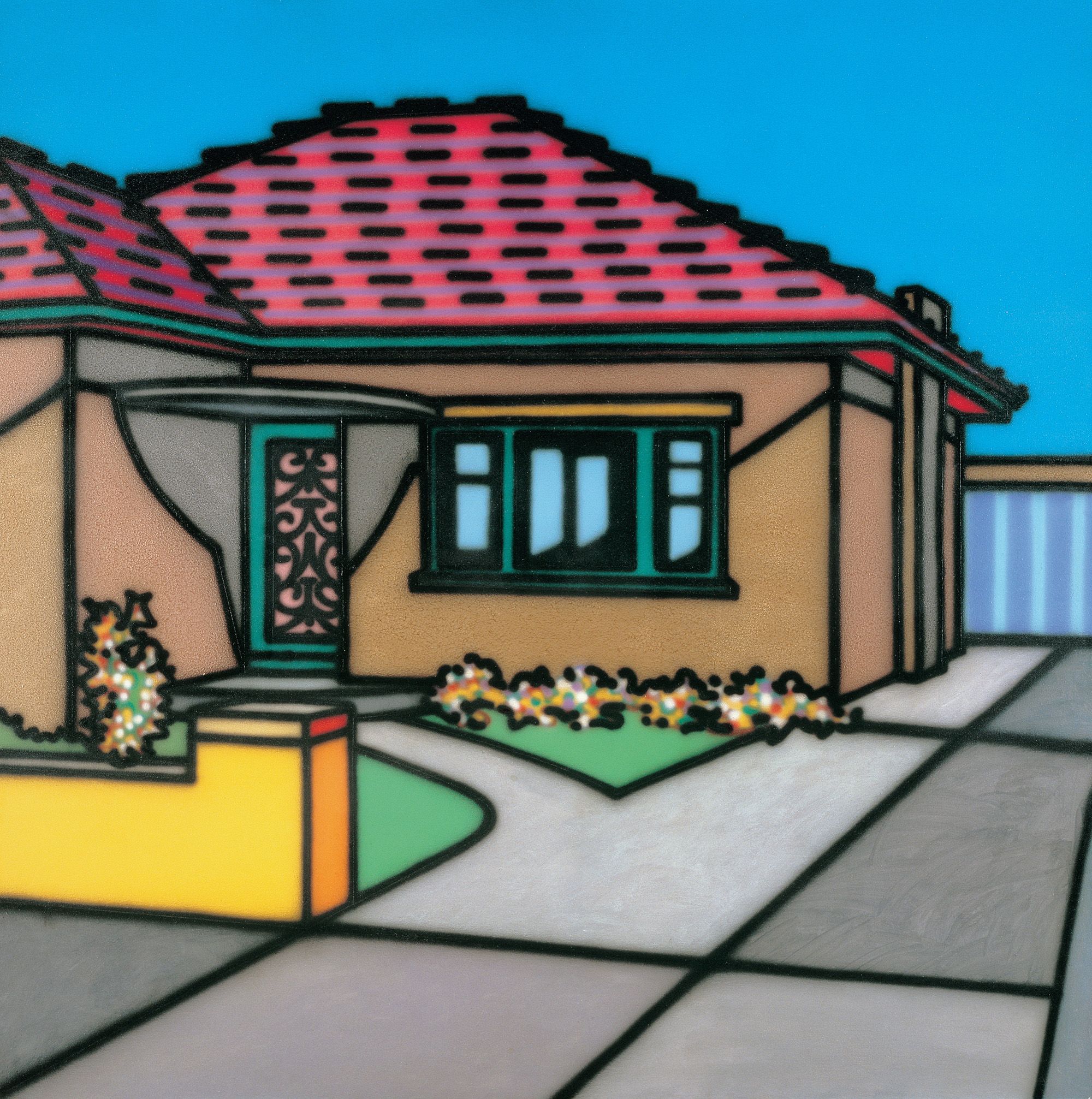
In Stucco home 1991, Howard Arkley turns from the mythic outback — long privileged in Australian art — to the suburbs, where most Australians live. Its meticulously airbrushed surface renders each detail with heightened clarity, transforming an ordinary house into a vivid, almost luminous image. Rather than tipping into caricature, this precision sharpens our attention to the aesthetic choices embedded in suburban design. Arkley was fascinated by the stylistic variety contained within what appears to be a limited architectural template. Flyscreen patterns and decorative surfaces become sites of projection: the suburban house as a vehicle for self-expression and aspiration. In foregrounding this environment, Arkley unsettles the hierarchy that has historically elevated rural myth above metropolitan reality.
Jenny Watson Sleeping in New York 1991

Jenny Watson, Australia b.1951 / Sleeping in New York 1991 / Oil, pigment, plastic pearls and buttons on canvas / 198 x 285cm / Purchased 1992 under the Contemporary Art Acquisition Program with funds from Feez Ruthning, Solicitors & Notaries through the QAG Foundation / Collection: Queensland Art Gallery | Gallery of Modern Art / © Jenny Watson / View full image
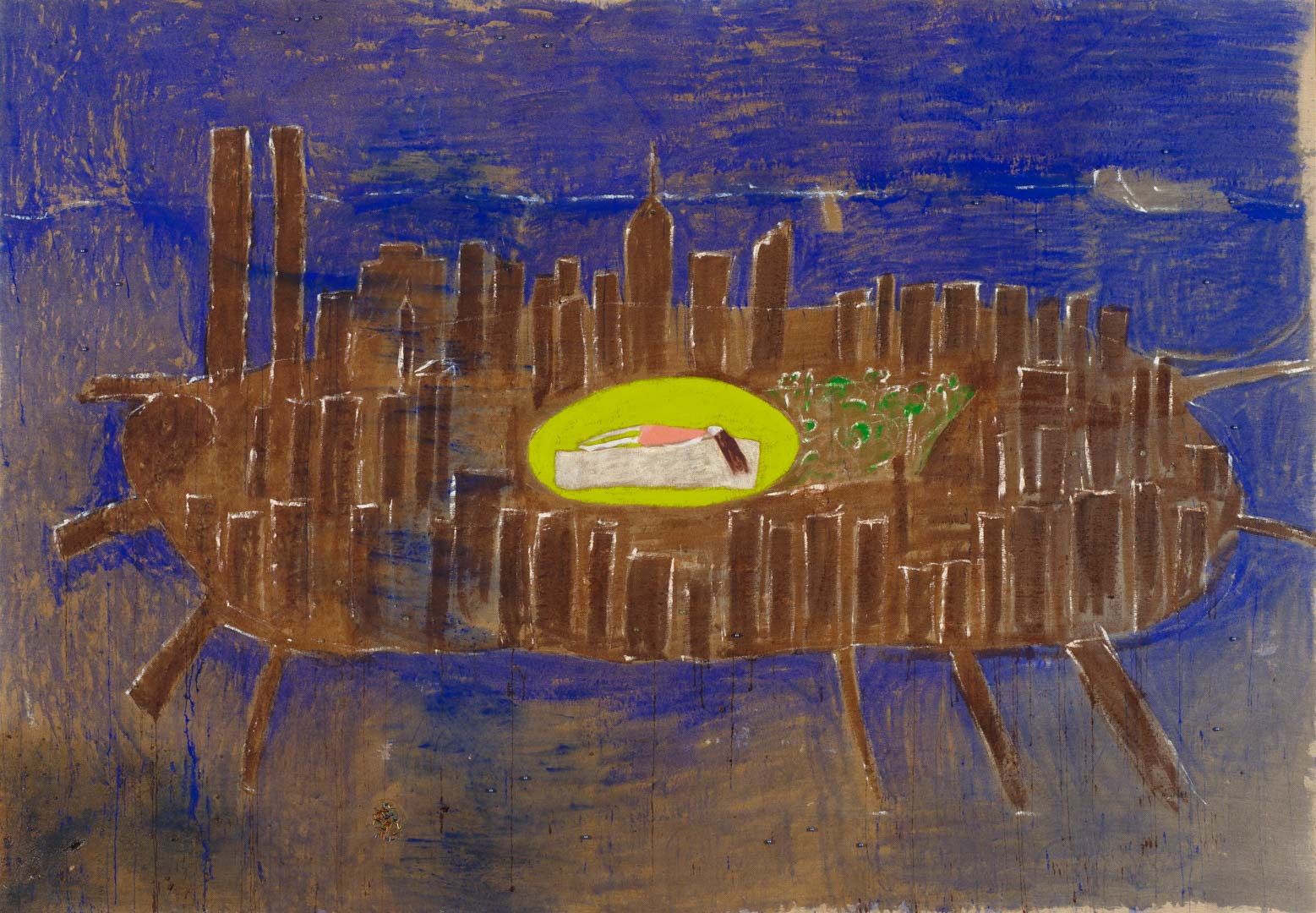
If Arkley attends to the facade, Jenny Watson turns inward. In Sleeping in New York 1991, she depicts herself asleep inside a hovering vision of Manhattan. The city appears mirage-like, suspended in a cobalt sky. Painted just after she secured representation in New York, the work oscillates between desire and relief. The metropolis is at once an artistic epicentre and an almost unattainable dream. Watson positions herself as both participant and outsider, capturing a deeply personal dimension of urban ambition: the longing to belong to a cultural centre while remaining physically and emotionally distant from it.
Nigel Cooke To work is to play 2008

Nigel Cooke, United Kingdom b.1973 / To work is to play 2008 / Oil on canvas / 220.5 x 370.5cm / Purchased 2008 with funds from the Estate of Lawrence F. King in memory of the late Mr and Mrs S.W. King through the QAG Foundation / Collection: Queensland Art Gallery | Gallery of Modern Art / © Nigel Cooke / View full image
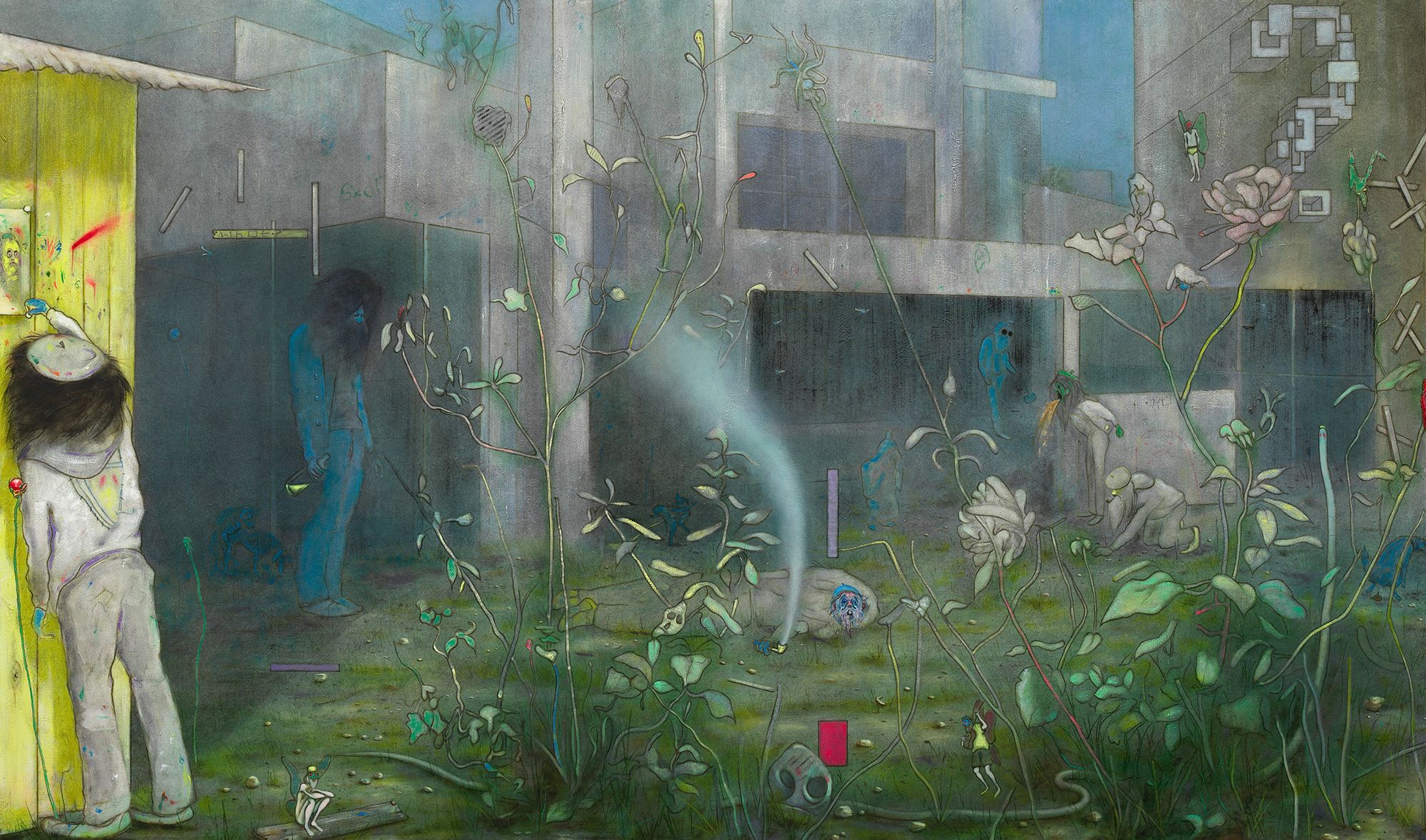
Questions of artistic identity and urban mythology resurface in Nigel Cooke’s To work is to play 2008. Using techniques indebted to seventeenth-century Flemish painters, Cooke stages a tragicomic vision of the ‘tortured’ artist. Clownish figures wander through a decaying industrial landscape reminiscent of his native Manchester. A mausoleum-like building — echoing the brutalist British public architecture of the 1960s and ’70s — looms in the background, daubed in graffiti. Through this collision of labour-intensive technique and contemporary subculture, Cooke deflates the grand utopian claims of modernism, revealing their susceptibility to erosion and cliche.
Thukral & Tagra Dominus Aeris – The Great, Grand Mirage 2009

Thukral & Tagra, India est. 2000 / Dominus Aeris – The Great, Grand Mirage 2009 / Synthetic polymer paint and oil on canvas / Triptych: 213.5 x 213.5cm (each panel); 213 x 640cm (installed) / The Kenneth and Yasuko Myer Collection of Contemporary Asian Art. Purchased 2010 with funds from Michael Sidney Myer through the QAG Foundation / Collection: Queensland Art Gallery | Gallery of Modern Art / © Thukral and Tagra / View full image
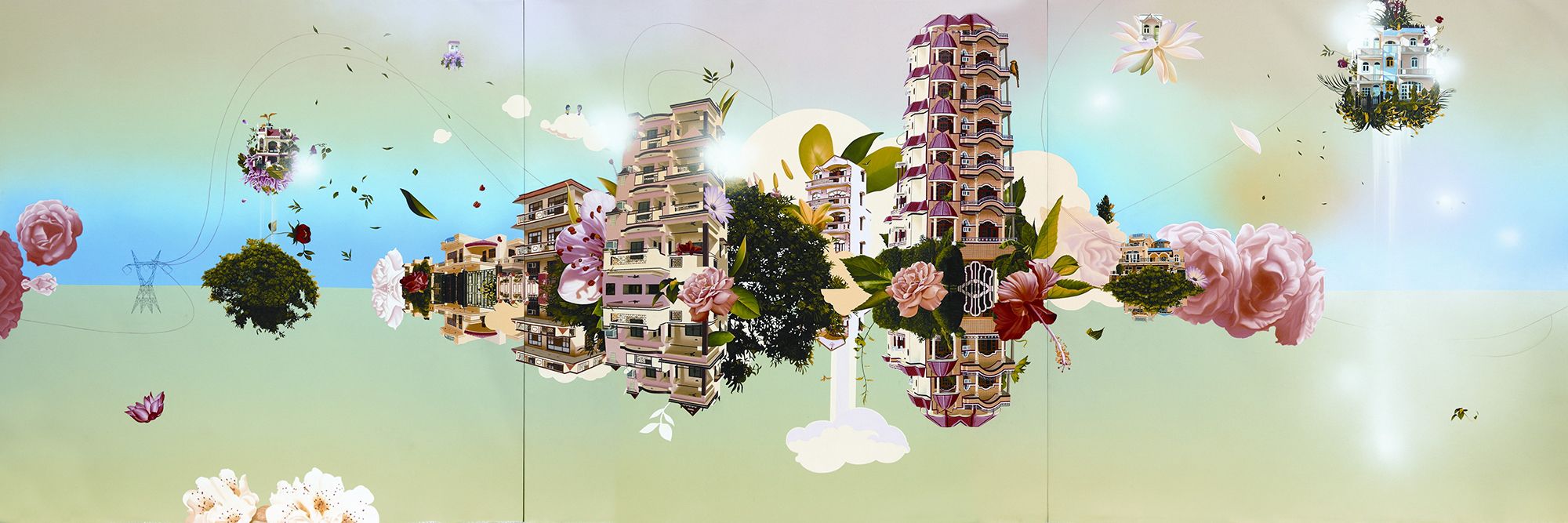
While Cooke critiques European modernist legacies, Thukral & Tagra examine the global circulation of architectural desire. In Dominus Aeris – The Great, Grand Mirage 2009, baroque villas rise in a dreamlike skyscape. These fantasy structures, modelled on European styles yet proliferating across parts of India, reflect the aspirations of a growing Punjabi middle class. Their ornate facades signal upward mobility, but they are often ill-suited to local climates and disconnected from local building traditions. The work situates architecture as performance: a stage on which globalised identities are rehearsed and displayed.
Dede Eri Supria Labyrinth (from ‘Labyrinth’ series) 1987–88

Dede Eri Supria, Indonesia b.1956 / Labyrinth (from ‘Labyrinth’ series) 1987–88 / Oil on canvas / 207.3 x 227.5cm / The Kenneth and Yasuko Myer Collection of Contemporary Asian Art. Purchased 1993 with funds from The Myer Foundation and Michael Sidney Myer through the QAG Foundation / Collection: Queensland Art Gallery | Gallery of Modern Art / © Dede Eri Supria / View full image
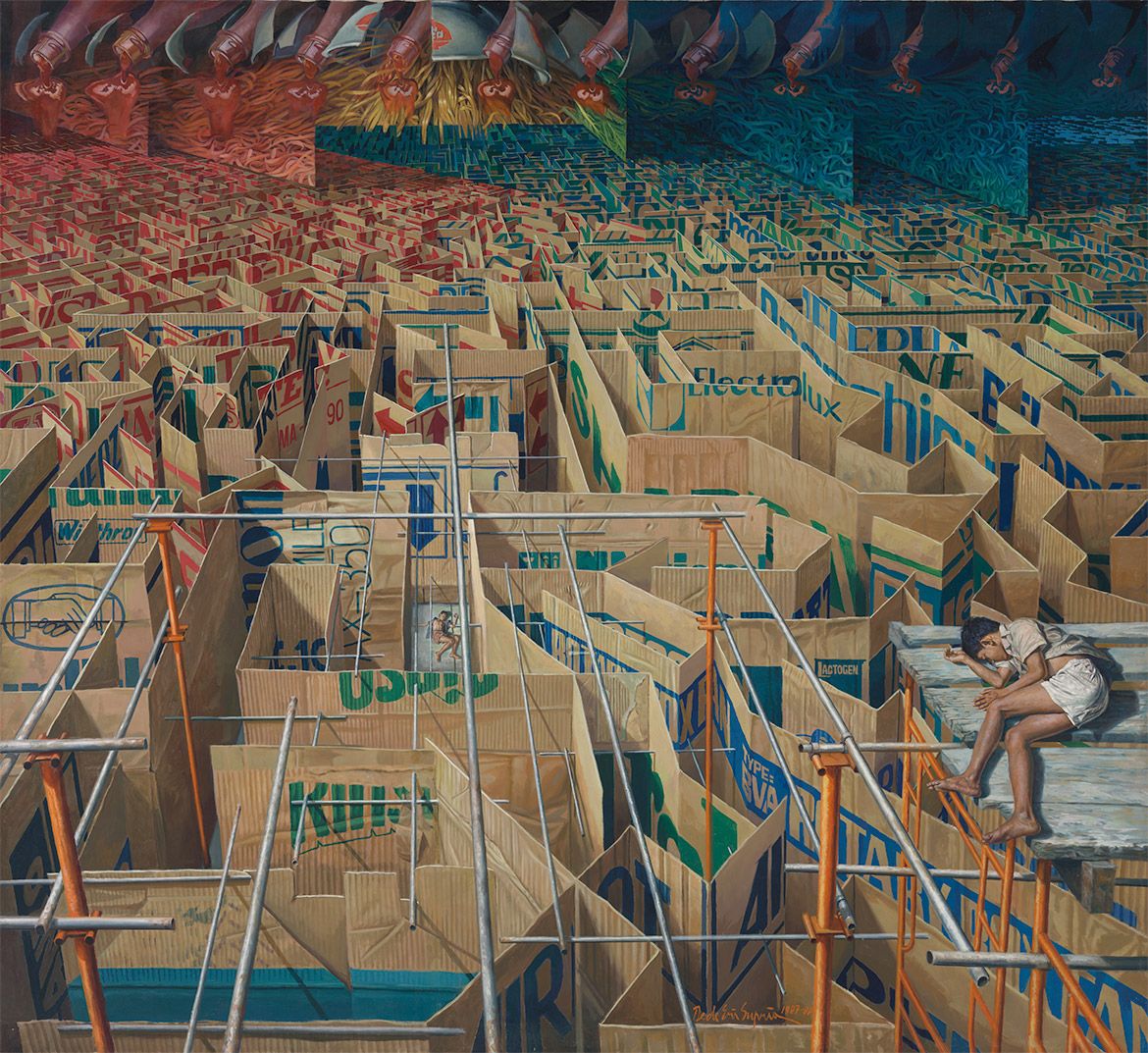
Urban inequality comes sharply into focus in the ‘Labyrinth’ paintings of Dede Eri Supria. Rejecting photorealism’s typical fascination with sleek perfection, Supria constructs vast slum environments from commercial packaging, viewed from an elevated perspective. The illusionistic detail heightens the work’s unsettling logic: consumer detritus becomes the very fabric of habitation. Here, the city’s promise curdles into congestion and precarity. Human suffering is framed as both incidental and structurally entangled with capitalism and mass consumption.
Aditya Novali The Wall: Asian Un(real) Estate Project 2018

Aditya Novali, Indonesia, b.1978 / The Wall: Asian Un(real) Estate Project 2018 / Plastic, cast, steel, zinc, brass, copper, wood, wooden board, fabric, LED light with adaptor, paint, cable, resin / 180 x 440 x 25cm / Purchased with funds from Tim Fairfax AC through the QAGOMA Foundation 2018 / Collection: Queensland Art Gallery | Gallery of Modern Art / © Aditya Novali / View full image
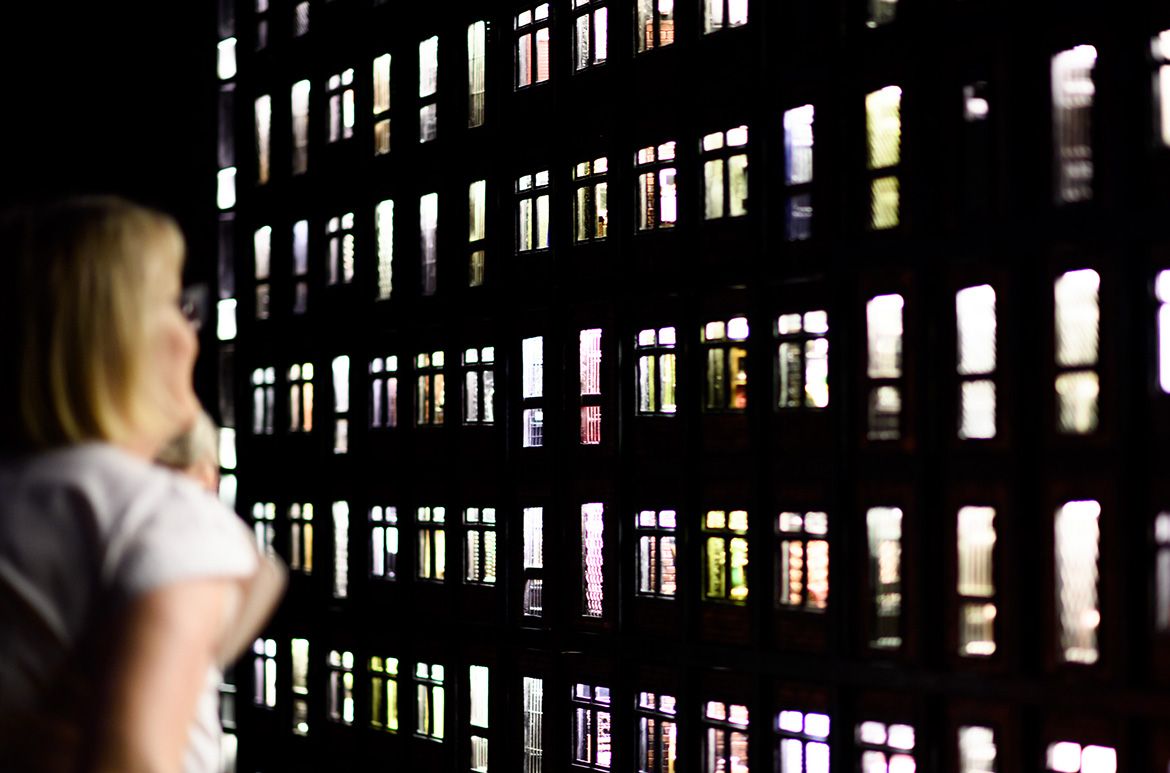
Housing crises also underpin Aditya Novali’s The Wall: Asian Un(real) Estate Project 2018, a speculative model of a 154-room apartment building. Inspired by patterns of urban development in Indonesia, where affordable housing remains scarce, the work reflects on the proliferation of kampung — informal settlements — that arise when formal planning fails. Novali imagines a dense vertical solution that is at once pragmatic and faintly dystopian, prompting viewers to consider who urban growth truly serves.
Andrea Fraser Little Frank and his carp 2001

Andrea Fraser, United States b.1965 / Little Frank and his carp 2001 / Digital Betacam and DVD formats (transferred from Mini DV):6 minutes, colour, sound / (Betacam box:17 x 11 x 3cm;DVD case:18.9 x 13.5 x 1.3cm) / Purchased 2004 / Collection: Queensland Art Gallery | Gallery of Modern Art / © Andrea Fraser / View full image
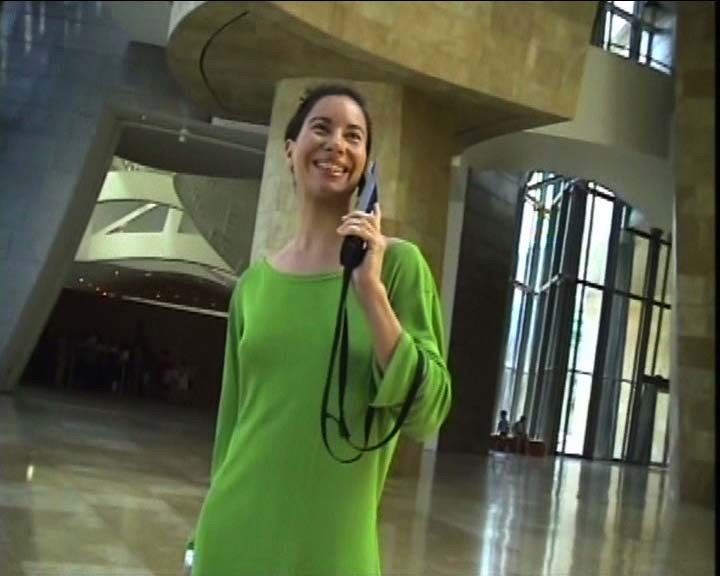
If these works dwell on scale and structure, several videos in the display turn to the body moving through the city, including works by Yang Fudong and UuDam Tran Nguyen that trace social anonymity and performance within rapidly transforming urban environments. Andrea Fraser’s Little Frank and his carp 2001 satirises the rhetoric surrounding the Guggenheim Museum Bilbao. Listening to its audio guide, she responds with exaggerated sensual gestures toward the building’s architecture, exposing how cultural institutions can package transcendence as spectacle. The museum itself becomes a protagonist, overpowering the art it contains.
Across these works, the city becomes a physical register of aspiration. Towers, villas and apartment blocks stand as records of desire made durable. Ambition gathers into form and settles into structure. What rises in concrete and steel is inseparable from the inner life that imagined it. The city remains before our eyes — and behind them.
Nabil Sabio Azadi (Ngāti Irāna o Aotearoa) is a Brisbane based Persian-New Zealand artist.
City Before Our Eyes
7 March – 25 October 2026
Gallery of Modern Art
Media Lounge & Pavilion Walk