
Brigid Cole-Adams inspired by aerial photographs of barley fields

Brigid Cole-Adams, Australia 1938–2015 / The last house 2011 / Synthetic polymer paint on canvas / 90 x 90cm / Purchased 2019 with funds from the Estate of Jessica Ellis through the QAGOMA Foundation / Collection: Queensland Art Gallery | Gallery of Modern Art / © Brigid Cole-Adams/Copyright Agency / View full image
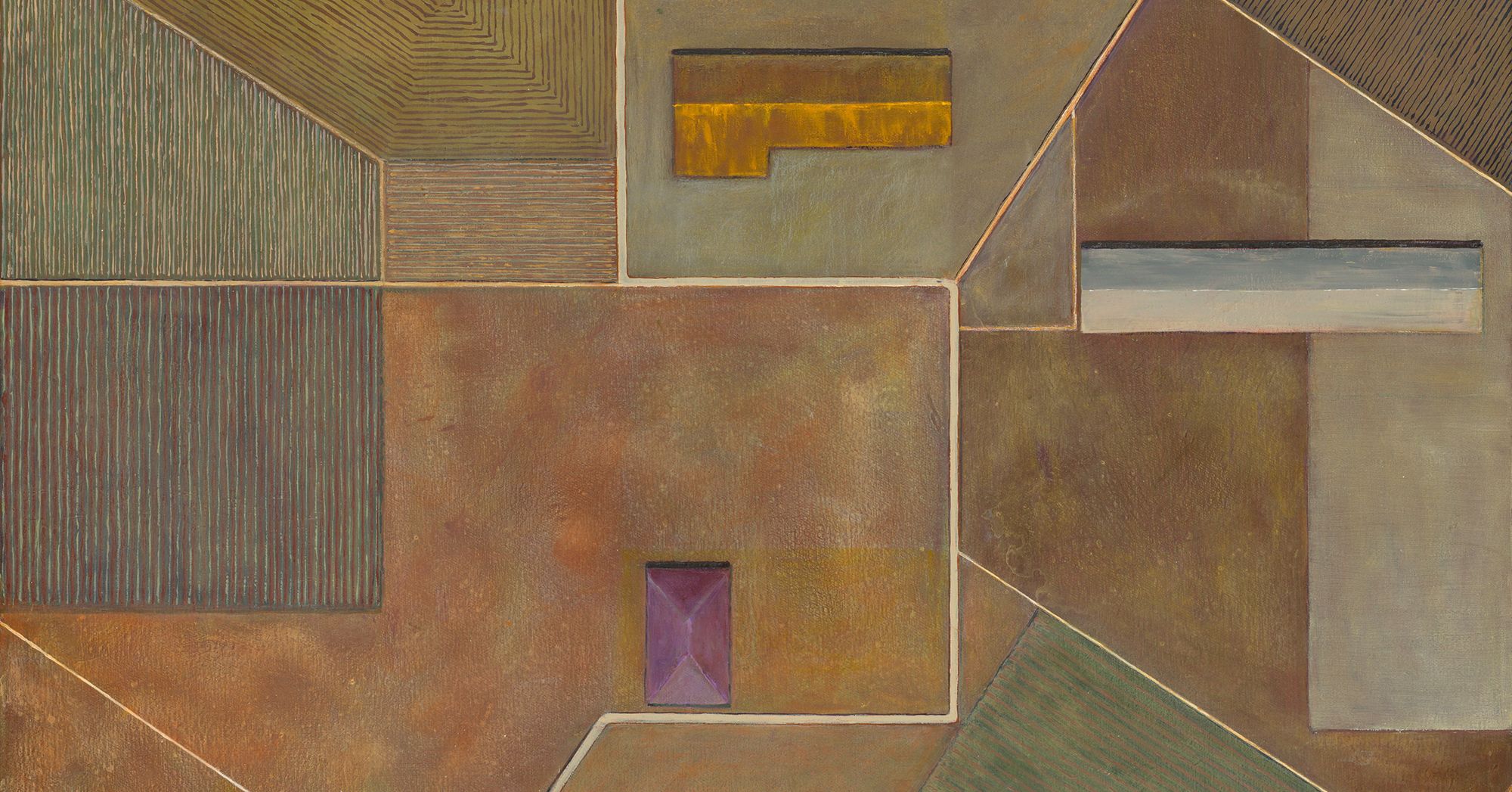
Brigid Cole-Adams (30 December 1938–2015) began her artistic career in Brisbane where she attended Jon Molvig's drawing classes in the late 1950s. The last house 2011 (illustrated) is a fine example of her late paintings, this work is inspired by aerial photographs of barley fields in western New South Wales that were sown using Global Positioning Systems (GPS) technology. Using the satellite-based technology, the barley seeds were planted in over two-kilometre-long stretches.
The last house 2011

Brigid Cole-Adams, Australia 1938–2015 / The last house 2011 / Synthetic polymer paint on canvas / 90 x 90cm / Purchased 2019 with funds from the Estate of Jessica Ellis through the QAGOMA Foundation / Collection: Queensland Art Gallery | Gallery of Modern Art / © Brigid Cole-Adams/Copyright Agency / View full image
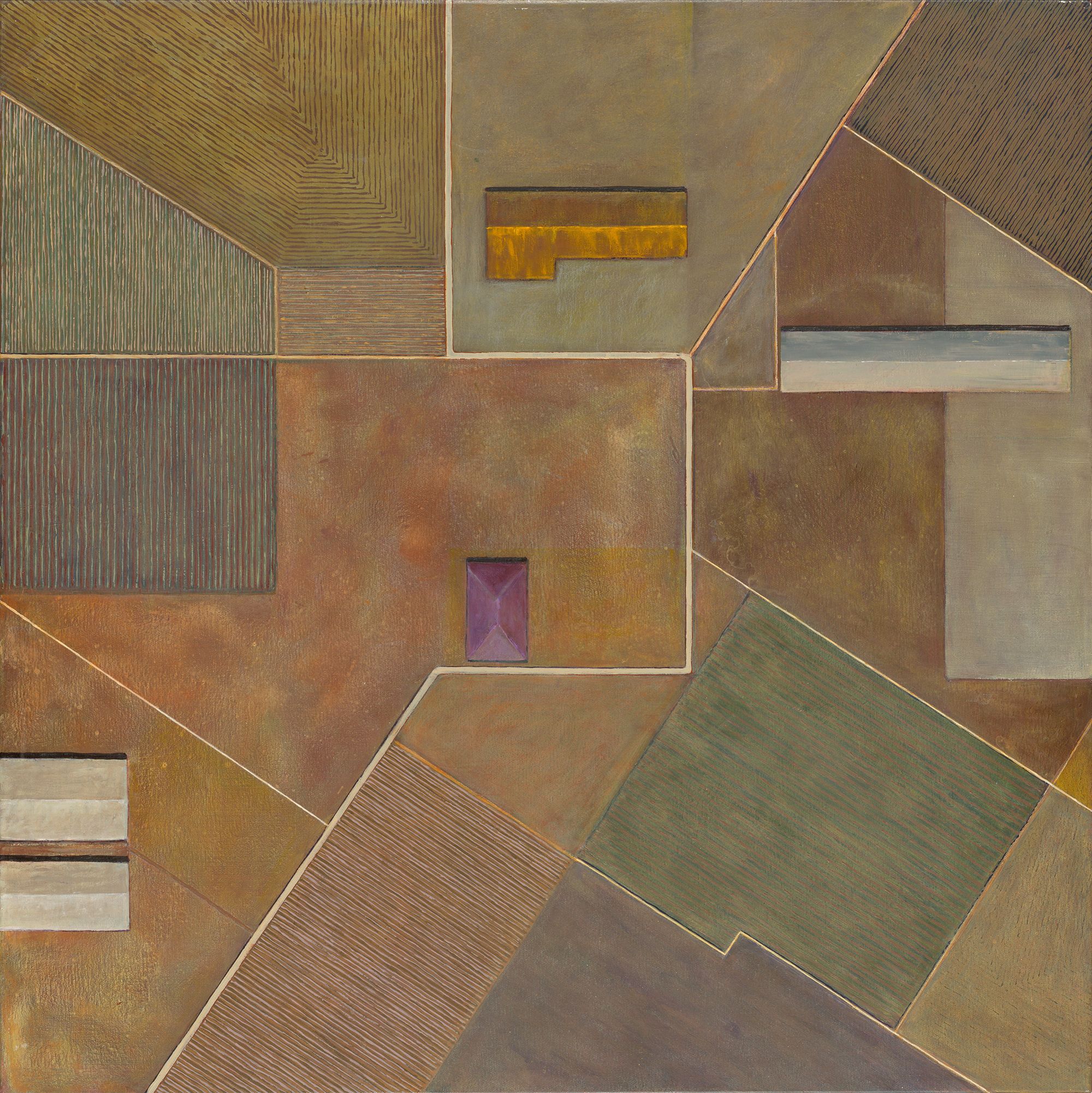
Cole-Adams combined these photographs with other source images of agricultural landscapes cut from newspapers to inform her work. In an article in the Age in 2009, the artist explained:
These pictures detail not just the scratches and patterns that farmers put on the land but also the more deeply imbedded structure of the earth underneath… we are devastating the land, but in fact the man-made marks are all such fragile surface stuff, and through them you can see the great forms of the earth.
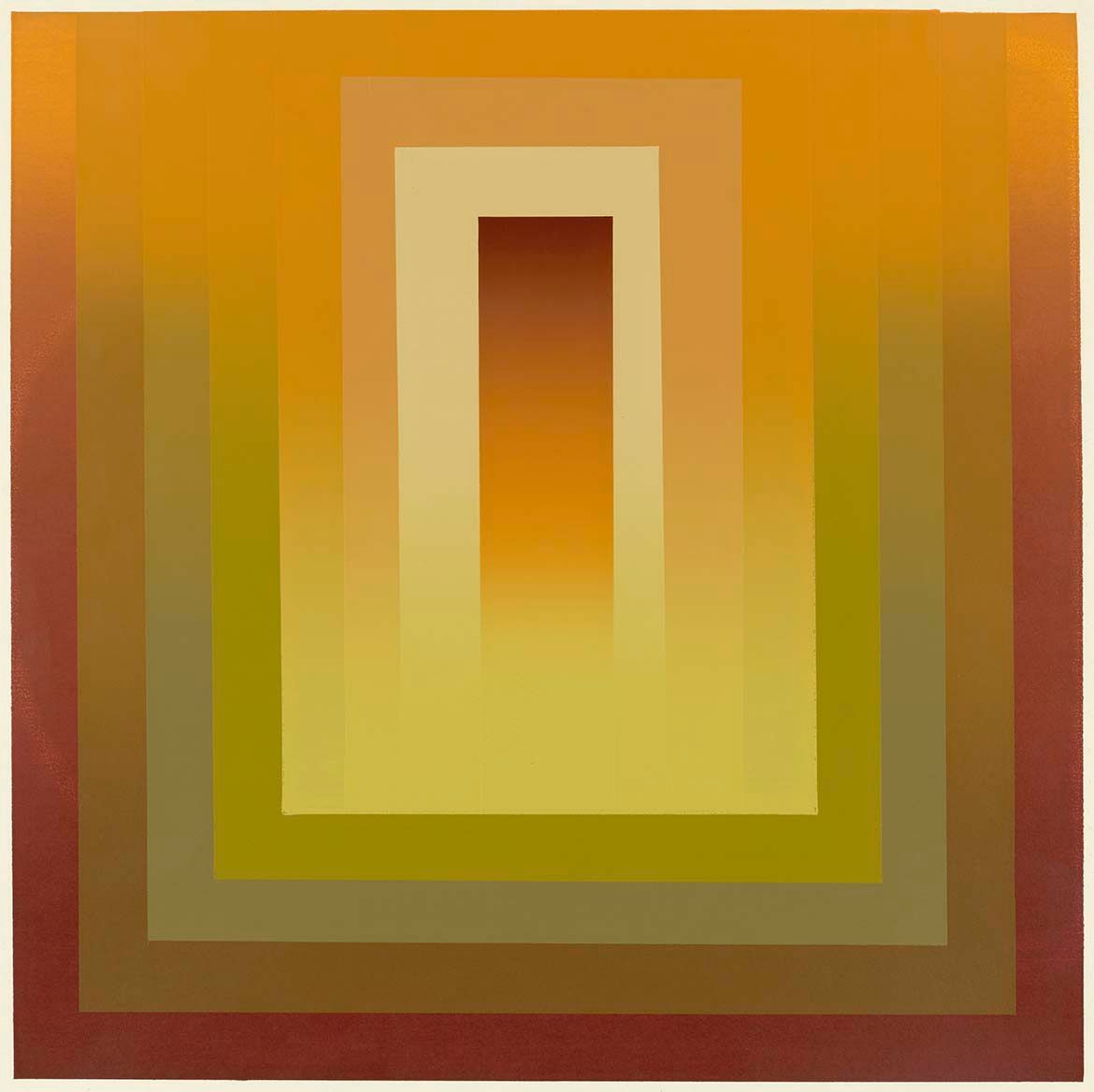
The washes of transparent polymer in the work are beautiful not only as elements of the painting, but in representing the colours and harmonies of the land depicted. The grids of the paddocks and geometric structures on the landscape appeal in their abstraction and relate to Cole-Adams's earlier abstract geometric forms explored in numerous series of prints completed in the 1970s. Orange rectangle 1973–74 (illustrated) comes from this earlier period in her career, Cole-Adams explains:
I was living in London at the time and missing the wide skyline of Australia. It interests me now that I conceptualised an open panorama as desirable because it lacked a 'view'.
Though Orange rectangle engages with landscape, the work has an introspective aspect in which the geometric forms confine and draw the viewer's gaze within.
Orange rectangle 1973–74

Brigid Cole-Adams, Australia 1938-2015 / Orange rectangle 1973-74 / Screenprint on paper / 41 x 41cm / Purchased 2019 with funds from the Bequest of Helen Dunoon through the QAGOMA Foundation / Collection: Queensland Art Gallery | Gallery of Modern Art / © Brigid Cole-Adams/Copyright Agency / View full image
Queensland Art Gallery | Gallery of Modern Art (QAGOMA)
Brisbane, Australia