
Bessie Gibson — From a Brisbane Agricultural Show drawing award in 1883 to a life in Paris

Bessie Gibson: From a National Agricultural & Industrial Association of Queensland award in 1883 to a life in Paris / View full image
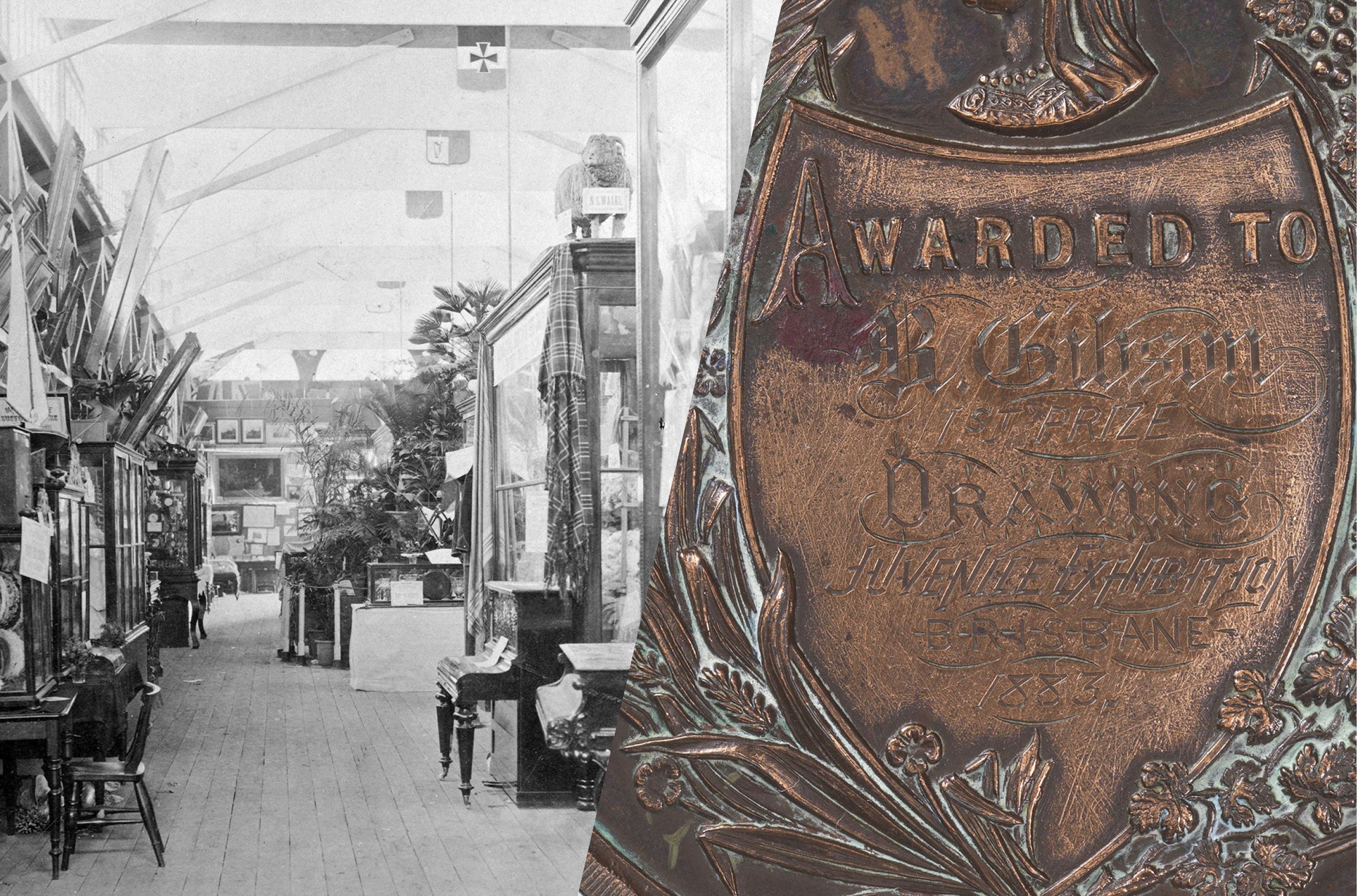
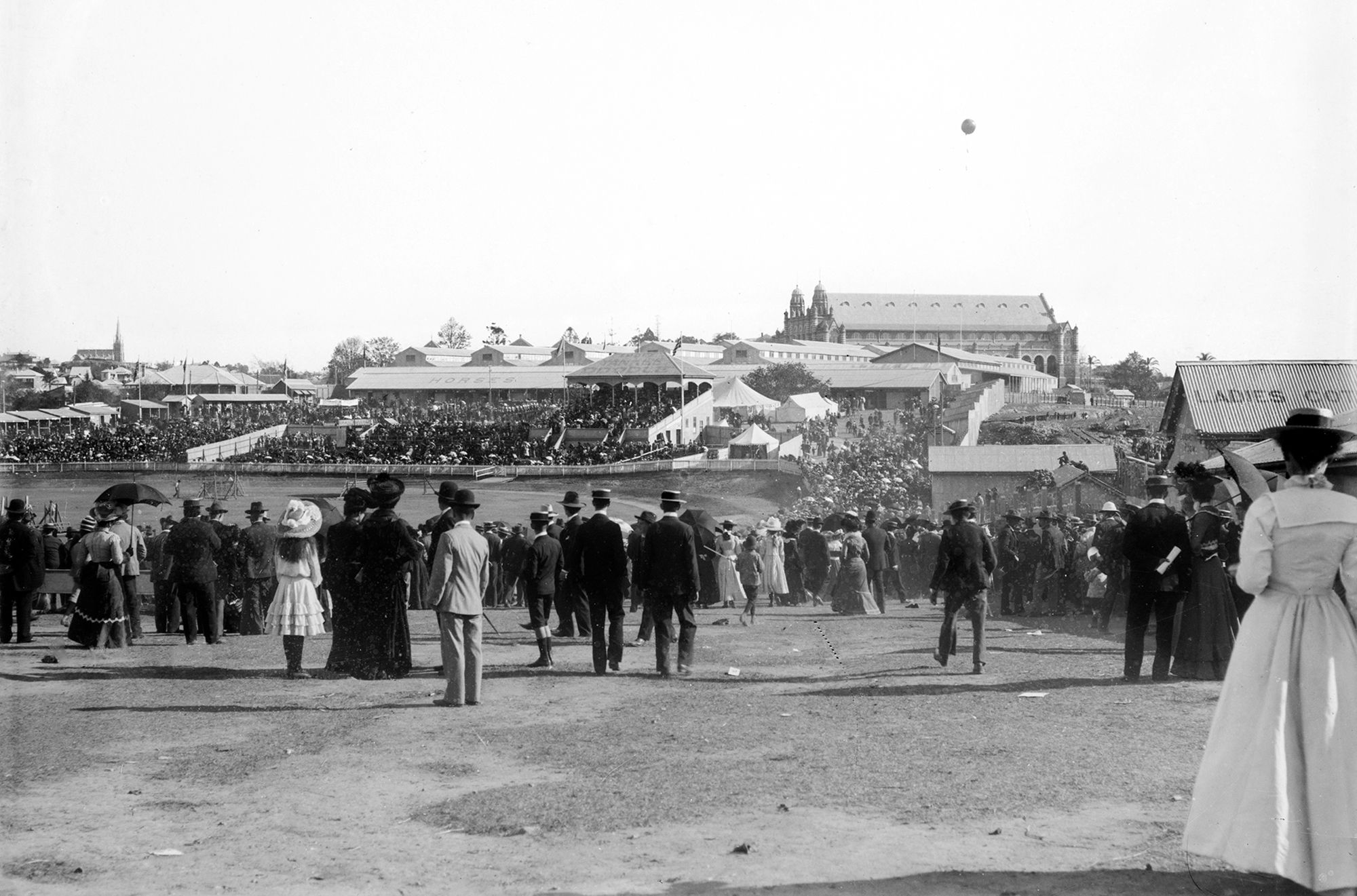
This year celebrates 150 years of Brisbane's much-loved Royal Queensland Show, affectionately known today as the Ekka (it's Royal Warrant granted in 1921 under King George V). Originally named after the National Agricultural and Industrial Association of Queensland, the organisation was formed in 1875, its goal to bring together the cultures of country and city in celebration of the diversity of Queensland industry and lifestyle.
The inaugural Intercolonial Exhibition at Bowen Park from 22 until 26 August 1876 drew crowds on the opening day public holiday of around 17 000 when Brisbane’s total population was only 22 000. The success of the exhibition guaranteed it was to be held each year from that time onwards.
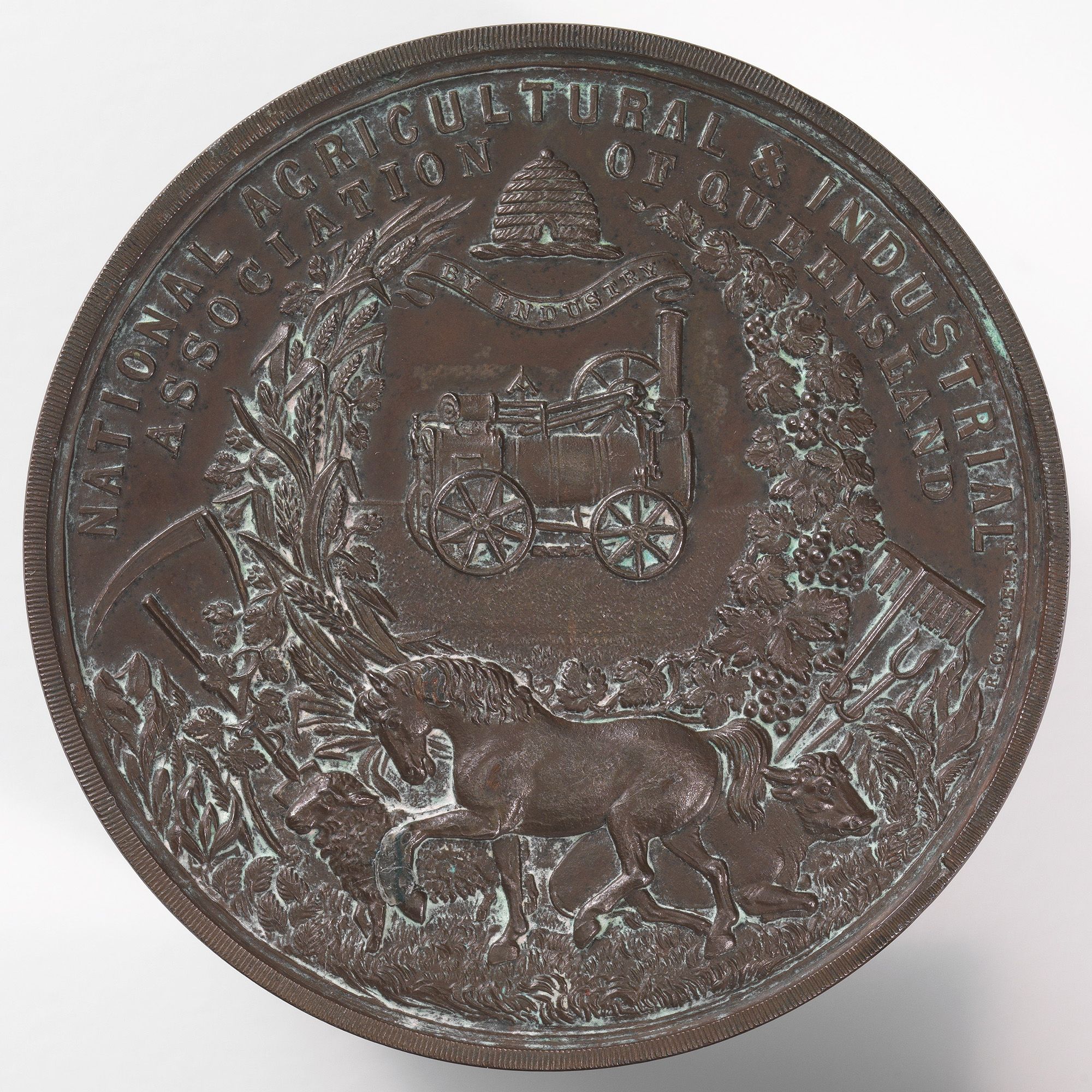
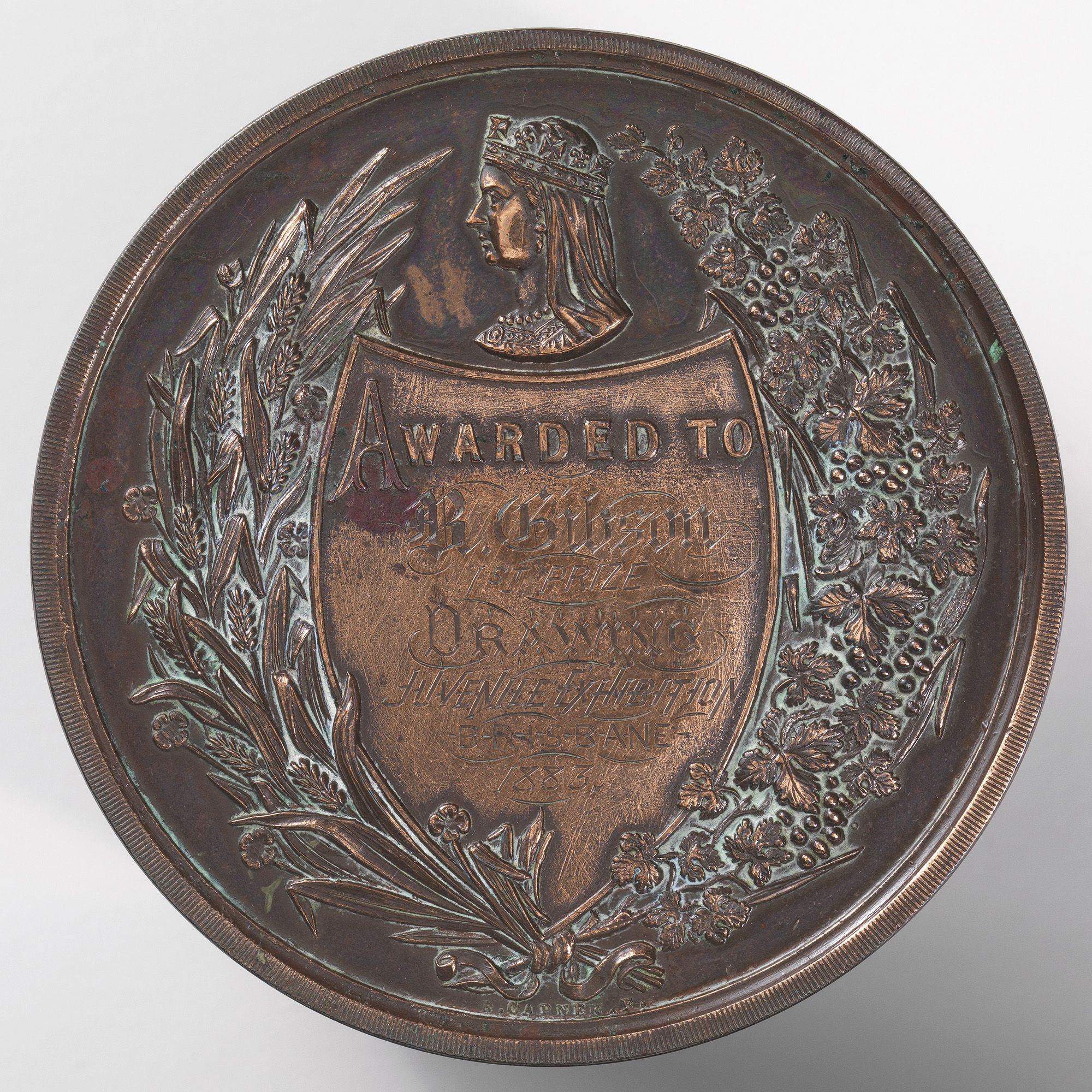
The bronze medallions (illustrated) awarded by the National Agricultural and Industrial Association of Queensland — designed by Brisbane engraver Robert Capner — recognised achievements in livestock, agricultural, and industrial machinery. Young Queenslanders were also awarded in juvenile craft categories like drawing to help promote Queensland agricultural and industrial endeavours. Bessie (Elizabeth Dickson) Gibson (16 May 1868–1961) was 15 when she won 1st Prize for Drawing – Juvenile in 1883.
Filled with imagery, the medallions were struck in bronze, measuring roughly 72mm in diameter with a steam traction engine above a horse in its centre signifying the leap into the industrial age, accompanied by a cow and sheep standing for wealth and science. These images are surrounded by a wreath of vines and wheat, tools of industry, and a depiction of a beehive symbolising hard work, unity, and community cooperation. The reverse has a crowned portrait of Queen Victoria above garlands of agricultural produce surrounding a central shield for the recipient and category engravings. Popular during the Victorian era, wheat and grapes together symbolised hard work and sacrifice.
Agricultural societies and their awards in the nineteenth century were vital for transforming the arts from a colonial hobby into a celebrated part of Australian identity. Competitions for traditional arts like drawing, painting, ceramics and embroidery gave the public a space to share their skills, and a way to earn community recognition. These annual exhibitions acted as important social gatherings, celebrating local culture and bridging the gap between city and country communities while mentoring the next generation in the arts alongside farming.
National Agricultural and Industrial Association of Queensland medallion presented to Bessie Gibson in 1883

Robert Capner, England/ Queensland Australia 1833–99 / National Agricultural and Industrial Association of Queensland medallion presented to Bessie Gibson - First Prize, Drawing, Juvenile Exhibition, 1883 (Verso) 1883 / Bronze / 7.2 (diam.) x .6cm / Gift of Dr W Lockhart Gibson 1975 / Collection: Queensland Art Gallery | Gallery of Modern Art / View full image

Robert Capner, England/ Queensland Australia 1833–99 / National Agricultural and Industrial Association of Queensland medallion presented to Bessie Gibson - First Prize, Drawing, Juvenile Exhibition, 1883 1883 / Bronze / 7.2 (diam.) x .6cm / Gift of Dr W Lockhart Gibson 1975 / Collection: Queensland Art Gallery | Gallery of Modern Art / View full image
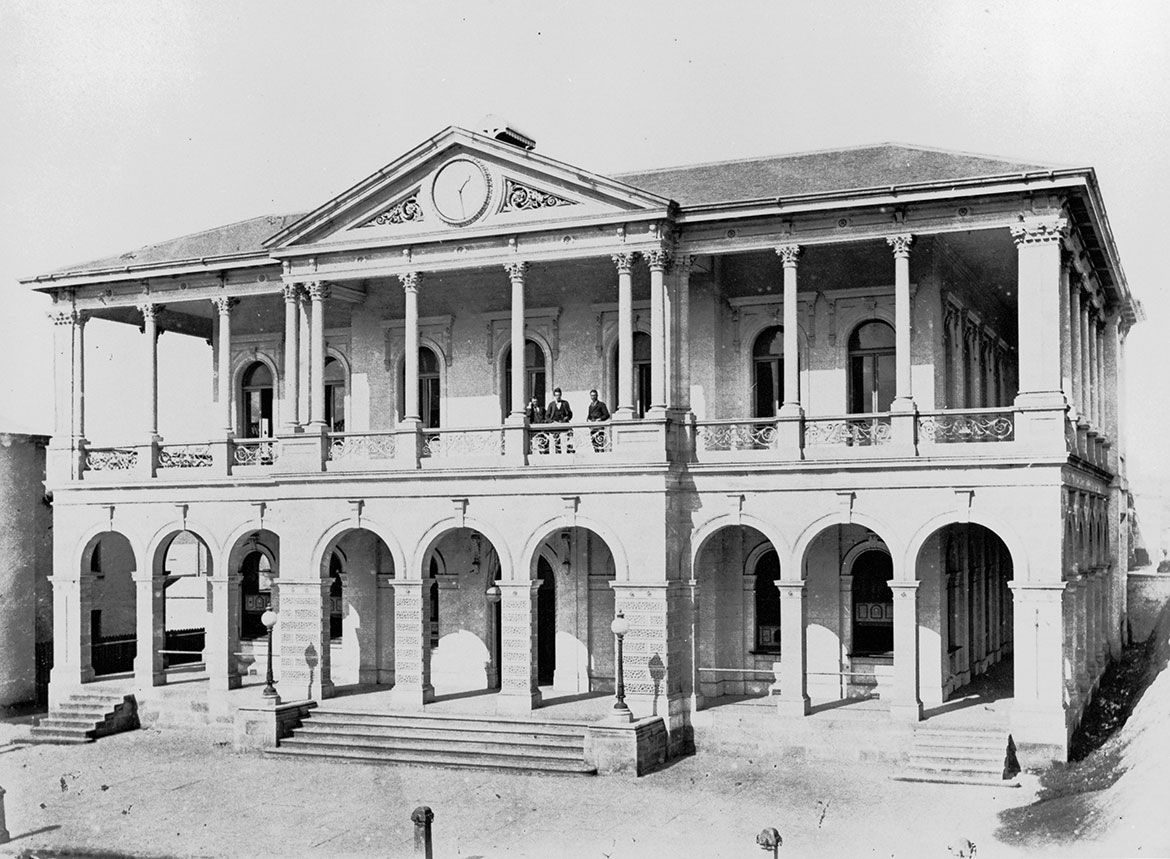
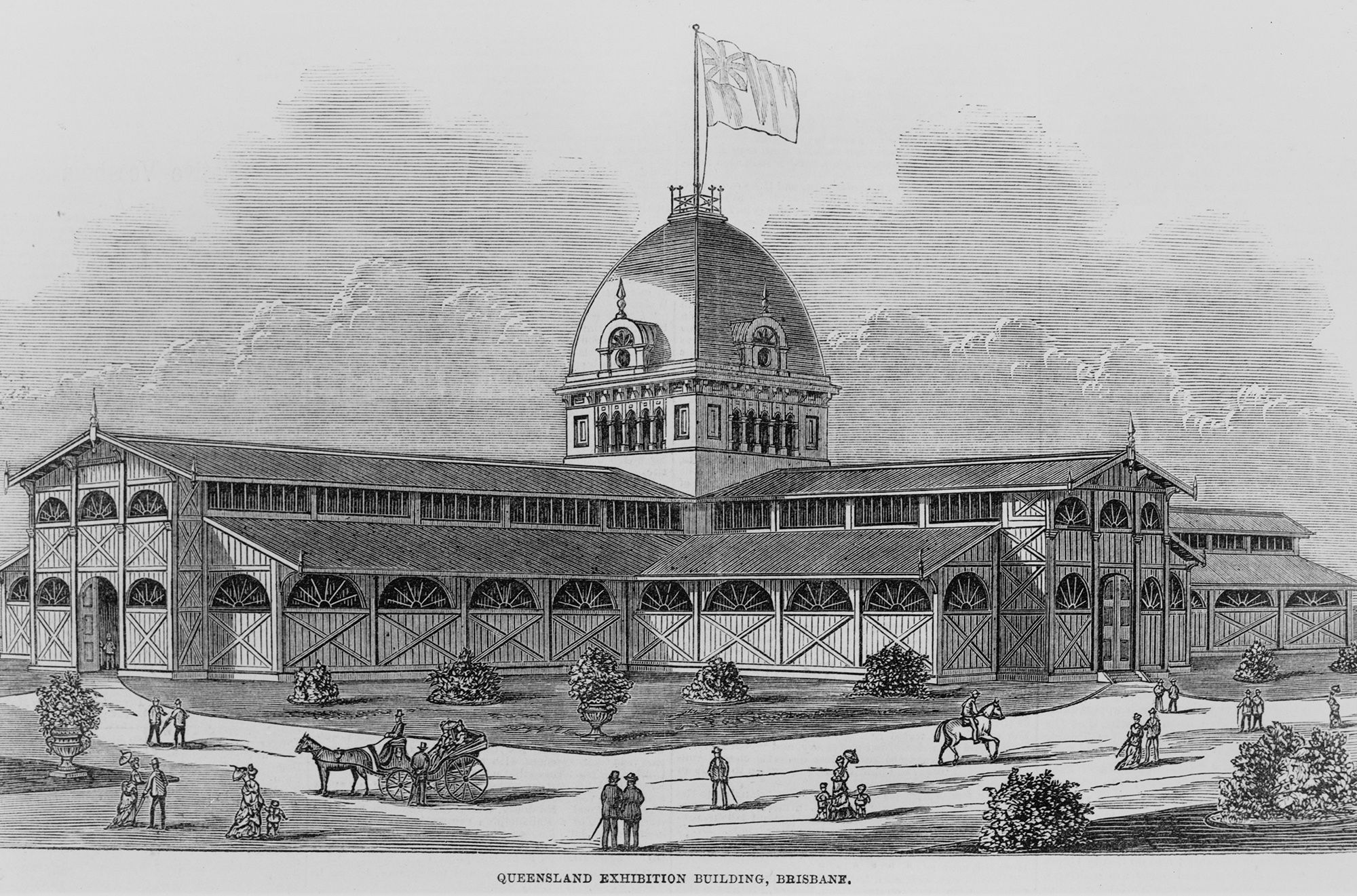
The first exhibition building erected along Gregory Terrace near the corner of Bowen Bridge Road was designed by Queensland Colonial architect and Chief Government architect FDG (Francis Drummond Greville) Stanley for the displays of the inaugural Intercolonial Exhibition in 1876. Known prior for Brisbane's imposing sandstone Victorian Italianate General Post Office in Queen Street's CBD (1872–74) (illustrated, now heritage listed), however the National Agricultural and Industrial Association's building essentially was a large timber hall with side aisles and a central clerestory to allow for natural light and ventilation, the proposed grand tower was never constructed (illustrated).
General Post Office

General Post Office, Queen Street, Brisbane c.1875 / 143672 / Courtesy: John Oxley Library, State Library of Queensland, Brisbane / View full image
Architectural drawing of the Queensland Exhibition Building, 1876

Architectural drawing of the Queensland Exhibition Building, Brisbane, 1876 / 99184004871402061 / Courtesy: John Oxley Library, State Library of Queensland, Brisbane / View full image
First Queensland Exhibition Building, c.1877

Original Exhibition Building, Bowen Hills, c. 1877. Brisbane’s first exhibition building for the Queensland National Agricultural and Industrial Association occupied the land before the current Exhibition Building and Concert Hall (Old Museum Building) and was destroyed by fire in 1888. The current exhibition building was built in 1891, however the Queensland Government took over control of the building and grounds when the National Association was forced into liquidation by the economic depression in 1897 / 61133 / Courtesy: John Oxley Library, State Library of Queensland, Brisbane / View full image
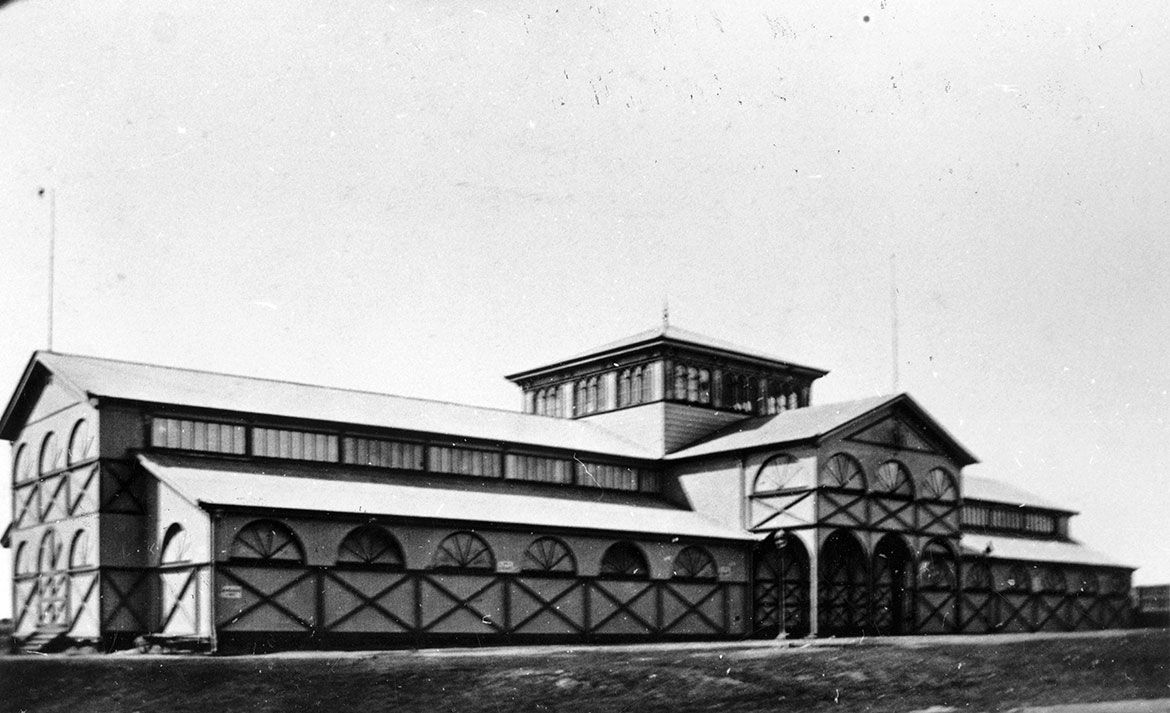
The main pavillion building was doubled in size for the following exhibition in 1877 (illustrated) to accommodate the expected increased crowds and exhibition numbers. The extension also included the addition of a modest central tower as an aesthetic focal point atop the building — this is the building that Bessie Gibson's drawings were displayed. By 1883, besides agricultural and industrial stalls, the National Agricultural and Industrial Association featured for the first time a Juvenile Industrial Exhibition with displays focused on education, local curriculum, and the creative arts: including textile and embroidery pieces; youth-engineered inventions and gadgets; and drawing with Gibson taking home her 1st Prize medallion.
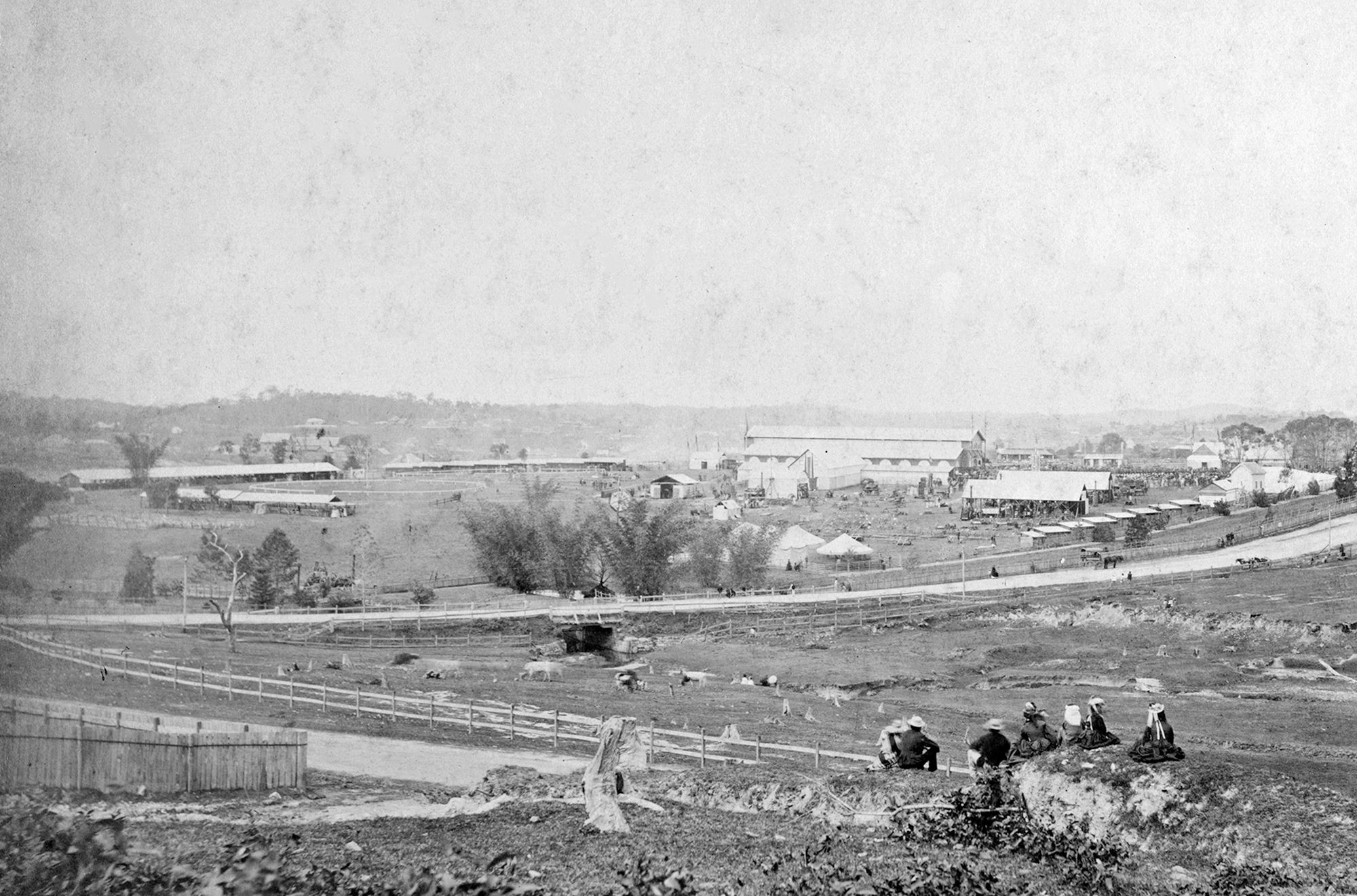
The grounds of the inaugural Brisbane Intercolonial Exhibition, 1876

George P Wright, photographer/ The inaugural Intercolonial Exhibition, Bowen Park, Brisbane, 22 August 1876 / 99184906289502061 / Courtesy: John Oxley Library, State Library of Queensland, Brisbane / View full image
Displays inside the main pavilion at the inaugural Intercolonial Exhibition, 1876

George P Wright, photographer / Displays inside the main pavilion at the inaugural Intercolonial Exhibition, Bowen Park, Brisbane, 22 August 1876 / 99184906288502061 / Courtesy: John Oxley Library, State Library of Queensland, Brisbane / View full image
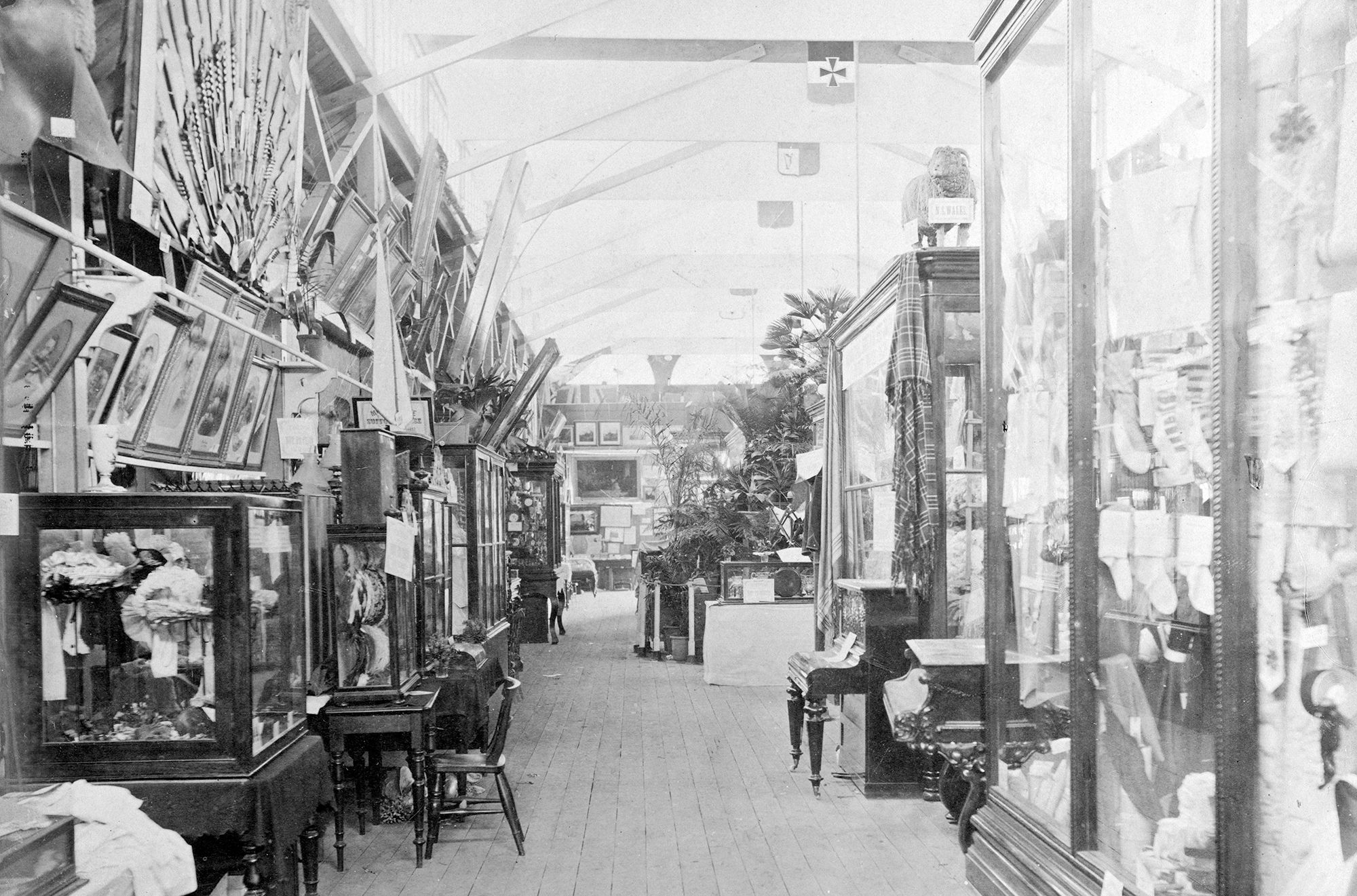

George P Wright, photographer/ Displays inside the main pavilion at the inaugural Intercolonial Exhibition, Bowen Park, Brisbane, 22 August 1876 / 99184906287802061 / Courtesy: John Oxley Library, State Library of Queensland, Brisbane / View full image
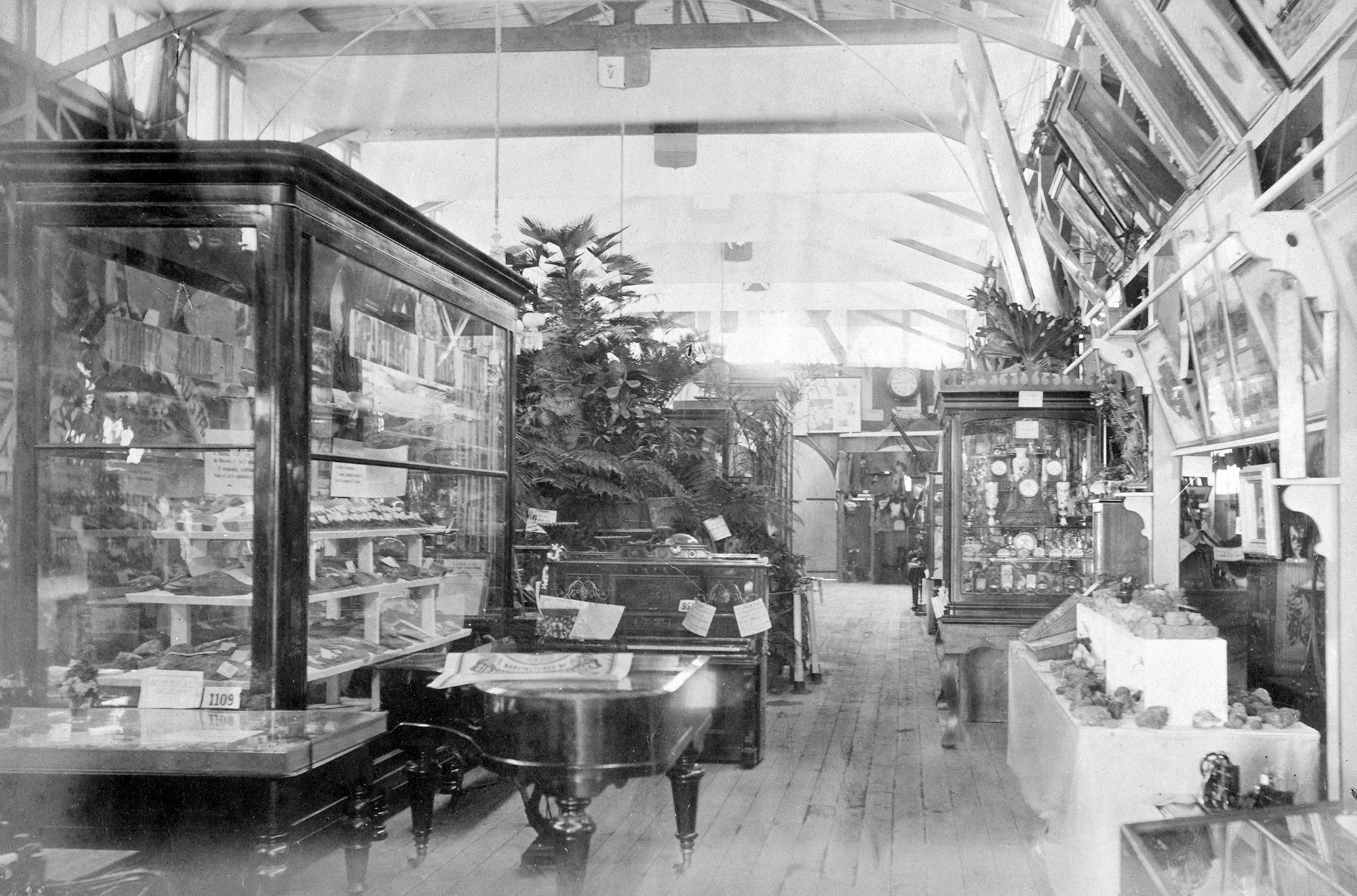
The main pavilion was leased out by the National Agricultural and Industrial Association between exhibitions and on 13 June 1888 the building was being used as a skating rink when it was destroyed by fire, with a temporary timber structure quickly constructed for that years August exhibition.
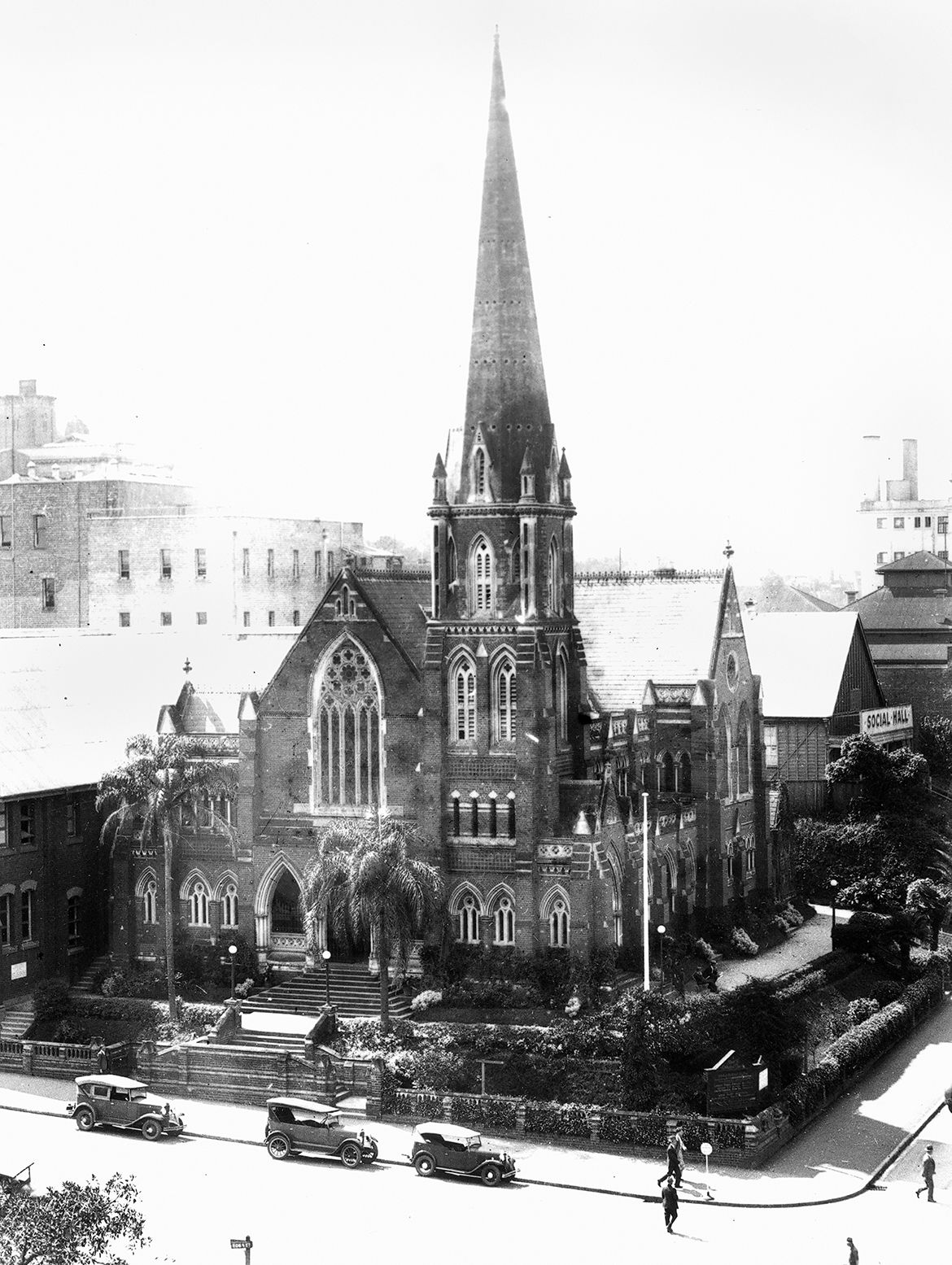
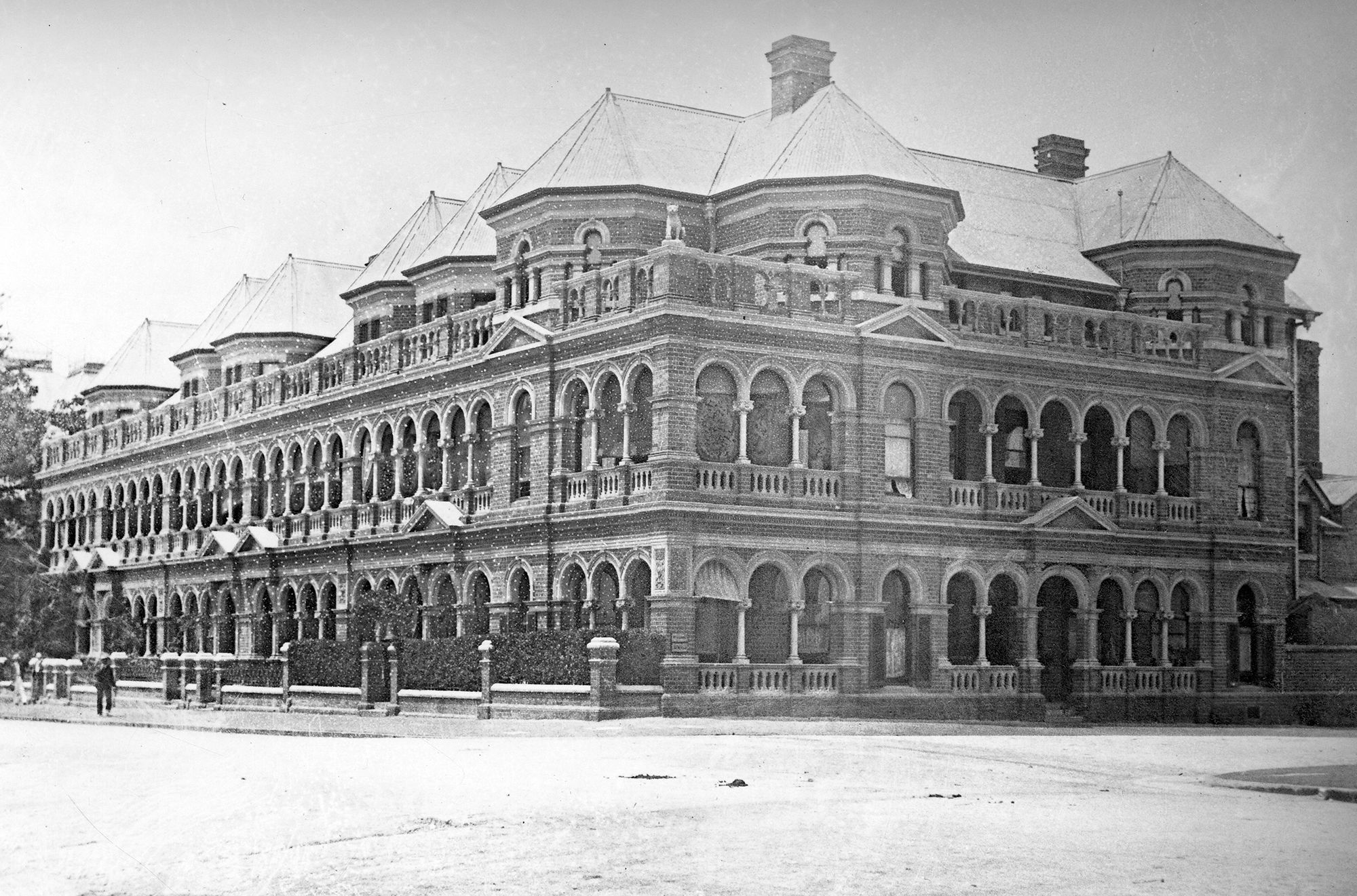
With the need for a permanent masonry building, in 1890 GHM (George Henry Male) Addison’s (1857–1922) winning design to replace the main pavilion was amended to a T-shape, incorporating a southern wing with a Concert Hall. Addison was known prior as the architect for Brisbane's Albert Street Uniting Church (1888-89) (illustrated, now heritage listed) and the Mansions, a row of six terrace houses in George Street (1889) (illustrated, now heritage listed). The new pavilion was erected closer to the corner of Bowen Bridge Road and Gregory Terrace than the original structure, with a section opened for the 1891 exhibition, and the pavilion completed the following year (illustrated, now heritage listed).
Albert Street Uniting Church

Albert Street Uniting Church, corner Albert and Ann Streets, Brisbane, 1934 / 99183505793402061 / Courtesy: John Oxley Library, State Library of Queensland, Brisbane / View full image
The Mansions

The Mansions, George Street, Brisbane, c.1908 / 99183512225502061 / Courtesy: John Oxley Library, State Library of Queensland, Brisbane / View full image
Due to the depression in 1897, the National Agricultural and Industrial Association was forced to liquidate the main exhibition building which was acquired by the Queensland Government. The building was refurbished for the Queensland Museum which moved from William Street in 1899 before settling in to its current location at South Bank in 1986. From 1931 the Queensland Art Gallery relocated from the Lands Administration Building on George Street to the former Concert Hall until the Gallery moved in 1975 to temporary premises in the MIM building, Ann Street CBD before relocating to its first permanent home at South Bank on 21 June 1982.
Second Queensland Exhibition Building, c.1900

Queensland Exhibition Building, Bowen Hills, c.1900/ 182289 / Courtesy: John Oxley Library, State Library of Queensland, Brisbane / View full image
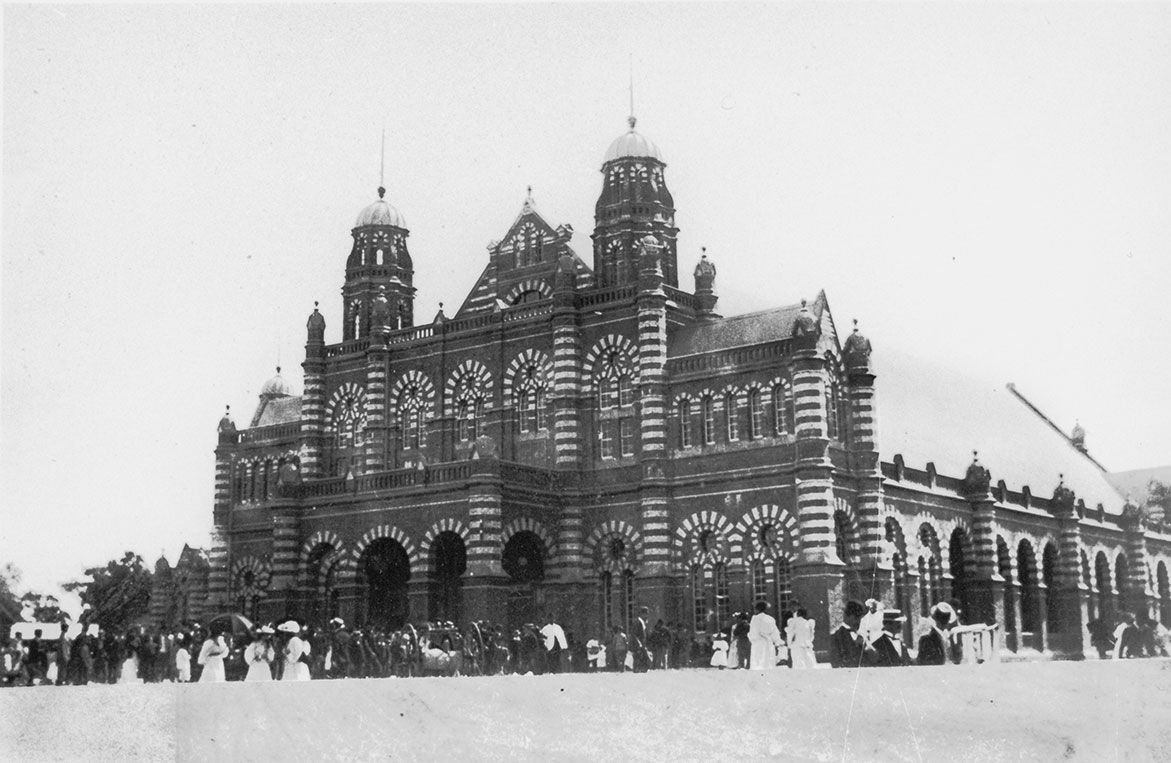
The National Agricultural and Industrial Association of Queensland exhibition, c.1900 showing the new pavilion

The National Agricultural and Industrial Association of Queensland exhibition, Bowen Hills, c.1900 / 99184501132202061 / Courtesy: John Oxley Library, State Library of Queensland, Brisbane / View full image
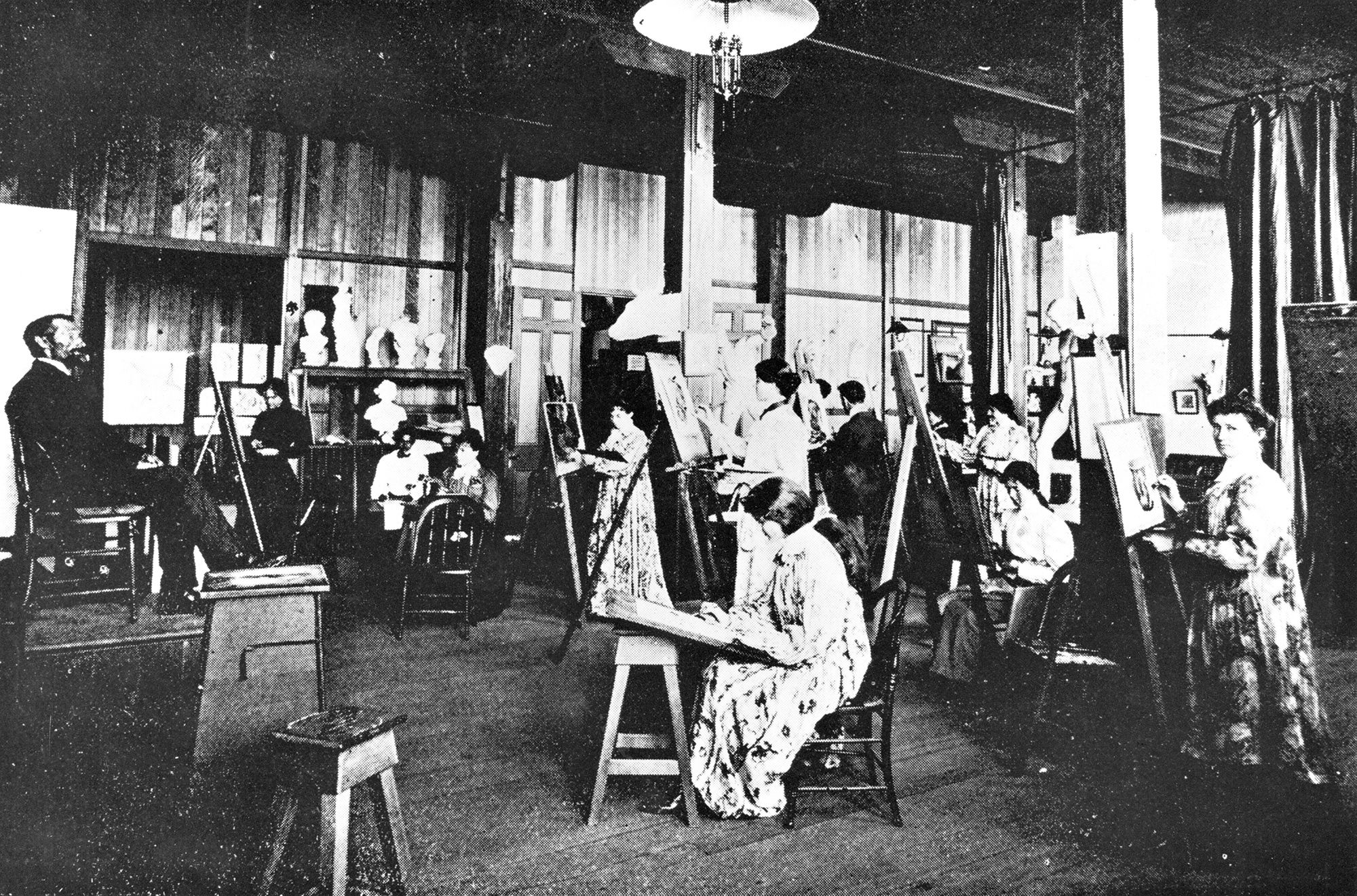
Gibson was born in Ipswich, Queensland of Scottish heritage, she and all her siblings were encouraged by their parents to follow their special career interests. Best known for her delicate miniatures, portraits and watercolours, she studied under R (Richard) Godfrey Rivers at Brisbane's Technical College from 1899-1905, then located at the Brisbane School of Arts building, Ann Street CBD. Of interest, Gibson would have been there when prominent Queensland artist Vida Lahey (1882-1968) attended classes from 1898-1904. The curriculum focused on both applied and fine arts, offering courses in freehand, perspective, figure, and technical drawing, painting and clay modelling.
Students in a painting class at the Brisbane Technical College Day Art School, c.1900

Students in a painting class at the Brisbane Technical College Day Art School reproduced from the College handbook, c.1900 / Collection: QAGOMA Research Library / View full image
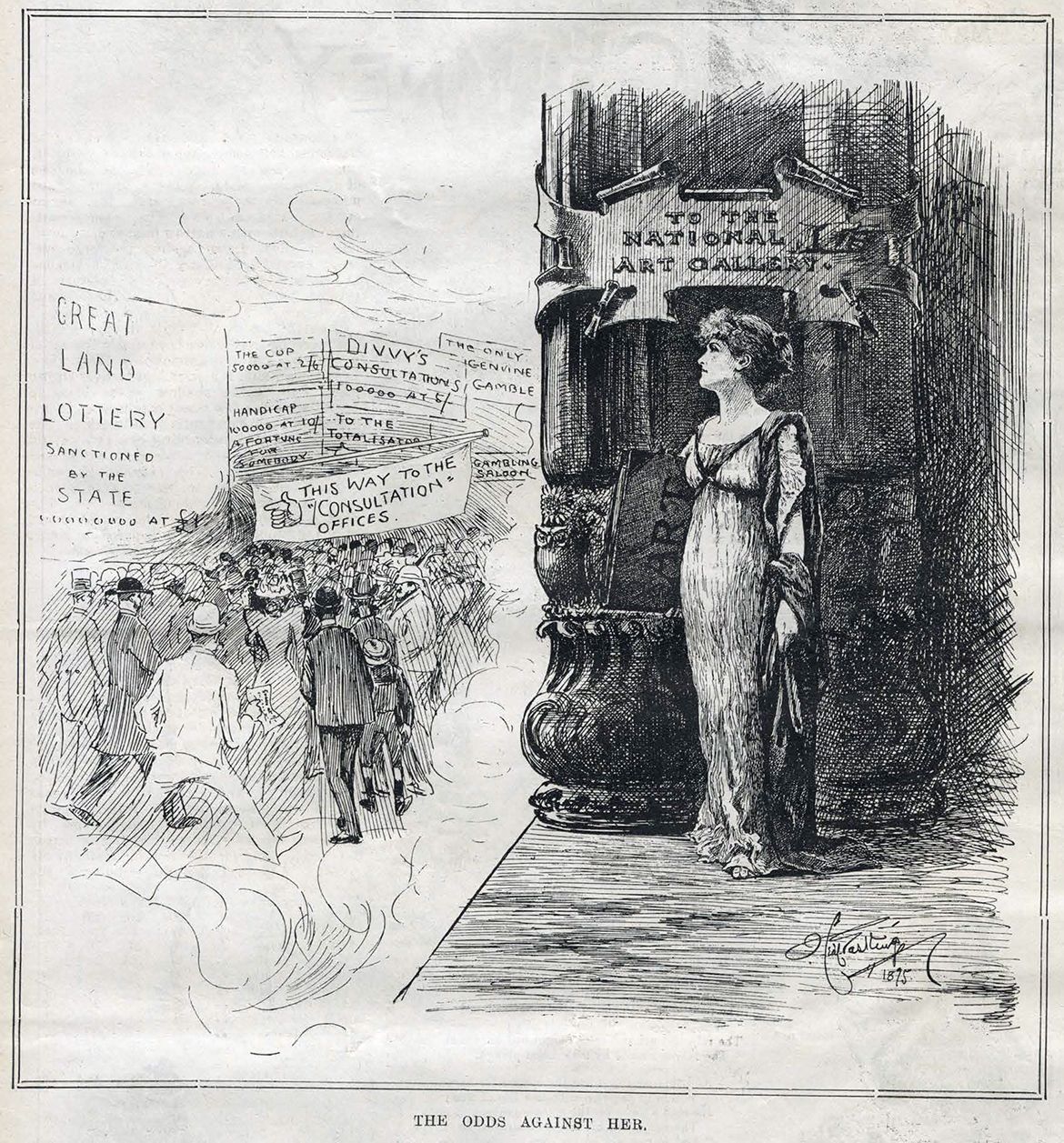
At the time, Brisbane's art appreciation and artistic environment lagged well behind Victoria, South Australia and New South Wales. In 1894 Rivers, president of the Queensland Art Society sent to the Queensland Government a proposal for a State Art Gallery. Queensland’s National Art Gallery opened to the public on 29 March 1895 in temporary quarters in the upstairs room of the Town Hall. The Collection consisted of a mixture of Old Masters and contemporary works and included both copies and originals culled from the town’s meager artistic resources, a reflection of the disparate taste of local art collectors.
The public of the 1890s were now able to boast a State Art Collection however contemporary opinion was far from enthusiastic. The Queenslander felt that the odds were against the whole thing, their cartoon shows Art as an ‘aesthetic’ Greek lady standing stalwart at the empty portal of some imagined gallery. Her proud gaze is concentrated well above the Philistine masses rushing to buy lottery tickets.
The Queenslander cartoon, 1895

THE ODDS AGAINST HER / Cartoon in the Queenslander, 13 April 1895 / View full image
In 1901-02 Gibson's family travelled abroad maintaining contact with Scotland and so it's no wonder Bessie left Brisbane's art scene behind and returned to Europe in September 1905 after being inspired from her travels to further her art studies.
Australian artists began to increasingly look overseas for inspiration, travelling to Europe to study and often to stay for long periods. By early 1906 at the age of 38, Gibson had settled in Paris, living in Montparnasse and exhibiting at the Salon, making regular visits to England where she exhibited at London's Royal Academy. Vida Lahey happened to be living in the Montparnasse quarter of Paris after the end of World War One, between 1919 and 1920, joining the wave of local artists travelling to absorb modern artistic trends. Just before the German occupation in 1939 Gibson moved to England returning to Paris after World War Two, and eventually back to Brisbane in 1947 at the age of 79.
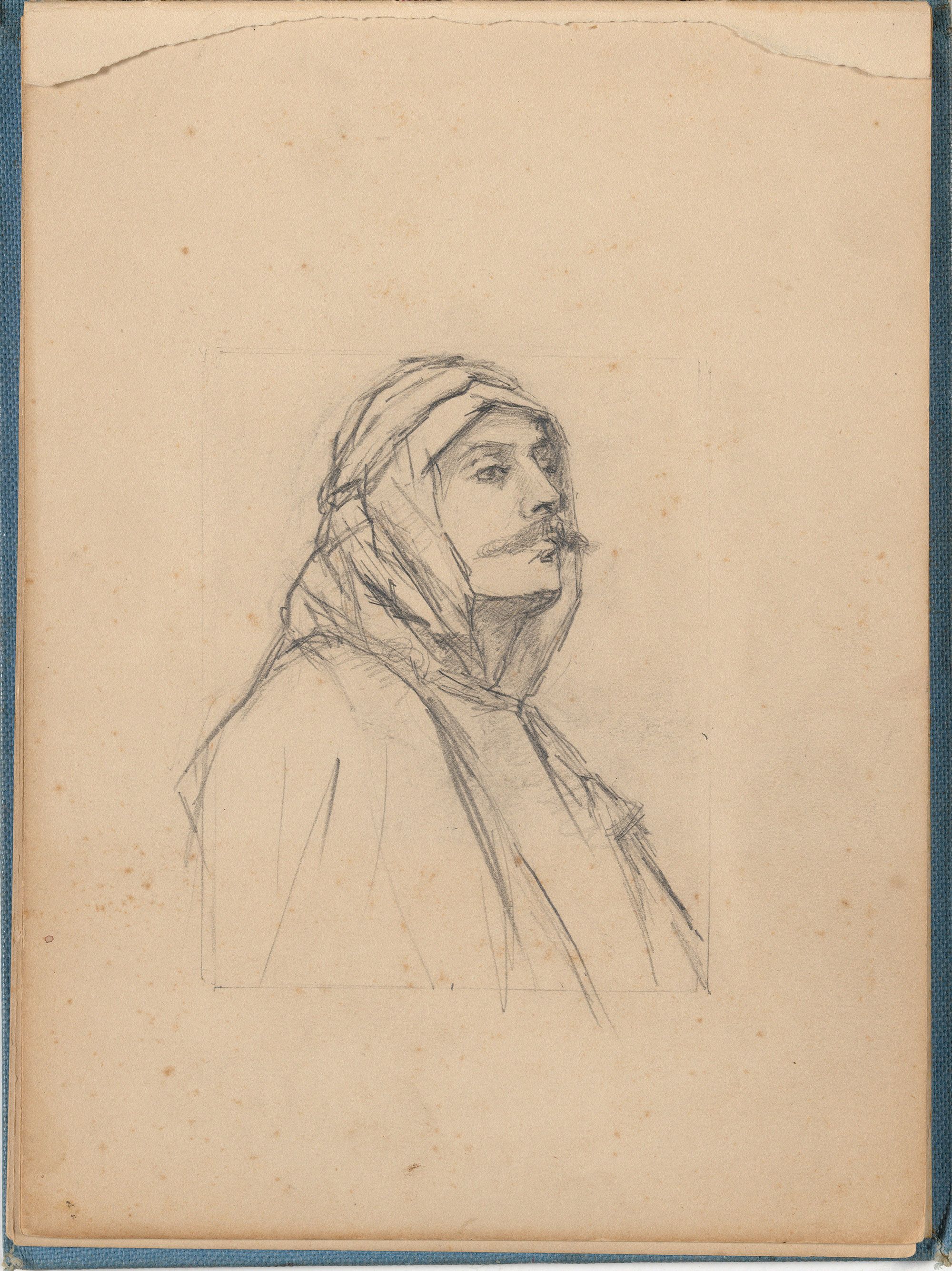
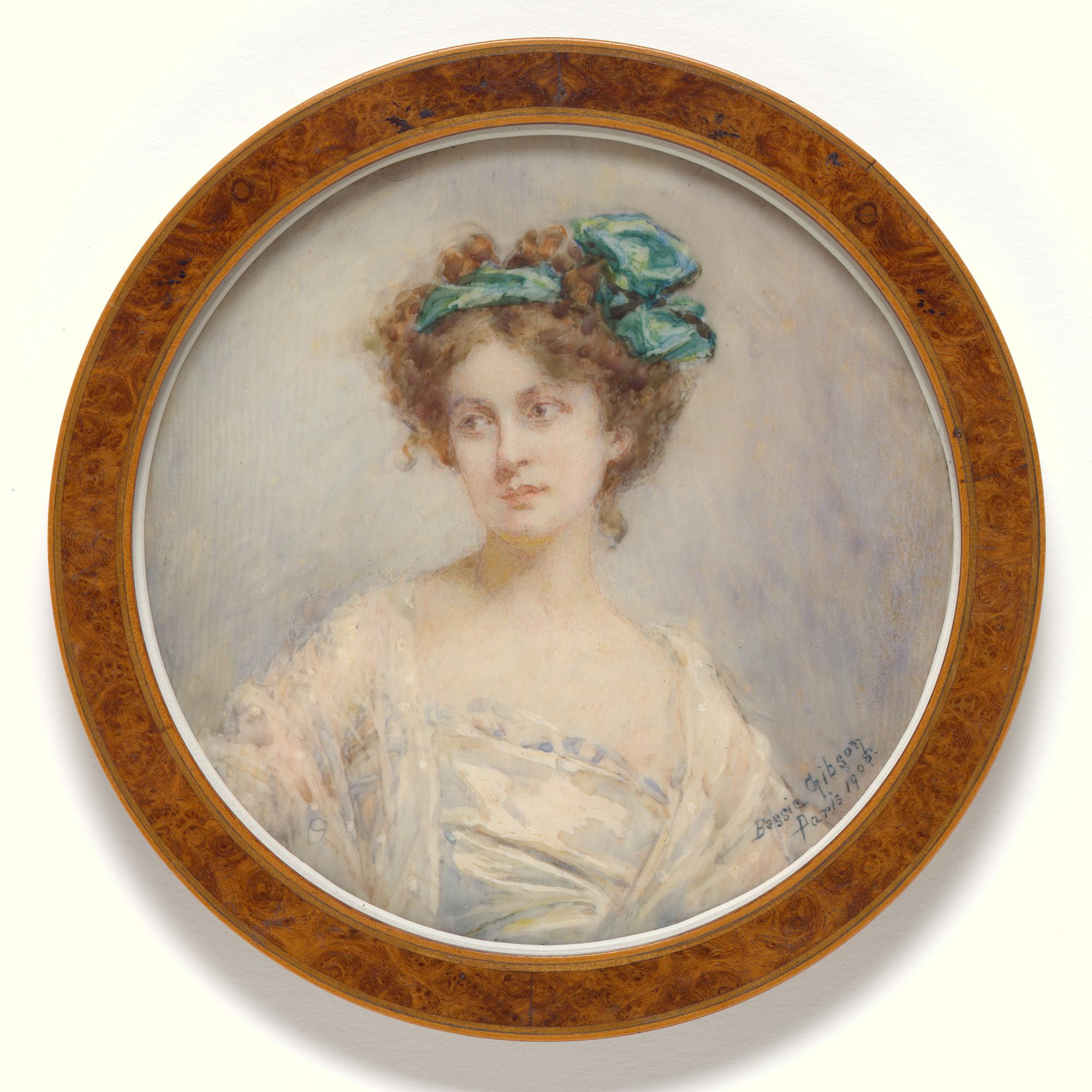
As seen with Gibson's 1st Prize for drawing award at the National Agricultural and Industrial Association in 1883, she showcased her skills at an early age. The following selection of well drawn studies are from her c.1905 sketchbook, one of many held in the QAGOMA Collection, and examples of her early paintings after leaving Australia.
Bessie Gibson's (Sketchbook) c.1905

Bessie (Elizabeth Dickson) Gibson, Queensland Australia 1868–1961 / (Sketchbook) 1905 / Sketchbook; watercolour and pencil / 22.5 x 16.5cm / Gift of Dr W Lockhart Gibson 1975 / Collection: Queensland Art Gallery | Gallery of Modern Art / © Bessie Gibson Estate / View full image
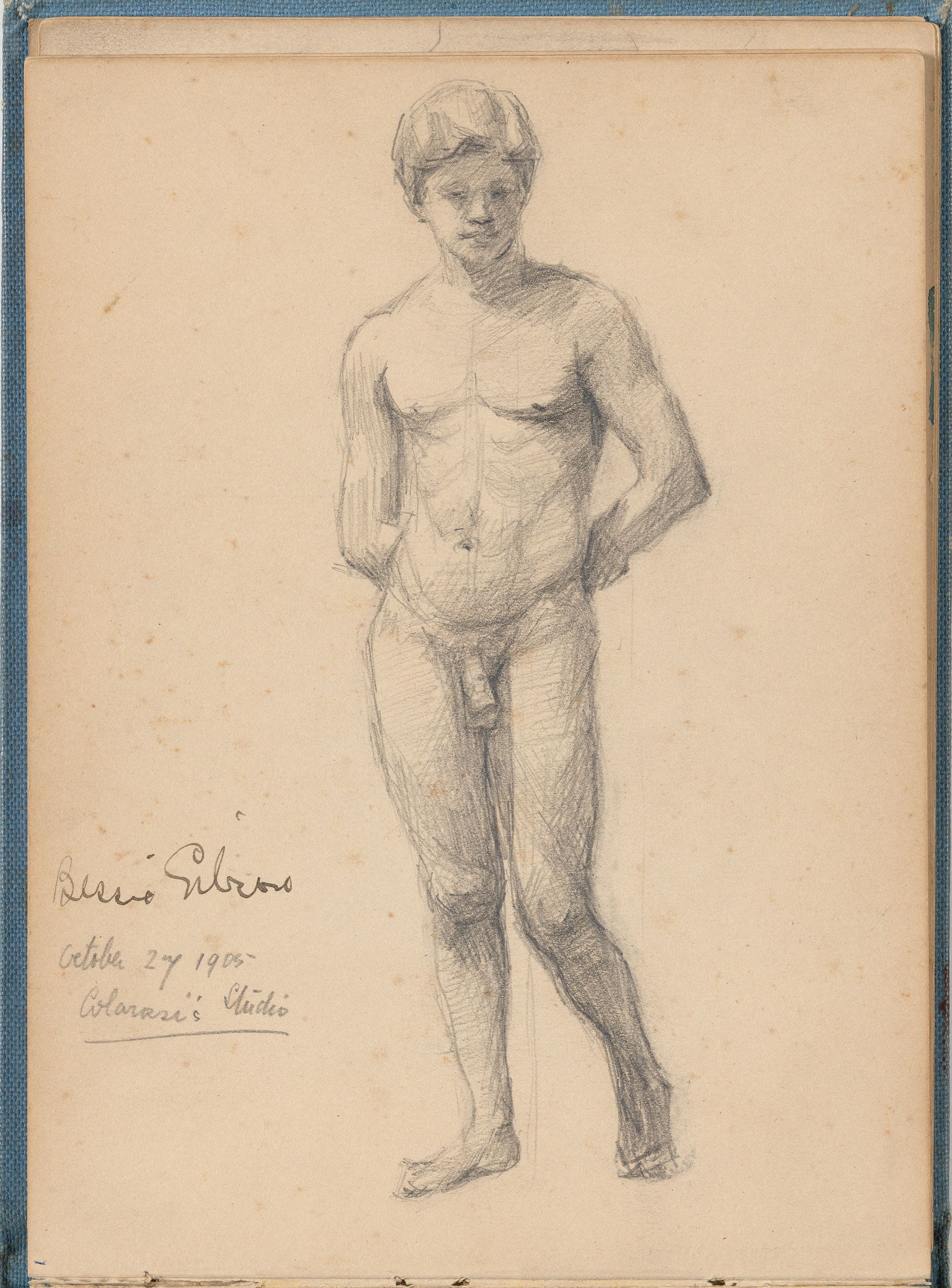

Bessie (Elizabeth Dickson) Gibson, Queensland Australia 1868–1961 / (Sketchbook) 1905 / Sketchbook; watercolour and pencil / 22.5 x 16.5cm / Gift of Dr W Lockhart Gibson 1975 / Collection: Queensland Art Gallery | Gallery of Modern Art / © Bessie Gibson Estate / View full image
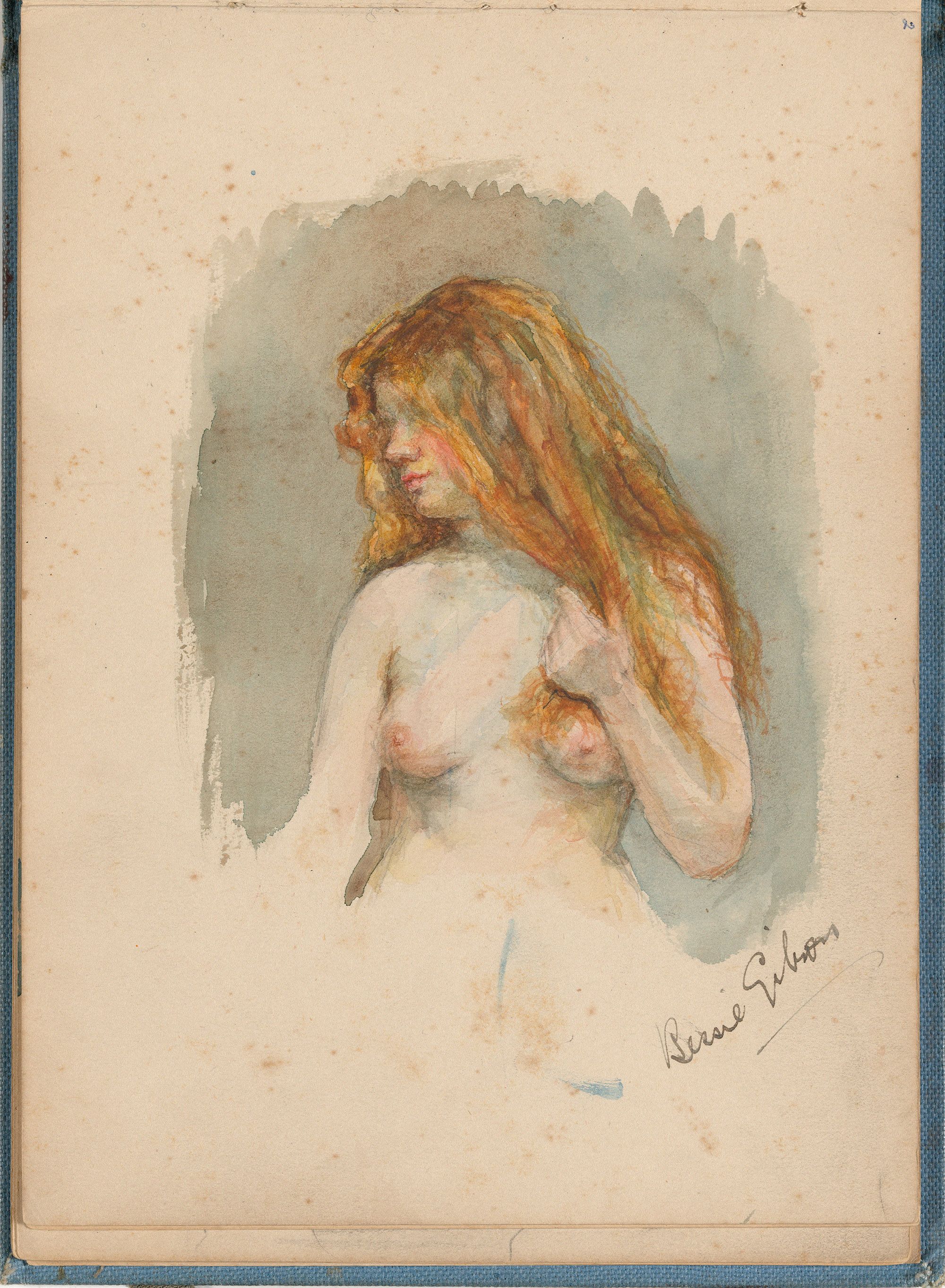

Bessie (Elizabeth Dickson) Gibson, Queensland Australia 1868–1961 / (Sketchbook) 1905 / Sketchbook; watercolour and pencil / 22.5 x 16.5cm / Gift of Dr W Lockhart Gibson 1975 / Collection: Queensland Art Gallery | Gallery of Modern Art / © Bessie Gibson Estate / View full image
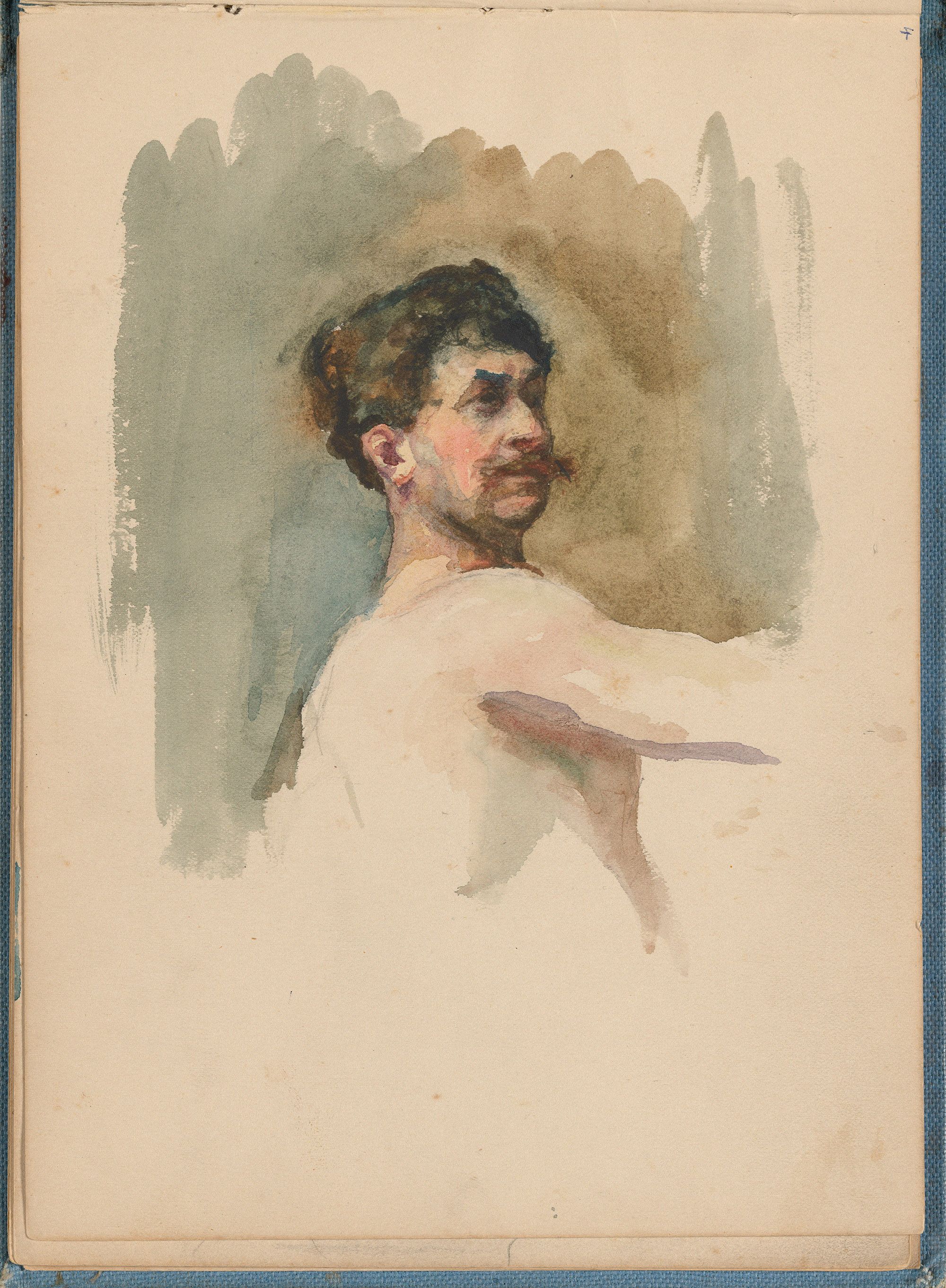

Bessie (Elizabeth Dickson) Gibson, Queensland Australia 1868–1961 / (Sketchbook) 1905 / Sketchbook; watercolour and pencil / 22.5 x 16.5cm / Gift of Dr W Lockhart Gibson 1975 / Collection: Queensland Art Gallery | Gallery of Modern Art / © Bessie Gibson Estate / View full image
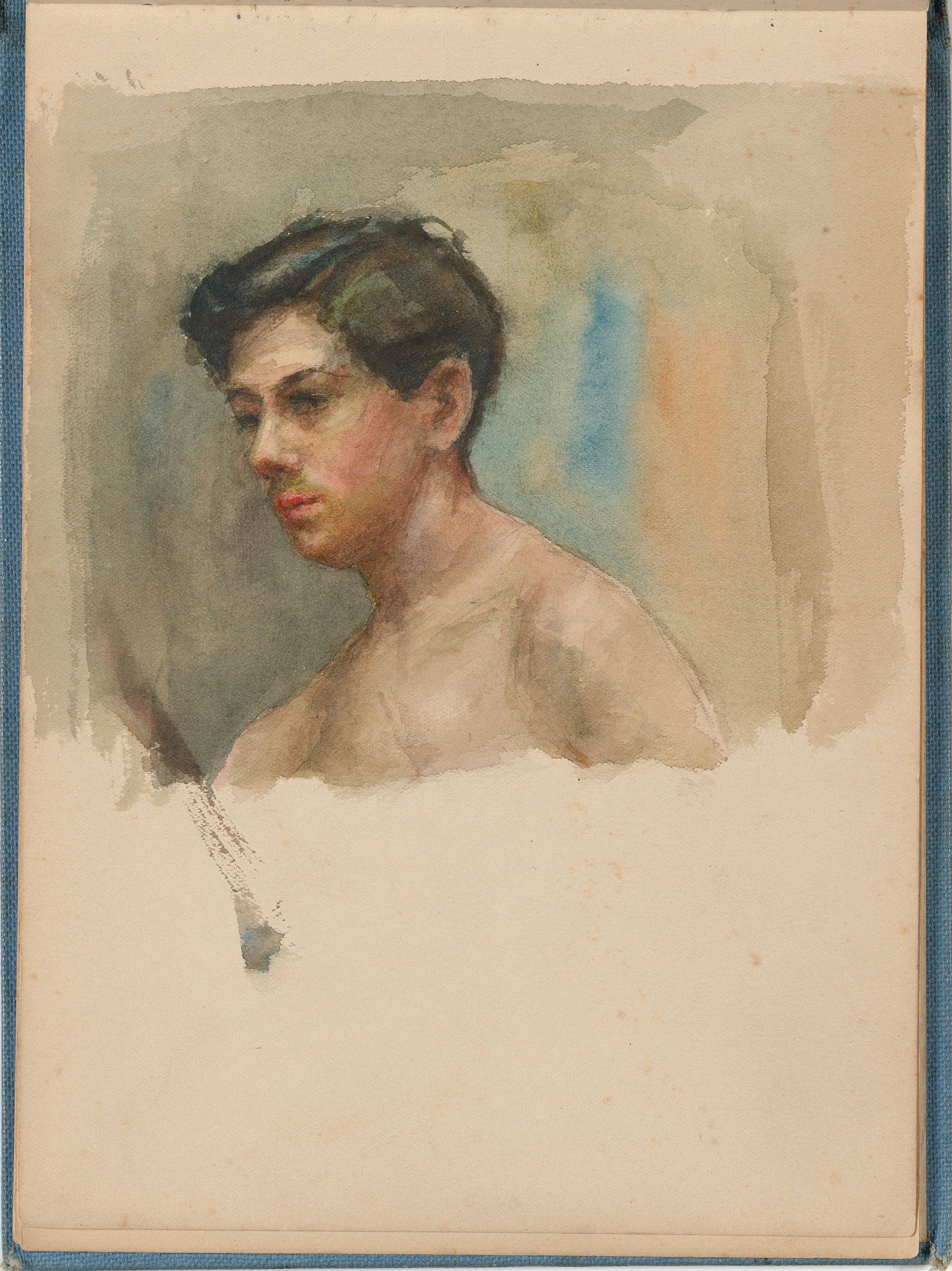

Bessie (Elizabeth Dickson) Gibson, Queensland Australia 1868–1961 / (Sketchbook) 1905 / Sketchbook; watercolour and pencil / 22.5 x 16.5cm / Gift of Dr W Lockhart Gibson 1975 / Collection: Queensland Art Gallery | Gallery of Modern Art / © Bessie Gibson Estate / View full image
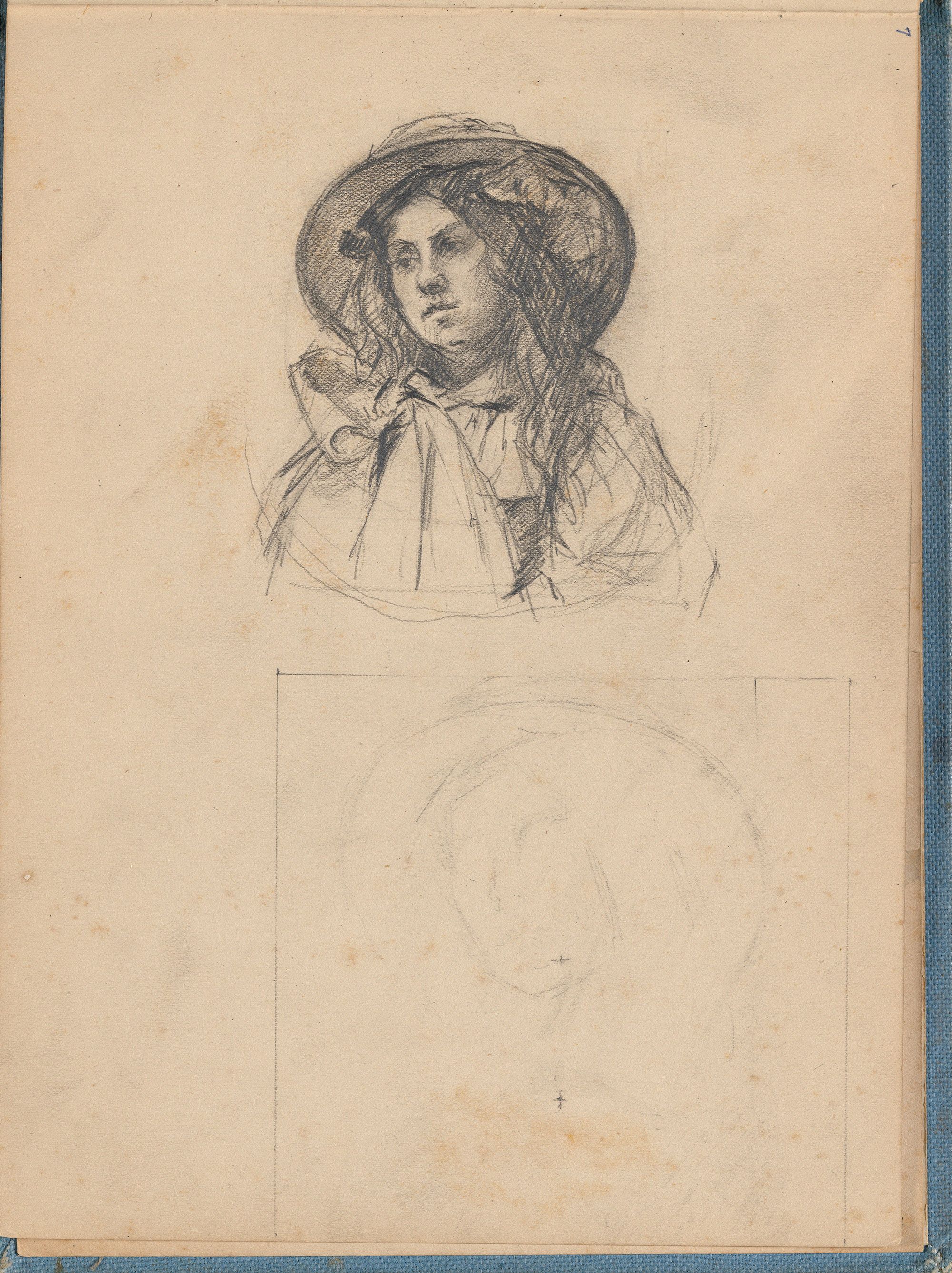

Bessie (Elizabeth Dickson) Gibson, Queensland Australia 1868–1961 / (Sketchbook) 1905 / Sketchbook; watercolour and pencil / 22.5 x 16.5cm / Gift of Dr W Lockhart Gibson 1975 / Collection: Queensland Art Gallery | Gallery of Modern Art / © Bessie Gibson Estate / View full image
The green bow 1905

Bessie (Elizabeth Dickson) Gibson, Queensland Australia 16 May 1868–1961 / The green bow 1905 / Oil on ivory / 11cm diameter / Gift of the artist 1954 / Collection: Queensland Art Gallery | Gallery of Modern Art / © Bessie Gibson Estate / View full image
The model (study of a nude) c.1905
_25-01_AM.png?rect=1,0,1999,3223&w=320&h=516&q=90&fit=max)
Bessie (Elizabeth Dickson) Gibson, Queensland Australia 16 May 1868–1961 / The model (study of a nude) c.1905-14 / Oil on ivory / 16.6 x 9.5cm;18 x 11.2cm (framed) / Gift of Dr Walter Lockhardt Gibson 1923 / Collection: Queensland Art Gallery | Gallery of Modern Art / © Bessie Gibson Estate / View full image
_25-01_AM.png)
Edited curatorial extracts, research and supplementary material sourced and compiled by Elliott Murray, Senior Digital Marketing Officer, QAGOMA
Go back in time to discover Brisbane’s forgotten landmarks, delve into our historical past, and uncover unique stories through the work of Australian artists in QAGOMA’s Collection.
Queensland Art Gallery | Gallery of Modern Art (QAGOMA)
Brisbane, Australia