
Bertram Mackennal's 'Truth' inspired by the Art Nouveau movement

Bertram Mackennal, Australia/England 1863-1931 / Truth (detail) 1894 / Bronze / 62 x 19.5 x 17.5cm / Purchased 1989 from the estate of Lady Trout with a special allocation from the Queensland Government / Collection: Queensland Art Gallery | Gallery of Modern Art / View full image
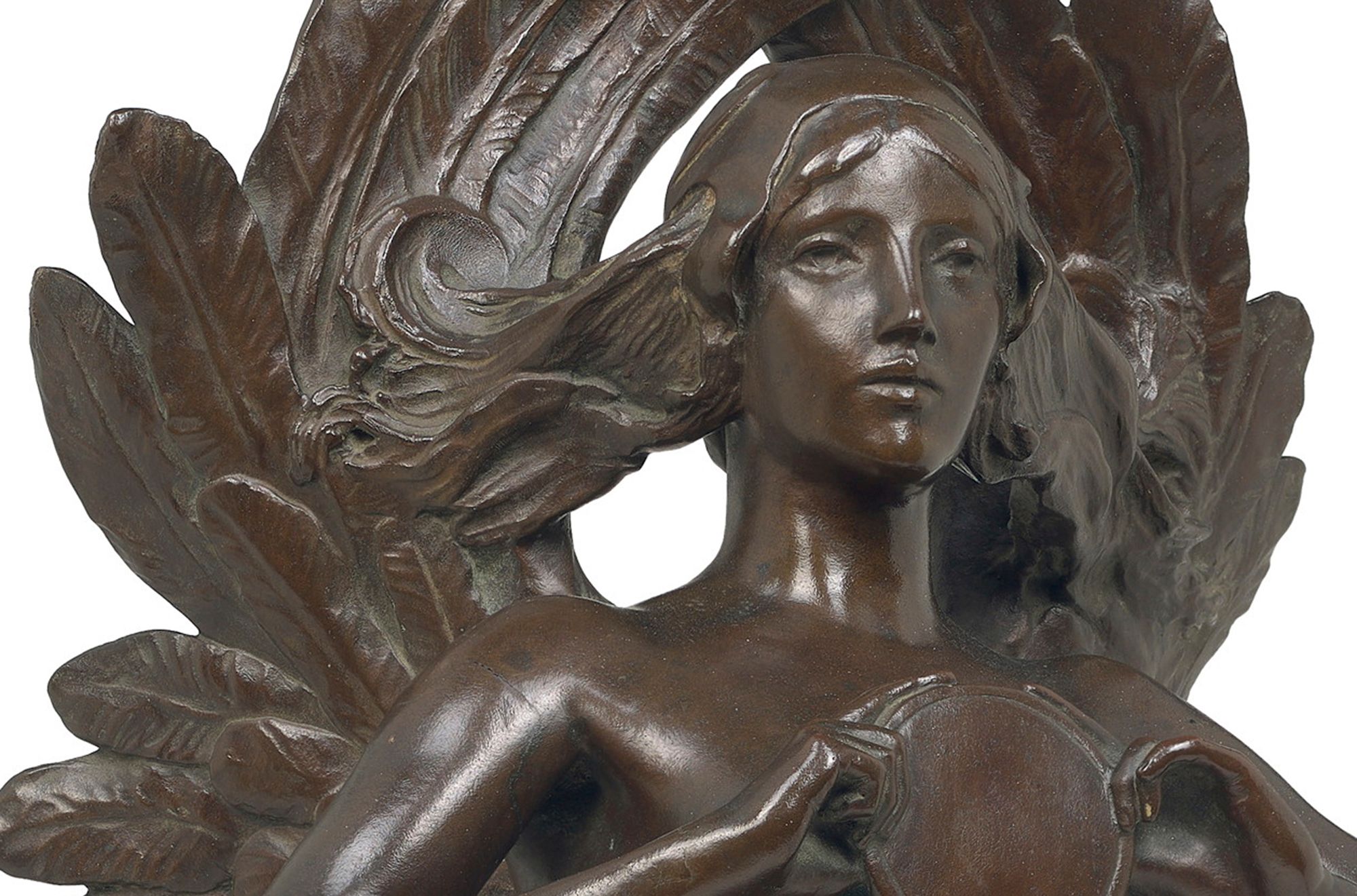
(Edgar) Bertram Mackennal (12 June 1863–1931) was one of the most influential Australian artists of the late nineteenth century, he enjoyed an international reputation, one which began in Europe in the early 1880s, establishing studios in London and Paris and staging regular exhibitions in major European cities.
Actively involved in bringing the Art Nouveau movement to England, Mackennal often adopted aspects of this style, as well as being influenced by the French sculptor Auguste Rodin, saying 'He was the first man whose work made me understand that art is not nature, but something grander and superimposed on nature'.
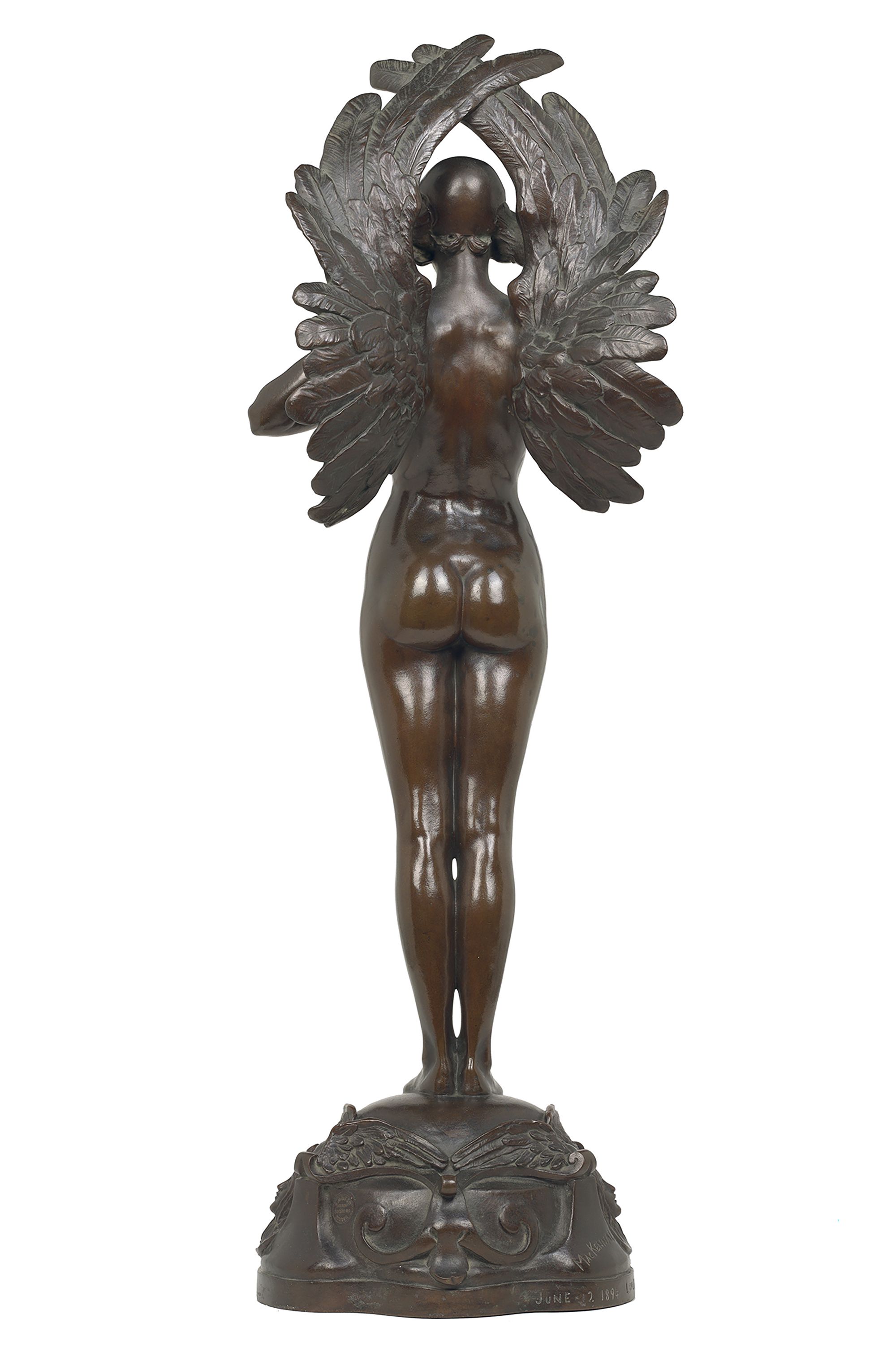
The cast for Truth 1894 bears the stamp of the bronze founder E. Gruet jeune, Paris and the date of the work 12 June 1894 is the same year Mackennal set up his studio at Clifton Hill in St John's Wood, London where Truth was probably modelled. Coincidently the date is also the artist's birthday.

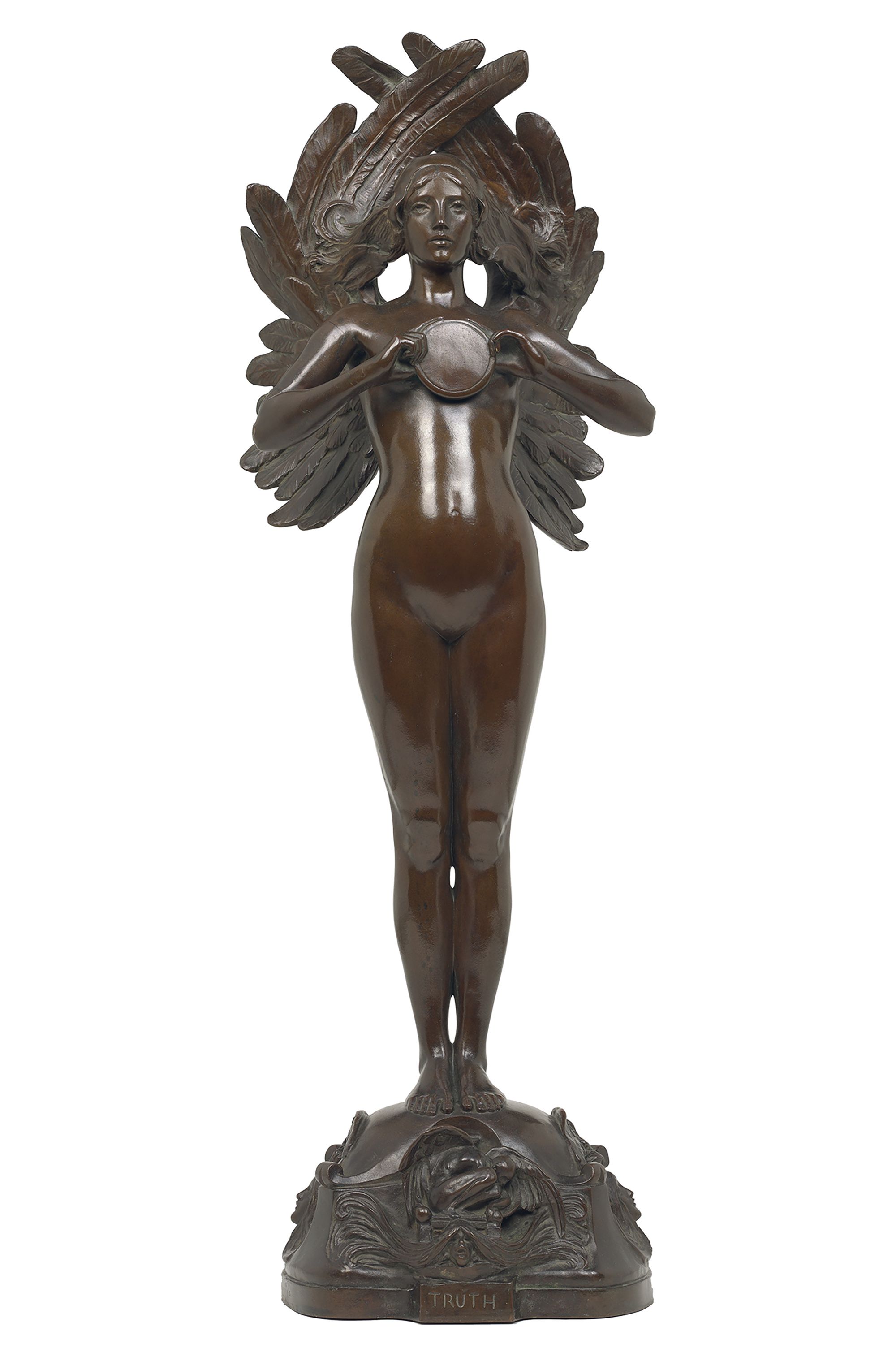
Bertram Mackennal, Australia/England 1863-1931 / Truth 1894 / Bronze / 62 x 19.5 x 17.5cm / Purchased 1989 from the estate of Lady Trout with a special allocation from the Queensland Government / Collection: Queensland Art Gallery | Gallery of Modern Art / View full image

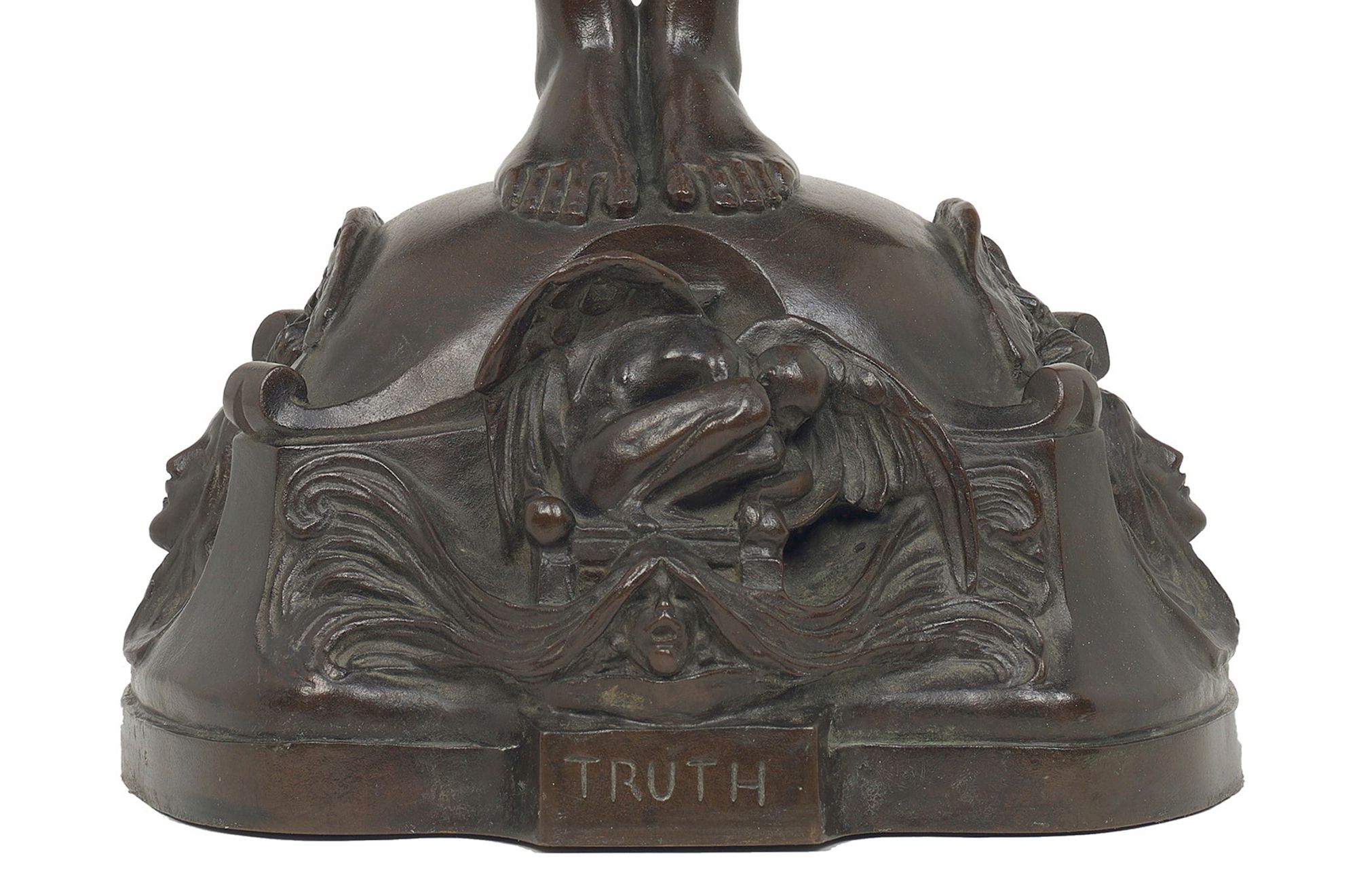
Bertram Mackennal, Australia/England 1863-1931 / Truth (detail) 1894 / Bronze / 62 x 19.5 x 17.5cm / Purchased 1989 from the estate of Lady Trout with a special allocation from the Queensland Government / Collection: Queensland Art Gallery | Gallery of Modern Art / View full image
Truth is one of a series of sculptures that Mackennal made on allegorical themes. The young woman with flowing hair and arched wings, who holds a disc to her chest, personifies the attribute referred to in the work’s title. The disc may represent the sun, which casts light on all things, or the mirror, which does not lie.
John Ruskin (1819–1900) who was hugely influential in the latter half of the nineteenth century referred to the relationship of the artist to Truth in Modern painters: 'Truth to himself; that is to say, the resolution to do his duty by his art', and in this sense the sculptor is holding Truth's mirror up to himself as artist.
The ornately carved base epitomises the design principles and generative movement of Art Nouveau, the figure stands on a half-hemispherical base which also refers to the globe and signifies that Truth is above worldly things. The treatment of the base also follows Renaissance masters like Italian sculptor Donatello (1386–1466) in extending the dramatic effect of the sculpture.

Bertram Mackennal, Australia/England 1863-1931 / Truth 1894 / Bronze / 62 x 19.5 x 17.5cm / Purchased 1989 from the estate of Lady Trout with a special allocation from the Queensland Government / Collection: Queensland Art Gallery | Gallery of Modern Art / View full image
On display in Australian Art Collection
Queensland Art Gallery
Galleries 10, 11, 12 & 13 (Josephine Ulrick and Win Schubert Galleries)
Queensland Art Gallery | Gallery of Modern Art (QAGOMA)
Brisbane, Australia