
Anthony van Dyck is recognised for the naturalism & humanity of his portraits

Anthony van Dyck, Flanders 1599–1641 / Portrait of Marchese Filippo Spinola c.1622-27 / Oil on canvas / 218.3 x 139.6cm / Purchased 1981. QAG Foundation. Dedicated 1998 to Sir George Fisher CMG inaugural President of the Foundation (1979–85) in recognition of his distinguished service / Collection: Queensland Art Gallery | Gallery of Modern Art / View full image
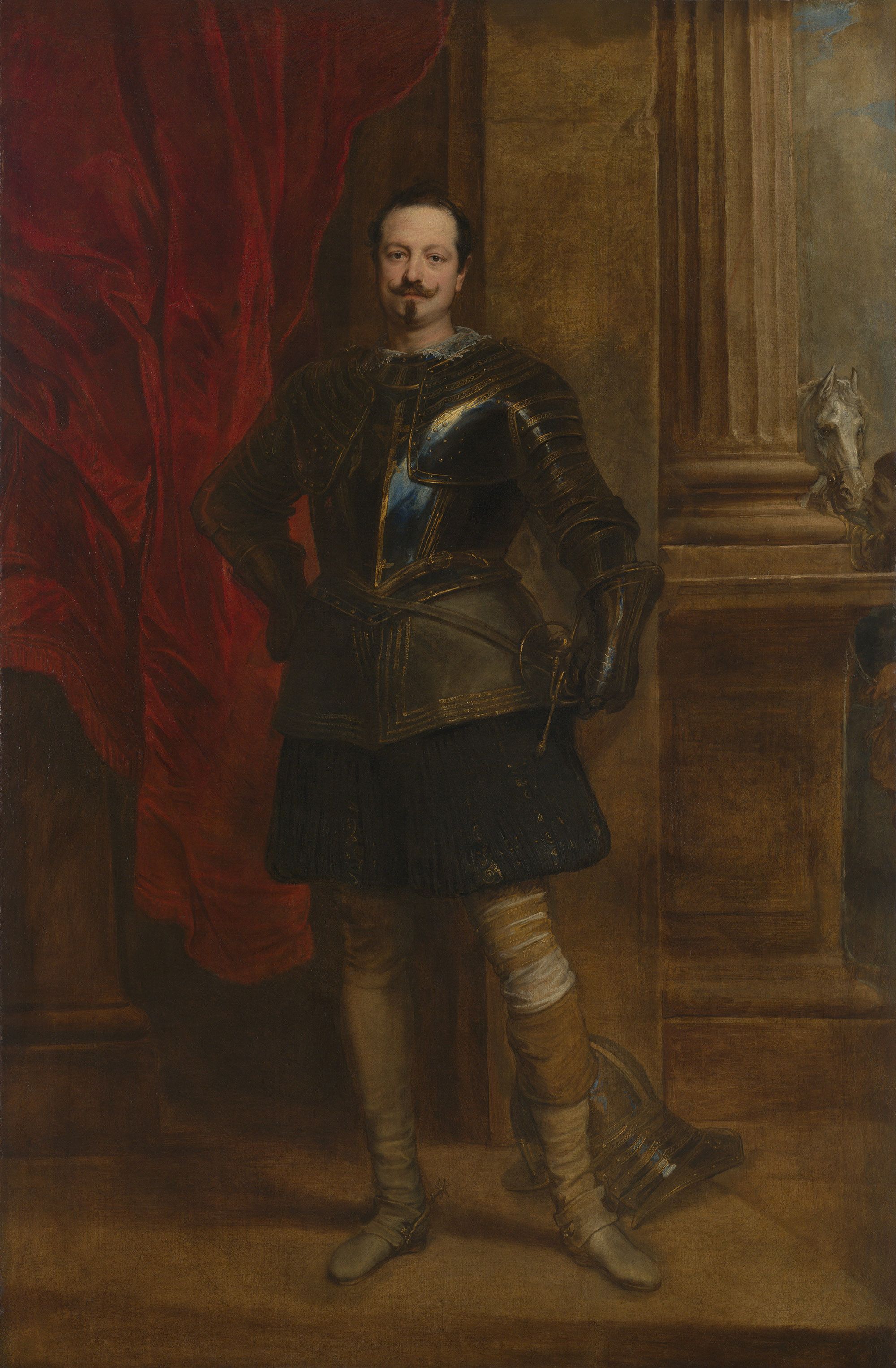
This painting by Flemish Baroque artist Anthony van Dyck (22 March 1599–1641) is thought to depict Filippo Spinola, the son of Ambrogio Spinola, a famous general whose family held great wealth and power in Genoa, then a part of the Spanish Empire.
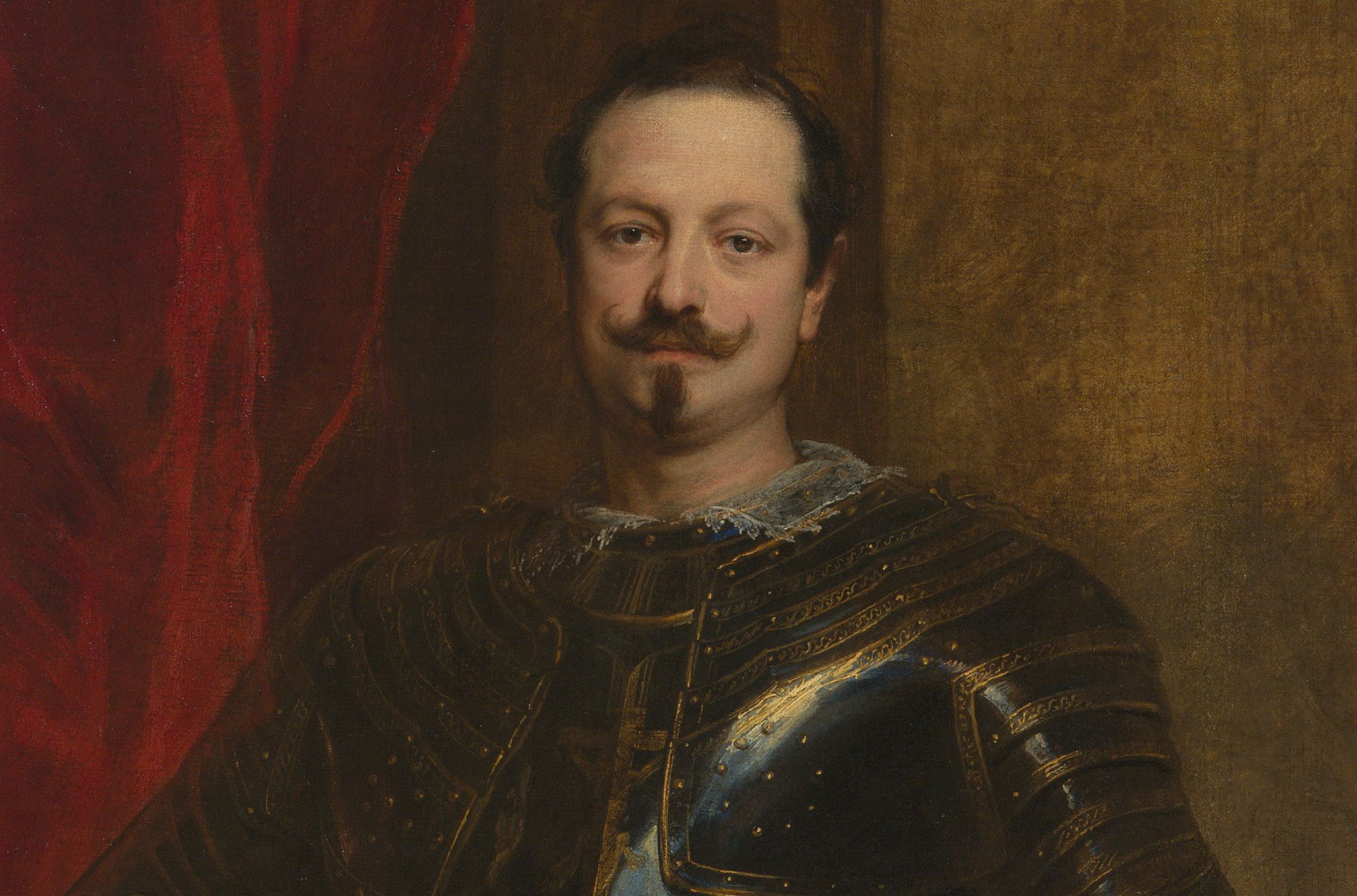
Filippo Spinola served under his father in the Netherlands, Milan and Spain. Van Dyck’s insightful and dignified portrait suggests a confidence and authority in the military commander, while sharing his vulnerability on the battlefield by illustrating his bandaged left knee.

Anthony van Dyck, Flanders 1599–1641 / Portrait of Marchese Filippo Spinola (detail) c.1622-27 / Oil on canvas / 218.3 x 139.6cm / Purchased 1981. QAG Foundation. Dedicated 1998 to Sir George Fisher CMG inaugural President of the Foundation (1979–85) in recognition of his distinguished service / Collection: Queensland Art Gallery | Gallery of Modern Art / View full image
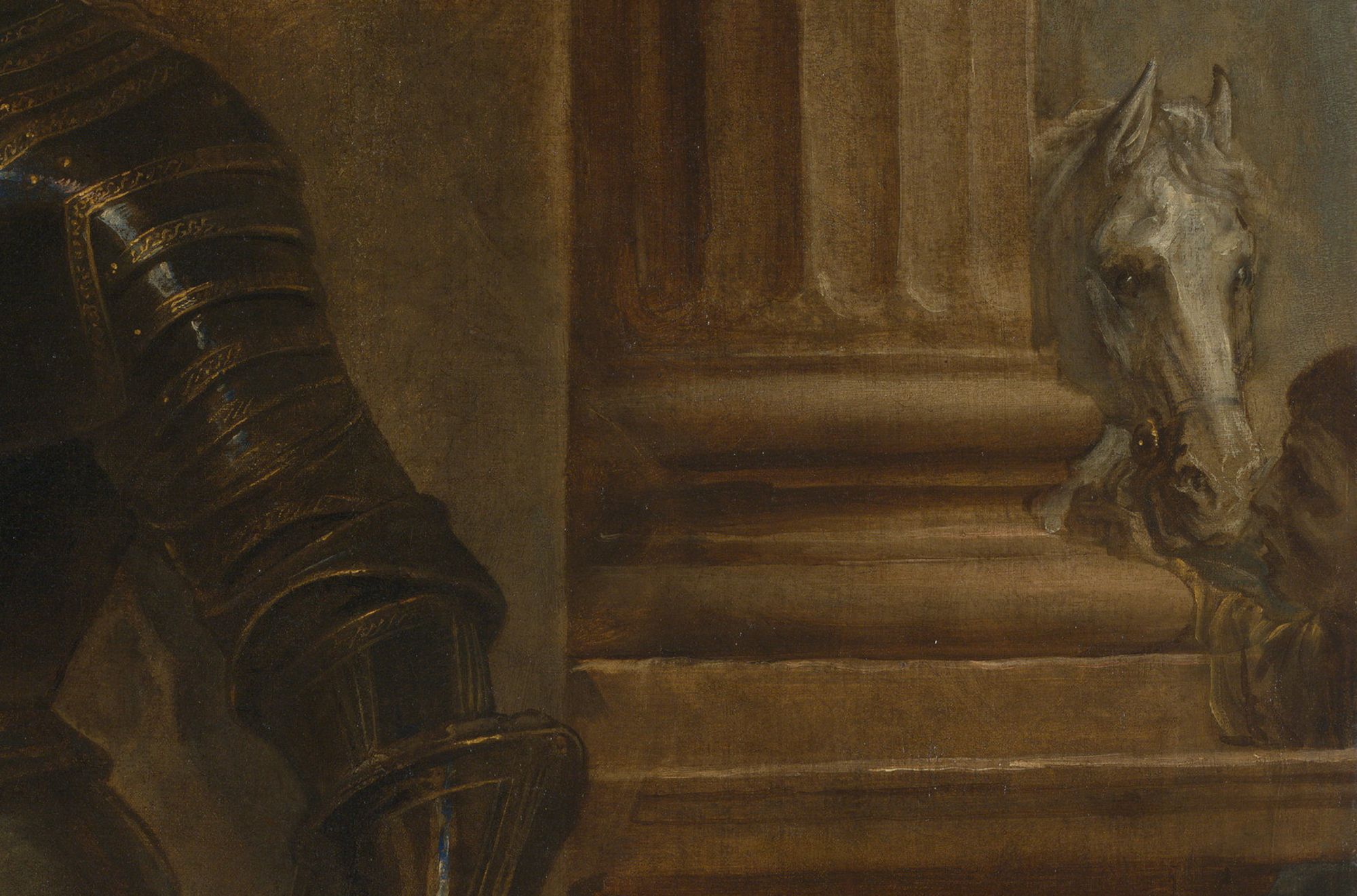
In Portrait of Marchese Filippo Spinola c.1622–27 with his helmet on the floor and his horse tended by a page in the background, the scene suggests Spinola has dismounted only moments before. The background of the canvas is halved: the red curtain symbolises the softness of an inner domestic world, while the exterior building column and tethered horse remind us of the omnipresent call of duty from the outside world. Spinola stands in the liminal space between these realms, a man divided.
Van Dyck is recognised for the naturalism and humanity of his portraits, and for his ability to represent subjects as individuals. He was in great demand among the Genoese, Flemish and English aristocracy.

Anthony van Dyck, Flanders 1599–1641 / Portrait of Marchese Filippo Spinola (detail) c.1622-27 / Oil on canvas / 218.3 x 139.6cm / Purchased 1981. QAG Foundation. Dedicated 1998 to Sir George Fisher CMG inaugural President of the Foundation (1979–85) in recognition of his distinguished service / Collection: Queensland Art Gallery | Gallery of Modern Art / View full image
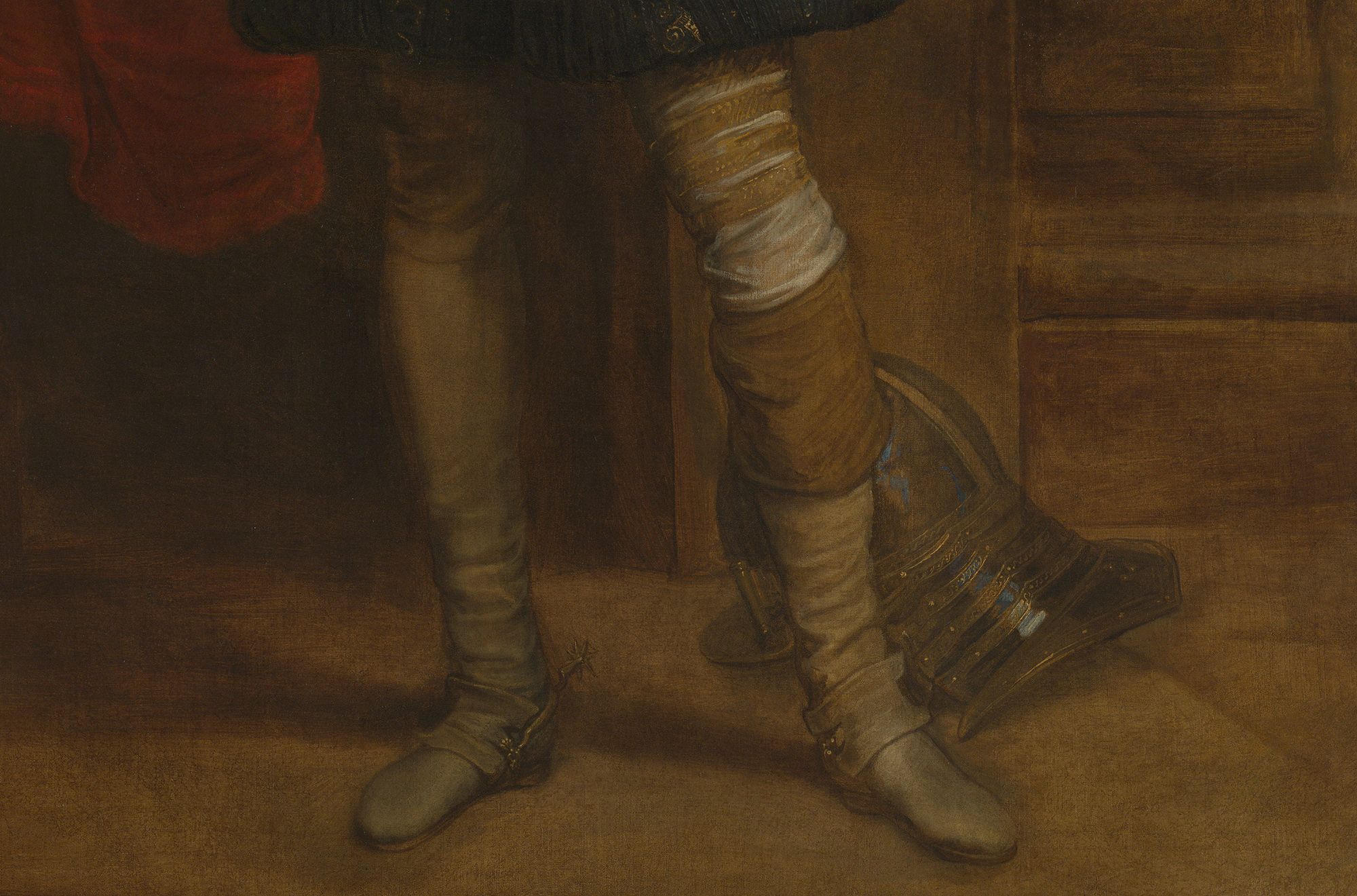

Anthony van Dyck, Flanders 1599–1641 / Portrait of Marchese Filippo Spinola (detail) c.1622-27 / Oil on canvas / 218.3 x 139.6cm / Purchased 1981. QAG Foundation. Dedicated 1998 to Sir George Fisher CMG inaugural President of the Foundation (1979–85) in recognition of his distinguished service / Collection: Queensland Art Gallery | Gallery of Modern Art / View full image
Anthony Van Dyck Portrait of Marchese Filippo Spinola c.1622-27

Anthony van Dyck, Flanders 1599–1641 / Portrait of Marchese Filippo Spinola c.1622-27 / Oil on canvas / 218.3 x 139.6cm / Purchased 1981. QAG Foundation. Dedicated 1998 to Sir George Fisher CMG inaugural President of the Foundation (1979–85) in recognition of his distinguished service / Collection: Queensland Art Gallery | Gallery of Modern Art / View full image
While the Catholic Church remained the dominant authority during the Baroque period in Europe, from the late sixteenth century to the early eighteenth century, power and privilege also distinctly shifted into the hands of royal families and courts in France, Spain and England. For artists this represented a new form of patronage and a freedom to portray individuals, predominantly nobility, in new and comparatively expressive ways.
Van Dyck enjoyed a short but illustrious career as one of the most sought after and successful portraitists in all of Europe, with particular recognition in England where he was appointed and knighted as court painter to Charles I in 1632. He then spent nearly 10 years in England where he died in London at the age of 42.
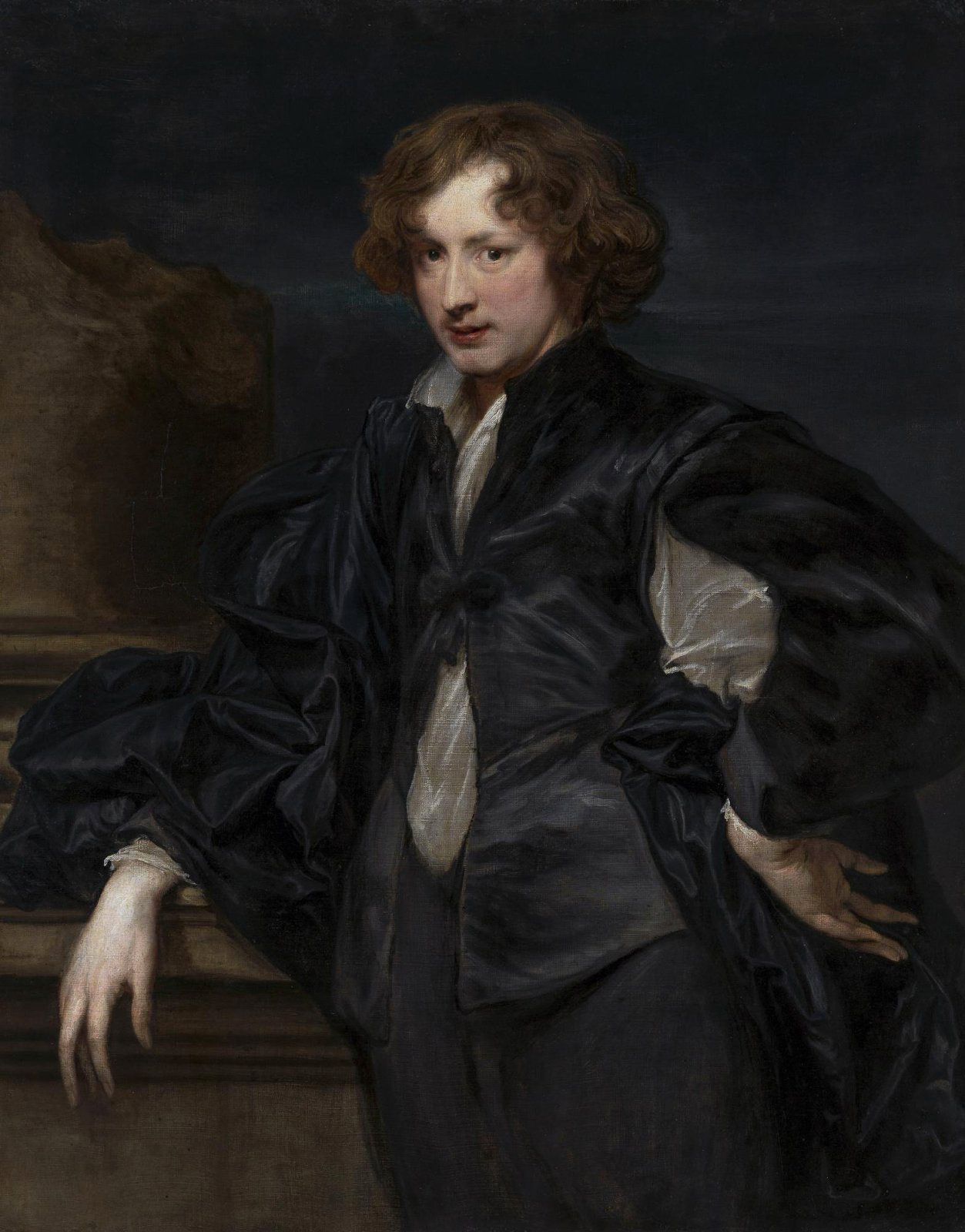
Van Dyck was the seventh child in a large, wealthy merchant family from Antwerp. Painting from an early age, he entered the studio of Peter Paul Rubens (1577–1640) in the same city around 1618, where he was more assistant than student, and by 1620 he was a talented, confident and successful painter at 21 years of age. Portrait of Marchese Filippo Spinola, was painted in Genoa when he was just 23 (Self-Portrait at age 23 illustrated), during a period when the artist travelled extensively in Italy for six years, visiting and working in Venice, Genoa, Florence, Padua, Milan and Rome. Genoa has been cited as the city in which his portraiture matured into the influential style for which the artist is best known.
Anthony van Dyck Self-Portrait 1622–23

Anthony van Dyck, Flanders 1599–1641 / Self-Portrait 1622–23 / Oil on canvas / 116.5 x 93.5cm / Entered the Hermitage in 1772; acquired from the collection of LA Crozat, Baron de Thiers, in Paris / Collection: State Hermitage Museum, Saint Petersburg / View full image
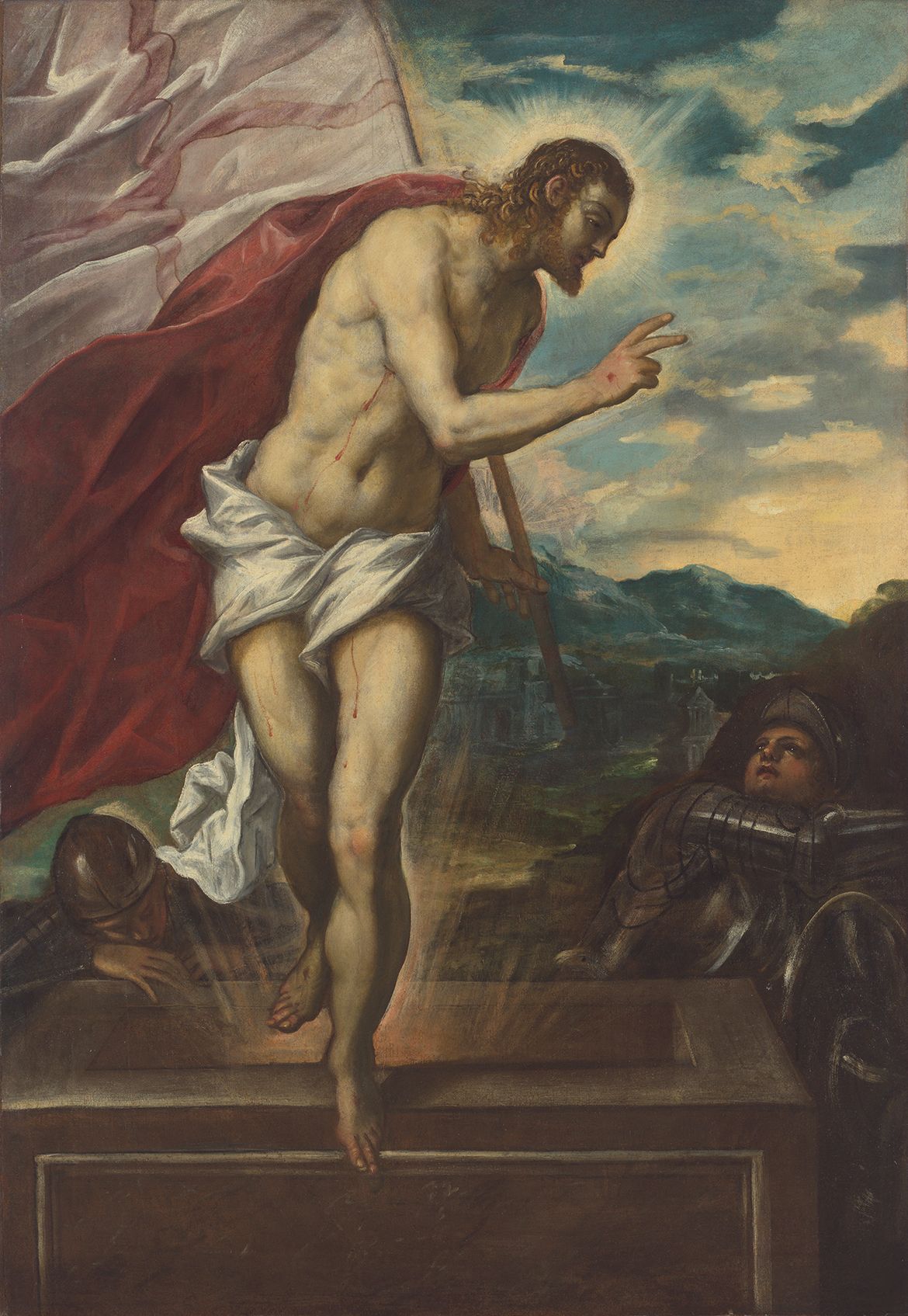
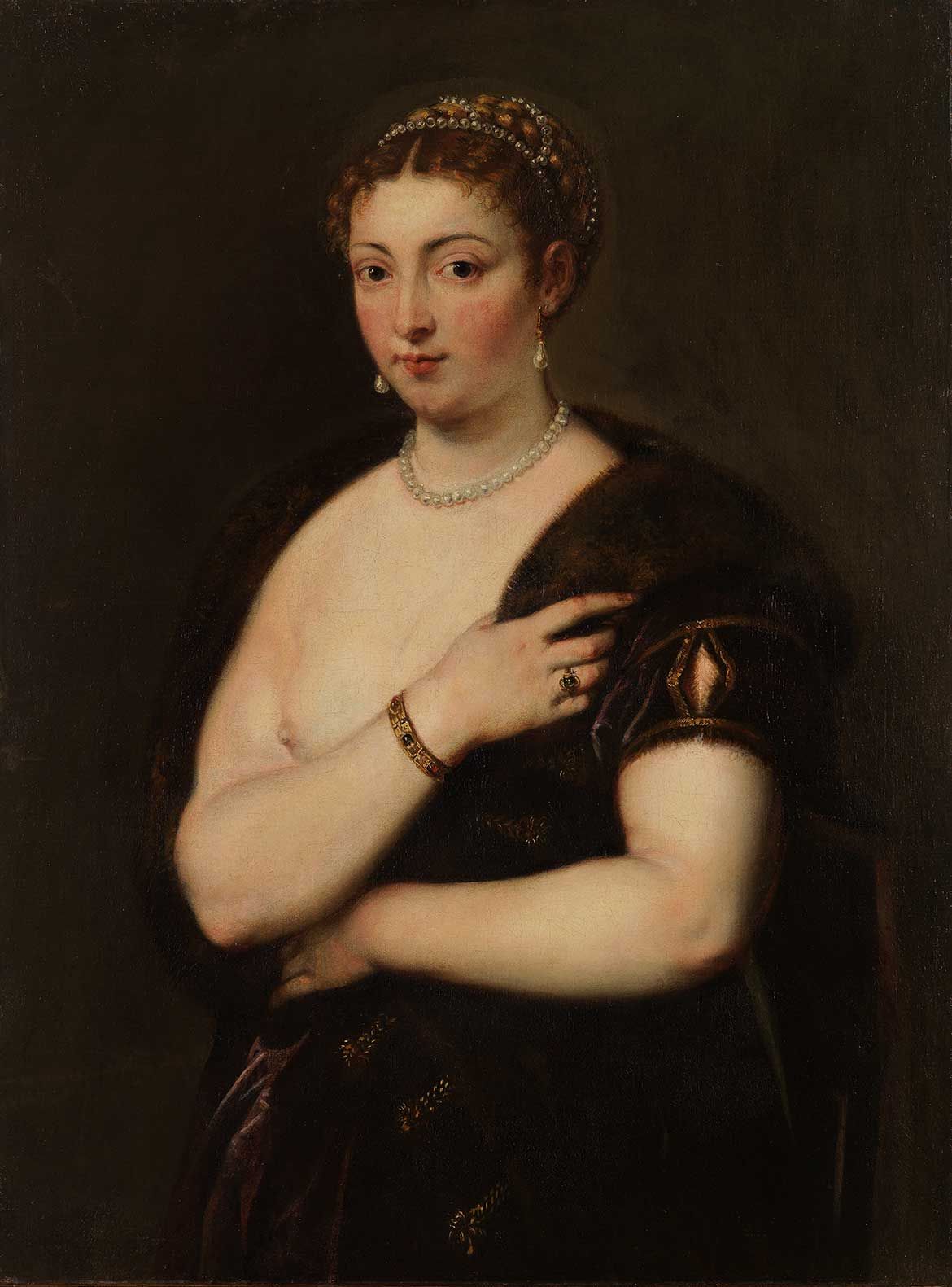
Genoa became a republic, like Venice, in 1508 as a powerful maritime, trading and banking centre. By the seventeenth century the city became a satellite of Spain and bankers to the Spanish Monarchy. Some of the finest and grandest domestic palaces in Europe were built in the city–state with a succession of noble and patrician families occupying key positions of power. The Spinola family was one of a group of aristocratic ruling families in Genoa, all of which accumulated extensive collections of art, much of which consisted of portraiture including paintings by Peter Paul Rubens (Young woman in a fur wrap (after Titian) c.1629 illustrated) and Tintoretto (Cristo risorgente (The risen Christ) c.1555 illustrated).
Ambrogio Spinola was elected doge of Genoa in 1621 and was in the employ of the King of Spain, Phillip IV as Commander of the Spanish Forces in the Netherlands and the victor of the famous battle of Breda of 1625 in which the fortified Dutch city fell to the Spanish army.
A number of portraits of armoured men were completed by van Dyck during this period, Portrait of Marchese Filippo Spinola could have been painted on Filippo’s return from renewed wars in the Netherlands in 1626.
Tintoretto Cristo risorgente (The risen Christ) c.1555

Tintoretto, Italy 1518-94 / Cristo risorgente (The risen Christ) c.1555 / Oil on canvas / 201 x 139cm / Purchased 1981. Queensland Art Gallery Foundation / Collection: Queensland Art Gallery | Gallery of Modern Art / View full image
Peter Paul Rubens Young woman in a fur wrap (after Titian) c.1629-30

Peter Paul Rubens, Flanders 1577-1640 / Young woman in a fur wrap (after Titian) c.1629-30 / Oil on canvas / 91.8 x 68.3cm / Purchased 1980. QAG Foundation / Collection: Queensland Art Gallery | Gallery of Modern Art / View full image
On display in the International Art Collection
Queensland Art Gallery
Galleries 7, 8 & 9 (Philip Bacon Galleries)
Queensland Art Gallery | Gallery of Modern Art (QAGOMA)
Brisbane, Australia