
An artistic dynasty — Camille Pissarro & his eldest son Lucien

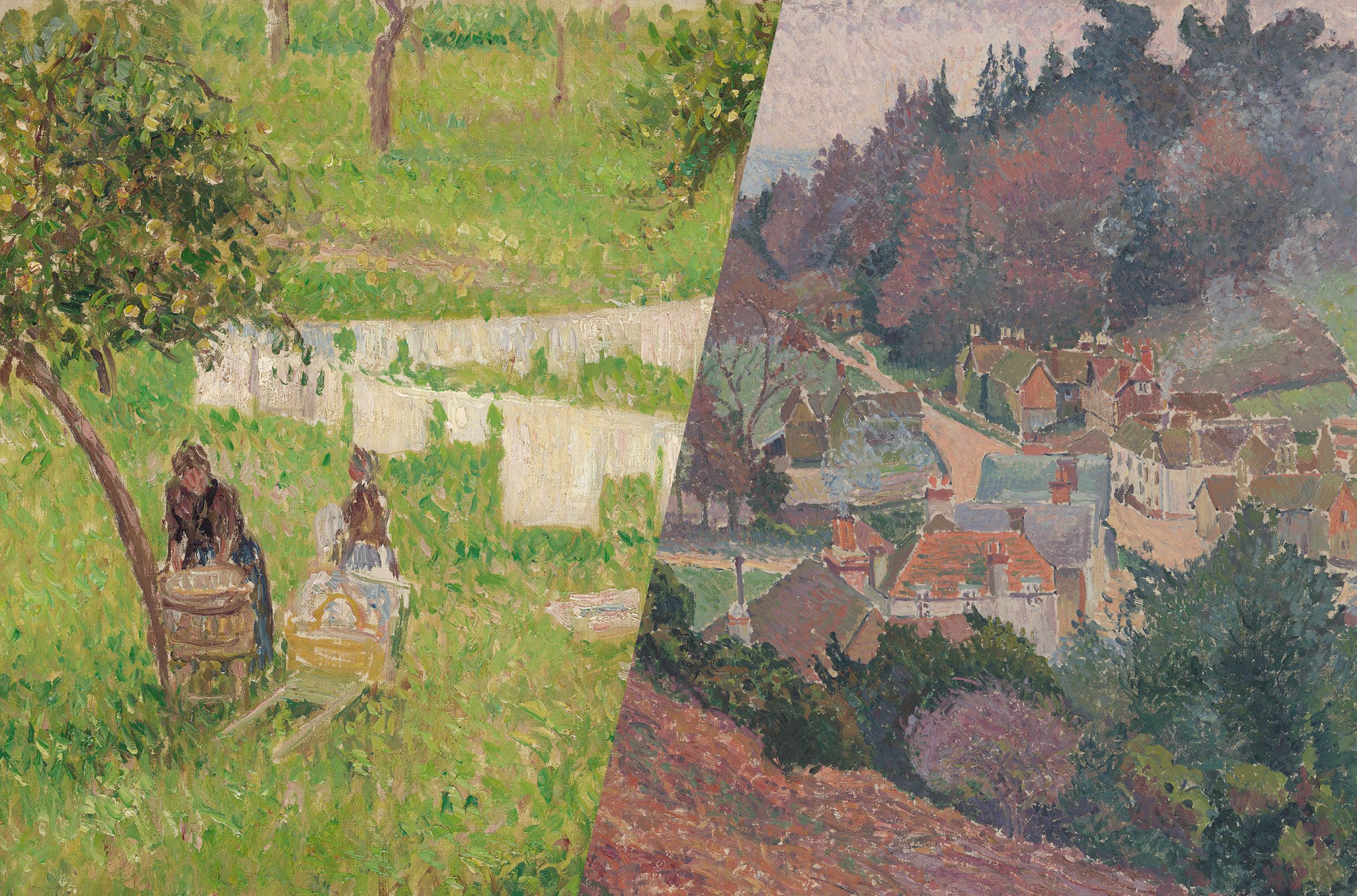
(l-r) Camille Pissarro, La lessive à Éragny (Washing day at Éragny) 1901 / Lucien Pissarro, Tea time, Coldharbour 1916 / View full image
Camille Pissarro's (10 July 1830–1903) time in Éragny-sur-Epte, a small village of some 460 residents in Normandy — just 30km north of Paris, however then a two hour commute by train — was a significant period in his artistic development. Pissarro moved from the Val d'Oise region to Éragny with his family from April 1884 and stayed until his death, the village and its surrounding countryside a major source of inspiration for his paintings.
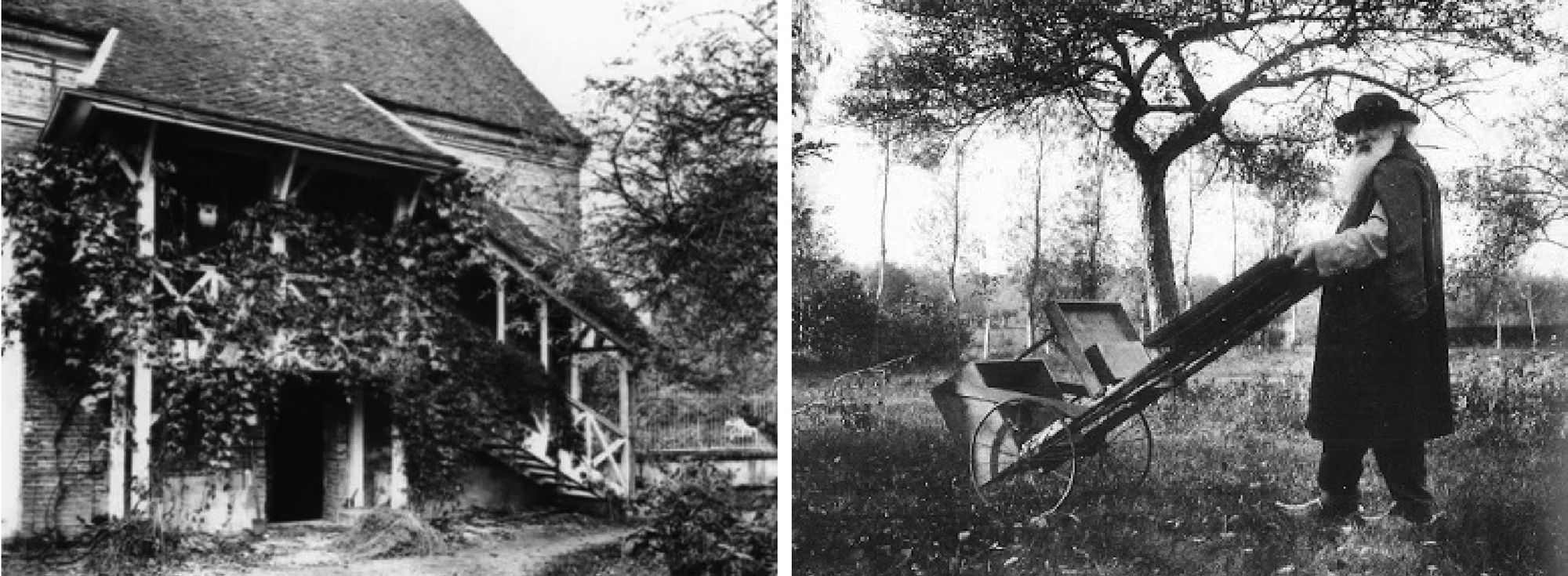
The artist converted a barn next to the family home and installed large windows so they opened directly to the outside so he could paint indoors. An eternal observer, he depicted the daily life that he witnessed with unobstructed views his studio offered of the surrounding garden and countryside, portraying scenes of people working in the fields and washing clothes.
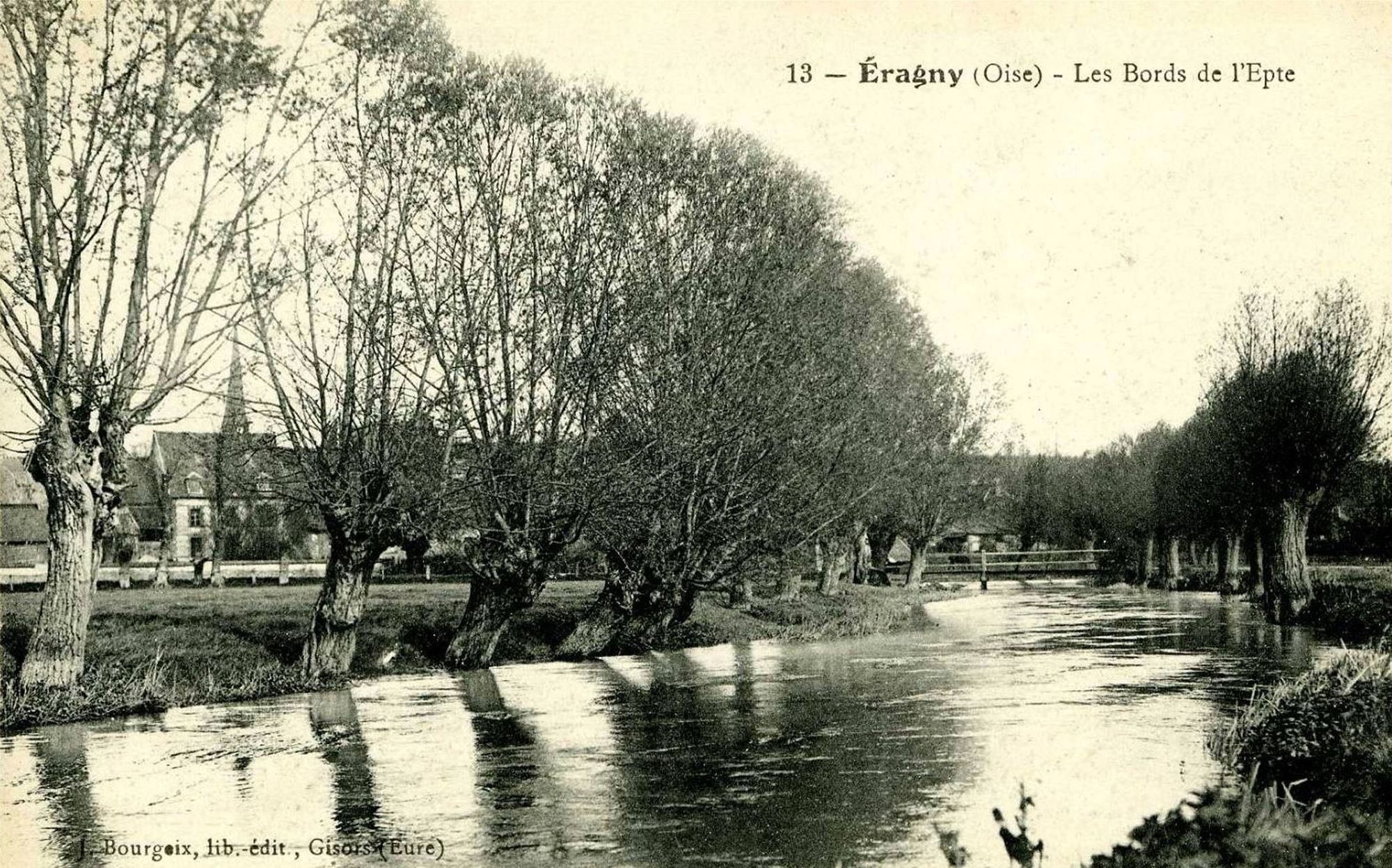
Éragny, c.1900

13 Eragny (Oise) / Les Bords de l’Epte (The Banks of the Epte) / Publisher: Bourgoix, lib. edit / Photograph: Gisors (Eure) / View full image
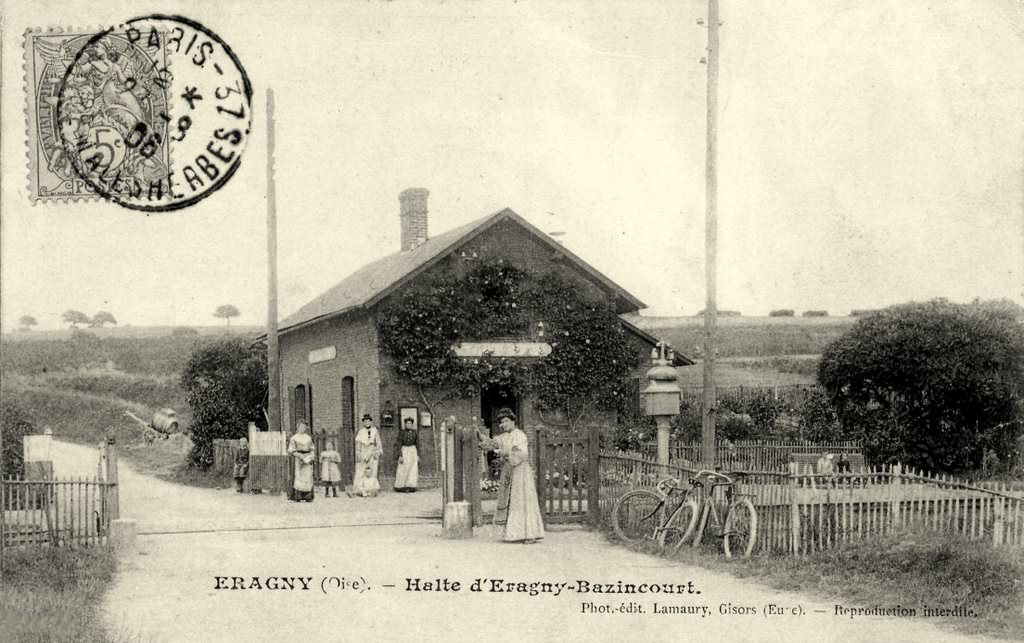
Éragny Train Station, 1906

ERAGNY (Oise) / Halte d'Éragny-Bazincourt (The Éragny-Bazincourt Station/stopover) / Publisher: Lamaury / Photograph: Gisors (Eure) / Date stamped 1906 / View full image
Camille Pissarro on the second floor of his studio, Éragny c.1900

Camille Pissarro on the second floor of his studio, Éragny c.1900 / Courtesy: Musée Pissarro Archives, Pontoise / View full image
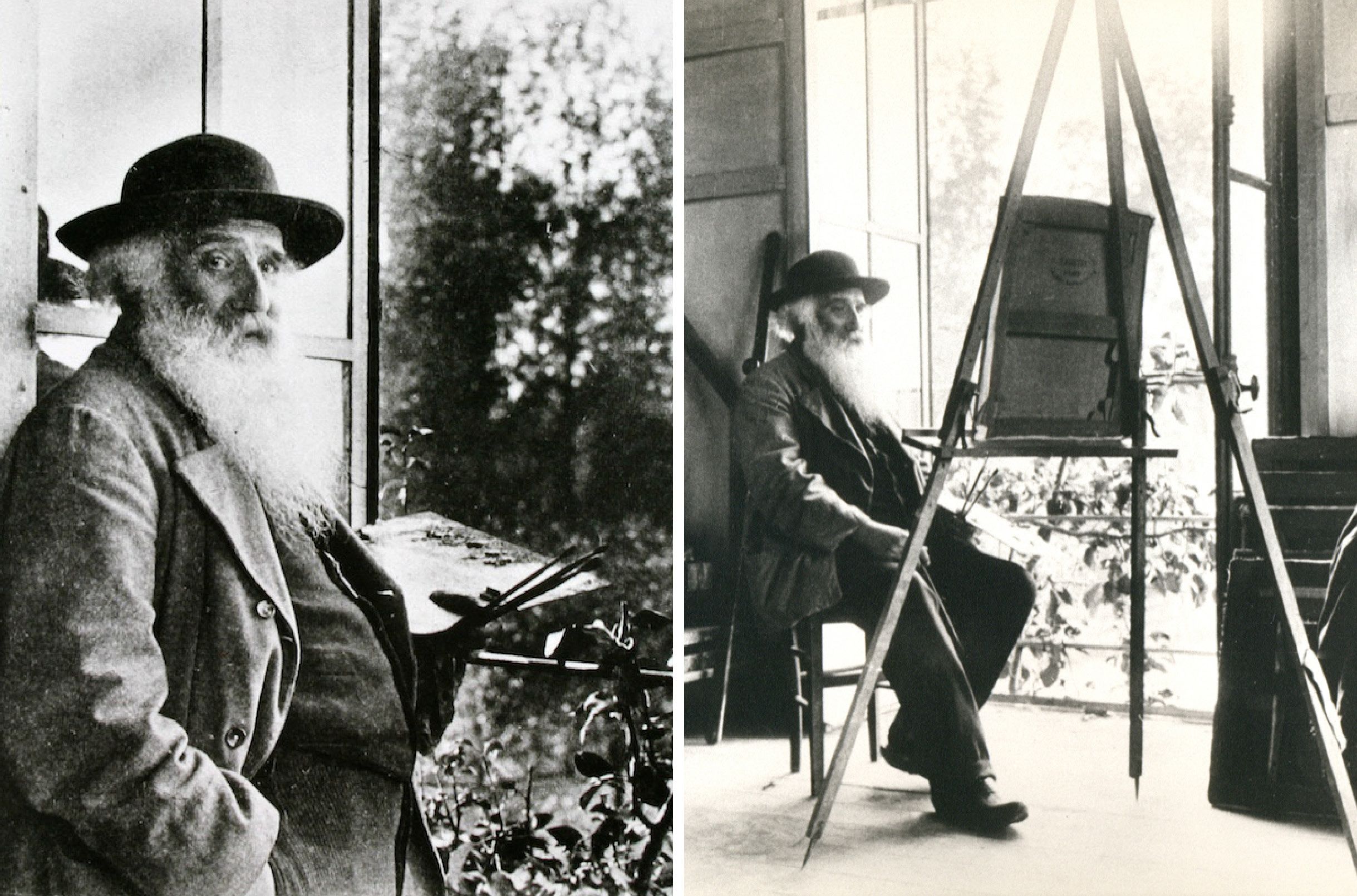
Camille Pissarro's studio & his mobile easel, Éragny c.1900

(l-r) Exterior view of Camille Pissarro's studio in Éragny / Camille Pissarro with his mobile easel, Éragny c.1900 / Courtesy: Musée Pissarro Archives, Pontoise / View full image
Pissarro had seven children, four of his sons grew to be respected artists in their own right. Lucien, the eldest (20 February 1863–1944) born in Paris, focused almost exclusively on rural landscapes of both England and France. He worked in different media including oil, watercolour, wood-engraving and etching.
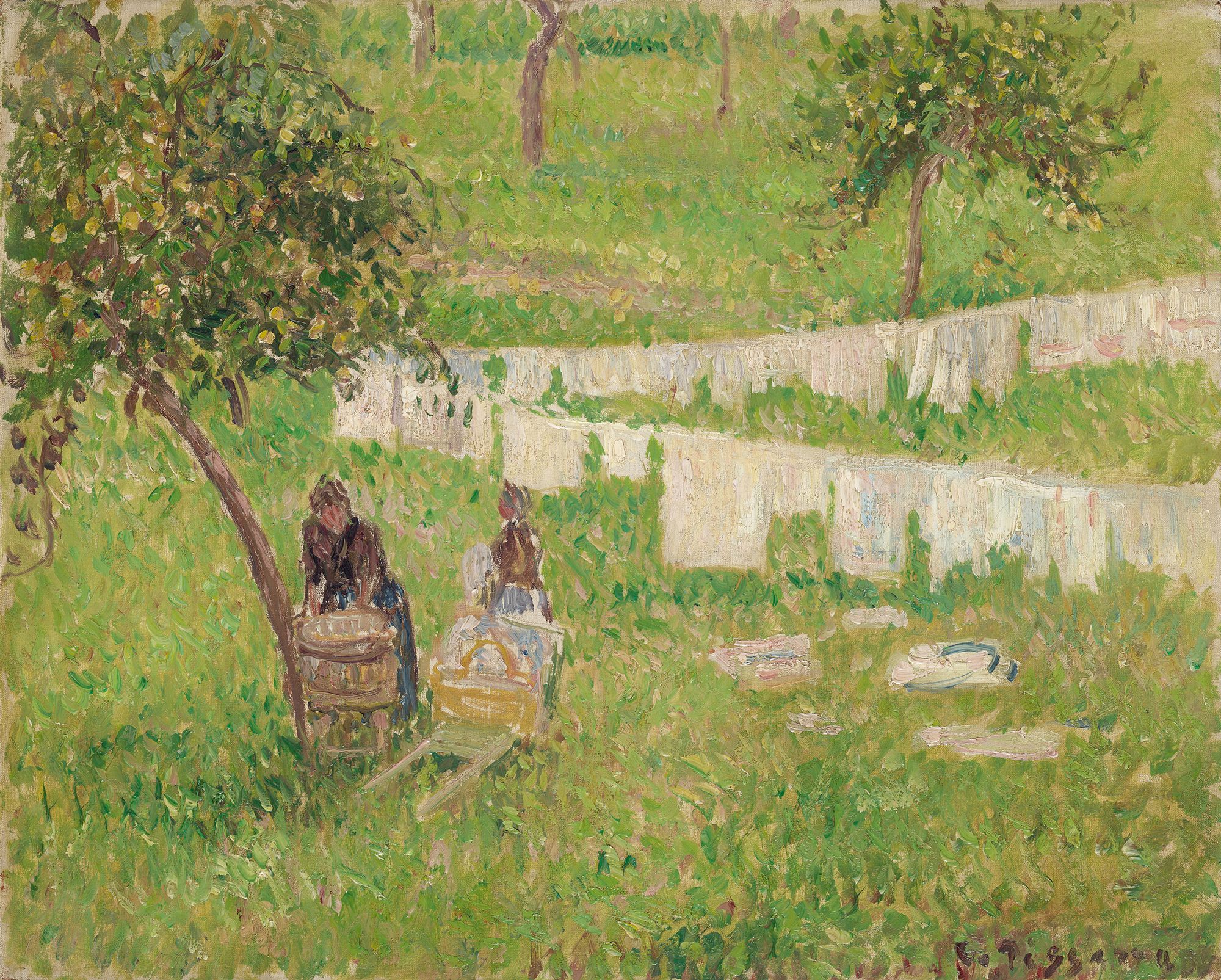
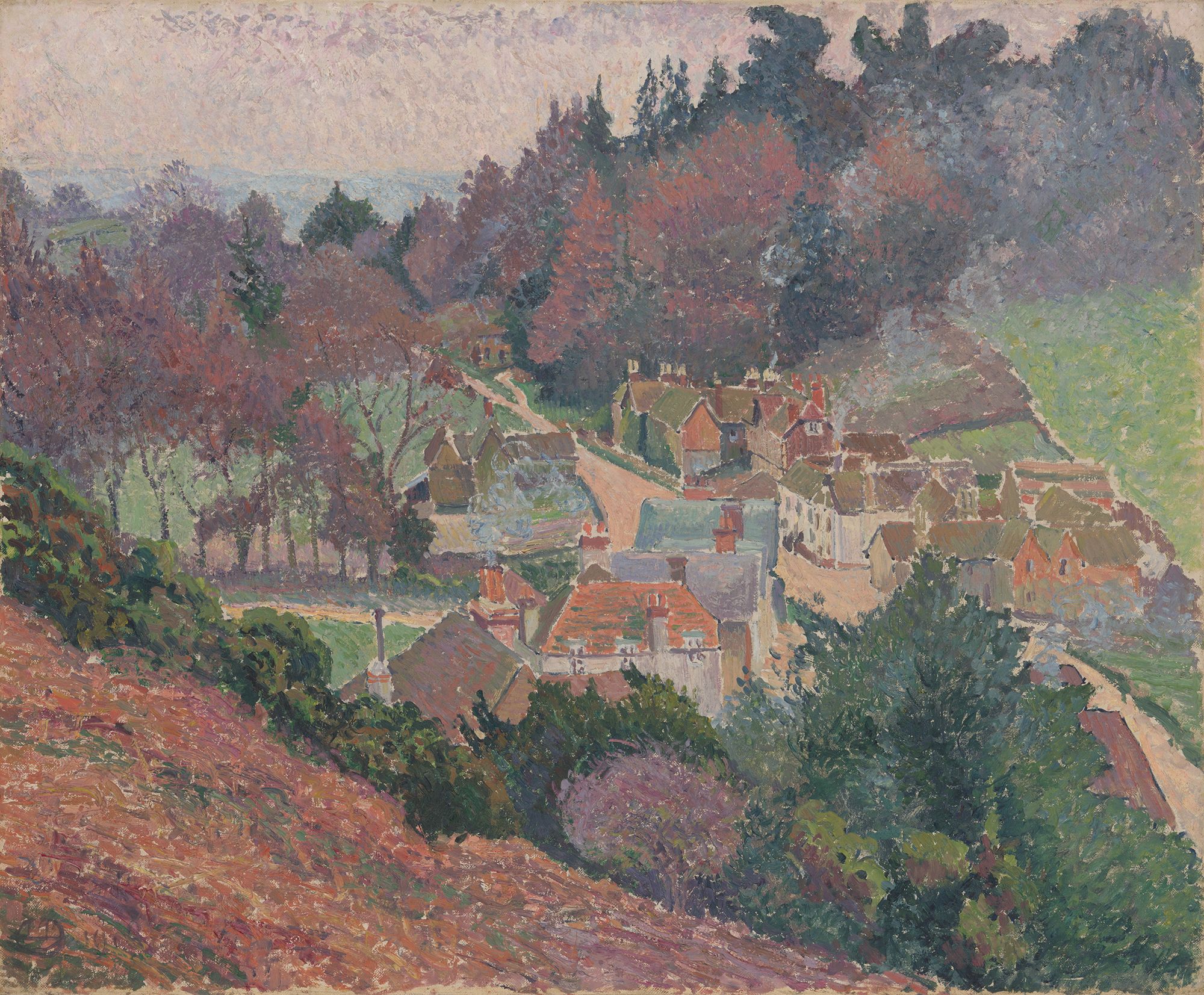
Here we look at the paintings Tea time, Coldharbour 1916 (illustrated) by Lucien, a companion work to Camille's La lessive à Éragny 1901 (illustrated).
Camille Pissarro
La lessive à Éragny (Washing day at Éragny) was painted in Éragny-sur-Epte in 1901, and depicts two women hang their washing outdoors in the sunshine. The paint — applied in small, heavily loaded brushstrokes — allowed Camille Pissarro to capture the light, colour and atmosphere of the moment.
Impressionism evolved from the practice of painting en plein air (out-of-doors), where artists were intrigued by the fugitive effects of light and drew their inspiration from everyday life. Throughout his practice, Pissarro kept a studio in Paris but spent long periods of time painting in the country, favouring rural scenes of people at work.
Pissarro was the only artist among the Impressionists to exhibit in all eight Impressionism exhibitions, which took place in Paris between 1874 and 1886. Held in the highest regard by members of the French avant-garde — Paul Cézanne and Claude Monet were among his friends and greatest admirers.
Camille Pissarro La lessive à Éragny 1901

Camille Pissarro, France 1830–1903 / La lessive à Éragny (Washing day at Éragny) 1901 / Oil on canvas / 33 x 40.5cm / Purchased 1975 / Collection: Queensland Art Gallery | Gallery of Modern Art / View full image
Lucien Pissarro
The eldest son of Camille Pissarro, Lucien’s practice focused almost exclusively on rural landscapes of both England and France. Tea time, Coldharbour 1916 reflects the colours of an English autumn afternoon, suggested by smoke from a distant chimney and the soft haziness of the scene.
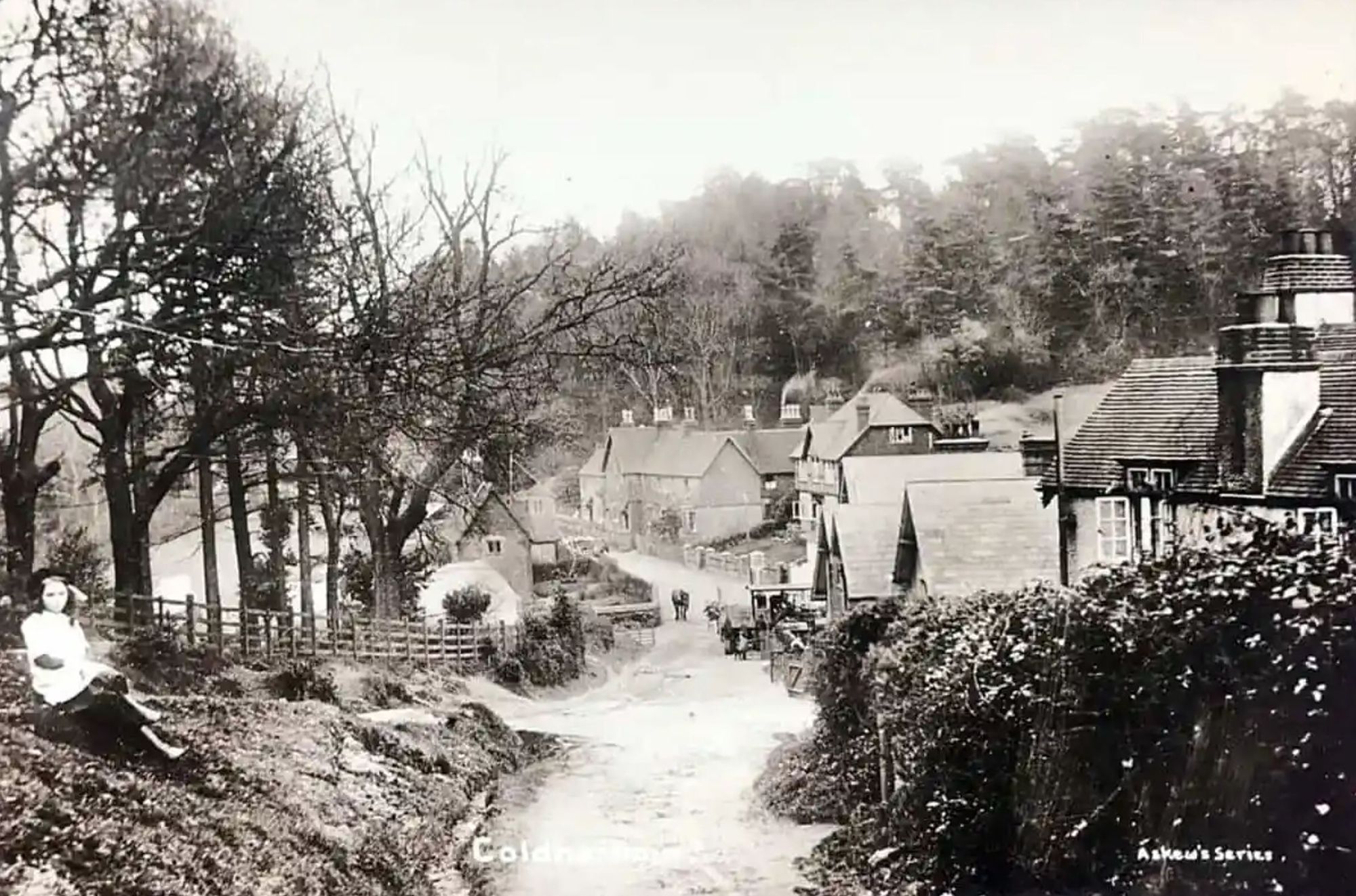
Lucien settled in England in 1890 and was naturalised during World War One in 1916. From 1913 to 1919, he painted landscapes of Dorset, Westmorland, Devon, Essex and Sussex, however from November 1915 to July the following year, Lucien and his family lived in 'Ivy Cottage' in the remote village of Coldharbour in Surrey, some 30km east of London, where he painted the view from the hills.
Initially trained by his artist father, Lucien later became involved with those who followed on from the Impressionists, known as the Neo-Impressionists. He worked closely with Paul Signac and Georges Seurat, whose pointillist technique influenced his style.
Lucien Pissarro Tea time, Coldharbour 1916

Lucien Pissarro, France 1863–1944 / Tea time, Coldharbour 1916 / Oil on canvas / 52 x 63.5cm / Purchased 1959. Annie Chisholm Wilson Bequest / Collection: Queensland Art Gallery | Gallery of Modern Art / View full image
Coldharbour Village, Dorking Surrey, c.1900

Coldharbour Village, Dorking Surrey, c.1900 / View full image
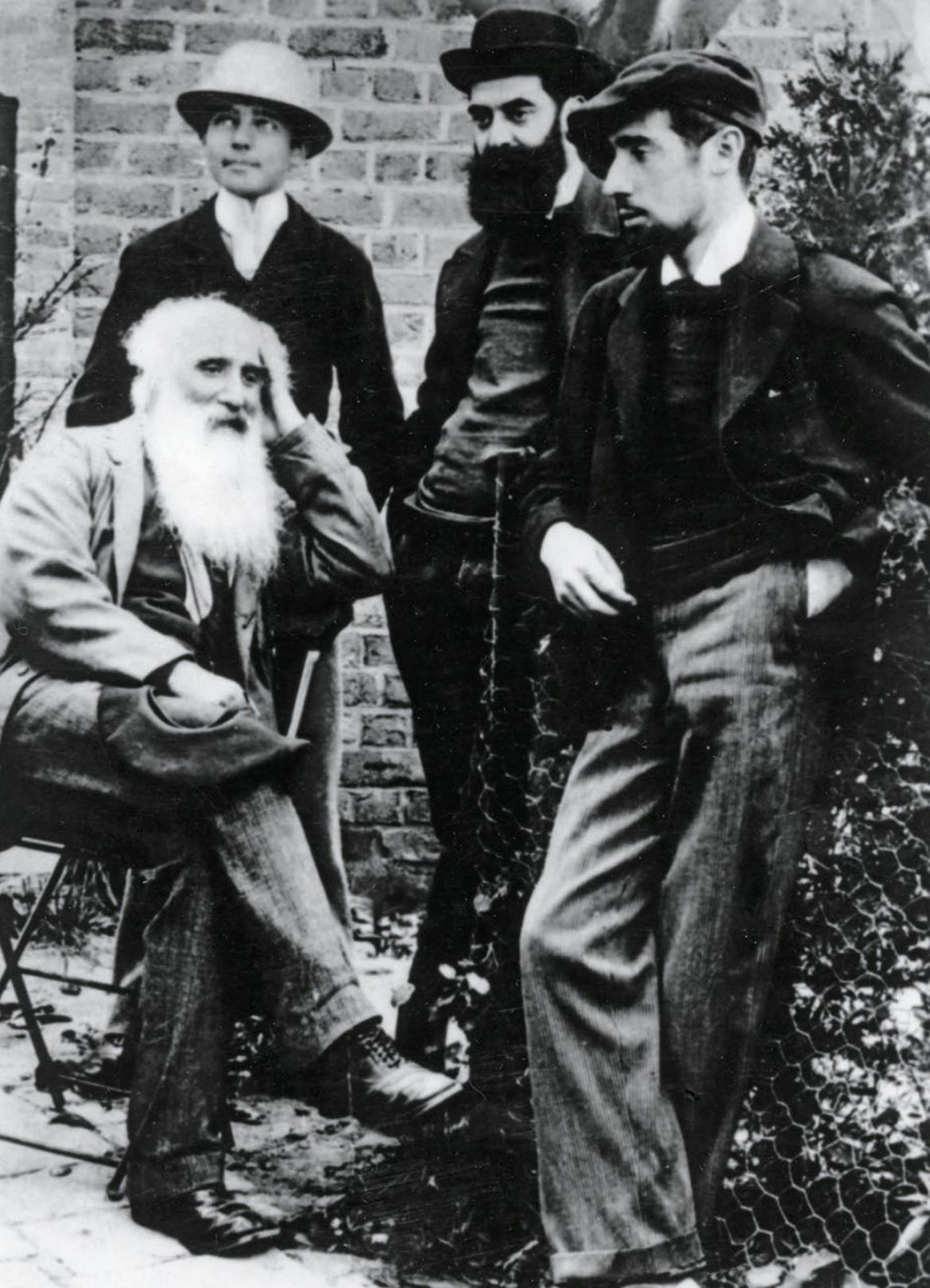
Camille Pissarro with his son Lucien (middle), c.1893

Camille Pissarro with his sons Ludovic-Rodolphe, Lucien (middle) and Félix, c.1893 / Courtesy: Musée Pissarro Archives, Pontoise / View full image
Edited curatorial extracts, research and supplementary material sourced and compiled by Elliott Murray, Senior Digital Marketing Officer, QAGOMA
Queensland Art Gallery | Gallery of Modern Art (QAGOMA)
Brisbane, Australia