
Once Neolithic urns now painted vases by Ai Weiwei

Ai Weiwei, China b.1957 / Painted vases 2006 / Synthetic polymer paint on ceramic (Neolithic period) / 14 pieces / / Purchased 2006. The Queensland Government’s GOMA Acquisitions Fund / Collection: Queensland Art Gallery | Gallery of Modern Art / © Ai Weiwei / View full image
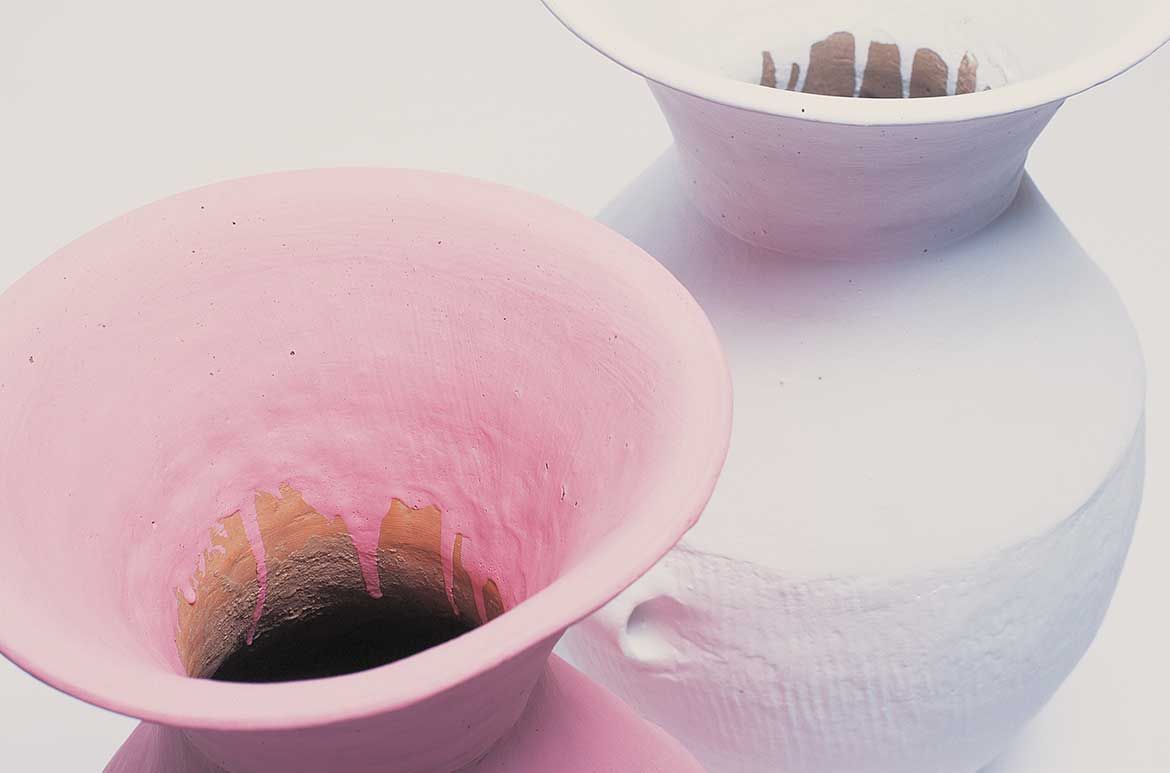
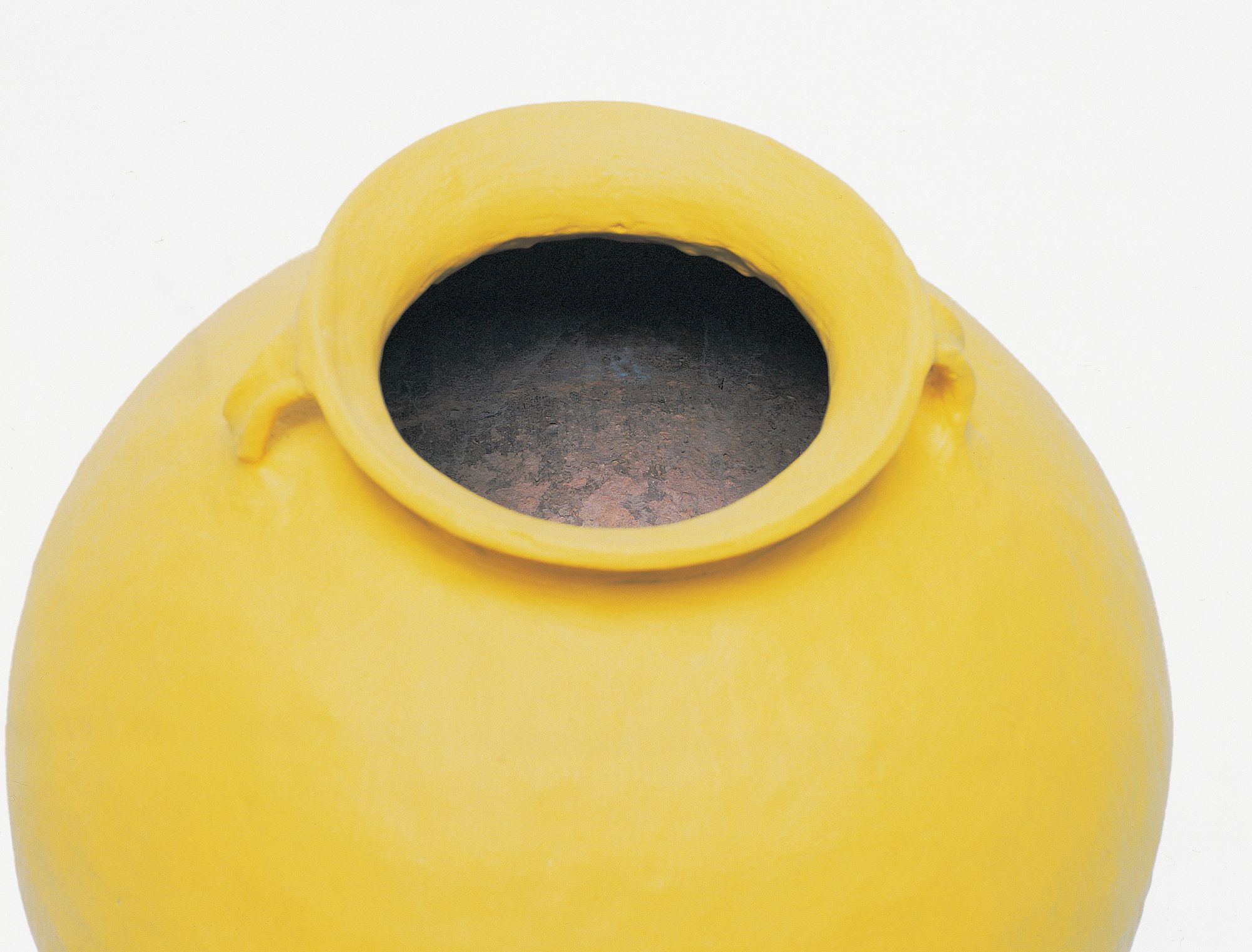
In a subversive act, Ai Weiwei dipped Chinese Neolithic pottery urns into brightly coloured paint, transforming them into contemporary artworks. Though prized as ancient artifacts, the pots are now considered valuable because of their transformation by the artist, as a play on his high standing and international recognition.
Ceramics have played important practical, social, and cultural roles for tens of thousands of years. Early pottery traditions have been studied and admired for their technological advances and remain an indicator of societal evolution, marking the transition from hunting and gathering to agriculture. From Neolithic times pottery has incorporated aesthetic modifications, providing the foundation for an extraordinary range of designs that have influenced the development of subsequent artistic media.
Many ceramic forms continue to be based on utility; however the medium has also been used for a variety of artistic purposes. Contemporary artists have also looked to long-established ceramic traditions — for example, Ai Weiwei manipulates Chinese Neolithic vessels — some six to seven thousand years old — to interrupt the passage of time, questioning value and aesthetic meaning throughout history.
Painted vases 2006

Ai Weiwei, China b.1957 / Painted vases 2006 / Synthetic polymer paint on ceramic (Neolithic period) / 14 pieces / / Purchased 2006. The Queensland Government’s GOMA Acquisitions Fund / Collection: Queensland Art Gallery | Gallery of Modern Art / © Ai Weiwei / View full image
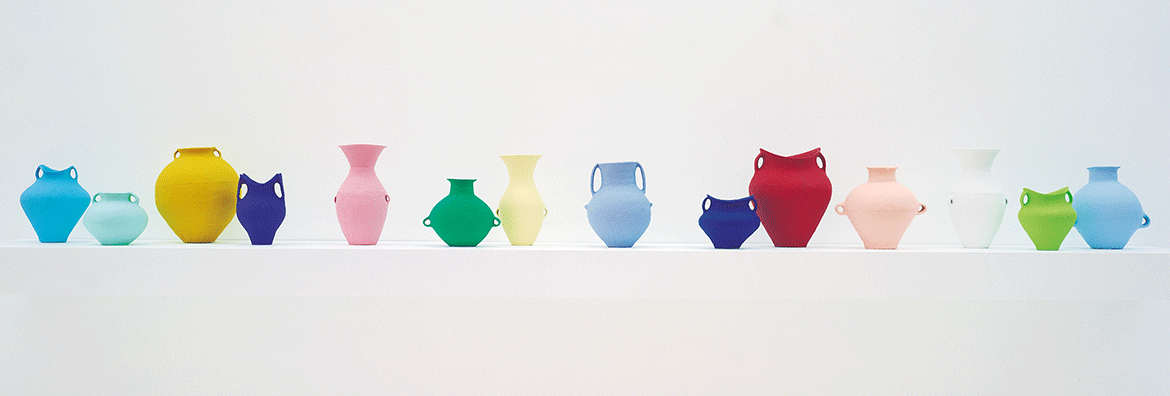
The vast majority of China’s Neolithic earthenwares which have survived to the present are funery urns, their long interment accounting for their remarkable state of preservation, although they were also created for domestic or utilitarian purposes. Neolithic pots are admired for their refined shape, elegant proportions and ancient patinas. For the modern collector, the values and meanings attached to these objects are vested not only in aesthetic characteristics, but also in their unique cultural authority as evidence of one the greatest epochs in China’s long history.
In Painted vases 2006, Ai Weiwei has performed a radical act in transforming these traditionally monochromatic objects — typically painted in red or brown and gently burnished to a mellow lustre — into a brightly coloured, almost day-glo fluorescent display. The original bold geometric or curvilinear patterns that adorn their forms are obliterated, masked by the modern pigment.
Ai Weiwei says of this action that it is ‘powerful only because someone thinks it’s powerful and invests value in the object’. The urns are valuable because the arbiters of taste and the art market have determined that this is so. With Painted vases, the meaning and value of the urns is transformed into a contemporary work that disrupts the value system to which it previously belonged. The urns today take on a new life, bringing them a fresh perspective.

Ai Weiwei, China b.1957 / Painted vases (detail) 2006 / Synthetic polymer paint on ceramic (Neolithic period) / 14 pieces / / Purchased 2006. The Queensland Government’s GOMA Acquisitions Fund / Collection: Queensland Art Gallery | Gallery of Modern Art / © Ai Weiwei / View full image
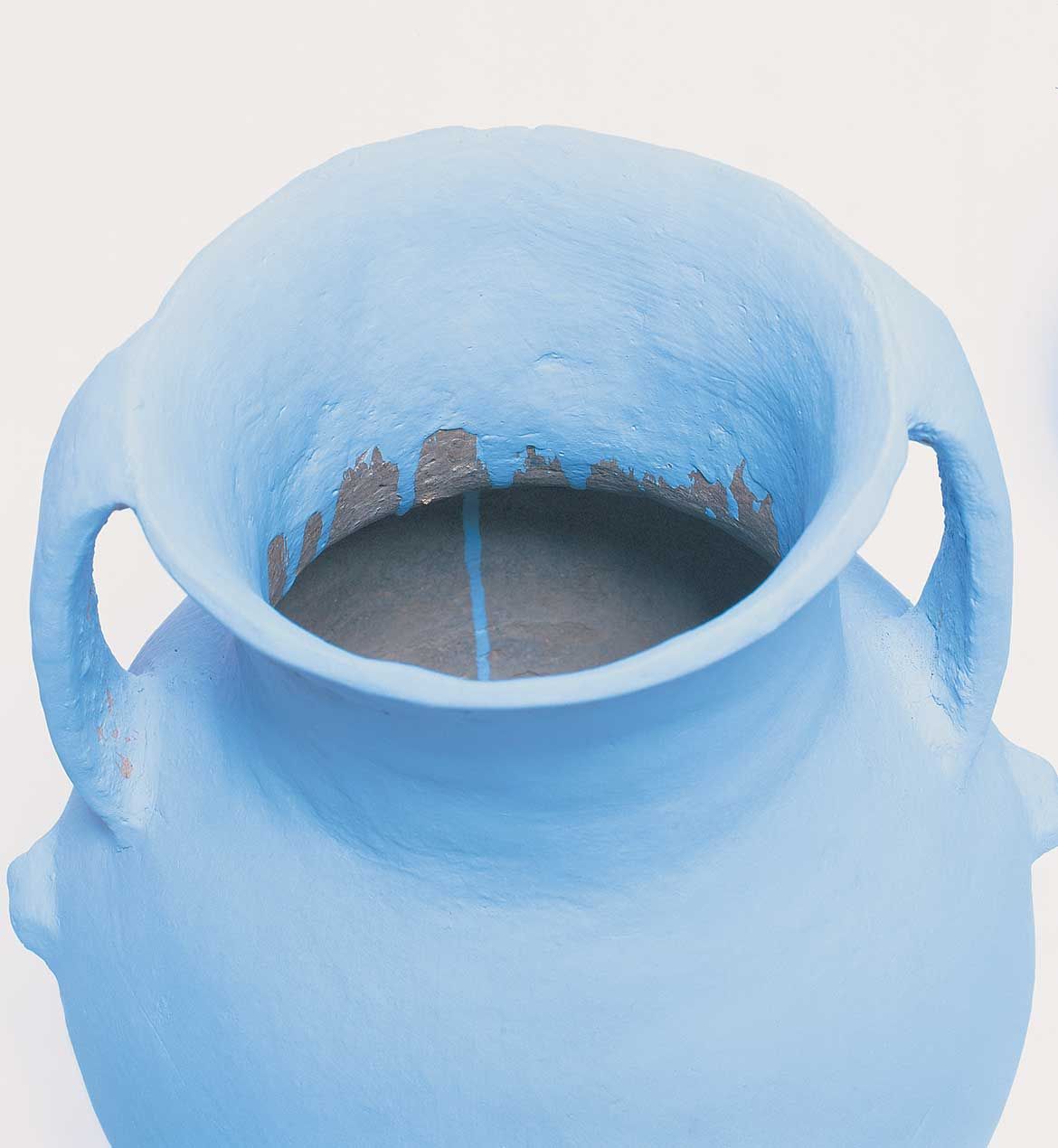

Ai Weiwei, China b.1957 / Painted vases (detail) 2006 / Synthetic polymer paint on ceramic (Neolithic period) / 14 pieces / / Purchased 2006. The Queensland Government’s GOMA Acquisitions Fund / Collection: Queensland Art Gallery | Gallery of Modern Art / © Ai Weiwei / View full image
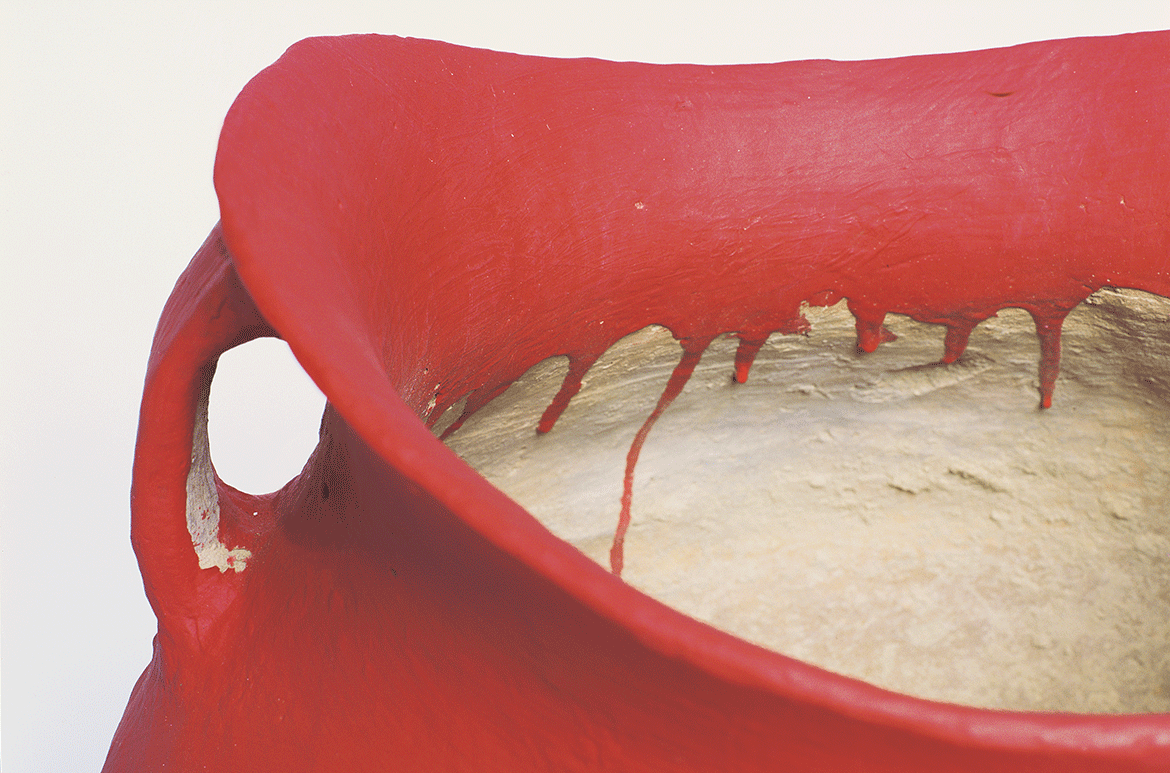

Ai Weiwei, China b.1957 / Painted vases (detail) 2006 / Synthetic polymer paint on ceramic (Neolithic period) / 14 pieces / / Purchased 2006. The Queensland Government’s GOMA Acquisitions Fund / Collection: Queensland Art Gallery | Gallery of Modern Art / © Ai Weiwei / View full image
Queensland Art Gallery | Gallery of Modern Art (QAGOMA)
Brisbane, Australia